

Cereals, CREAM OF WHEAT, 1 minute cook time, cooked with water, stove-top, without salt
Whole food · Breakfast Cereals

Photo: Wikipedia
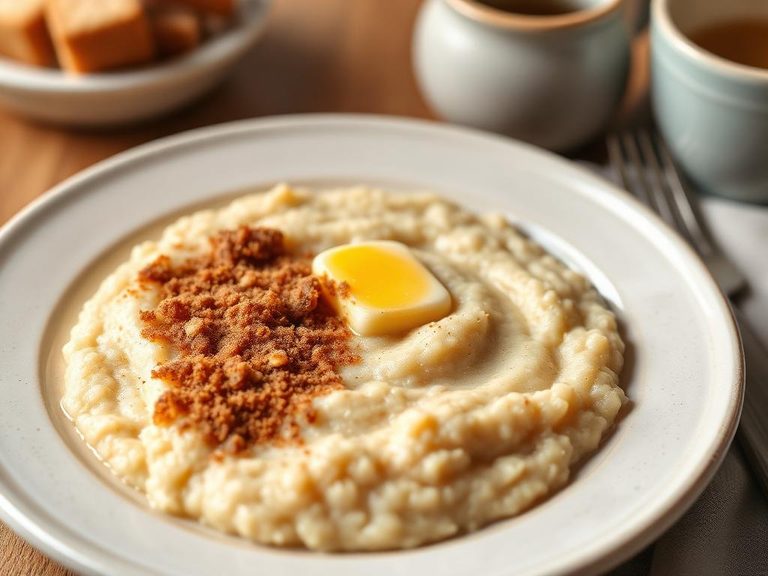
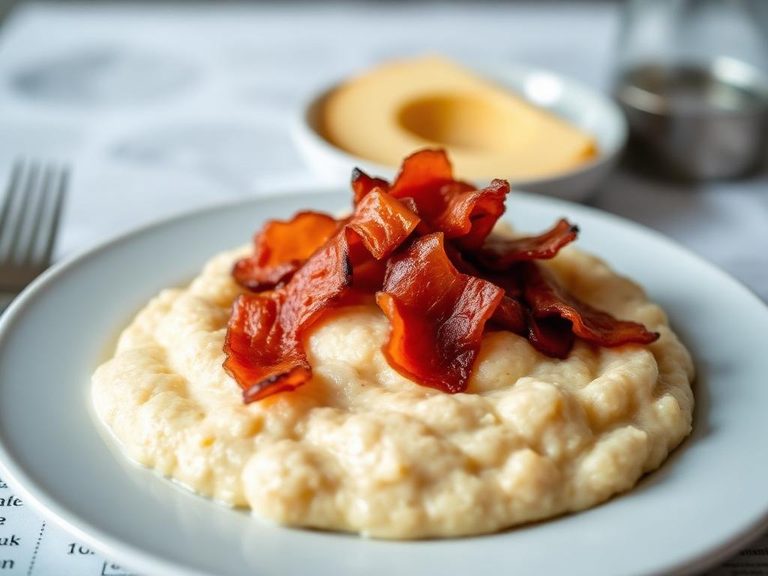
Cream of Wheat is a classic hot cereal made from farina, a finely milled wheat product, that cooks into a smooth, velvety porridge. Its mild, slightly nutty flavor and comforting, creamy texture make it a blank canvas for sweet or savory toppings. With only 56 calories per 100g, it's a light yet satisfying way to start the day.
Calorie split: 12% protein · 81% carbs · 7% fat
↓ Full nutrition💚 Why it's loved
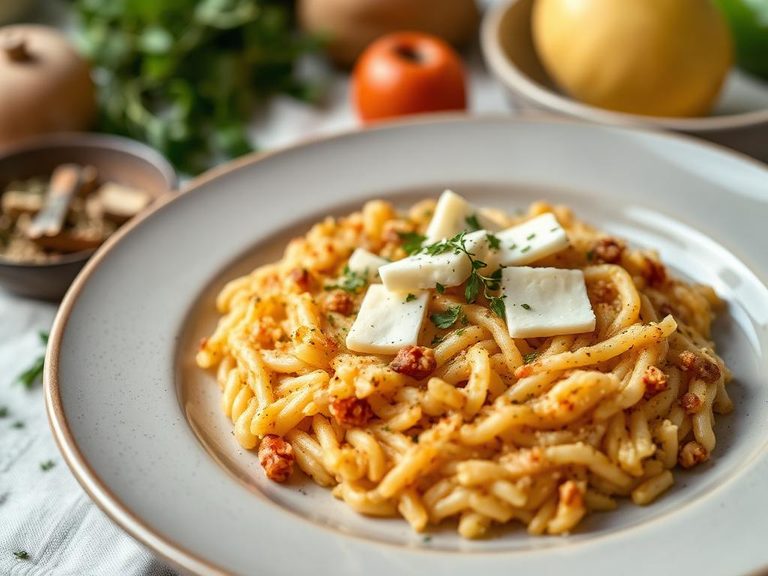
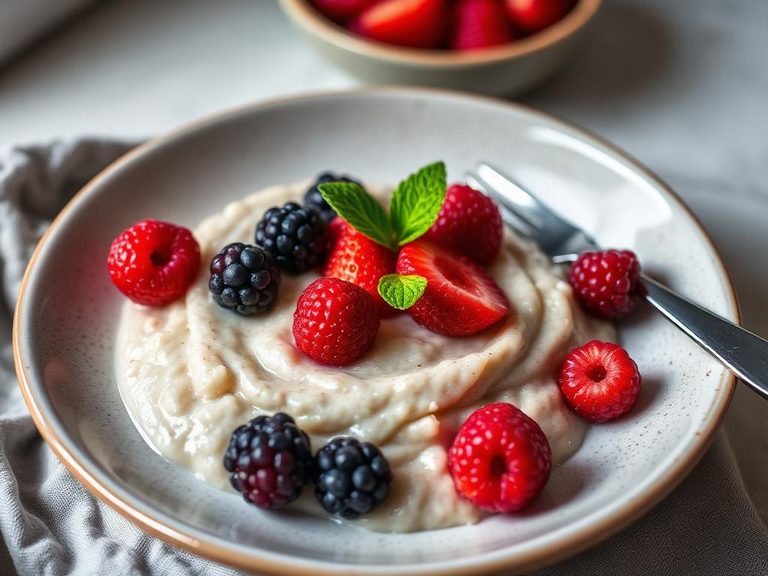
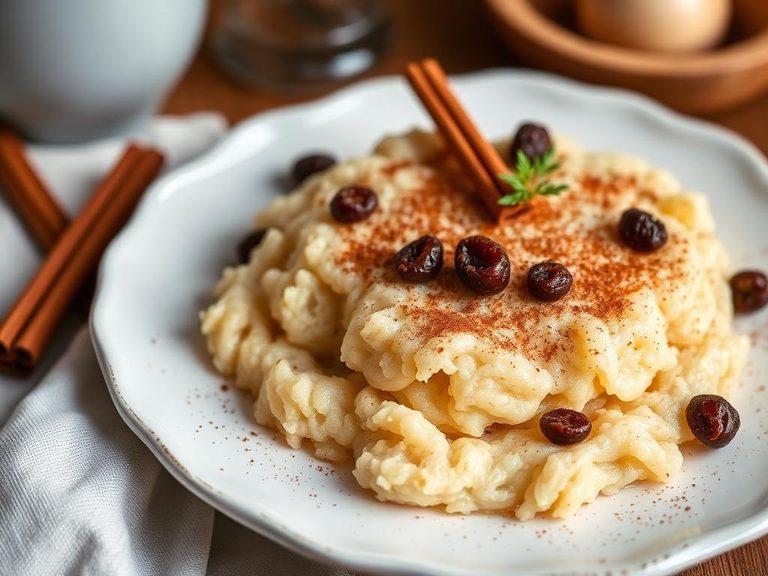
People love it for its comforting, smooth texture and its incredible versatility, which allows it to be dressed up with everything from brown sugar and cinnamon to savory herbs and cheese. It's a nostalgic staple in many American and British households, evoking memories of warm, simple breakfasts.
⚠️ Watch-outs & how to enjoy it better
Its high glycemic index can cause rapid blood sugar spikes, which is a concern for individuals managing diabetes. To counteract this, pair it with a source of protein (like nuts or Greek yogurt) or healthy fat (like nut butter or a drizzle of olive oil) to slow digestion. Also, be mindful of added salt if using a pre-packaged mix.
Key benefits
- Low in calories, making it suitable for weight management.
- Good source of quick energy from complex carbohydrates.
- Often fortified with iron and B vitamins in commercial preparations.
- Easy to digest, making it gentle on the stomach.
- A versatile base for both sweet and savory meals.
🍽️ Popular dishes

🌍 Where it's eaten
💡 Did you know?
The original Cream of Wheat was created in 1893 by a miller in Grand Forks, North Dakota, and was initially called 'Farina' before being rebranded to emphasize its creamy texture.
Full nutrition (USDA data · scales with serving)
| Water | 86.4 g |
| Energy | 56.0 kcal |
| Energy | 235 kj |
| Protein | 1.6 g |
| Total lipid (fat) | 0.42 g |
| Ash | 0.37 g |
| Carbohydrate, by difference | 11.2 g |
| Fiber, total dietary | 0.40 g |
| Total Sugars | 0.07 g |
| Sucrose | 0.07 g |
| Glucose | 0.00 g |
| Fructose | 0.00 g |
| Lactose | 0.00 g |
| Maltose | 0.00 g |
| Galactose | 0.00 g |
| Starch | 12.9 g |
| Calcium, Ca | 125 mg |
| Iron, Fe | 4.7 mg |
| Magnesium, Mg | 8.0 mg |
| Phosphorus, P | 27.0 mg |
| Potassium, K | 23.0 mg |
| Sodium, Na | 4.0 mg |
| Zinc, Zn | 0.26 mg |
| Copper, Cu | 0.04 mg |
| Manganese, Mn | 0.23 mg |
| Vitamin C, total ascorbic acid | 0.00 mg |
| Thiamin | 0.06 mg |
| Riboflavin | 0.02 mg |
| Niacin | 0.84 mg |
| Pantothenic acid | 0.19 mg |
| Vitamin B-6 | 0.03 mg |
| Folate, total | 26.0 ug |
| Folic acid | 14.0 ug |
| Folate, food | 12.0 ug |
| Folate, DFE | 36.0 ug |
| Vitamin E (alpha-tocopherol) | 0.03 mg |
| Tocopherol, beta | 0.02 mg |
| Tocopherol, gamma | 0.14 mg |
| Tocopherol, delta | 0.00 mg |
| Tocotrienol, alpha | 0.01 mg |
| Tocotrienol, beta | 0.00 mg |
| Tocotrienol, gamma | 0.00 mg |
| Tocotrienol, delta | 0.00 mg |
| Vitamin K (phylloquinone) | 0.00 ug |
| Vitamin K (Dihydrophylloquinone) | 0.00 ug |
| Vitamin K (Menaquinone-4) | 0.00 ug |
Fat & fatty acid profile (per 100g)
| Fatty acids, total saturated | 0.11 g |
| SFA 4:0 | 0.00 g |
| SFA 6:0 | 0.00 g |
| SFA 8:0 | 0.00 g |
| SFA 10:0 | 0.00 g |
| SFA 12:0 | 0.00 g |
| SFA 14:0 | 0.00 g |
| SFA 15:0 | 0.00 g |
| SFA 16:0 | 0.09 g |
| SFA 17:0 | 0.00 g |
| SFA 18:0 | 0.01 g |
| SFA 20:0 | 0.00 g |
| SFA 22:0 | 0.00 g |
| SFA 24:0 | 0.00 g |
| Fatty acids, total monounsaturated | 0.06 g |
| MUFA 14:1 | 0.00 g |
| MUFA 15:1 | 0.00 g |
| MUFA 16:1 | 0.00 g |
| MUFA 16:1 c | 0.00 g |
| MUFA 17:1 | 0.00 g |
| MUFA 18:1 | 0.06 g |
| MUFA 18:1 c | 0.06 g |
| MUFA 20:1 | 0.01 g |
| MUFA 22:1 | 0.00 g |
| MUFA 22:1 c | 0.00 g |
| MUFA 24:1 c | 0.00 g |
| Fatty acids, total polyunsaturated | 0.21 g |
| PUFA 18:2 | 0.20 g |
| PUFA 18:2 n-6 c,c | 0.00 g |
| PUFA 18:2 CLAs | 0.00 g |
| PUFA 18:3 | 0.01 g |
| PUFA 18:3 n-3 c,c,c (ALA) | 0.01 g |
| PUFA 18:3 n-6 c,c,c | 0.00 g |
| PUFA 18:4 | 0.00 g |
| PUFA 20:2 n-6 c,c | 0.00 g |
| PUFA 20:3 | 0.00 g |
| PUFA 20:3 n-3 | 0.00 g |
| PUFA 20:3 n-6 | 0.00 g |
| PUFA 20:4 | 0.00 g |
| PUFA 20:5 n-3 (EPA) | 0.00 g |
| PUFA 22:4 | 0.00 g |
| PUFA 22:5 n-3 (DPA) | 0.00 g |
| PUFA 22:6 n-3 (DHA) | 0.00 g |
| Fatty acids, total trans | 0.20 g |
| Fatty acids, total trans-monoenoic | 0.00 g |
| TFA 18:1 t | 0.00 g |
| TFA 22:1 t | 0.00 g |
| TFA 18:2 t not further defined | 0.20 g |
| Fatty acids, total trans-polyenoic | 0.20 g |
Amino acid profile (per 100g)
| Tryptophan | 0.02 g |
| Threonine | 0.04 g |
| Isoleucine | 0.06 g |
| Leucine | 0.12 g |
| Lysine | 0.02 g |
| Methionine | 0.04 g |
| Cystine | 0.04 g |
| Phenylalanine | 0.09 g |
| Tyrosine | 0.05 g |
| Valine | 0.09 g |
| Arginine | 0.05 g |
| Histidine | 0.03 g |
| Alanine | 0.07 g |
| Aspartic acid | 0.10 g |
| Glutamic acid | 0.61 g |
| Glycine | 0.06 g |
| Proline | 0.37 g |
| Serine | 0.09 g |
| Hydroxyproline | 0.00 g |
FAQ
Is Cream of Wheat gluten-free?
No, it is made from wheat and contains gluten, so it is not suitable for those with celiac disease or gluten sensitivity.
How does it differ from oatmeal?
Cream of Wheat is made from ground wheat (farina), while oatmeal is made from oats. It has a smoother, finer texture and a milder flavor compared to the heartier, chewier texture of oatmeal.
Can it be made with milk instead of water?
Yes, cooking it with milk or a milk alternative will make it richer, creamier, and increase its protein and calcium content.
Nutrient density (calculated · NRF9.3)
Nutrient Rich Foods index: beneficial nutrients (protein, fiber, vitamins, minerals) minus saturated fat, added sugar & sodium, per 100 kcal.
NRF9.3 index — Fulgoni, Keast & Drewnowski, 2009. Computed from USDA nutrients.
Weight-loss friendliness (composite index)
Energy density 0.56 kcal/g · 12% calories from protein · 0.4 g fiber · 0.1 g sugar per 100 g.
Composite of energy density (Rolls et al., 1999), protein & fiber satiety, minus sugar. A calculated heuristic — ranks satiety-per-calorie, not a clinical measure.
Dietary load (calculated from USDA values)
Potential renal acid load. Positive = acid-forming, negative = alkaline-forming.
Sodium-to-potassium ratio: 0.17 (lower is better — aim for ≤ 1)
Sodium:potassium per WHO potassium guidance. Computed from USDA nutrients.