

Caribou, shoulder meat, dried (Alaska Native)
Whole food · American Indian/Alaska Native Foods

Photo: Wikipedia
Caribou shoulder meat, dried, is a traditional Alaska Native staple, transformed by air-drying into a dense, chewy, and intensely savory jerky. Its texture is firm and fibrous, concentrating a deep, gamey, slightly sweet flavor reminiscent of lean venison. Nutritionally, it is a powerhouse of protein, delivering nearly 60 grams per 100g with virtually no fat or carbohydrates.
Calorie split: 88% protein · 0% carbs · 12% fat
↓ Full nutrition💚 Why it's loved
People cherish it for its intense, concentrated umami flavor and satisfying, chewy texture that provides a powerful energy boost. It is deeply valued in Alaska Native cultures as a portable, reliable food source for hunting and travel, representing heritage and self-sufficiency.
⚠️ Watch-outs & how to enjoy it better
Its very lean, dried nature can be tough and difficult to chew for some, potentially causing jaw fatigue. Those unaccustomed to game meat may find the strong, distinct flavor overpowering. To counteract toughness, rehydrate it in warm broth or water before adding to stews, or slice it very thinly against the grain.
Key benefits
- Exceptionally high in complete protein for muscle maintenance.
- Extremely low in fat and carbohydrates, ideal for lean diets.
- Shelf-stable and lightweight, perfect for long-term storage and travel.
- A dense source of iron and B vitamins, especially B12.
- Traditional food providing cultural connection and sustenance.
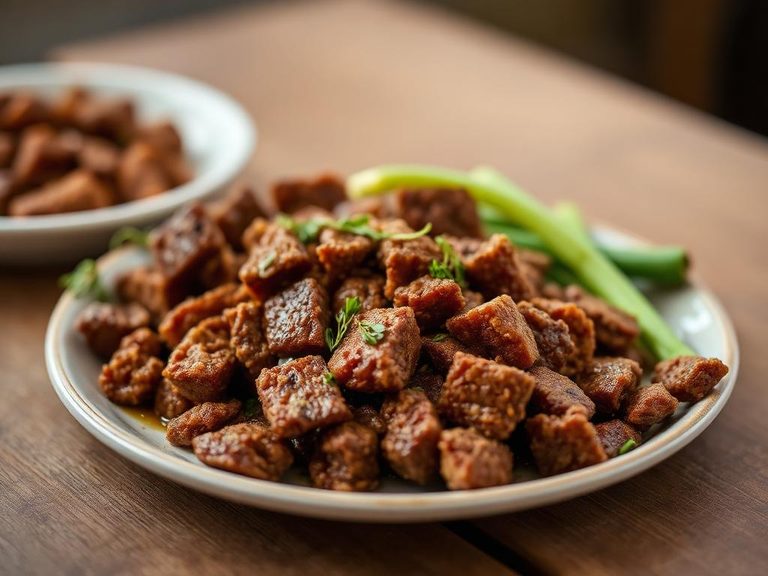
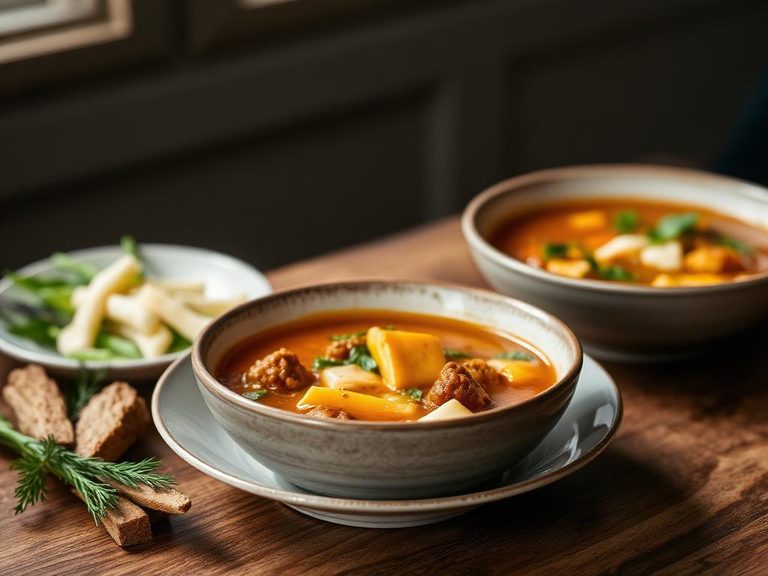
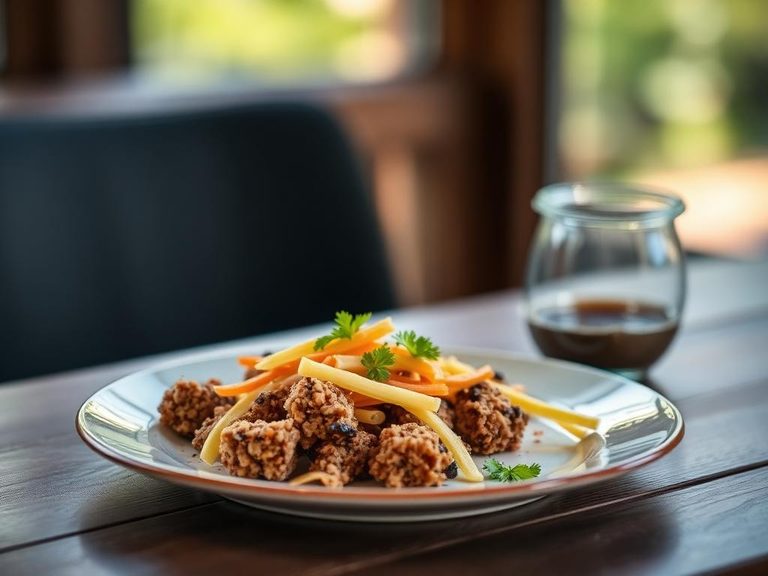
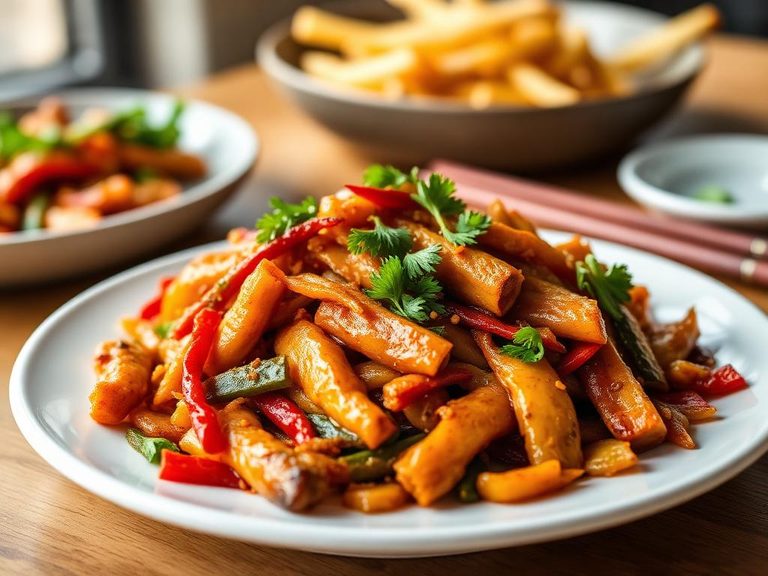
🍽️ Popular dishes
🌍 Where it's eaten
💡 Did you know?
Traditional drying methods often involved hanging strips of meat in the cold, dry Arctic air, sometimes in a special smokehouse, where the combination of low temperature, wind, and smoke preserved it for months or even years.
Full nutrition (USDA data · scales with serving)
| Water | 33.8 g |
| Energy | 271 kcal |
| Energy | 1132 kj |
| Protein | 59.4 g |
| Total lipid (fat) | 3.7 g |
| Ash | 4.7 g |
| Carbohydrate, by difference | 0.00 g |
| Fiber, total dietary | 0.00 g |
| Total Sugars | 0.00 g |
| Sucrose | 0.00 g |
| Glucose | 0.00 g |
| Fructose | 0.00 g |
| Lactose | 0.00 g |
| Maltose | 0.00 g |
| Galactose | 0.00 g |
| Starch | 0.00 g |
| Calcium, Ca | 14.0 mg |
| Iron, Fe | 11.0 mg |
| Magnesium, Mg | 62.0 mg |
| Phosphorus, P | 550 mg |
| Potassium, K | 810 mg |
| Sodium, Na | 950 mg |
| Zinc, Zn | 9.4 mg |
| Copper, Cu | 0.78 mg |
| Manganese, Mn | 0.11 mg |
| Selenium, Se | 36.8 ug |
| Vitamin C, total ascorbic acid | 0.00 mg |
| Thiamin | 0.31 mg |
| Riboflavin | 1.3 mg |
| Niacin | 14.8 mg |
| Pantothenic acid | 4.2 mg |
| Vitamin B-6 | 0.50 mg |
| Folate, total | 8.0 ug |
| Folic acid | 0.00 ug |
| Folate, food | 8.0 ug |
| Folate, DFE | 8.0 ug |
| Choline, total | 258 mg |
| Betaine | 42.8 mg |
| Vitamin B-12 | 15.1 ug |
| Vitamin B-12, added | 0.00 ug |
| Vitamin A, RAE | 11.0 ug |
| Retinol | 11.0 ug |
| Carotene, beta | 0.00 ug |
| Carotene, alpha | 0.00 ug |
| Cryptoxanthin, beta | 0.00 ug |
| Vitamin A, IU | 37.0 iu |
| Lycopene | 0.00 ug |
| Lutein + zeaxanthin | 0.00 ug |
| Vitamin E (alpha-tocopherol) | 0.07 mg |
| Vitamin E, added | 0.00 mg |
| Tocopherol, beta | 0.00 mg |
| Tocopherol, gamma | 0.00 mg |
| Tocopherol, delta | 0.00 mg |
| Tocotrienol, alpha | 0.03 mg |
| Tocotrienol, beta | 0.00 mg |
| Tocotrienol, gamma | 0.00 mg |
| Tocotrienol, delta | 0.00 mg |
| Vitamin D (D2 + D3), International Units | 0.00 iu |
| Vitamin D (D2 + D3) | 0.00 ug |
| Vitamin K (phylloquinone) | 0.00 ug |
| Vitamin K (Dihydrophylloquinone) | 0.00 ug |
| Vitamin K (Menaquinone-4) | 0.00 ug |
| Alcohol, ethyl | 0.00 g |
| Caffeine | 0.00 mg |
Fat & fatty acid profile (per 100g)
| Fatty acids, total saturated | 1.6 g |
| SFA 8:0 | 0.00 g |
| SFA 10:0 | 0.00 g |
| SFA 12:0 | 0.00 g |
| SFA 14:0 | 0.06 g |
| SFA 15:0 | 0.01 g |
| SFA 16:0 | 0.86 g |
| SFA 17:0 | 0.03 g |
| SFA 18:0 | 0.60 g |
| SFA 20:0 | 0.01 g |
| SFA 22:0 | 0.00 g |
| SFA 24:0 | 0.01 g |
| Fatty acids, total monounsaturated | 1.2 g |
| MUFA 14:1 | 0.00 g |
| MUFA 15:1 | 0.00 g |
| MUFA 16:1 | 0.08 g |
| MUFA 17:1 | 0.01 g |
| MUFA 18:1 | 1.1 g |
| MUFA 20:1 | 0.02 g |
| MUFA 22:1 | 0.00 g |
| MUFA 24:1 c | 0.00 g |
| Fatty acids, total polyunsaturated | 0.37 g |
| PUFA 18:2 | 0.21 g |
| PUFA 18:3 | 0.07 g |
| PUFA 18:4 | 0.00 g |
| PUFA 20:2 n-6 c,c | 0.00 g |
| PUFA 20:3 | 0.00 g |
| PUFA 20:4 | 0.04 g |
| PUFA 20:5 n-3 (EPA) | 0.01 g |
| PUFA 21:5 | 0.00 g |
| PUFA 22:4 | 0.00 g |
| PUFA 22:5 n-3 (DPA) | 0.02 g |
| PUFA 22:6 n-3 (DHA) | 0.01 g |
| Cholesterol | 164 mg |
Amino acid profile (per 100g)
Estimated from Game meat, caribou, raw — USDA does not publish this profile for Caribou.
| Tryptophan | 0.35 g |
| Threonine | 0.97 g |
| Isoleucine | 1.0 g |
| Leucine | 1.9 g |
| Lysine | 2.0 g |
| Methionine | 0.51 g |
| Cystine | 0.16 g |
| Phenylalanine | 1.0 g |
| Tyrosine | 0.74 g |
| Valine | 1.1 g |
| Arginine | 1.3 g |
| Histidine | 0.90 g |
| Alanine | 1.2 g |
| Aspartic acid | 2.0 g |
| Glutamic acid | 3.6 g |
| Glycine | 0.95 g |
| Proline | 0.70 g |
| Serine | 0.80 g |
FAQ
How does dried caribou differ from commercial beef jerky?
Dried caribou is typically air-dried or smoked with minimal processing, resulting in a leaner, denser, and more intensely flavored product. Commercial jerky often contains added sugars, soy sauce, and preservatives, making it sweeter and softer.
How should I store dried caribou meat?
For short-term use, store in an airtight container in a cool, dark place. For long-term storage, vacuum-seal it and keep it in the freezer, where it can last for years. Properly dried traditional caribou is naturally shelf-stable.
Is it safe to eat dried caribou raw?
Yes, traditional dried caribou is a ready-to-eat food, similar to jerky. The drying process removes moisture, inhibiting bacterial growth. However, ensure it was prepared hygienically and is fully dried (no soft spots).
Nutrient density (calculated · NRF9.3)
Nutrient Rich Foods index: beneficial nutrients (protein, fiber, vitamins, minerals) minus saturated fat, added sugar & sodium, per 100 kcal.
NRF9.3 index — Fulgoni, Keast & Drewnowski, 2009. Computed from USDA nutrients.
Weight-loss friendliness (composite index)
Energy density 2.71 kcal/g · 88% calories from protein · 0.0 g fiber · 0.0 g sugar per 100 g.
Composite of energy density (Rolls et al., 1999), protein & fiber satiety, minus sugar. A calculated heuristic — ranks satiety-per-calorie, not a clinical measure.
Dietary load (calculated from USDA values)
Potential renal acid load. Positive = acid-forming, negative = alkaline-forming.
Sodium-to-potassium ratio: 1.17 (lower is better — aim for ≤ 1)
Sodium:potassium per WHO potassium guidance. Computed from USDA nutrients.