

Beans, navy, mature seeds, raw
Whole food · Legumes and Legume Products

Photo: Wikipedia
Navy beans, also known as haricot beans, are small, oval-shaped legumes with a mild, nutty flavor and a creamy, starchy texture when cooked. They are a nutritional powerhouse, boasting an impressive 22.33g of protein and a massive 15.3g of fiber per 100g dry weight, making them a staple for plant-based nutrition.
Calorie split: 26% protein · 70% carbs · 4% fat
↓ Full nutrition💚 Why it's loved
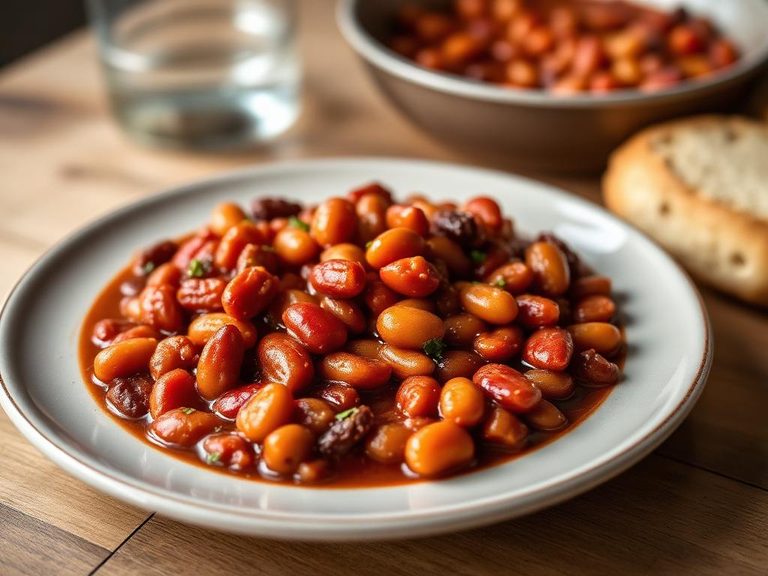
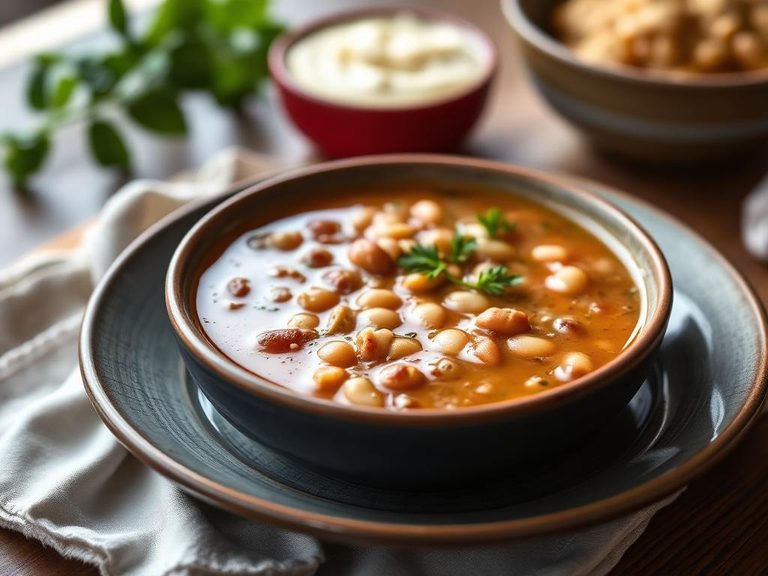
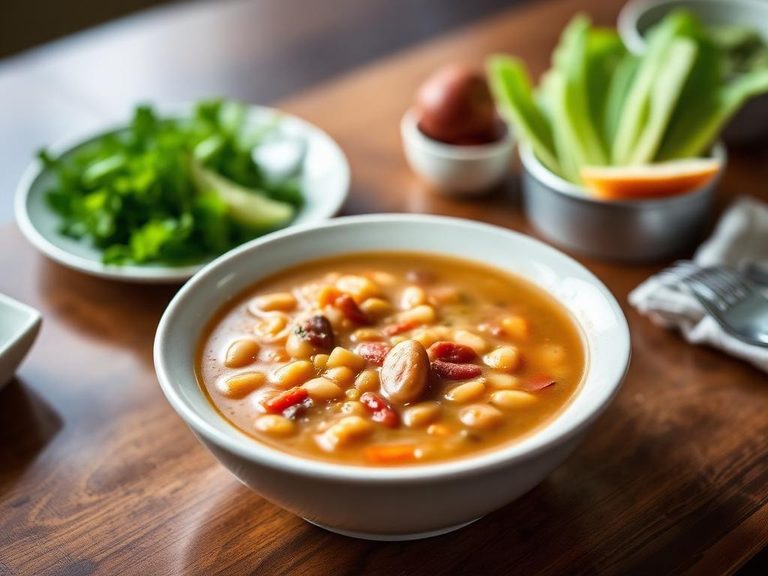
People love navy beans for their ability to absorb flavors and transform into a velvety, comforting base for soups, stews, and baked bean dishes. They are a beloved, affordable, and versatile pantry staple across many global cuisines.
⚠️ Watch-outs & how to enjoy it better
The high fiber and oligosaccharide content can cause digestive gas and bloating in some individuals, especially when not accustomed to legumes. To counteract this, start with small portions, ensure they are thoroughly cooked, and consider soaking dried beans for several hours or overnight, discarding the soak water, to reduce these compounds.
Key benefits
- Excellent source of plant-based protein for muscle maintenance.
- Extremely high in dietary fiber to support digestive health.
- Rich in folate, essential for cell function and tissue growth.
- Provides important minerals like iron, magnesium, and potassium.
- Low in fat and naturally cholesterol-free.
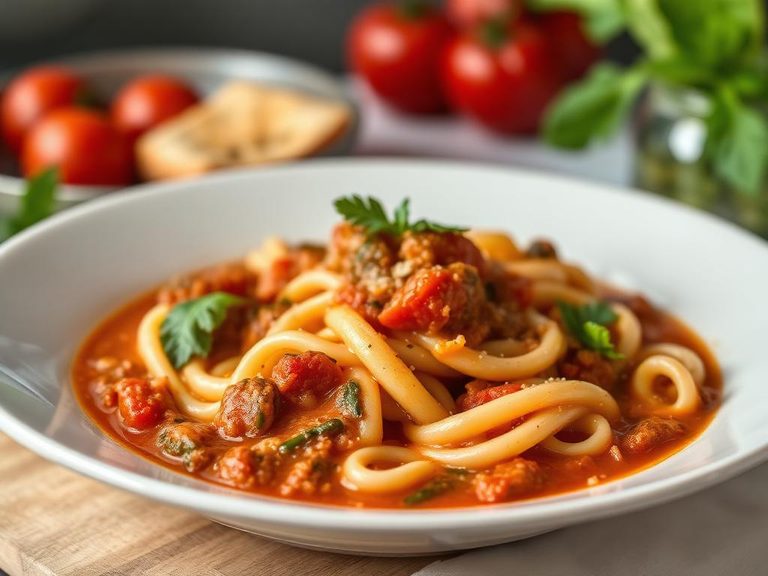
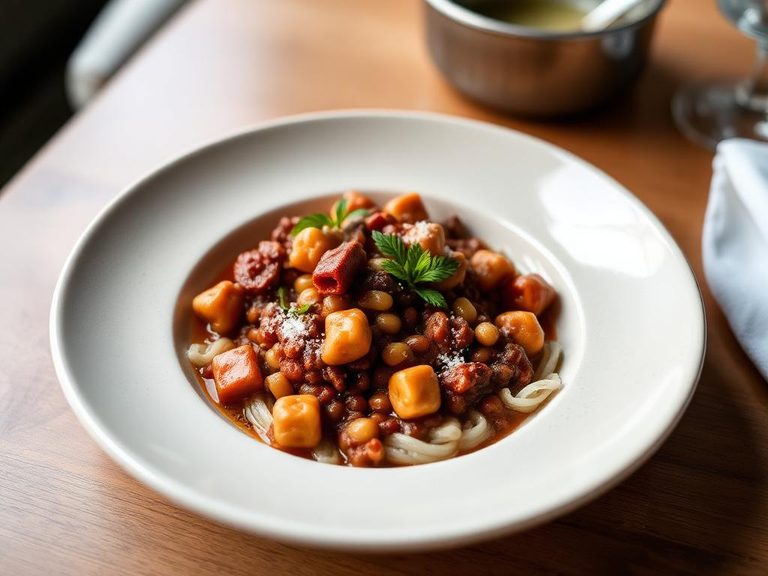
🍽️ Popular dishes
🌍 Where it's eaten
💡 Did you know?
The classic American canned 'pork and beans' typically contains more beans than pork, and the pork is often just a small piece of salt pork for flavoring.
Full nutrition (USDA data · scales with serving)
| Water | 12.1 g |
| Energy | 337 kcal |
| Energy | 1411 kj |
| Protein | 22.3 g |
| Total lipid (fat) | 1.5 g |
| Ash | 3.3 g |
| Carbohydrate, by difference | 60.8 g |
| Fiber, total dietary | 15.3 g |
| Total Sugars | 3.9 g |
| Sucrose | 3.3 g |
| Glucose | 0.21 g |
| Fructose | 0.00 g |
| Lactose | 0.00 g |
| Maltose | 0.00 g |
| Galactose | 0.34 g |
| Starch | 32.9 g |
| Calcium, Ca | 147 mg |
| Iron, Fe | 5.5 mg |
| Magnesium, Mg | 175 mg |
| Phosphorus, P | 407 mg |
| Potassium, K | 1185 mg |
| Sodium, Na | 5.0 mg |
| Zinc, Zn | 3.6 mg |
| Copper, Cu | 0.83 mg |
| Manganese, Mn | 1.4 mg |
| Selenium, Se | 11.0 ug |
| Thiamin | 0.78 mg |
| Riboflavin | 0.16 mg |
| Niacin | 2.2 mg |
| Pantothenic acid | 0.74 mg |
| Vitamin B-6 | 0.43 mg |
| Folate, total | 364 ug |
| Folic acid | 0.00 ug |
| Folate, food | 364 ug |
| Folate, DFE | 364 ug |
| Choline, total | 87.4 mg |
| Betaine | 0.10 mg |
| Vitamin B-12 | 0.00 ug |
| Vitamin B-12, added | 0.00 ug |
| Vitamin A, RAE | 0.00 ug |
| Retinol | 0.00 ug |
| Carotene, beta | 0.00 ug |
| Carotene, alpha | 0.00 ug |
| Cryptoxanthin, beta | 0.00 ug |
| Vitamin A, IU | 0.00 iu |
| Lycopene | 0.00 ug |
| Lutein + zeaxanthin | 0.00 ug |
| Vitamin E (alpha-tocopherol) | 0.02 mg |
| Vitamin E, added | 0.00 mg |
| Tocopherol, beta | 0.00 mg |
| Tocopherol, gamma | 2.0 mg |
| Tocopherol, delta | 0.17 mg |
| Tocotrienol, alpha | 0.00 mg |
| Tocotrienol, beta | 0.00 mg |
| Tocotrienol, gamma | 0.00 mg |
| Tocotrienol, delta | 0.00 mg |
| Vitamin D (D2 + D3), International Units | 0.00 iu |
| Vitamin D (D2 + D3) | 0.00 ug |
| Vitamin K (phylloquinone) | 2.5 ug |
| Vitamin K (Dihydrophylloquinone) | 0.00 ug |
| Alcohol, ethyl | 0.00 g |
| Caffeine | 0.00 mg |
| Theobromine | 0.00 mg |
Fat & fatty acid profile (per 100g)
| Fatty acids, total saturated | 0.17 g |
| SFA 4:0 | 0.00 g |
| SFA 6:0 | 0.00 g |
| SFA 8:0 | 0.00 g |
| SFA 10:0 | 0.00 g |
| SFA 12:0 | 0.00 g |
| SFA 13:0 | 0.00 g |
| SFA 14:0 | 0.00 g |
| SFA 15:0 | 0.00 g |
| SFA 16:0 | 0.14 g |
| SFA 17:0 | 0.00 g |
| SFA 18:0 | 0.02 g |
| SFA 20:0 | 0.01 g |
| SFA 22:0 | 0.00 g |
| SFA 24:0 | 0.00 g |
| Fatty acids, total monounsaturated | 0.13 g |
| MUFA 14:1 | 0.00 g |
| MUFA 15:1 | 0.00 g |
| MUFA 16:1 | 0.00 g |
| MUFA 17:1 | 0.00 g |
| MUFA 18:1 | 0.12 g |
| MUFA 18:1 c | 0.12 g |
| MUFA 20:1 | 0.00 g |
| MUFA 22:1 | 0.01 g |
| Fatty acids, total polyunsaturated | 0.87 g |
| PUFA 18:2 | 0.34 g |
| PUFA 18:3 | 0.54 g |
| PUFA 18:3 n-3 c,c,c (ALA) | 0.54 g |
| PUFA 18:3 n-6 c,c,c | 0.00 g |
| PUFA 20:2 n-6 c,c | 0.00 g |
| PUFA 20:3 | 0.00 g |
| PUFA 20:4 | 0.00 g |
| PUFA 20:5 n-3 (EPA) | 0.00 g |
| PUFA 22:6 n-3 (DHA) | 0.00 g |
| Fatty acids, total trans | 0.00 g |
| Fatty acids, total trans-monoenoic | 0.00 g |
| TFA 18:1 t | 0.00 g |
Amino acid profile (per 100g)
| Tryptophan | 0.25 g |
| Threonine | 0.71 g |
| Isoleucine | 0.95 g |
| Leucine | 1.7 g |
| Lysine | 1.3 g |
| Methionine | 0.27 g |
| Cystine | 0.19 g |
| Phenylalanine | 1.2 g |
| Tyrosine | 0.48 g |
| Valine | 1.2 g |
| Arginine | 1.0 g |
| Histidine | 0.51 g |
| Alanine | 0.91 g |
| Aspartic acid | 2.6 g |
| Glutamic acid | 3.1 g |
| Glycine | 0.80 g |
| Proline | 1.1 g |
| Serine | 1.2 g |
| Hydroxyproline | 0.00 g |
FAQ
What's the difference between navy beans and great northern beans?
Navy beans are smaller, oval, and have a more pronounced starchiness, making them ideal for purees and baked beans. Great northern beans are larger, have a milder flavor, and hold their shape better in soups and salads.
Do I need to soak dried navy beans?
Soaking overnight (8-12 hours) is recommended to reduce cooking time and help minimize compounds that cause gas. If short on time, you can use a 'quick soak' method: boil beans for 2 minutes, then let them stand covered for an hour before cooking.
Are canned navy beans as nutritious as dried?
Yes, canned navy beans retain most of their protein, fiber, and minerals. They are a convenient option, but be mindful of added sodium. Look for 'low sodium' or 'no salt added' versions, and rinse them before use to reduce sodium content by about 40%.
Nutrient density (calculated · NRF9.3)
Nutrient Rich Foods index: beneficial nutrients (protein, fiber, vitamins, minerals) minus saturated fat, added sugar & sodium, per 100 kcal.
NRF9.3 index — Fulgoni, Keast & Drewnowski, 2009. Computed from USDA nutrients.
Weight-loss friendliness (composite index)
Energy density 3.37 kcal/g · 27% calories from protein · 15.3 g fiber · 3.9 g sugar per 100 g.
Composite of energy density (Rolls et al., 1999), protein & fiber satiety, minus sugar. A calculated heuristic — ranks satiety-per-calorie, not a clinical measure.
Dietary load (calculated from USDA values)
Potential renal acid load. Positive = acid-forming, negative = alkaline-forming.
Sodium-to-potassium ratio: 0.00 (lower is better — aim for ≤ 1)
Sodium:potassium per WHO potassium guidance. Computed from USDA nutrients.