Fish, haddock, raw
Whole food · Finfish and Shellfish Products

Photo: Wikipedia
Haddock is a lean, white-fleshed North Atlantic fish prized for its mild, slightly sweet flavor and a firm yet flaky texture that holds up beautifully to various cooking methods. With an impressive 16.32 grams of high-quality protein per 100 grams and virtually no fat or carbohydrates, it's a powerhouse of lean nutrition. Its clean, non-fishy taste makes it an excellent canvas for bold seasonings or simple preparations.
💚 Why it's loved
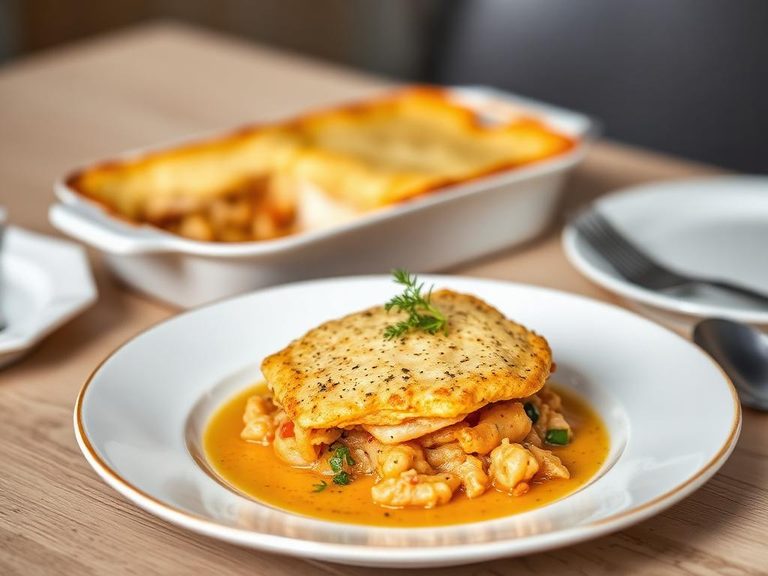
People adore haddock for its delicate, sweet flavor that is more subtle than cod, making it incredibly versatile in everything from classic fish and chips to elegant baked dishes. Its reliable texture doesn't fall apart easily, making it a favorite for both home cooks and chefs.
⚠️ Watch-outs & how to enjoy it better
As a very lean fish, haddock can dry out if overcooked, so careful timing is key. It is a common allergen for those with fish sensitivities. To counteract dryness, cook it just until it flakes easily (internal temp 145°F/63°C) and consider pairing it with a sauce, butter, or oil-based dressing for added moisture and fat.
Key benefits
- Excellent source of lean, complete protein for muscle maintenance.
- Very low in fat and calories, supporting weight management.
- Naturally free of carbohydrates and sugars.
- Rich in essential nutrients like selenium and vitamin B12.
- A sustainable choice when sourced from well-managed fisheries.
🍽️ Popular dishes
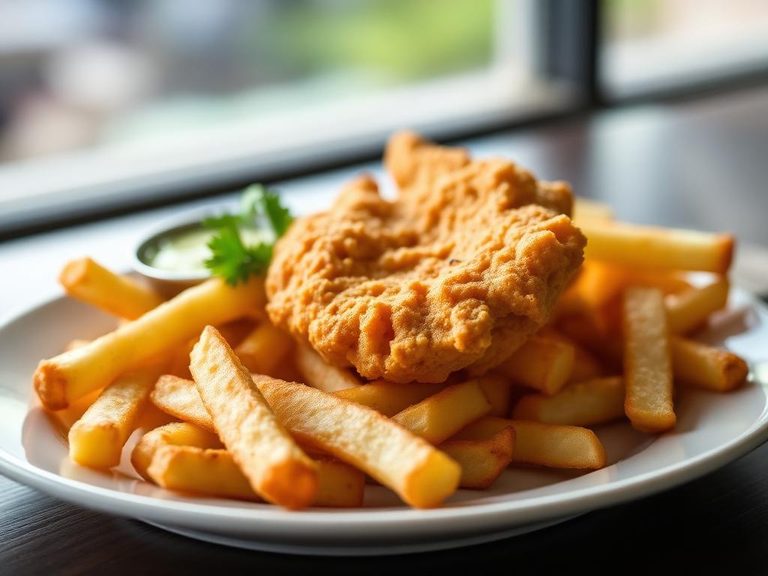
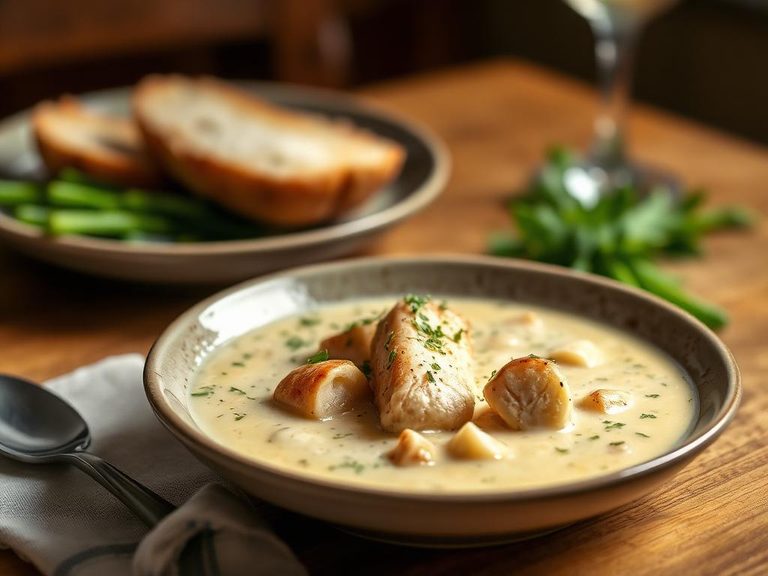
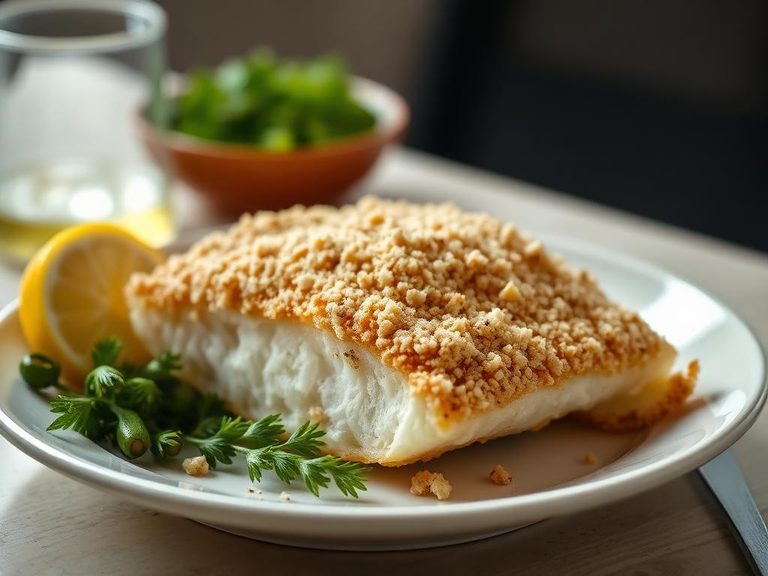
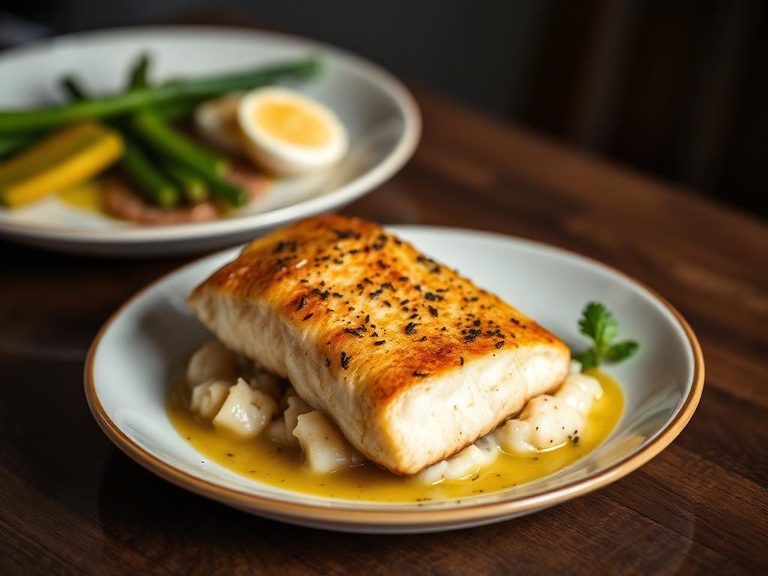
🌍 Where it's eaten
💡 Did you know?
The distinctive 'lateral line' on a haddock's side, a dark stripe running from head to tail, was historically called the 'Devil's thumbprint' in some fishing communities.
Full nutrition (scales with serving)
| Water | 83.4 g |
| Energy | 74.0 kcal |
| Energy | 309 kj |
| Protein | 16.3 g |
| Total lipid (fat) | 0.45 g |
| Ash | 1.3 g |
| Carbohydrate, by difference | 0.00 g |
| Fiber, total dietary | 0.00 g |
| Total Sugars | 0.00 g |
| Calcium, Ca | 11.0 mg |
| Iron, Fe | 0.17 mg |
| Magnesium, Mg | 21.0 mg |
| Phosphorus, P | 227 mg |
| Potassium, K | 286 mg |
| Sodium, Na | 213 mg |
| Zinc, Zn | 0.32 mg |
| Copper, Cu | 0.02 mg |
| Manganese, Mn | 0.01 mg |
| Selenium, Se | 25.9 ug |
| Vitamin C, total ascorbic acid | 0.00 mg |
| Thiamin | 0.02 mg |
| Riboflavin | 0.06 mg |
| Niacin | 3.4 mg |
| Pantothenic acid | 0.40 mg |
| Vitamin B-6 | 0.28 mg |
| Folate, total | 12.0 ug |
| Folic acid | 0.00 ug |
| Folate, food | 12.0 ug |
| Folate, DFE | 12.0 ug |
| Choline, total | 65.0 mg |
| Vitamin B-12 | 1.8 ug |
| Vitamin B-12, added | 0.00 ug |
| Vitamin A, RAE | 17.0 ug |
| Retinol | 17.0 ug |
| Carotene, beta | 0.00 ug |
| Carotene, alpha | 0.00 ug |
| Cryptoxanthin, beta | 0.00 ug |
| Vitamin A, IU | 57.0 iu |
| Lycopene | 0.00 ug |
| Lutein + zeaxanthin | 0.00 ug |
| Vitamin E (alpha-tocopherol) | 0.45 mg |
| Vitamin E, added | 0.00 mg |
| Tocopherol, beta | 0.00 mg |
| Tocopherol, gamma | 0.00 mg |
| Tocopherol, delta | 0.00 mg |
| Tocotrienol, alpha | 0.00 mg |
| Tocotrienol, beta | 0.00 mg |
| Tocotrienol, gamma | 0.00 mg |
| Tocotrienol, delta | 0.00 mg |
| Vitamin D (D2 + D3), International Units | 18.0 iu |
| Vitamin D (D2 + D3) | 0.50 ug |
| Vitamin D3 (cholecalciferol) | 0.50 ug |
| Vitamin K (phylloquinone) | 0.10 ug |
| Alcohol, ethyl | 0.00 g |
| Caffeine | 0.00 mg |
| Theobromine | 0.00 mg |
Fat & fatty acid profile (per 100g)
| Fatty acids, total saturated | 0.09 g |
| SFA 4:0 | 0.00 g |
| SFA 6:0 | 0.00 g |
| SFA 8:0 | 0.00 g |
| SFA 10:0 | 0.00 g |
| SFA 12:0 | 0.00 g |
| SFA 14:0 | 0.00 g |
| SFA 15:0 | 0.00 g |
| SFA 16:0 | 0.06 g |
| SFA 17:0 | 0.00 g |
| SFA 18:0 | 0.02 g |
| SFA 20:0 | 0.00 g |
| SFA 22:0 | 0.00 g |
| SFA 24:0 | 0.00 g |
| Fatty acids, total monounsaturated | 0.06 g |
| MUFA 14:1 | 0.00 g |
| MUFA 15:1 | 0.00 g |
| MUFA 16:1 | 0.00 g |
| MUFA 16:1 c | 0.00 g |
| MUFA 17:1 | 0.01 g |
| MUFA 18:1 | 0.04 g |
| MUFA 18:1 c | 0.04 g |
| MUFA 20:1 | 0.01 g |
| MUFA 22:1 | 0.00 g |
| MUFA 22:1 c | 0.00 g |
| MUFA 24:1 c | 0.00 g |
| Fatty acids, total polyunsaturated | 0.17 g |
| PUFA 18:2 | 0.01 g |
| PUFA 18:2 n-6 c,c | 0.01 g |
| PUFA 18:2 CLAs | 0.00 g |
| PUFA 18:3 | 0.00 g |
| PUFA 18:3 n-3 c,c,c (ALA) | 0.00 g |
| PUFA 18:3 n-6 c,c,c | 0.00 g |
| PUFA 18:4 | 0.00 g |
| PUFA 20:2 n-6 c,c | 0.00 g |
| PUFA 20:3 | 0.00 g |
| PUFA 20:3 n-3 | 0.00 g |
| PUFA 20:3 n-6 | 0.00 g |
| PUFA 20:4 | 0.01 g |
| PUFA 20:5 n-3 (EPA) | 0.04 g |
| PUFA 22:4 | 0.00 g |
| PUFA 22:5 n-3 (DPA) | 0.01 g |
| PUFA 22:6 n-3 (DHA) | 0.09 g |
| Fatty acids, total trans | 0.00 g |
| Fatty acids, total trans-monoenoic | 0.00 g |
| TFA 16:1 t | 0.00 g |
| TFA 18:1 t | 0.00 g |
| TFA 22:1 t | 0.00 g |
| TFA 18:2 t not further defined | 0.00 g |
| Fatty acids, total trans-polyenoic | 0.00 g |
| Cholesterol | 54.0 mg |
Amino acid profile (per 100g)
| Tryptophan | 0.21 g |
| Threonine | 0.83 g |
| Isoleucine | 0.87 g |
| Leucine | 1.5 g |
| Lysine | 1.7 g |
| Methionine | 0.56 g |
| Cystine | 0.20 g |
| Phenylalanine | 0.74 g |
| Tyrosine | 0.64 g |
| Valine | 0.97 g |
| Arginine | 1.1 g |
| Histidine | 0.56 g |
| Alanine | 1.1 g |
| Aspartic acid | 1.9 g |
| Glutamic acid | 2.8 g |
| Glycine | 0.91 g |
| Proline | 0.67 g |
| Serine | 0.77 g |
FAQ
What's the difference between haddock and cod?
Haddock is generally smaller, with a slightly sweeter flavor and firmer texture. Cod is milder and has larger, more delicate flakes. Nutritionally, they are very similar.
Is smoked haddock healthy?
Smoked haddock retains most of its protein and nutrients but is significantly higher in sodium due to the curing process. Opt for naturally smoked varieties and rinse before cooking to reduce salt.
How do I know when haddock is cooked through?
The flesh should turn from translucent to opaque white and flake easily when pressed with a fork. An instant-read thermometer should read 145°F (63°C) at the thickest part.