

Potatoes, hash brown, refrigerated, prepared, pan-fried in canola oil
Whole food · Vegetables and Vegetable Products

Photo: Wikipedia
These are shredded potatoes, pre-formed into patties or loose shreds, that have been refrigerated and then pan-fried in canola oil until golden and crispy on the outside while remaining tender within. The frying process imparts a rich, savory flavor and a satisfying crunch, making them a staple breakfast side. Nutritionally, they are a dense source of energy, primarily from carbohydrates and fats.
Calorie split: 5% protein · 56% carbs · 38% fat
↓ Full nutrition💚 Why it's loved
People love them for their irresistible contrast of textures—a shatteringly crisp, golden-brown exterior giving way to a soft, steaming interior. They are a beloved, comforting canvas that readily absorbs seasonings and pairs perfectly with eggs, meats, and sauces.
⚠️ Watch-outs & how to enjoy it better
The pan-frying process adds significant calories and fat, and the high-glycemic nature of potatoes can lead to rapid blood-sugar spikes, especially when eaten alone. To counteract this, pair them with protein (like eggs or sausage) and healthy fats (like avocado) to slow digestion, and practice portion control by treating them as a side, not the main event.
Key benefits
- Provides quick, accessible energy from complex carbs.
- Contains potassium, which supports nerve and muscle function.
- The canola oil used for frying is a source of heart-healthy monounsaturated fats.
- A versatile base for both simple and elaborate dishes.
- Offers dietary fiber, aiding in digestive health.
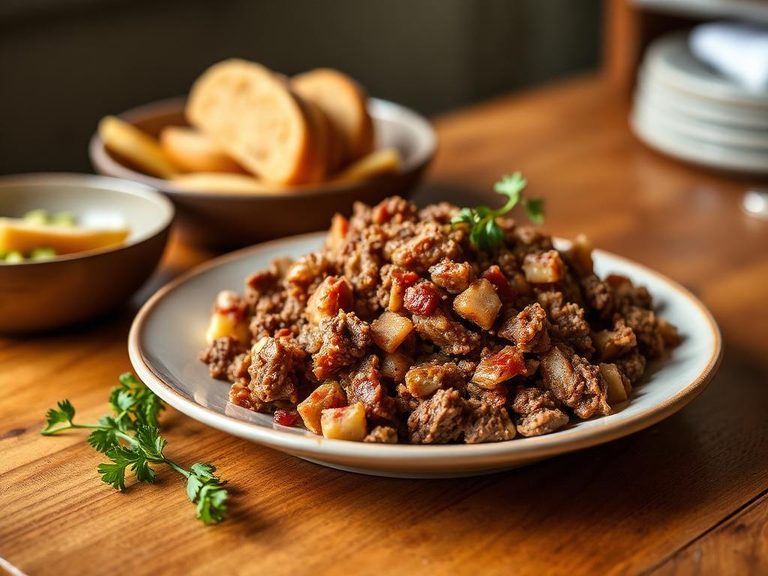
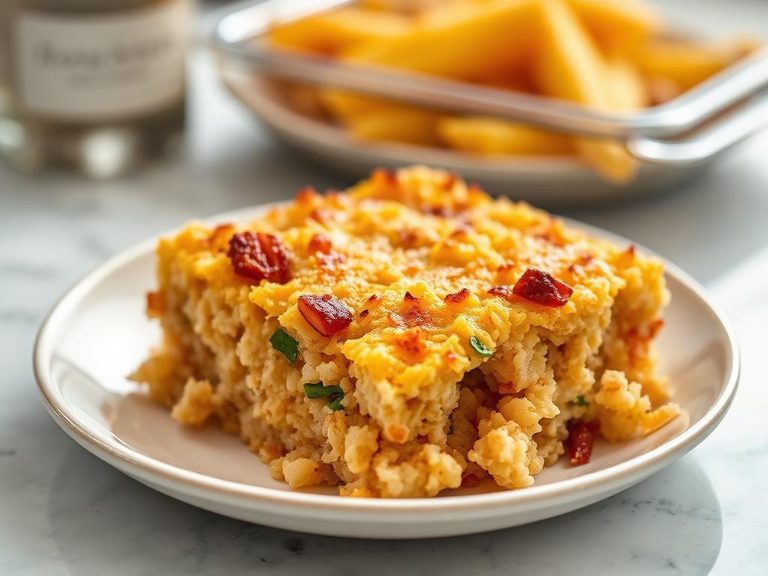
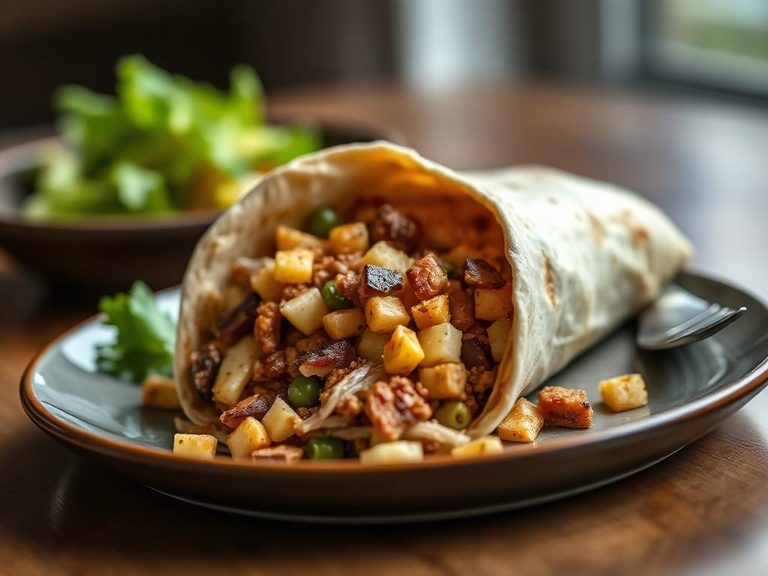
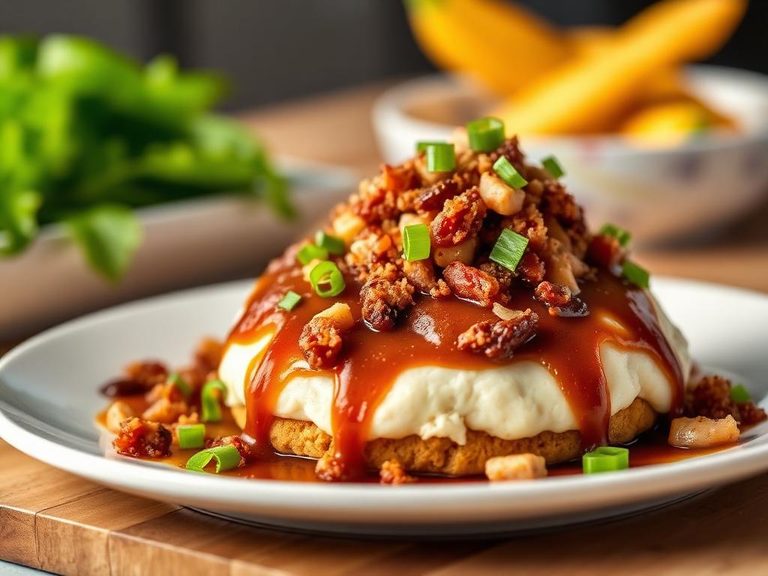
🍽️ Popular dishes


🌍 Where it's eaten
💡 Did you know?
The term 'hash' comes from the French word 'hacher,' meaning to chop or hack, reflecting the dish's origins as a way to use up leftover chopped meat and potatoes.
Full nutrition (USDA data · scales with serving)
| Water | 50.6 g |
| Energy | 242 kcal |
| Energy | 1011 kj |
| Protein | 3.2 g |
| Total lipid (fat) | 10.3 g |
| Ash | 1.9 g |
| Carbohydrate, by difference | 34.0 g |
| Fiber, total dietary | 3.6 g |
| Total Sugars | 1.2 g |
| Sucrose | 0.00 g |
| Glucose | 0.61 g |
| Fructose | 0.45 g |
| Lactose | 0.00 g |
| Maltose | 0.00 g |
| Galactose | 0.00 g |
| Starch | 26.3 g |
| Calcium, Ca | 10.0 mg |
| Iron, Fe | 0.74 mg |
| Magnesium, Mg | 32.0 mg |
| Phosphorus, P | 122 mg |
| Potassium, K | 704 mg |
| Sodium, Na | 77.0 mg |
| Zinc, Zn | 0.63 mg |
| Copper, Cu | 0.11 mg |
| Manganese, Mn | 0.23 mg |
| Vitamin C, total ascorbic acid | 2.7 mg |
| Thiamin | 0.03 mg |
| Riboflavin | 0.05 mg |
| Niacin | 3.2 mg |
| Pantothenic acid | 0.73 mg |
| Vitamin B-6 | 0.36 mg |
| Vitamin B-12 | 0.00 ug |
| Vitamin B-12, added | 0.00 ug |
| Vitamin E (alpha-tocopherol) | 1.7 mg |
| Vitamin E, added | 0.00 mg |
| Tocopherol, beta | 0.05 mg |
| Tocopherol, gamma | 3.4 mg |
| Tocopherol, delta | 0.14 mg |
| Tocotrienol, alpha | 0.03 mg |
| Tocotrienol, beta | 0.00 mg |
| Tocotrienol, gamma | 0.01 mg |
| Tocotrienol, delta | 0.00 mg |
| Vitamin D (D2 + D3), International Units | 0.00 iu |
| Vitamin D (D2 + D3) | 0.00 ug |
| Vitamin K (phylloquinone) | 19.6 ug |
| Vitamin K (Dihydrophylloquinone) | 0.00 ug |
| Vitamin K (Menaquinone-4) | 0.00 ug |
| Alcohol, ethyl | 0.00 g |
| Caffeine | 0.00 mg |
| Theobromine | 0.00 mg |
Fat & fatty acid profile (per 100g)
| Fatty acids, total saturated | 0.81 g |
| SFA 4:0 | 0.00 g |
| SFA 6:0 | 0.00 g |
| SFA 8:0 | 0.00 g |
| SFA 10:0 | 0.01 g |
| SFA 12:0 | 0.00 g |
| SFA 14:0 | 0.01 g |
| SFA 15:0 | 0.00 g |
| SFA 16:0 | 0.46 g |
| SFA 17:0 | 0.01 g |
| SFA 18:0 | 0.21 g |
| SFA 20:0 | 0.06 g |
| SFA 22:0 | 0.03 g |
| SFA 24:0 | 0.02 g |
| Fatty acids, total monounsaturated | 6.6 g |
| MUFA 15:1 | 0.00 g |
| MUFA 16:1 | 0.02 g |
| MUFA 16:1 c | 0.02 g |
| MUFA 17:1 | 0.01 g |
| MUFA 18:1 | 6.3 g |
| MUFA 18:1 c | 6.3 g |
| MUFA 20:1 | 0.18 g |
| MUFA 22:1 | 0.01 g |
| MUFA 22:1 c | 0.00 g |
| MUFA 24:1 c | 0.00 g |
| Fatty acids, total polyunsaturated | 2.9 g |
| PUFA 18:2 | 2.1 g |
| PUFA 18:2 n-6 c,c | 2.0 g |
| PUFA 18:2 CLAs | 0.01 g |
| PUFA 18:3 | 0.79 g |
| PUFA 18:3 n-3 c,c,c (ALA) | 0.72 g |
| PUFA 18:3 n-6 c,c,c | 0.07 g |
| PUFA 18:3i | 0.00 g |
| PUFA 18:4 | 0.00 g |
| PUFA 20:2 n-6 c,c | 0.01 g |
| PUFA 20:3 | 0.00 g |
| PUFA 20:3 n-3 | 0.00 g |
| PUFA 20:3 n-6 | 0.00 g |
| PUFA 20:4 | 0.00 g |
| PUFA 20:5 n-3 (EPA) | 0.00 g |
| PUFA 22:4 | 0.00 g |
| PUFA 22:5 n-3 (DPA) | 0.00 g |
| PUFA 22:6 n-3 (DHA) | 0.00 g |
| Fatty acids, total trans | 0.03 g |
| Fatty acids, total trans-monoenoic | 0.01 g |
| TFA 16:1 t | 0.00 g |
| TFA 18:1 t | 0.01 g |
| TFA 22:1 t | 0.01 g |
| TFA 18:2 t not further defined | 0.02 g |
| Fatty acids, total trans-polyenoic | 0.02 g |
| Cholesterol | 0.00 mg |
Amino acid profile (per 100g)
Estimated from Potatoes, french fried, all types, salt added in processing, frozen, unprepared — USDA does not publish this profile for Potatoes.
| Tryptophan | 0.02 g |
| Threonine | 0.08 g |
| Isoleucine | 0.08 g |
| Leucine | 0.13 g |
| Lysine | 0.13 g |
| Methionine | 0.04 g |
| Cystine | 0.04 g |
| Phenylalanine | 0.10 g |
| Tyrosine | 0.08 g |
| Valine | 0.12 g |
| Arginine | 0.13 g |
| Histidine | 0.05 g |
| Alanine | 0.09 g |
| Aspartic acid | 0.50 g |
| Glutamic acid | 0.40 g |
| Glycine | 0.07 g |
| Proline | 0.08 g |
| Serine | 0.10 g |
FAQ
Why are my hash browns soggy instead of crispy?
The key is to remove as much moisture as possible. Squeeze the thawed shreds in a clean towel, use a very hot pan with enough oil, and don't overcrowd the pan, which steams instead of fries.
Can I make them healthier?
Yes. Bake them on a preheated sheet at 425°F (220°C) with a light spray of oil, or use an air fryer. This drastically reduces the added fat while still achieving a crisp texture.
What's the difference between refrigerated and frozen hash browns?
Refrigerated are typically par-cooked and fresher, with a softer texture that crisps quickly. Frozen are fully raw and flash-frozen, requiring a longer cooking time to cook through and crisp up.
Nutrient density (calculated · NRF9.3)
Nutrient Rich Foods index: beneficial nutrients (protein, fiber, vitamins, minerals) minus saturated fat, added sugar & sodium, per 100 kcal.
NRF9.3 index — Fulgoni, Keast & Drewnowski, 2009. Computed from USDA nutrients.
Weight-loss friendliness (composite index)
Energy density 2.42 kcal/g · 5% calories from protein · 3.6 g fiber · 1.2 g sugar per 100 g.
Composite of energy density (Rolls et al., 1999), protein & fiber satiety, minus sugar. A calculated heuristic — ranks satiety-per-calorie, not a clinical measure.
Dietary load (calculated from USDA values)
Potential renal acid load. Positive = acid-forming, negative = alkaline-forming.
Sodium-to-potassium ratio: 0.11 (lower is better — aim for ≤ 1)
Sodium:potassium per WHO potassium guidance. Computed from USDA nutrients.