

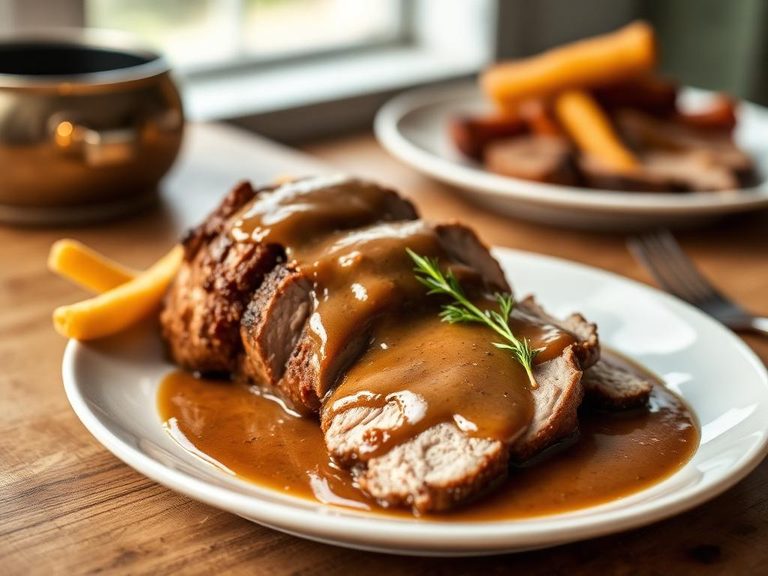
Pork, fresh, shoulder, (Boston butt), blade (steaks), separable lean and fat, cooked, braised
Whole food · Pork Products

Photo: Wikipedia
This is a well-marbled cut from the pork shoulder, specifically the blade portion, which becomes incredibly tender and succulent when braised low and slow. The cooking method transforms its connective tissue into rich gelatin, creating a melt-in-your-mouth texture with a deep, savory pork flavor. Nutritionally, it's a powerhouse of protein (25g per 100g) with a significant fat content (17.69g), making it a satisfying, energy-dense meal component.
Calorie split: 39% protein · 0% carbs · 61% fat
↓ Full nutrition💚 Why it's loved
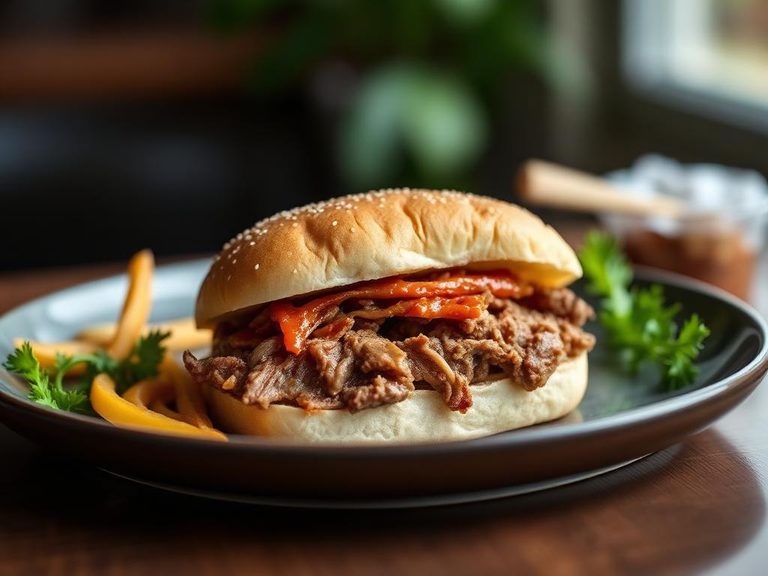
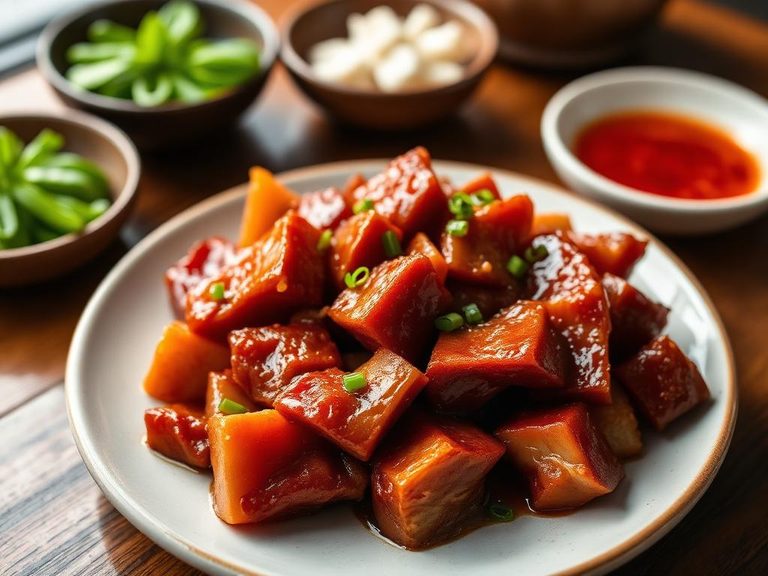
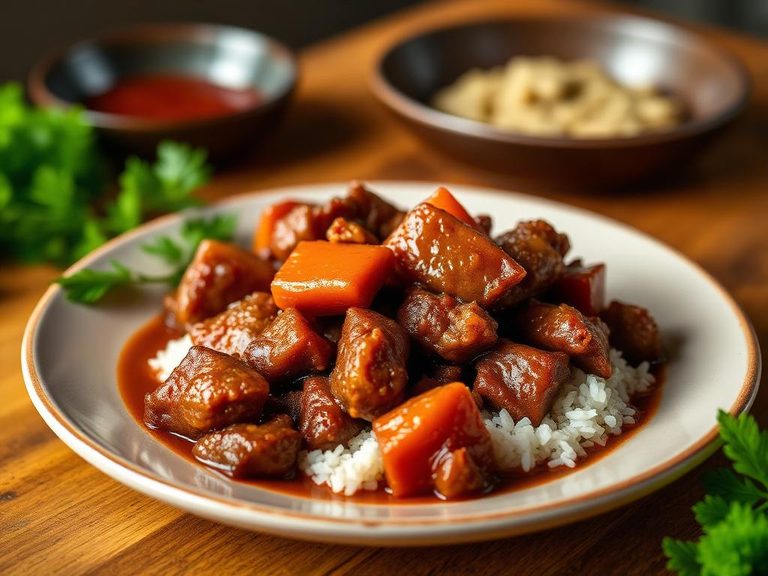
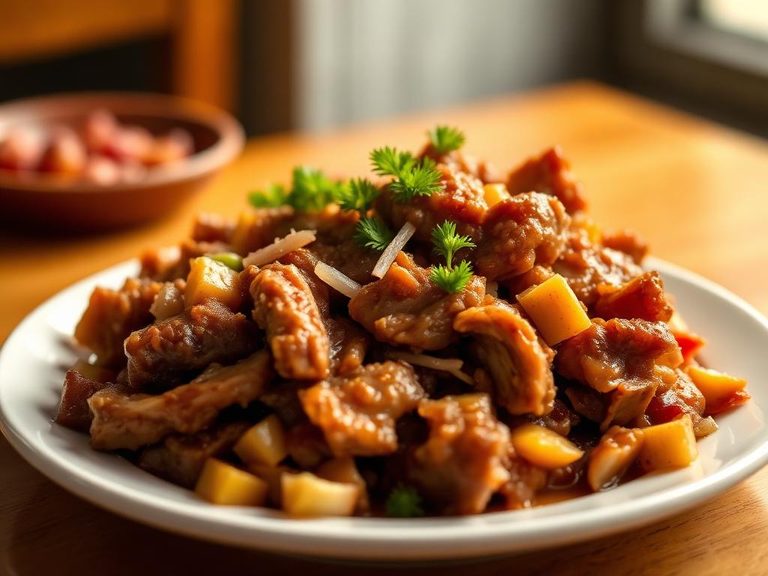
People adore it for its unparalleled ability to become fork-tender and infused with the flavors of its braising liquid. Its versatility makes it the star of comforting, hearty dishes across many cuisines, from American barbecue to Chinese red-cooked pork.
⚠️ Watch-outs & how to enjoy it better
The high fat content (nearly 18g per 100g) means it's calorie-dense, which may be a concern for those monitoring fat or calorie intake. To counteract this, practice portion control, skim excess fat from the braising liquid before serving, and pair it with fiber-rich vegetables like steamed greens or a crisp salad to balance the meal.
Key benefits
- Excellent source of complete protein for muscle maintenance.
- Provides B vitamins, especially thiamine (B1) and niacin (B3), for energy metabolism.
- Rich in minerals like zinc and selenium, supporting immune function.
- Contains iron, which is important for oxygen transport in the blood.
- The braising process renders fat, making it a flavorful, satisfying cut.
🍽️ Popular dishes

🌍 Where it's eaten
💡 Did you know?
The 'Boston butt' name is a historical misnomer; it actually comes from the shoulder, not the rear of the pig, and the term originated in colonial New England where this cut was packed into barrels called 'butts' for storage and shipping.
Full nutrition (USDA data · scales with serving)
| Water | 55.0 g |
| Energy | 267 kcal |
| Energy | 1116 kj |
| Protein | 25.1 g |
| Total lipid (fat) | 17.7 g |
| Ash | 0.82 g |
| Carbohydrate, by difference | 0.00 g |
| Fiber, total dietary | 0.00 g |
| Total Sugars | 0.00 g |
| Calcium, Ca | 26.0 mg |
| Iron, Fe | 1.8 mg |
| Magnesium, Mg | 23.0 mg |
| Phosphorus, P | 208 mg |
| Potassium, K | 305 mg |
| Sodium, Na | 58.0 mg |
| Zinc, Zn | 4.8 mg |
| Copper, Cu | 0.13 mg |
| Manganese, Mn | 0.01 mg |
| Selenium, Se | 42.4 ug |
| Vitamin C, total ascorbic acid | 0.00 mg |
| Thiamin | 0.50 mg |
| Riboflavin | 0.36 mg |
| Niacin | 3.9 mg |
| Pantothenic acid | 1.3 mg |
| Vitamin B-6 | 0.45 mg |
| Folate, total | 0.00 ug |
| Folic acid | 0.00 ug |
| Folate, food | 0.00 ug |
| Folate, DFE | 0.00 ug |
| Choline, total | 102 mg |
| Betaine | 3.4 mg |
| Vitamin B-12 | 0.93 ug |
| Vitamin B-12, added | 0.00 ug |
| Vitamin A, RAE | 2.0 ug |
| Retinol | 2.0 ug |
| Carotene, beta | 0.00 ug |
| Carotene, alpha | 0.00 ug |
| Cryptoxanthin, beta | 0.00 ug |
| Vitamin A, IU | 8.0 iu |
| Lycopene | 0.00 ug |
| Lutein + zeaxanthin | 0.00 ug |
| Vitamin E (alpha-tocopherol) | 0.12 mg |
| Vitamin E, added | 0.00 mg |
| Tocopherol, beta | 0.00 mg |
| Tocopherol, gamma | 0.01 mg |
| Tocopherol, delta | 0.00 mg |
| Tocotrienol, alpha | 0.00 mg |
| Tocotrienol, beta | 0.00 mg |
| Tocotrienol, gamma | 0.01 mg |
| Tocotrienol, delta | 0.00 mg |
| Vitamin D (D2 + D3), International Units | 47.0 iu |
| Vitamin D (D2 + D3) | 1.2 ug |
| Vitamin D3 (cholecalciferol) | 1.2 ug |
| Vitamin K (phylloquinone) | 0.00 ug |
| Vitamin K (Dihydrophylloquinone) | 0.00 ug |
| Alcohol, ethyl | 0.00 g |
| Caffeine | 0.00 mg |
| Theobromine | 0.00 mg |
Fat & fatty acid profile (per 100g)
| Fatty acids, total saturated | 6.6 g |
| SFA 4:0 | 0.00 g |
| SFA 6:0 | 0.00 g |
| SFA 8:0 | 0.00 g |
| SFA 10:0 | 0.02 g |
| SFA 12:0 | 0.01 g |
| SFA 14:0 | 0.22 g |
| SFA 15:0 | 0.01 g |
| SFA 16:0 | 4.0 g |
| SFA 17:0 | 0.06 g |
| SFA 18:0 | 2.2 g |
| SFA 20:0 | 0.03 g |
| SFA 22:0 | 0.00 g |
| Fatty acids, total monounsaturated | 8.0 g |
| MUFA 14:1 | 0.00 g |
| MUFA 15:1 | 0.00 g |
| MUFA 16:1 | 0.41 g |
| MUFA 17:1 | 0.01 g |
| MUFA 18:1 | 7.4 g |
| MUFA 18:1 c | 7.3 g |
| MUFA 20:1 | 0.13 g |
| MUFA 22:1 | 0.00 g |
| Fatty acids, total polyunsaturated | 2.1 g |
| PUFA 18:2 | 1.8 g |
| PUFA 18:2 n-6 c,c | 1.8 g |
| PUFA 18:3 | 0.08 g |
| PUFA 18:3 n-3 c,c,c (ALA) | 0.08 g |
| PUFA 18:3 n-6 c,c,c | 0.00 g |
| PUFA 18:4 | 0.00 g |
| PUFA 20:2 n-6 c,c | 0.07 g |
| PUFA 20:3 | 0.01 g |
| PUFA 20:4 | 0.10 g |
| PUFA 20:5 n-3 (EPA) | 0.00 g |
| PUFA 22:5 n-3 (DPA) | 0.00 g |
| PUFA 22:6 n-3 (DHA) | 0.00 g |
| Fatty acids, total trans | 0.15 g |
| Fatty acids, total trans-monoenoic | 0.10 g |
| TFA 18:1 t | 0.10 g |
| TFA 18:2 t,t | 0.06 g |
| Fatty acids, total trans-polyenoic | 0.06 g |
| Cholesterol | 98.0 mg |
Amino acid profile (per 100g)
| Tryptophan | 0.26 g |
| Threonine | 1.1 g |
| Isoleucine | 1.2 g |
| Leucine | 2.1 g |
| Lysine | 2.3 g |
| Methionine | 0.69 g |
| Cystine | 0.29 g |
| Phenylalanine | 1.1 g |
| Tyrosine | 0.95 g |
| Valine | 1.3 g |
| Arginine | 1.7 g |
| Histidine | 1.1 g |
| Alanine | 1.5 g |
| Aspartic acid | 2.5 g |
| Glutamic acid | 4.0 g |
| Glycine | 1.1 g |
| Proline | 1.0 g |
| Serine | 1.1 g |
| Hydroxyproline | 0.06 g |
FAQ
What's the difference between Boston butt and pork shoulder?
They are two different parts of the same primal shoulder cut. Boston butt is the upper portion (above the leg), which is more marbled and uniform, ideal for slow cooking. The lower portion is the picnic shoulder, which has more connective tissue and skin.
Is this cut the same as pork blade steak?
Yes, 'blade steak' refers to steaks cut from the Boston butt/shoulder region. They contain sections of the blade bone and surrounding muscle, perfect for braising or slow cooking to break down the tough fibers.
How can I make it less fatty?
After braising, let the cooking liquid cool and solidify in the refrigerator. The fat will form a hard layer on top that can be easily removed before reheating the meat in the defatted, flavorful sauce.
Nutrient density (calculated · NRF9.3)
Nutrient Rich Foods index: beneficial nutrients (protein, fiber, vitamins, minerals) minus saturated fat, added sugar & sodium, per 100 kcal.
NRF9.3 index — Fulgoni, Keast & Drewnowski, 2009. Computed from USDA nutrients.
Weight-loss friendliness (composite index)
Energy density 2.67 kcal/g · 38% calories from protein · 0.0 g fiber · 0.0 g sugar per 100 g.
Composite of energy density (Rolls et al., 1999), protein & fiber satiety, minus sugar. A calculated heuristic — ranks satiety-per-calorie, not a clinical measure.
Dietary load (calculated from USDA values)
Potential renal acid load. Positive = acid-forming, negative = alkaline-forming.
Sodium-to-potassium ratio: 0.19 (lower is better — aim for ≤ 1)
Sodium:potassium per WHO potassium guidance. Computed from USDA nutrients.