

Pork, fresh, composite of trimmed retail cuts (loin and shoulder blade), separable lean and fat, cooked
Whole food · Pork Products

Photo: Wikipedia
This is a versatile blend of cooked pork from the loin and shoulder, offering a balanced mix of tender lean meat and flavorful fat. It has a savory, rich taste with a satisfying, slightly chewy texture that holds up well in various dishes. Nutritionally, it's a powerhouse of protein with a moderate calorie count, providing essential amino acids without any carbohydrates.
Calorie split: 46% protein · 0% carbs · 54% fat
↓ Full nutrition💚 Why it's loved
People love it for its deep, savory umami flavor and the satisfying contrast between tender lean sections and melt-in-your-mouth fat. Its versatility makes it a staple in countless comfort foods, from hearty stews to quick stir-fries, embodying a sense of home cooking across many cultures.
⚠️ Watch-outs & how to enjoy it better
The fat content, while flavorful, means it's calorie-dense, which those monitoring weight or fat intake should note. To counteract, practice portion control and pair it with large portions of non-starchy vegetables or fibrous sides to increase fullness. If the cut is from a processed or cured preparation, sodium can be high; look for fresh versions or rinse before cooking.
Key benefits
- Excellent source of high-quality protein for muscle maintenance
- Provides B vitamins like thiamine, niacin, and B12 for energy metabolism
- Rich in minerals such as zinc, selenium, and phosphorus
- Contains heme iron, which is highly bioavailable
- Offers a good balance of lean and fat for satiety
🍽️ Popular dishes
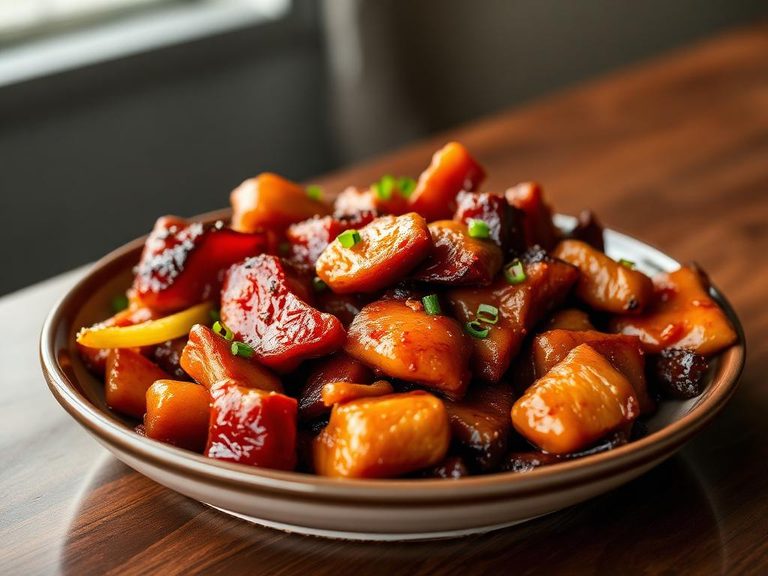
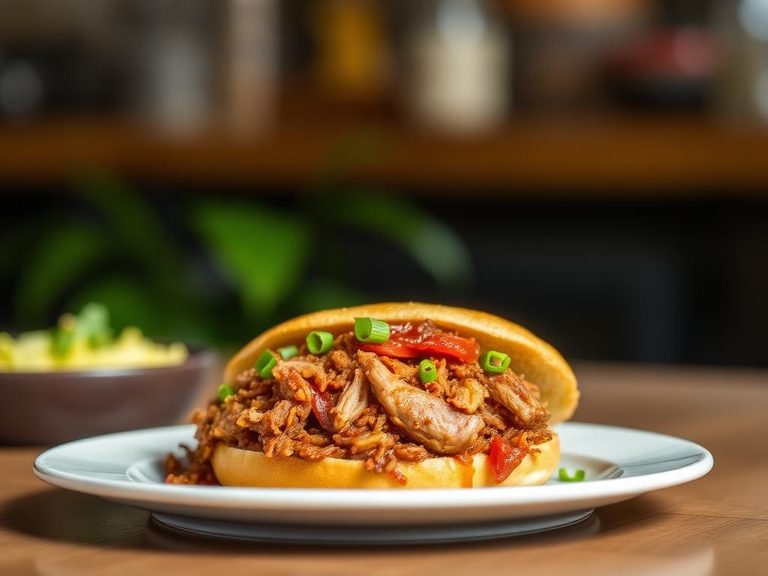
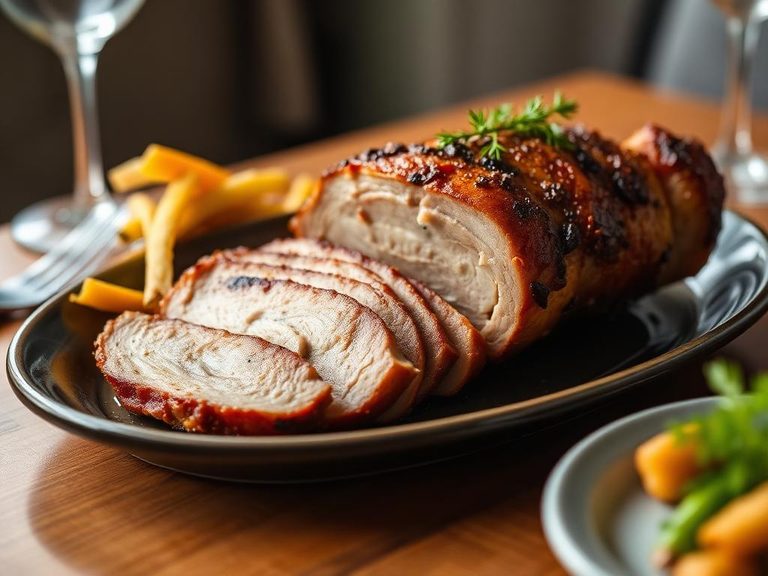
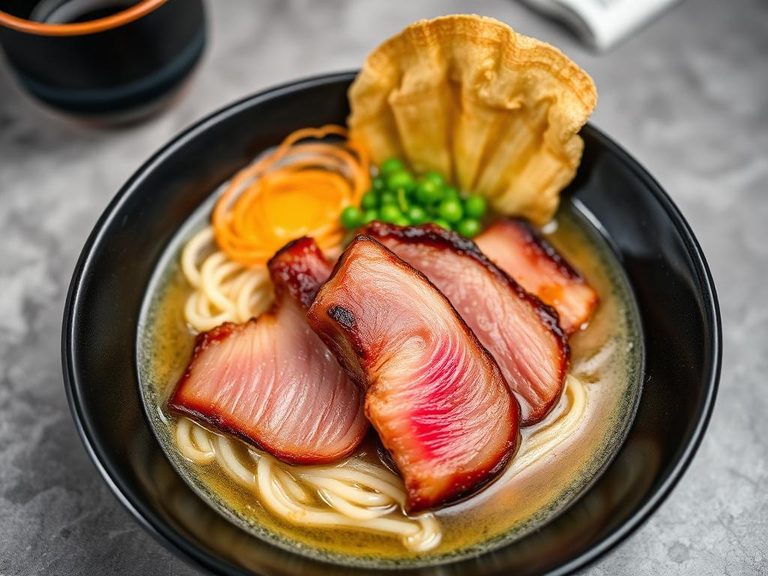
🌍 Where it's eaten
💡 Did you know?
Pork loin and shoulder blade come from very different parts of the pig—the loin is a lean, tender muscle along the back, while the shoulder (or 'picnic') is a hardworking, connective tissue-rich cut—blending them creates a composite with ideal texture and flavor for many slow-cooked dishes.
Full nutrition (USDA data · scales with serving)
| Water | 59.4 g |
| Energy | 235 kcal |
| Energy | 981 kj |
| Protein | 26.1 g |
| Total lipid (fat) | 13.7 g |
| Ash | 1.1 g |
| Carbohydrate, by difference | 0.00 g |
| Fiber, total dietary | 0.00 g |
| Total Sugars | 0.00 g |
| Calcium, Ca | 20.0 mg |
| Iron, Fe | 0.93 mg |
| Magnesium, Mg | 24.0 mg |
| Phosphorus, P | 222 mg |
| Potassium, K | 345 mg |
| Sodium, Na | 55.0 mg |
| Zinc, Zn | 2.6 mg |
| Copper, Cu | 0.07 mg |
| Manganese, Mn | 0.01 mg |
| Selenium, Se | 41.8 ug |
| Vitamin C, total ascorbic acid | 0.10 mg |
| Thiamin | 0.68 mg |
| Riboflavin | 0.29 mg |
| Niacin | 6.4 mg |
| Pantothenic acid | 0.73 mg |
| Vitamin B-6 | 0.56 mg |
| Folate, total | 2.0 ug |
| Folic acid | 0.00 ug |
| Folate, food | 2.0 ug |
| Folate, DFE | 2.0 ug |
| Choline, total | 63.4 mg |
| Betaine | 2.5 mg |
| Vitamin B-12 | 0.68 ug |
| Vitamin B-12, added | 0.00 ug |
| Vitamin A, RAE | 2.0 ug |
| Retinol | 2.0 ug |
| Carotene, beta | 0.00 ug |
| Carotene, alpha | 0.00 ug |
| Cryptoxanthin, beta | 0.00 ug |
| Vitamin A, IU | 7.0 iu |
| Lycopene | 0.00 ug |
| Lutein + zeaxanthin | 0.00 ug |
| Vitamin E (alpha-tocopherol) | 0.12 mg |
| Vitamin E, added | 0.00 mg |
| Tocopherol, beta | 0.00 mg |
| Tocopherol, gamma | 0.01 mg |
| Tocopherol, delta | 0.00 mg |
| Tocotrienol, alpha | 0.00 mg |
| Tocotrienol, beta | 0.00 mg |
| Tocotrienol, gamma | 0.01 mg |
| Tocotrienol, delta | 0.00 mg |
| Vitamin D (D2 + D3), International Units | 38.0 iu |
| Vitamin D (D2 + D3) | 0.90 ug |
| Vitamin D3 (cholecalciferol) | 0.90 ug |
| Vitamin K (phylloquinone) | 0.00 ug |
| Vitamin K (Dihydrophylloquinone) | 0.00 ug |
| Alcohol, ethyl | 0.00 g |
| Caffeine | 0.00 mg |
| Theobromine | 0.00 mg |
Fat & fatty acid profile (per 100g)
| Fatty acids, total saturated | 4.7 g |
| SFA 4:0 | 0.00 g |
| SFA 6:0 | 0.00 g |
| SFA 8:0 | 0.00 g |
| SFA 10:0 | 0.01 g |
| SFA 12:0 | 0.01 g |
| SFA 14:0 | 0.17 g |
| SFA 15:0 | 0.00 g |
| SFA 16:0 | 2.9 g |
| SFA 17:0 | 0.02 g |
| SFA 18:0 | 1.5 g |
| SFA 20:0 | 0.01 g |
| SFA 22:0 | 0.00 g |
| Fatty acids, total monounsaturated | 5.8 g |
| MUFA 14:1 | 0.00 g |
| MUFA 15:1 | 0.00 g |
| MUFA 16:1 | 0.35 g |
| MUFA 17:1 | 0.01 g |
| MUFA 18:1 | 5.3 g |
| MUFA 18:1 c | 2.3 g |
| MUFA 20:1 | 0.10 g |
| MUFA 22:1 | 0.00 g |
| Fatty acids, total polyunsaturated | 1.4 g |
| PUFA 18:2 | 1.2 g |
| PUFA 18:2 n-6 c,c | 0.65 g |
| PUFA 18:3 | 0.05 g |
| PUFA 18:3 n-3 c,c,c (ALA) | 0.03 g |
| PUFA 18:3 n-6 c,c,c | 0.00 g |
| PUFA 18:4 | 0.00 g |
| PUFA 20:2 n-6 c,c | 0.03 g |
| PUFA 20:3 | 0.00 g |
| PUFA 20:4 | 0.07 g |
| PUFA 20:5 n-3 (EPA) | 0.00 g |
| PUFA 22:5 n-3 (DPA) | 0.00 g |
| PUFA 22:6 n-3 (DHA) | 0.00 g |
| Fatty acids, total trans | 0.06 g |
| Fatty acids, total trans-monoenoic | 0.04 g |
| TFA 18:1 t | 0.04 g |
| TFA 18:2 t,t | 0.02 g |
| Fatty acids, total trans-polyenoic | 0.02 g |
| Cholesterol | 83.0 mg |
Amino acid profile (per 100g)
| Tryptophan | 0.30 g |
| Threonine | 1.2 g |
| Isoleucine | 1.3 g |
| Leucine | 2.2 g |
| Lysine | 2.4 g |
| Methionine | 0.71 g |
| Cystine | 0.32 g |
| Phenylalanine | 1.1 g |
| Tyrosine | 0.95 g |
| Valine | 1.4 g |
| Arginine | 1.7 g |
| Histidine | 1.1 g |
| Alanine | 1.5 g |
| Aspartic acid | 2.5 g |
| Glutamic acid | 4.1 g |
| Glycine | 1.2 g |
| Proline | 1.1 g |
| Serine | 1.1 g |
| Hydroxyproline | 0.04 g |
FAQ
Is this the same as 'pork shoulder' or 'pork loin'?
No, it's a composite blend of both cuts, cooked together. This means it has a mix of the loin's leanness and the shoulder's marbling and collagen, resulting in a balanced texture and flavor profile different from using either cut alone.
How should I store and reheat leftovers?
Store in an airtight container in the refrigerator for up to 3-4 days. For best results when reheating, add a splash of broth or water and warm gently on the stovetop or in the microwave to prevent it from drying out, as the lean portions can toughen.
Can I use this in place of ground pork in recipes?
It's not a direct substitute due to its texture. This is cooked, sliced, or chopped meat, while ground pork is raw and minced. You could dice it finely for some applications like fried rice or dumpling fillings, but the cooking time and final texture will differ.
Nutrient density (calculated · NRF9.3)
Nutrient Rich Foods index: beneficial nutrients (protein, fiber, vitamins, minerals) minus saturated fat, added sugar & sodium, per 100 kcal.
NRF9.3 index — Fulgoni, Keast & Drewnowski, 2009. Computed from USDA nutrients.
Weight-loss friendliness (composite index)
Energy density 2.35 kcal/g · 44% calories from protein · 0.0 g fiber · 0.0 g sugar per 100 g.
Composite of energy density (Rolls et al., 1999), protein & fiber satiety, minus sugar. A calculated heuristic — ranks satiety-per-calorie, not a clinical measure.
Dietary load (calculated from USDA values)
Potential renal acid load. Positive = acid-forming, negative = alkaline-forming.
Sodium-to-potassium ratio: 0.16 (lower is better — aim for ≤ 1)
Sodium:potassium per WHO potassium guidance. Computed from USDA nutrients.