

Pork, cured, ham with natural juices, rump, bone-in, separable lean and fat, heated, roasted
Whole food · Pork Products

Photo: Wikipedia
This is a succulent cut of roasted, cured ham, prized for its deep, savory flavor and tender, juicy texture. With an impressive 22.47g of protein per 100g and minimal carbs, it's a powerhouse for muscle maintenance. The roasting process caramelizes the natural juices, creating a deliciously rich, salty-sweet crust.
Calorie split: 51% protein · 1% carbs · 48% fat
↓ Full nutrition💚 Why it's loved
People love it for its classic, comforting flavor that's both savory and subtly sweet, making it a centerpiece for holiday feasts and Sunday dinners. Its versatility allows it to be served hot, cold, or incorporated into countless dishes, from sandwiches to salads.
⚠️ Watch-outs & how to enjoy it better
The primary concern is its high sodium content from the curing process, which can be an issue for those monitoring blood pressure. To mitigate this, pair it with potassium-rich vegetables like asparagus or spinach and control portion sizes to about 3-4 ounces. The fat content, while moderate, means it's best enjoyed as part of a balanced meal rather than a daily staple.
Key benefits
- Excellent source of high-quality protein (22.47g per 100g).
- Very low in carbohydrates and sugar, suitable for low-carb diets.
- Provides essential B vitamins like thiamine, niacin, and B12.
- Rich in minerals such as phosphorus, selenium, and zinc.
- The bone-in cut contributes to a richer, more flavorful broth if used.
🍽️ Popular dishes
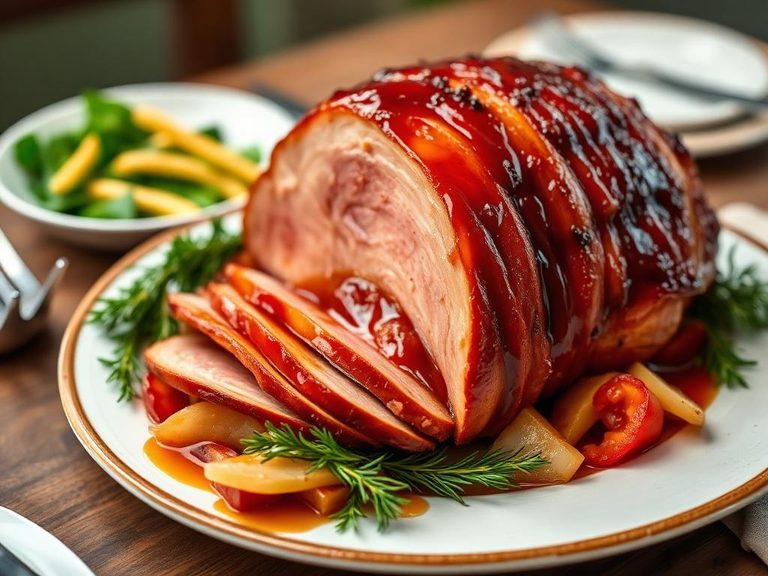
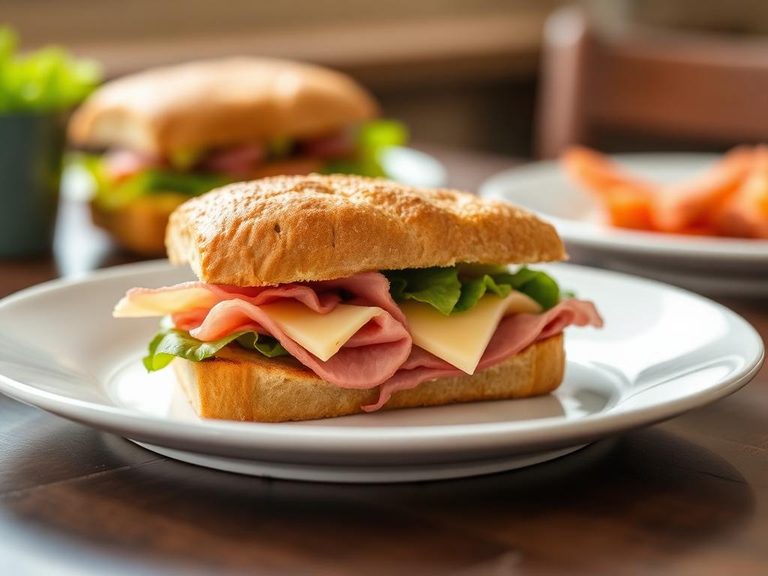


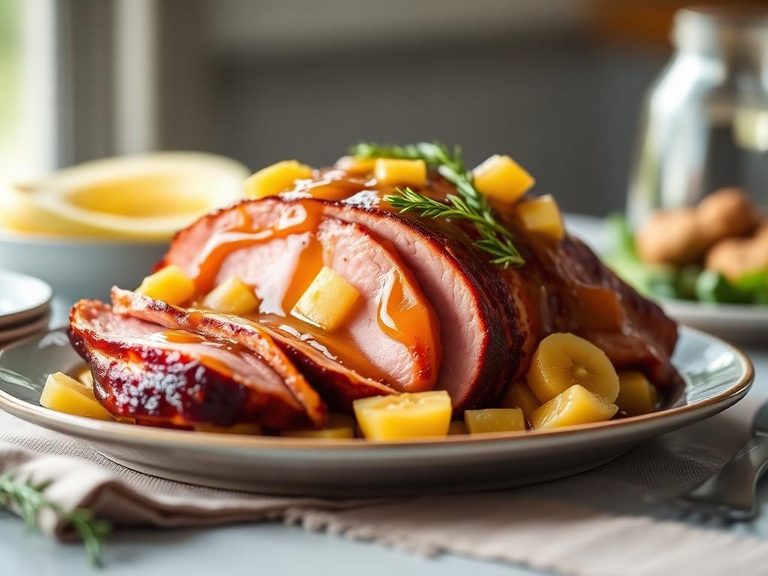
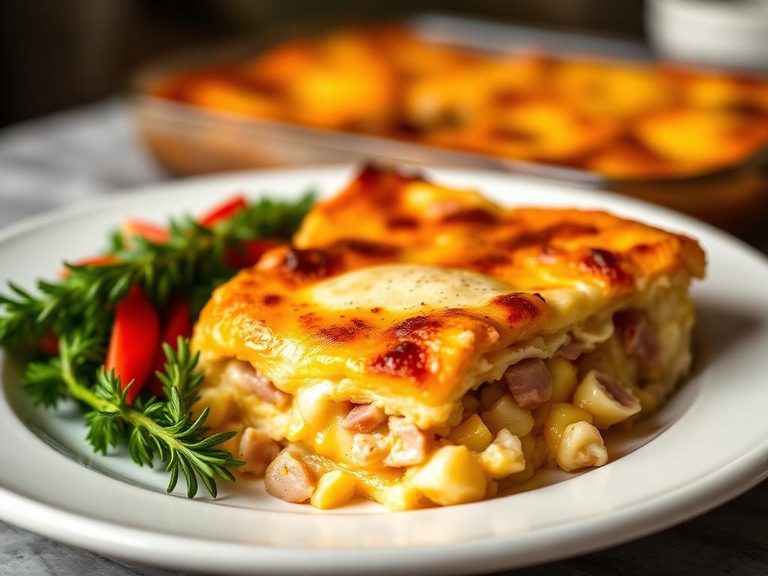
🌍 Where it's eaten
💡 Did you know?
The tradition of curing ham with salt and smoke dates back to ancient times, but the specific 'natural juices' designation often refers to the ham being cooked in its own moisture without added water, a method that intensifies its flavor and is a hallmark of many premium, slow-roasted hams.
Full nutrition (USDA data · scales with serving)
| Water | 64.4 g |
| Energy | 177 kcal |
| Energy | 740 kj |
| Protein | 22.5 g |
| Total lipid (fat) | 9.4 g |
| Ash | 3.2 g |
| Carbohydrate, by difference | 0.60 g |
| Fiber, total dietary | 0.00 g |
| Total Sugars | 0.45 g |
| Sucrose | 0.06 g |
| Glucose | 0.24 g |
| Fructose | 0.15 g |
| Lactose | 0.00 g |
| Maltose | 0.00 g |
| Galactose | 0.00 g |
| Calcium, Ca | 10.0 mg |
| Iron, Fe | 0.99 mg |
| Magnesium, Mg | 21.0 mg |
| Phosphorus, P | 260 mg |
| Potassium, K | 477 mg |
| Sodium, Na | 841 mg |
| Zinc, Zn | 2.4 mg |
| Copper, Cu | 0.12 mg |
| Manganese, Mn | 0.02 mg |
| Selenium, Se | 46.2 ug |
| Vitamin C, total ascorbic acid | 0.00 mg |
| Thiamin | 0.33 mg |
| Riboflavin | 0.22 mg |
| Niacin | 7.1 mg |
| Pantothenic acid | 0.48 mg |
| Vitamin B-6 | 0.36 mg |
| Folate, total | 1.0 ug |
| Folic acid | 0.00 ug |
| Folate, food | 1.0 ug |
| Folate, DFE | 1.0 ug |
| Choline, total | 98.6 mg |
| Betaine | 2.7 mg |
| Vitamin B-12 | 0.58 ug |
| Vitamin B-12, added | 0.00 ug |
| Vitamin A, RAE | 11.0 ug |
| Retinol | 11.0 ug |
| Carotene, beta | 0.00 ug |
| Carotene, alpha | 0.00 ug |
| Cryptoxanthin, beta | 0.00 ug |
| Vitamin A, IU | 38.0 iu |
| Lycopene | 0.00 ug |
| Lutein + zeaxanthin | 0.00 ug |
| Vitamin E (alpha-tocopherol) | 0.27 mg |
| Vitamin E, added | 0.00 mg |
| Tocopherol, beta | 0.00 mg |
| Tocopherol, gamma | 0.05 mg |
| Tocopherol, delta | 0.00 mg |
| Tocotrienol, alpha | 0.01 mg |
| Tocotrienol, beta | 0.00 mg |
| Tocotrienol, gamma | 0.04 mg |
| Tocotrienol, delta | 0.00 mg |
| Vitamin K (phylloquinone) | 0.00 ug |
| Vitamin K (Dihydrophylloquinone) | 0.00 ug |
| Vitamin K (Menaquinone-4) | 8.6 ug |
| Alcohol, ethyl | 0.00 g |
| Caffeine | 0.00 mg |
| Theobromine | 0.00 mg |
Fat & fatty acid profile (per 100g)
| Fatty acids, total saturated | 3.1 g |
| SFA 4:0 | 0.00 g |
| SFA 6:0 | 0.00 g |
| SFA 8:0 | 0.00 g |
| SFA 10:0 | 0.01 g |
| SFA 12:0 | 0.01 g |
| SFA 14:0 | 0.12 g |
| SFA 15:0 | 0.00 g |
| SFA 16:0 | 2.0 g |
| SFA 17:0 | 0.03 g |
| SFA 18:0 | 0.93 g |
| SFA 20:0 | 0.01 g |
| SFA 22:0 | 0.02 g |
| Fatty acids, total monounsaturated | 4.4 g |
| MUFA 14:1 | 0.00 g |
| MUFA 15:1 | 0.00 g |
| MUFA 16:1 | 0.25 g |
| MUFA 17:1 | 0.00 g |
| MUFA 18:1 | 4.0 g |
| MUFA 20:1 | 0.07 g |
| MUFA 22:1 | 0.00 g |
| Fatty acids, total polyunsaturated | 1.3 g |
| PUFA 18:2 | 1.2 g |
| PUFA 18:3 | 0.05 g |
| PUFA 18:4 | 0.00 g |
| PUFA 20:2 n-6 c,c | 0.04 g |
| PUFA 20:3 | 0.00 g |
| PUFA 20:4 | 0.09 g |
| PUFA 20:5 n-3 (EPA) | 0.00 g |
| PUFA 22:5 n-3 (DPA) | 0.00 g |
| PUFA 22:6 n-3 (DHA) | 0.00 g |
| Fatty acids, total trans | 0.07 g |
| Cholesterol | 72.0 mg |
Amino acid profile (per 100g)
| Tryptophan | 0.21 g |
| Threonine | 1.0 g |
| Isoleucine | 1.0 g |
| Leucine | 1.8 g |
| Lysine | 1.9 g |
| Methionine | 0.53 g |
| Cystine | 0.25 g |
| Phenylalanine | 0.90 g |
| Tyrosine | 0.72 g |
| Valine | 1.1 g |
| Arginine | 1.4 g |
| Histidine | 0.98 g |
| Alanine | 1.3 g |
| Aspartic acid | 2.0 g |
| Glutamic acid | 3.2 g |
| Glycine | 1.2 g |
| Proline | 0.97 g |
| Serine | 0.88 g |
| Hydroxyproline | 0.15 g |
FAQ
Is this ham gluten-free?
Most cured hams are naturally gluten-free, but it's crucial to check the label. Some curing agents or glazes may contain gluten-based additives or thickeners.
How should I store leftover roasted ham?
Store it in an airtight container in the refrigerator for up to 3-4 days. For longer storage, wrap it tightly in plastic wrap and foil and freeze for up to 1-2 months.
What's the best way to reheat it without drying it out?
Reheat slices in a skillet with a splash of water or broth, covered, over medium-low heat. For larger pieces, bake in a covered dish at 325°F (163°C) with a bit of apple juice or broth to keep it moist.
Nutrient density (calculated · NRF9.3)
Nutrient Rich Foods index: beneficial nutrients (protein, fiber, vitamins, minerals) minus saturated fat, added sugar & sodium, per 100 kcal.
NRF9.3 index — Fulgoni, Keast & Drewnowski, 2009. Computed from USDA nutrients.
Weight-loss friendliness (composite index)
Energy density 1.77 kcal/g · 51% calories from protein · 0.0 g fiber · 0.5 g sugar per 100 g.
Composite of energy density (Rolls et al., 1999), protein & fiber satiety, minus sugar. A calculated heuristic — ranks satiety-per-calorie, not a clinical measure.
Dietary load (calculated from USDA values)
Potential renal acid load. Positive = acid-forming, negative = alkaline-forming.
Sodium-to-potassium ratio: 1.76 (lower is better — aim for ≤ 1)
Sodium:potassium per WHO potassium guidance. Computed from USDA nutrients.