

Pork, cured, ham -- water added, slice, bone-in, separable lean and fat, unheated
Whole food · Pork Products
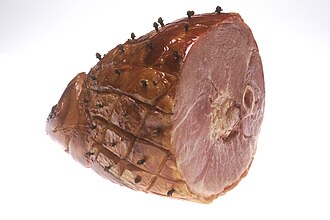
Photo: Wikipedia
This is a classic, water-added cured ham, typically sold pre-sliced and bone-in for convenience and flavor. It offers a tender, juicy texture with a balanced savory-salty taste and a moderate fat marbling that keeps it moist. Nutritionally, it's a solid source of lean protein with a relatively low carbohydrate content.
Calorie split: 38% protein · 3% carbs · 59% fat
↓ Full nutrition💚 Why it's loved
People adore it for its reliable, savory saltiness and tender bite that requires no cooking, making it a staple for quick sandwiches, salads, and charcuterie boards. Its familiar, comforting flavor is deeply embedded in many culinary traditions, from American delis to European breakfasts.
⚠️ Watch-outs & how to enjoy it better
The primary concern is its high sodium content from the curing process, which can be problematic for those monitoring blood pressure or fluid retention. It may also contain added sugars and phosphates. To counteract this, pair it with potassium-rich foods like leafy greens or avocado, rinse slices briefly under water if concerned, and practice strict portion control.
Key benefits
- High-quality protein source for muscle maintenance
- Low in carbohydrates, suitable for low-carb diets
- Provides essential B vitamins like thiamine and niacin
- Convenient, ready-to-eat protein option
- Contains minerals like zinc and phosphorus
🍽️ Popular dishes

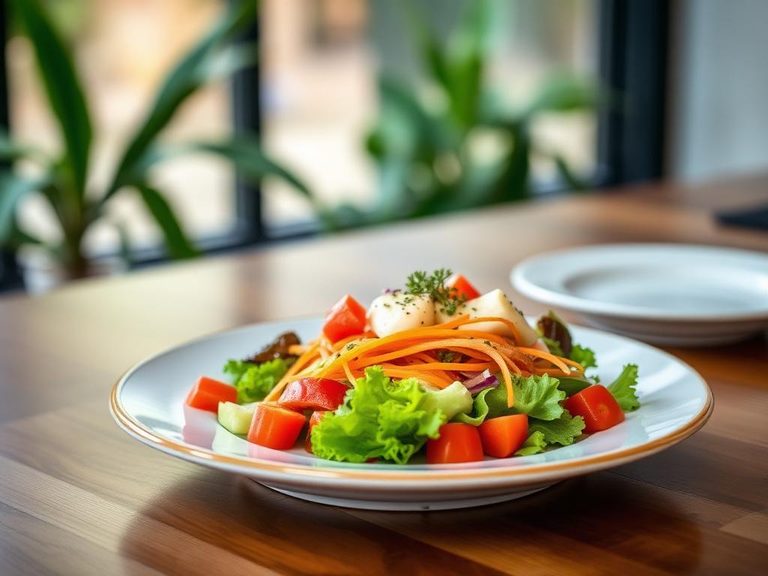
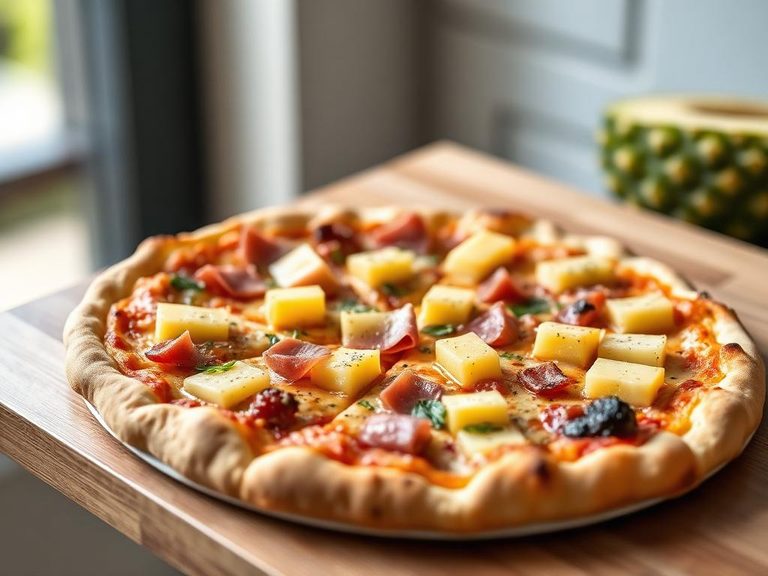

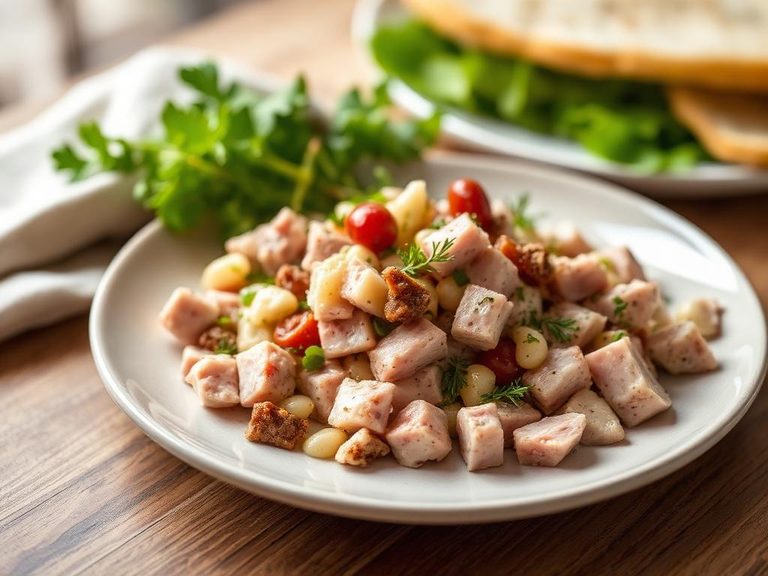

🌍 Where it's eaten
💡 Did you know?
The 'water added' label often indicates a specific USDA category where water is injected or tumbled into the ham to increase yield and juiciness, a common practice in modern commercial ham production.
Full nutrition (USDA data · scales with serving)
| Water | 69.9 g |
| Energy | 164 kcal |
| Energy | 687 kj |
| Protein | 15.7 g |
| Total lipid (fat) | 10.8 g |
| Ash | 3.0 g |
| Carbohydrate, by difference | 1.1 g |
| Fiber, total dietary | 0.00 g |
| Total Sugars | 1.1 g |
| Sucrose | 0.20 g |
| Glucose | 0.87 g |
| Fructose | 0.04 g |
| Lactose | 0.00 g |
| Maltose | 0.00 g |
| Galactose | 0.00 g |
| Calcium, Ca | 8.0 mg |
| Iron, Fe | 0.98 mg |
| Magnesium, Mg | 16.0 mg |
| Phosphorus, P | 220 mg |
| Potassium, K | 213 mg |
| Sodium, Na | 1011 mg |
| Zinc, Zn | 1.7 mg |
| Copper, Cu | 0.18 mg |
| Manganese, Mn | 0.02 mg |
| Selenium, Se | 32.0 ug |
| Vitamin C, total ascorbic acid | 0.00 mg |
| Thiamin | 0.35 mg |
| Riboflavin | 0.18 mg |
| Niacin | 4.4 mg |
| Pantothenic acid | 0.41 mg |
| Vitamin B-6 | 0.28 mg |
| Folate, total | 1.0 ug |
| Folic acid | 0.00 ug |
| Folate, food | 1.0 ug |
| Folate, DFE | 1.0 ug |
| Choline, total | 63.2 mg |
| Betaine | 3.9 mg |
| Vitamin B-12 | 0.38 ug |
| Vitamin B-12, added | 0.00 ug |
| Vitamin A, RAE | 9.0 ug |
| Retinol | 9.0 ug |
| Carotene, beta | 0.00 ug |
| Carotene, alpha | 0.00 ug |
| Cryptoxanthin, beta | 0.00 ug |
| Vitamin A, IU | 31.0 iu |
| Lycopene | 0.00 ug |
| Lutein + zeaxanthin | 0.00 ug |
| Vitamin E (alpha-tocopherol) | 0.29 mg |
| Vitamin E, added | 0.00 mg |
| Tocopherol, beta | 0.01 mg |
| Tocopherol, gamma | 0.06 mg |
| Tocopherol, delta | 0.00 mg |
| Tocotrienol, alpha | 0.03 mg |
| Tocotrienol, beta | 0.00 mg |
| Tocotrienol, gamma | 0.02 mg |
| Tocotrienol, delta | 0.00 mg |
| Vitamin K (phylloquinone) | 0.00 ug |
| Vitamin K (Dihydrophylloquinone) | 0.00 ug |
| Vitamin K (Menaquinone-4) | 0.00 ug |
| Alcohol, ethyl | 0.00 g |
| Caffeine | 0.00 mg |
| Theobromine | 0.00 mg |
Fat & fatty acid profile (per 100g)
| Fatty acids, total saturated | 3.6 g |
| SFA 4:0 | 0.00 g |
| SFA 6:0 | 0.00 g |
| SFA 8:0 | 0.00 g |
| SFA 10:0 | 0.00 g |
| SFA 12:0 | 0.00 g |
| SFA 14:0 | 0.13 g |
| SFA 15:0 | 0.00 g |
| SFA 16:0 | 2.3 g |
| SFA 17:0 | 0.03 g |
| SFA 18:0 | 1.1 g |
| SFA 20:0 | 0.02 g |
| SFA 22:0 | 0.01 g |
| Fatty acids, total monounsaturated | 4.9 g |
| MUFA 14:1 | 0.00 g |
| MUFA 15:1 | 0.00 g |
| MUFA 16:1 | 0.24 g |
| MUFA 17:1 | 0.00 g |
| MUFA 18:1 | 4.6 g |
| MUFA 20:1 | 0.08 g |
| MUFA 22:1 | 0.00 g |
| Fatty acids, total polyunsaturated | 1.5 g |
| PUFA 18:2 | 1.3 g |
| PUFA 18:3 | 0.06 g |
| PUFA 18:4 | 0.00 g |
| PUFA 20:2 n-6 c,c | 0.06 g |
| PUFA 20:3 | 0.00 g |
| PUFA 20:4 | 0.05 g |
| PUFA 20:5 n-3 (EPA) | 0.00 g |
| PUFA 22:5 n-3 (DPA) | 0.00 g |
| PUFA 22:6 n-3 (DHA) | 0.00 g |
| Fatty acids, total trans | 0.08 g |
| Cholesterol | 55.0 mg |
Amino acid profile (per 100g)
| Tryptophan | 0.14 g |
| Threonine | 0.70 g |
| Isoleucine | 0.70 g |
| Leucine | 1.3 g |
| Lysine | 1.3 g |
| Methionine | 0.37 g |
| Cystine | 0.18 g |
| Phenylalanine | 0.63 g |
| Tyrosine | 0.50 g |
| Valine | 0.79 g |
| Arginine | 1.0 g |
| Histidine | 0.69 g |
| Alanine | 0.93 g |
| Aspartic acid | 1.4 g |
| Glutamic acid | 2.2 g |
| Glycine | 0.85 g |
| Proline | 0.68 g |
| Serine | 0.61 g |
| Hydroxyproline | 0.12 g |
FAQ
What does 'bone-in' mean for this sliced ham?
It means the ham was sliced from a larger cut that still contained the bone. The bone adds flavor during the initial curing/cooking process, and slices may have a small, tender piece of meat near where the bone was.
Is this ham considered processed meat?
Yes. As a cured product, it falls under the category of processed meats. It's best enjoyed as part of a varied diet, not as a primary protein source at every meal.
How should I store the leftover slices?
Keep them tightly sealed in their original packaging or an airtight container in the refrigerator for up to 5-7 days. For longer storage, freeze individual slices separated by parchment paper for up to 1-2 months.
Nutrient density (calculated · NRF9.3)
Nutrient Rich Foods index: beneficial nutrients (protein, fiber, vitamins, minerals) minus saturated fat, added sugar & sodium, per 100 kcal.
NRF9.3 index — Fulgoni, Keast & Drewnowski, 2009. Computed from USDA nutrients.
Weight-loss friendliness (composite index)
Energy density 1.64 kcal/g · 38% calories from protein · 0.0 g fiber · 1.1 g sugar per 100 g.
Composite of energy density (Rolls et al., 1999), protein & fiber satiety, minus sugar. A calculated heuristic — ranks satiety-per-calorie, not a clinical measure.
Dietary load (calculated from USDA values)
Potential renal acid load. Positive = acid-forming, negative = alkaline-forming.
Sodium-to-potassium ratio: 4.75 (lower is better — aim for ≤ 1)
Sodium:potassium per WHO potassium guidance. Computed from USDA nutrients.