

Pork, cured, bacon, cooked, microwaved
Whole food · Pork Products
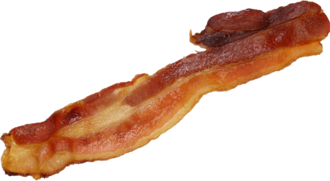
Photo: Wikipedia
This is bacon that has been fully cooked in a microwave, resulting in a uniquely tender yet slightly chewy texture with a concentrated, salty-smoky flavor. Nutritionally, it is a dense source of protein and fat, with virtually no carbohydrates, making it a staple for low-carb and ketogenic diets.
Calorie split: 34% protein · 0% carbs · 66% fat
↓ Full nutrition💚 Why it's loved
People love it for its intense, savory umami punch and incredible convenience—a hot, crispy side or ingredient ready in minutes. It's a cultural icon of quick comfort food, from classic breakfasts to a secret weapon for elevating salads and pastas.
⚠️ Watch-outs & how to enjoy it better
The primary concerns are its very high sodium content and saturated fat, which can be problematic for heart health and blood pressure. To counteract, always pair it with potassium-rich foods like leafy greens or avocado, and practice strict portion control, using it as a flavorful accent rather than the main protein.
Key benefits
- Extremely high in protein per calorie.
- Virtually zero carbohydrates or sugars.
- Provides essential B vitamins like B1 (thiamin) and B12.
- A source of minerals such as selenium and phosphorus.
- Offers a quick, savory protein boost with minimal prep.
🍽️ Popular dishes
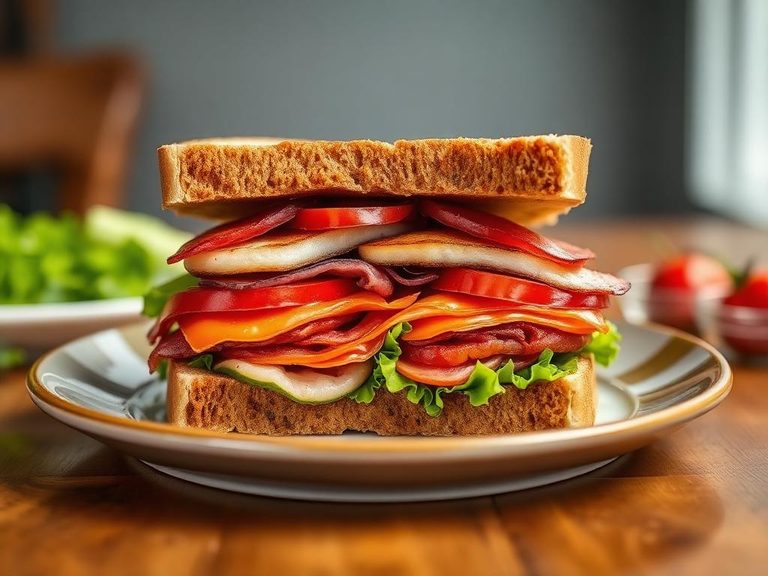

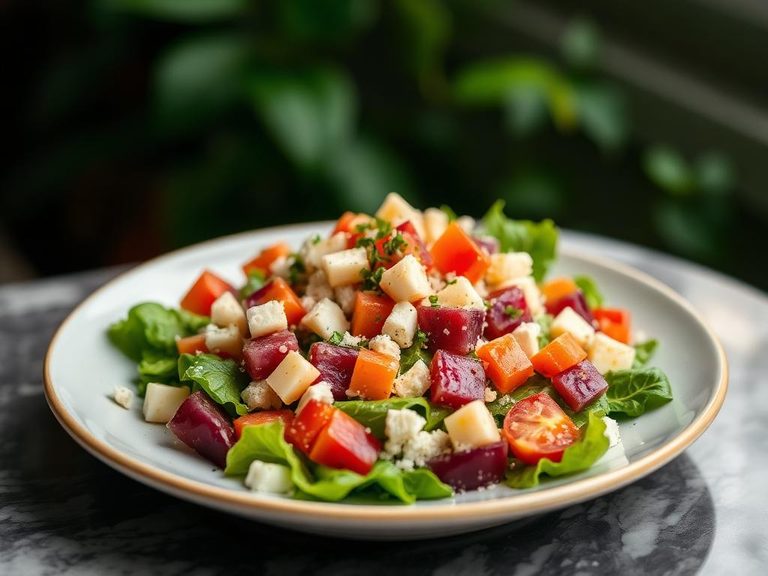
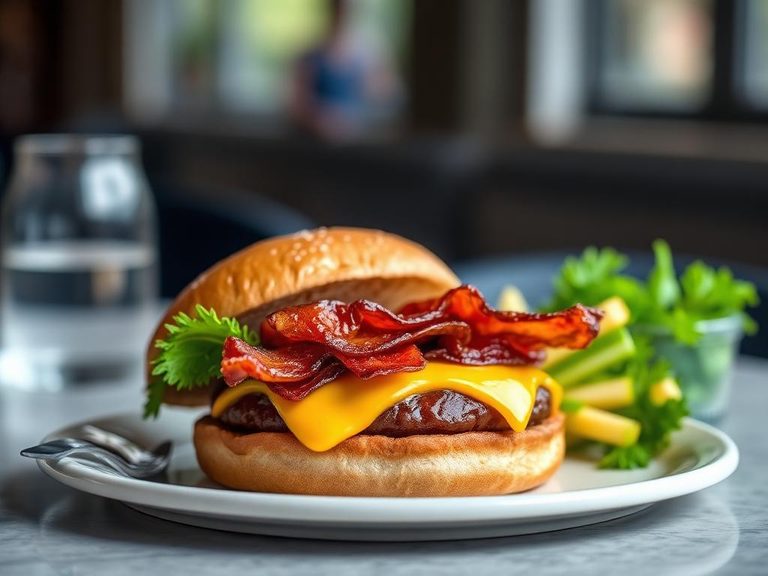

🌍 Where it's eaten
💡 Did you know?
The specific cut and curing process for bacon means it can be safely eaten 'raw' (uncured) or undercooked, as the curing salts and smoking act as preservatives, though microwaving ensures a crispier texture and kills any potential pathogens.
Full nutrition (USDA data · scales with serving)
| Water | 20.4 g |
| Energy | 476 kcal |
| Energy | 1992 kj |
| Protein | 39.0 g |
| Total lipid (fat) | 34.1 g |
| Ash | 6.0 g |
| Carbohydrate, by difference | 0.48 g |
| Fiber, total dietary | 0.00 g |
| Total Sugars | 0.00 g |
| Calcium, Ca | 13.0 mg |
| Iron, Fe | 1.1 mg |
| Magnesium, Mg | 34.0 mg |
| Phosphorus, P | 389 mg |
| Potassium, K | 525 mg |
| Sodium, Na | 1783 mg |
| Zinc, Zn | 3.5 mg |
| Copper, Cu | 0.12 mg |
| Manganese, Mn | 0.02 mg |
| Selenium, Se | 65.1 ug |
| Vitamin C, total ascorbic acid | 0.00 mg |
| Thiamin | 0.55 mg |
| Riboflavin | 0.26 mg |
| Niacin | 10.7 mg |
| Pantothenic acid | 1.2 mg |
| Vitamin B-6 | 0.51 mg |
| Folic acid | 0.00 ug |
| Choline, total | 107 mg |
| Betaine | 8.4 mg |
| Vitamin B-12 | 1.0 ug |
| Vitamin B-12, added | 0.00 ug |
| Carotene, beta | 0.00 ug |
| Carotene, alpha | 0.00 ug |
| Cryptoxanthin, beta | 0.00 ug |
| Lycopene | 0.00 ug |
| Lutein + zeaxanthin | 0.00 ug |
| Vitamin E (alpha-tocopherol) | 0.48 mg |
| Vitamin E, added | 0.00 mg |
| Tocopherol, beta | 0.68 mg |
| Tocopherol, gamma | 0.22 mg |
| Tocopherol, delta | 0.00 mg |
| Tocotrienol, alpha | 0.03 mg |
| Tocotrienol, beta | 0.01 mg |
| Tocotrienol, gamma | 0.04 mg |
| Tocotrienol, delta | 0.00 mg |
| Alcohol, ethyl | 0.00 g |
| Caffeine | 0.00 mg |
| Theobromine | 0.00 mg |
Fat & fatty acid profile (per 100g)
| Fatty acids, total saturated | 11.6 g |
| SFA 4:0 | 0.00 g |
| SFA 6:0 | 0.00 g |
| SFA 8:0 | 0.00 g |
| SFA 10:0 | 0.00 g |
| SFA 12:0 | 0.00 g |
| SFA 14:0 | 0.43 g |
| SFA 15:0 | 0.02 g |
| SFA 16:0 | 7.4 g |
| SFA 17:0 | 0.09 g |
| SFA 18:0 | 3.6 g |
| SFA 20:0 | 0.07 g |
| SFA 22:0 | 0.01 g |
| SFA 24:0 | 0.00 g |
| Fatty acids, total monounsaturated | 15.2 g |
| MUFA 14:1 | 0.01 g |
| MUFA 15:1 | 0.00 g |
| MUFA 16:1 | 0.77 g |
| MUFA 16:1 c | 0.76 g |
| MUFA 17:1 | 0.09 g |
| MUFA 18:1 | 14.1 g |
| MUFA 18:1 c | 14.0 g |
| MUFA 20:1 | 0.29 g |
| MUFA 22:1 | 0.01 g |
| MUFA 22:1 c | 0.01 g |
| MUFA 24:1 c | 0.00 g |
| Fatty acids, total polyunsaturated | 5.6 g |
| PUFA 18:2 | 4.9 g |
| PUFA 18:2 n-6 c,c | 4.8 g |
| PUFA 18:2 CLAs | 0.04 g |
| PUFA 18:3 | 0.20 g |
| PUFA 18:3 n-3 c,c,c (ALA) | 0.20 g |
| PUFA 18:3 n-6 c,c,c | 0.01 g |
| PUFA 18:4 | 0.00 g |
| PUFA 20:2 n-6 c,c | 0.21 g |
| PUFA 20:3 | 0.07 g |
| PUFA 20:3 n-3 | 0.03 g |
| PUFA 20:3 n-6 | 0.04 g |
| PUFA 20:4 | 0.17 g |
| PUFA 20:5 n-3 (EPA) | 0.01 g |
| PUFA 22:4 | 0.05 g |
| PUFA 22:5 n-3 (DPA) | 0.02 g |
| PUFA 22:6 n-3 (DHA) | 0.01 g |
| Fatty acids, total trans | 0.12 g |
| Fatty acids, total trans-monoenoic | 0.09 g |
| TFA 16:1 t | 0.01 g |
| TFA 18:1 t | 0.08 g |
| TFA 22:1 t | 0.00 g |
| TFA 18:2 t not further defined | 0.03 g |
| Fatty acids, total trans-polyenoic | 0.03 g |
| Cholesterol | 111 mg |
Amino acid profile (per 100g)
| Tryptophan | 0.46 g |
| Threonine | 1.7 g |
| Isoleucine | 1.8 g |
| Leucine | 3.2 g |
| Lysine | 3.5 g |
| Methionine | 1.1 g |
| Cystine | 0.44 g |
| Phenylalanine | 1.6 g |
| Tyrosine | 1.5 g |
| Valine | 2.0 g |
| Arginine | 2.5 g |
| Histidine | 1.6 g |
| Alanine | 2.2 g |
| Aspartic acid | 3.6 g |
| Glutamic acid | 6.0 g |
| Glycine | 1.8 g |
| Proline | 1.6 g |
| Serine | 1.6 g |
| Hydroxyproline | 0.14 g |
FAQ
Is microwaved bacon healthier than pan-fried?
Microwaving allows some fat to render out and be blotted away, potentially reducing total fat and calories slightly compared to frying in additional oil. However, the sodium content remains high regardless of cooking method.
Why does microwaved bacon have a different texture?
The rapid, intense heat of the microwave causes the fat to render quickly and the protein to contract fast, often resulting in a texture that's more pliable or chewy compared to the crispness achieved through slower pan-frying.
Can I use this in recipes that call for raw bacon?
Yes, but you must adjust cooking times and methods. Since it's pre-cooked, it only needs to be heated through or crisped. Adding it late in a recipe prevents it from becoming overly tough or burnt.
Nutrient density (calculated · NRF9.3)
Nutrient Rich Foods index: beneficial nutrients (protein, fiber, vitamins, minerals) minus saturated fat, added sugar & sodium, per 100 kcal.
NRF9.3 index — Fulgoni, Keast & Drewnowski, 2009. Computed from USDA nutrients.
Weight-loss friendliness (composite index)
Energy density 4.76 kcal/g · 33% calories from protein · 0.0 g fiber · 0.0 g sugar per 100 g.
Composite of energy density (Rolls et al., 1999), protein & fiber satiety, minus sugar. A calculated heuristic — ranks satiety-per-calorie, not a clinical measure.
Dietary load (calculated from USDA values)
Potential renal acid load. Positive = acid-forming, negative = alkaline-forming.
Sodium-to-potassium ratio: 3.40 (lower is better — aim for ≤ 1)
Sodium:potassium per WHO potassium guidance. Computed from USDA nutrients.