Milk, lowfat, fluid, 1% milkfat, with added vitamin A and vitamin D
Whole food · Dairy and Egg Products

Photo: Wikipedia
This is the familiar, slightly bluish-white fluid from the dairy case, known for its clean, mild, and subtly sweet taste. Its texture is light and refreshing, with a thin consistency that coats the mouth just enough to feel satisfying. Nutritionally, it's a lean powerhouse, delivering a solid 3.37g of high-quality protein per 100g with minimal fat and calories.
💚 Why it's loved
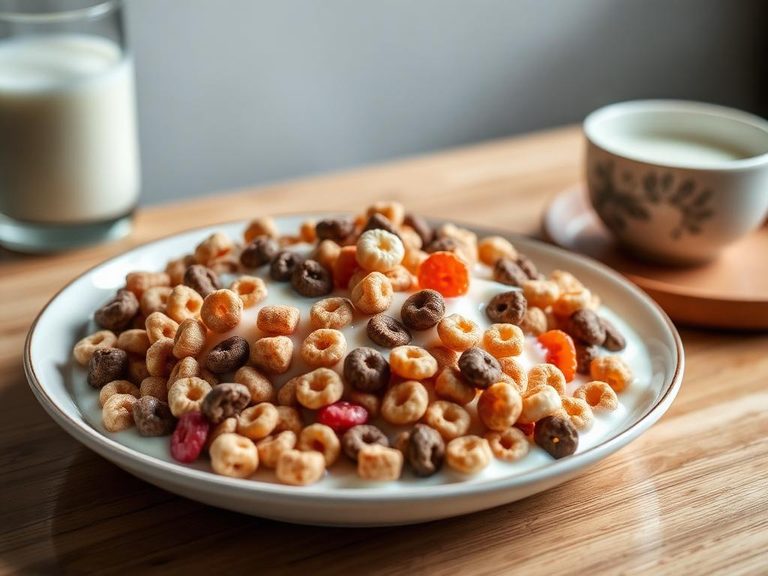
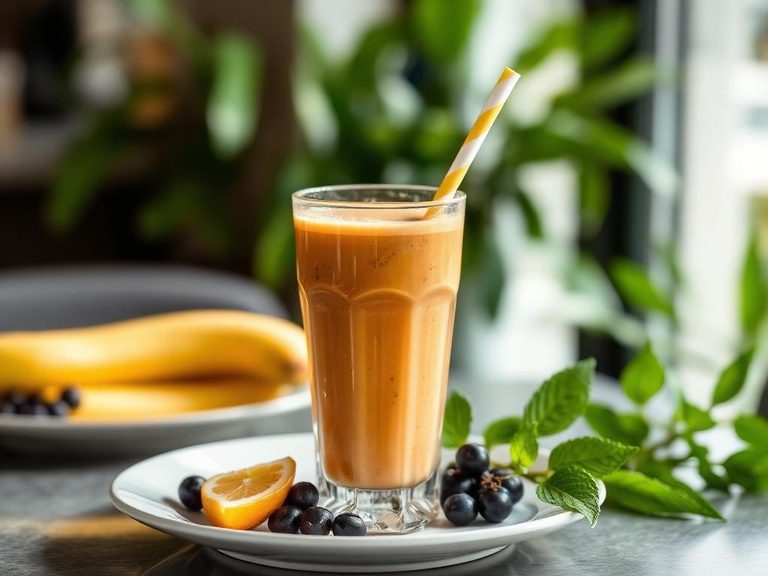
People love it as a foundational, versatile staple that's as comforting in a cold glass as it is essential in recipes. Its mild flavor makes it a perfect canvas for everything from cereal and coffee to smoothies and baked goods.
⚠️ Watch-outs & how to enjoy it better
The primary caution is for those with lactose intolerance, as the natural sugars can cause digestive upset. To mitigate this, choose lactose-free versions or pair it with high-fiber foods like oats or whole-grain toast to slow sugar absorption. It's also a common allergen; those with a milk protein allergy must avoid it entirely.
Key benefits
- Excellent source of calcium for bone health
- High-quality protein for muscle maintenance
- Fortified with vitamins A and D for immune support
- Low in saturated fat compared to higher-fat milks
- Provides naturally occurring electrolytes like potassium
🍽️ Popular dishes

🌍 Where it's eaten
💡 Did you know?
The 'bluish' tint in skim and low-fat milk is real—it's caused by the scattering of light by tiny fat globules and casein proteins, a phenomenon known as the Tyndall effect.
Full nutrition (scales with serving)
| Water | 89.9 g |
| Energy | 42.0 kcal |
| Energy | 177 kj |
| Protein | 3.4 g |
| Total lipid (fat) | 0.97 g |
| Ash | 0.75 g |
| Carbohydrate, by difference | 5.0 g |
| Fiber, total dietary | 0.00 g |
| Total Sugars | 5.2 g |
| Sucrose | 0.00 g |
| Glucose | 0.00 g |
| Fructose | 0.00 g |
| Lactose | 5.2 g |
| Maltose | 0.00 g |
| Galactose | 0.00 g |
| Calcium, Ca | 125 mg |
| Iron, Fe | 0.03 mg |
| Magnesium, Mg | 11.0 mg |
| Phosphorus, P | 95.0 mg |
| Potassium, K | 150 mg |
| Sodium, Na | 44.0 mg |
| Zinc, Zn | 0.42 mg |
| Copper, Cu | 0.01 mg |
| Manganese, Mn | 0.00 mg |
| Selenium, Se | 3.3 ug |
| Fluoride, F | 2.6 ug |
| Vitamin C, total ascorbic acid | 0.00 mg |
| Thiamin | 0.02 mg |
| Riboflavin | 0.18 mg |
| Niacin | 0.09 mg |
| Pantothenic acid | 0.36 mg |
| Vitamin B-6 | 0.04 mg |
| Folate, total | 5.0 ug |
| Folic acid | 0.00 ug |
| Folate, food | 5.0 ug |
| Folate, DFE | 5.0 ug |
| Choline, total | 17.7 mg |
| Betaine | 0.60 mg |
| Vitamin B-12 | 0.47 ug |
| Vitamin B-12, added | 0.00 ug |
| Vitamin A, RAE | 58.0 ug |
| Retinol | 58.0 ug |
| Carotene, beta | 2.0 ug |
| Carotene, alpha | 0.00 ug |
| Cryptoxanthin, beta | 0.00 ug |
| Vitamin A, IU | 196 iu |
| Lycopene | 0.00 ug |
| Lutein + zeaxanthin | 0.00 ug |
| Vitamin E (alpha-tocopherol) | 0.01 mg |
| Vitamin E, added | 0.00 mg |
| Tocopherol, beta | 0.00 mg |
| Tocopherol, gamma | 0.00 mg |
| Tocopherol, delta | 0.00 mg |
| Tocotrienol, alpha | 0.00 mg |
| Tocotrienol, beta | 0.00 mg |
| Tocotrienol, gamma | 0.00 mg |
| Tocotrienol, delta | 0.00 mg |
| Vitamin D (D2 + D3), International Units | 48.0 iu |
| Vitamin D (D2 + D3) | 1.2 ug |
| Vitamin D3 (cholecalciferol) | 1.2 ug |
| Vitamin K (phylloquinone) | 0.10 ug |
| Vitamin K (Dihydrophylloquinone) | 0.00 ug |
| Fatty acids, total saturated | 0.63 g |
| SFA 4:0 | 0.02 g |
| SFA 6:0 | 0.02 g |
| SFA 8:0 | 0.01 g |
| SFA 10:0 | 0.03 g |
| SFA 12:0 | 0.03 g |
| SFA 14:0 | 0.09 g |
| SFA 15:0 | 0.01 g |
| SFA 16:0 | 0.29 g |
| SFA 17:0 | 0.01 g |
| SFA 18:0 | 0.13 g |
| SFA 20:0 | 0.00 g |
| Fatty acids, total monounsaturated | 0.28 g |
| MUFA 14:1 | 0.01 g |
| MUFA 15:1 | 0.00 g |
| MUFA 16:1 | 0.02 g |
| MUFA 16:1 c | 0.02 g |
| MUFA 17:1 | 0.00 g |
| MUFA 18:1 | 0.25 g |
| MUFA 18:1 c | 0.21 g |
| MUFA 20:1 | 0.00 g |
| MUFA 22:1 | 0.00 g |
| Fatty acids, total polyunsaturated | 0.04 g |
| PUFA 18:2 | 0.03 g |
| PUFA 18:2 n-6 c,c | 0.03 g |
| PUFA 18:2 i | 0.00 g |
| PUFA 18:3 | 0.00 g |
| PUFA 18:3 n-3 c,c,c (ALA) | 0.00 g |
| PUFA 18:4 | 0.00 g |
| PUFA 20:4 | 0.00 g |
| PUFA 20:5 n-3 (EPA) | 0.00 g |
| PUFA 22:5 n-3 (DPA) | 0.00 g |
| PUFA 22:6 n-3 (DHA) | 0.00 g |
| TFA 18:1 t | 0.04 g |
| Cholesterol | 5.0 mg |
| Stigmasterol | 0.00 mg |
| Campesterol | 0.00 mg |
| Beta-sitosterol | 0.00 mg |
| Tryptophan | 0.04 g |
| Threonine | 0.14 g |
| Isoleucine | 0.17 g |
| Leucine | 0.32 g |
| Lysine | 0.28 g |
| Methionine | 0.09 g |
| Cystine | 0.02 g |
| Phenylalanine | 0.17 g |
| Tyrosine | 0.17 g |
| Valine | 0.22 g |
| Arginine | 0.10 g |
| Histidine | 0.10 g |
| Alanine | 0.11 g |
| Aspartic acid | 0.29 g |
| Glutamic acid | 0.76 g |
| Glycine | 0.07 g |
| Proline | 0.33 g |
| Serine | 0.20 g |
| Alcohol, ethyl | 0.00 g |
| Caffeine | 0.00 mg |
| Theobromine | 0.00 mg |
FAQ
Why is low-fat milk sometimes yellowish and sometimes bluish?
The color can vary slightly based on the cow's diet (like beta-carotene from grass) and processing. The bluish tint is more common in skim and low-fat milk due to light scattering, while whole milk appears creamier and more yellow due to its fat content.
Is the added vitamin A and D synthetic?
Yes, the vitamins are added during fortification to replace what's lost when fat is removed and to enhance nutritional value. They are typically in a synthetic form but are chemically identical to the vitamins found naturally in milk.
Can I use this for frothing in coffee?
Yes, but it's more challenging than whole milk. The lower fat content produces less stable foam. For best results, use a milk frother and ensure the milk is very cold. It will create a lighter, less creamy foam.