

Pancake batter
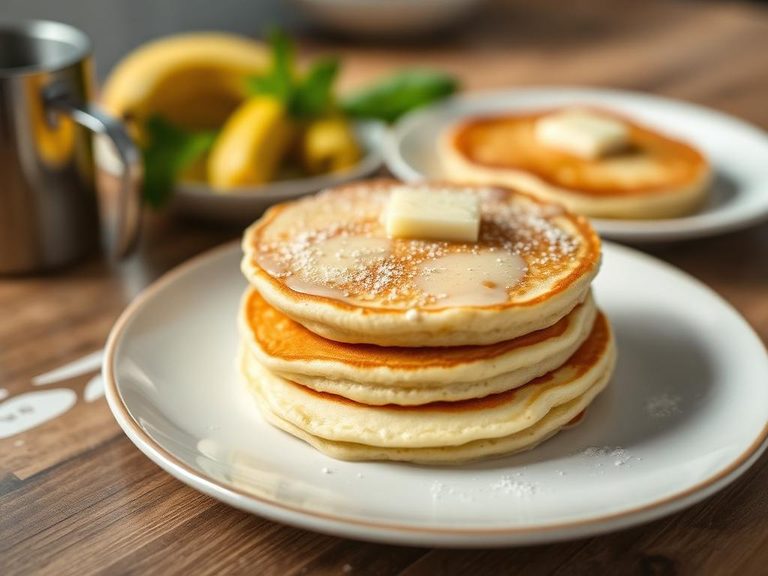
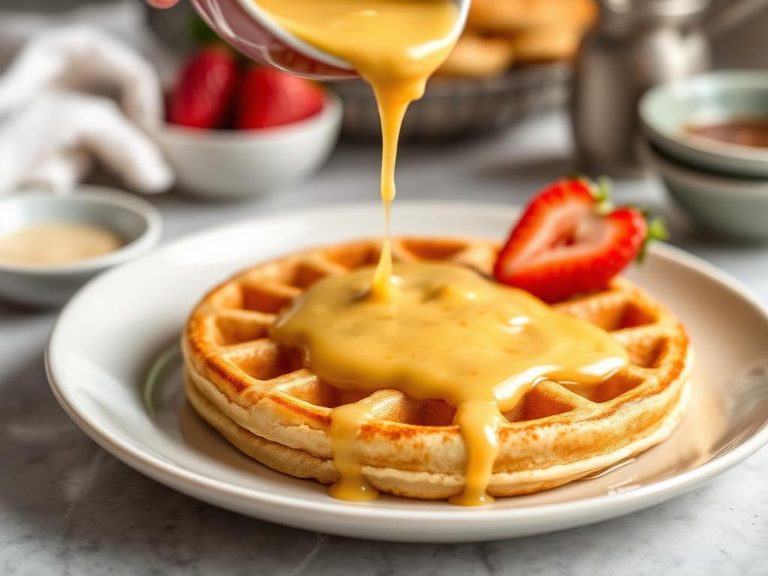
Pancake batter is a liquid or semi-liquid mixture used as the base for making pancakes, crepes, and similar flatbreads. Its core ingredients are flour, a liquid (like milk or water), eggs, and a leavening agent such as baking powder. While its origins are tied to ancient flatbreads, the modern, fluffy version is a staple of American breakfast cuisine.
🍳 View the full Pancake batter recipe →
🍽️ Nutrition at a glance
As a raw mixture, pancake batter is primarily a source of carbohydrates from the flour, with additional protein and fat from the eggs and milk. A typical serving of the cooked pancake provides around 200-300 calories, along with some B vitamins and minerals like iron from the enriched flour.
Nutrition breakdown
| Calories | 227 kcal |
| Protein | 6.4 g |
| Carbs | 32.5 g |
| Fat | 8.2 g |
| Fiber | 1 g |
| Sugar | 4.5 g |
| Sodium | 520 mg |
| Calcium | 115 mg |
| Iron | 1.8 mg |
| Potassium | 150 mg |
| Phosphorus | 130 mg |
| Thiamin (B1) | 0.2 mg |
| Riboflavin (B2) | 0.1 mg |
| Niacin (B3) | 1.5 mg |
| Folate | 45 mcg |
Per 1 cup (240 g) · estimated, varies by recipe
💡 What's interesting
Culturally, pancake batter is a versatile canvas, adaptable to countless regional variations, from French crêpes to Ethiopian injera. Nutritionally, it's interesting that the batter's raw state is unsafe to eat due to potential bacteria in raw eggs and flour, yet it transforms into a beloved comfort food through simple cooking.
🍽️ Related dishes
AI estimate may be inaccurate · Terms