

Fish, whitefish, eggs (Alaska Native)
Whole food · American Indian/Alaska Native Foods
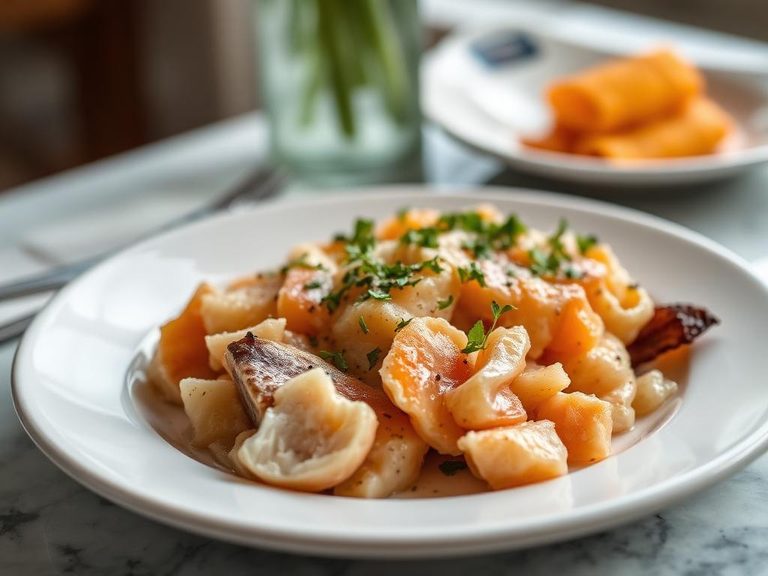
This is a traditional Alaska Native preparation of whitefish, often herring or cod, mixed with eggs and sometimes oil or berries. The texture is typically flaky and moist, with a mild, savory flavor that can range from delicate to rich depending on the fish and preparation. It's a nutrient-dense, low-calorie staple, offering an exceptional protein-to-calorie ratio.
Calorie split: 56% protein · 19% carbs · 25% fat
↓ Full nutrition💚 Why it's loved
People love it for its clean, oceanic flavor and satisfying, protein-packed texture that feels both nourishing and light. It's a versatile base that can be enjoyed simply or incorporated into a variety of dishes.
⚠️ Watch-outs & how to enjoy it better
As a fish product, it is a common allergen and should be avoided by those with fish or egg allergies. The natural sodium content can be moderate, so those on strict low-sodium diets should monitor portions. To counteract any potential fishiness, it can be paired with acidic elements like lemon juice or vinegar, or fresh herbs.
Key benefits
- Excellent source of lean, complete protein for muscle maintenance.
- Very low in calories and fat, suitable for weight management.
- Provides essential omega-3 fatty acids from the fish.
- Naturally low in carbohydrates and sugar.
- A traditional, minimally processed whole food.
🍽️ Popular dishes
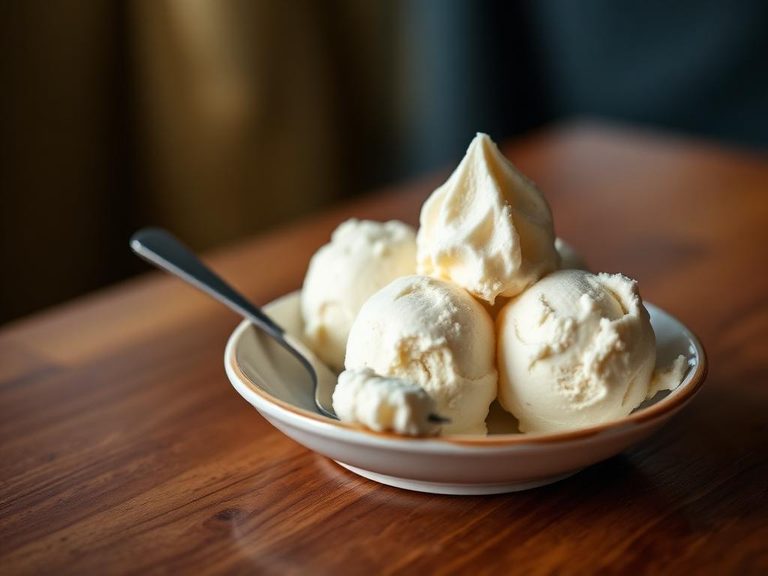
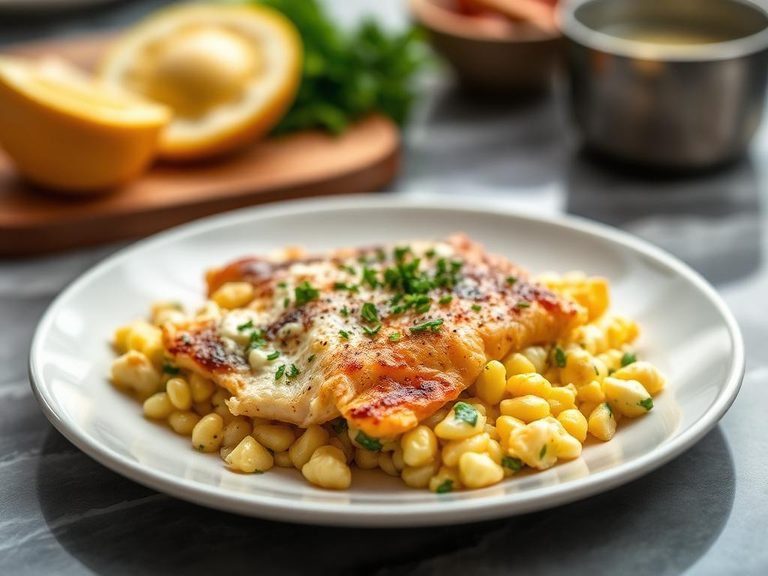
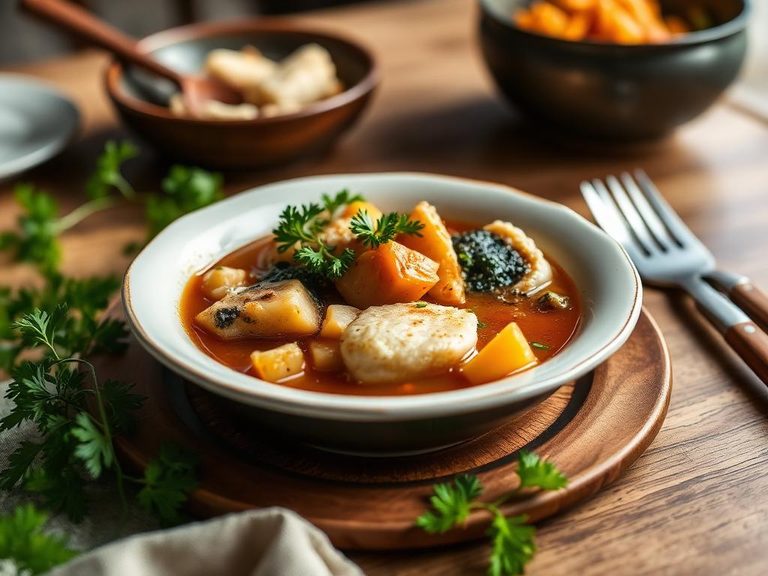
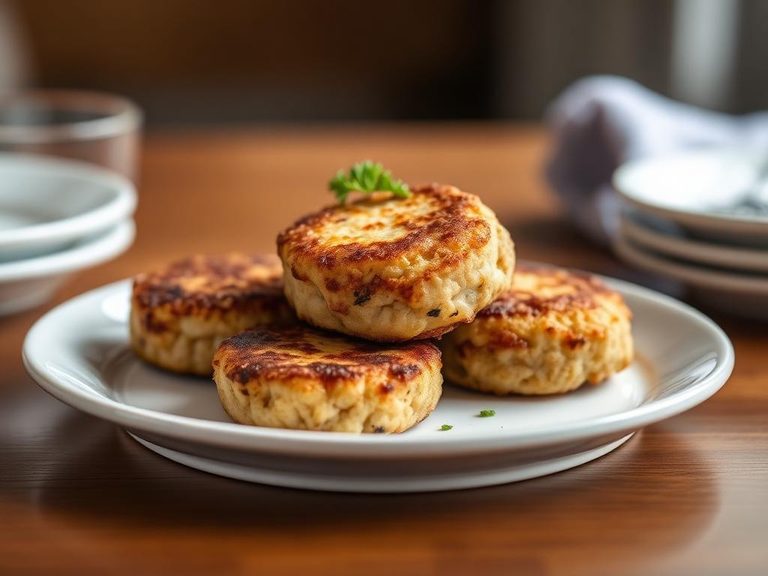
🌍 Where it's eaten
💡 Did you know?
The traditional preparation often involves drying the fish strips in the sun and wind before mixing, a preservation method used for centuries in Arctic climates.
Full nutrition (USDA data · scales with serving)
| Water | 76.2 g |
| Energy | 104 kcal |
| Energy | 436 kj |
| Protein | 14.7 g |
| Total lipid (fat) | 2.9 g |
| Ash | 1.3 g |
| Carbohydrate, by difference | 4.9 g |
| Fiber, total dietary | 0.00 g |
| Total Sugars | 0.00 g |
| Sucrose | 0.00 g |
| Glucose | 0.00 g |
| Fructose | 0.00 g |
| Lactose | 0.00 g |
| Maltose | 0.00 g |
| Galactose | 0.00 g |
| Starch | 0.00 g |
| Calcium, Ca | 46.0 mg |
| Iron, Fe | 6.0 mg |
| Magnesium, Mg | 30.0 mg |
| Phosphorus, P | 306 mg |
| Potassium, K | 190 mg |
| Sodium, Na | 160 mg |
| Zinc, Zn | 2.1 mg |
| Copper, Cu | 0.22 mg |
| Manganese, Mn | 0.22 mg |
| Selenium, Se | 92.8 ug |
| Vitamin C, total ascorbic acid | 12.0 mg |
| Thiamin | 0.09 mg |
| Riboflavin | 0.40 mg |
| Niacin | 0.96 mg |
| Pantothenic acid | 1.1 mg |
| Vitamin B-6 | 0.16 mg |
| Folate, total | 53.0 ug |
| Folic acid | 0.00 ug |
| Folate, food | 53.0 ug |
| Folate, DFE | 53.0 ug |
| Choline, total | 248 mg |
| Betaine | 8.2 mg |
| Vitamin B-12 | 56.4 ug |
| Vitamin B-12, added | 0.00 ug |
| Vitamin A, RAE | 91.0 ug |
| Retinol | 91.0 ug |
| Carotene, beta | 0.00 ug |
| Carotene, alpha | 0.00 ug |
| Cryptoxanthin, beta | 0.00 ug |
| Vitamin A, IU | 305 iu |
| Lycopene | 0.00 ug |
| Lutein + zeaxanthin | 0.00 ug |
| Vitamin E (alpha-tocopherol) | 2.7 mg |
| Vitamin E, added | 0.00 mg |
| Tocopherol, beta | 0.01 mg |
| Tocopherol, gamma | 0.02 mg |
| Tocopherol, delta | 0.00 mg |
| Tocotrienol, alpha | 0.00 mg |
| Tocotrienol, beta | 0.00 mg |
| Tocotrienol, gamma | 0.00 mg |
| Tocotrienol, delta | 0.00 mg |
| Vitamin K (phylloquinone) | 0.60 ug |
| Vitamin K (Dihydrophylloquinone) | 0.00 ug |
| Vitamin K (Menaquinone-4) | 0.60 ug |
| Alcohol, ethyl | 0.00 g |
| Caffeine | 0.00 mg |
| Theobromine | 0.00 mg |
Fat & fatty acid profile (per 100g)
| Fatty acids, total saturated | 0.50 g |
| SFA 8:0 | 0.00 g |
| SFA 10:0 | 0.00 g |
| SFA 12:0 | 0.00 g |
| SFA 14:0 | 0.04 g |
| SFA 15:0 | 0.01 g |
| SFA 16:0 | 0.36 g |
| SFA 17:0 | 0.02 g |
| SFA 18:0 | 0.06 g |
| SFA 20:0 | 0.00 g |
| SFA 22:0 | 0.00 g |
| SFA 24:0 | 0.00 g |
| Fatty acids, total monounsaturated | 1.0 g |
| MUFA 14:1 | 0.00 g |
| MUFA 15:1 | 0.00 g |
| MUFA 16:1 | 0.25 g |
| MUFA 17:1 | 0.00 g |
| MUFA 18:1 | 0.74 g |
| MUFA 20:1 | 0.04 g |
| MUFA 22:1 | 0.00 g |
| MUFA 24:1 c | 0.01 g |
| Fatty acids, total polyunsaturated | 1.1 g |
| PUFA 18:2 | 0.07 g |
| PUFA 18:3 | 0.07 g |
| PUFA 18:4 | 0.04 g |
| PUFA 20:2 n-6 c,c | 0.02 g |
| PUFA 20:3 | 0.03 g |
| PUFA 20:4 | 0.12 g |
| PUFA 20:5 n-3 (EPA) | 0.23 g |
| PUFA 21:5 | 0.01 g |
| PUFA 22:4 | 0.03 g |
| PUFA 22:5 n-3 (DPA) | 0.13 g |
| PUFA 22:6 n-3 (DHA) | 0.33 g |
| Cholesterol | 439 mg |
Amino acid profile (per 100g)
| Tryptophan | 0.28 g |
| Threonine | 1.0 g |
| Isoleucine | 1.1 g |
| Leucine | 1.6 g |
| Lysine | 1.6 g |
| Methionine | 0.56 g |
| Cystine | 0.23 g |
| Phenylalanine | 0.90 g |
| Tyrosine | 0.76 g |
| Valine | 1.3 g |
| Arginine | 1.1 g |
| Histidine | 0.53 g |
| Alanine | 1.6 g |
| Aspartic acid | 1.6 g |
| Glutamic acid | 2.2 g |
| Glycine | 0.50 g |
| Proline | 1.1 g |
| Serine | 1.2 g |
FAQ
What specific whitefish is typically used?
Common choices include herring, salmon, cod, or whitefish like haddock, depending on regional availability and tradition.
Is this dish raw or cooked?
The fish is almost always cooked—often dried, smoked, or boiled—before being mixed with the eggs, which are also cooked.
How does it differ from a standard fish and egg scramble?
Traditional Alaska Native preparations often involve specific drying or smoking techniques and may include unique additions like seal oil or berries, reflecting indigenous foodways.
Nutrient density (calculated · NRF9.3)
Nutrient Rich Foods index: beneficial nutrients (protein, fiber, vitamins, minerals) minus saturated fat, added sugar & sodium, per 100 kcal.
NRF9.3 index — Fulgoni, Keast & Drewnowski, 2009. Computed from USDA nutrients.
Weight-loss friendliness (composite index)
Energy density 1.04 kcal/g · 56% calories from protein · 0.0 g fiber · 0.0 g sugar per 100 g.
Composite of energy density (Rolls et al., 1999), protein & fiber satiety, minus sugar. A calculated heuristic — ranks satiety-per-calorie, not a clinical measure.
Dietary load (calculated from USDA values)
Potential renal acid load. Positive = acid-forming, negative = alkaline-forming.
Sodium-to-potassium ratio: 0.84 (lower is better — aim for ≤ 1)
Sodium:potassium per WHO potassium guidance. Computed from USDA nutrients.