

Bread, blue corn, somiviki (Hopi)
Whole food · American Indian/Alaska Native Foods

Photo: Wikipedia
Hopi Blue Corn Bread is a traditional, dense flatbread made from stone-ground blue cornmeal, giving it a distinctive, deep blue-purple hue. It has a hearty, slightly coarse texture and a rich, nutty, earthy flavor that is less sweet than yellow corn bread. Nutritionally, it is a notable source of dietary fiber and complex carbohydrates, providing sustained energy.
Calorie split: 7% protein · 86% carbs · 7% fat
↓ Full nutrition💚 Why it's loved
People love its unique, robust corn flavor and satisfying, crumbly texture that pairs perfectly with savory stews or beans. It is cherished as a cultural staple of Hopi cuisine, connecting eaters to centuries of Southwestern agricultural tradition.
⚠️ Watch-outs & how to enjoy it better
The dense, high-fiber texture can be heavy for some, and its carbohydrate content may cause blood-sugar spikes if eaten alone in large portions. To counteract this, pair it with protein and healthy fats like beans, eggs, or avocado, and practice portion control.
Key benefits
- Rich in dietary fiber (3.6g per 100g) for digestive health.
- Source of complex carbohydrates for sustained energy release.
- Contains anthocyanin antioxidants from the blue corn pigment.
- Naturally low in fat (1.53g per 100g).
- Traditional preparation method preserves whole-grain nutrients.
🍽️ Popular dishes
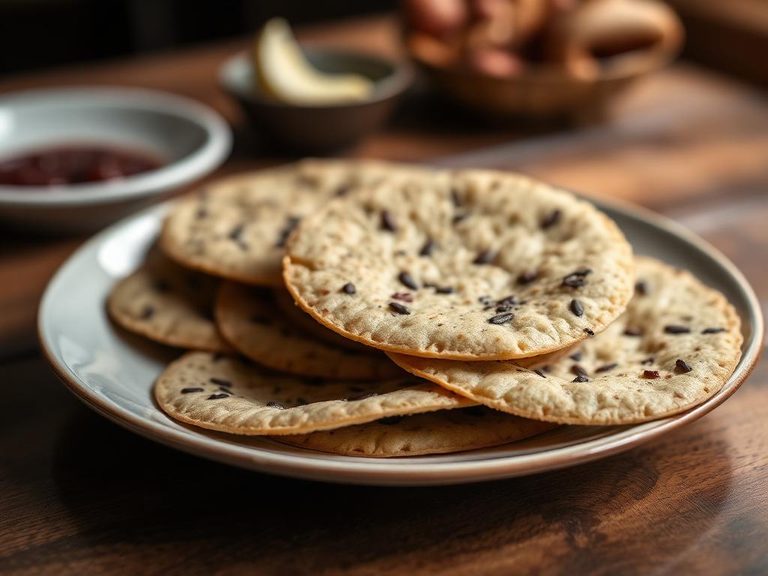
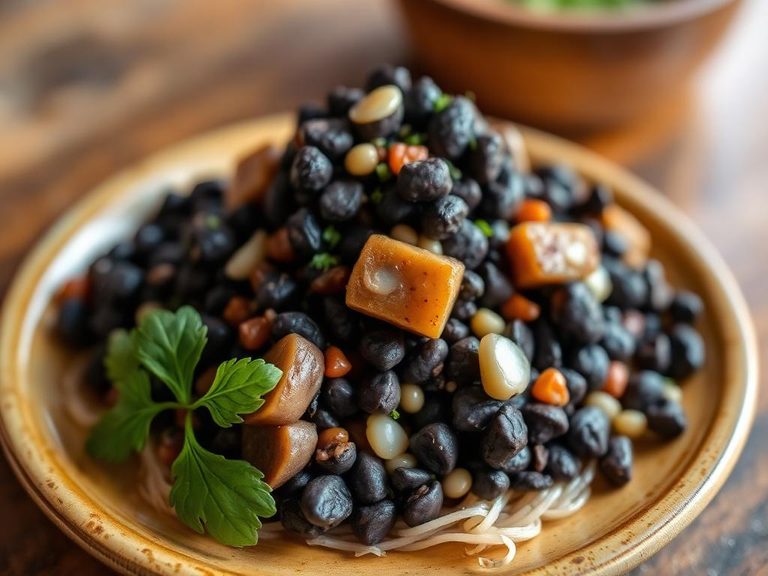
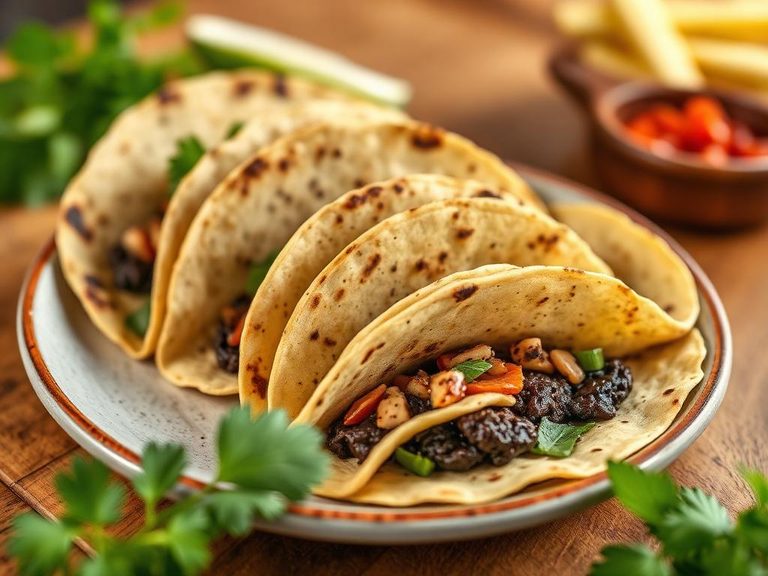
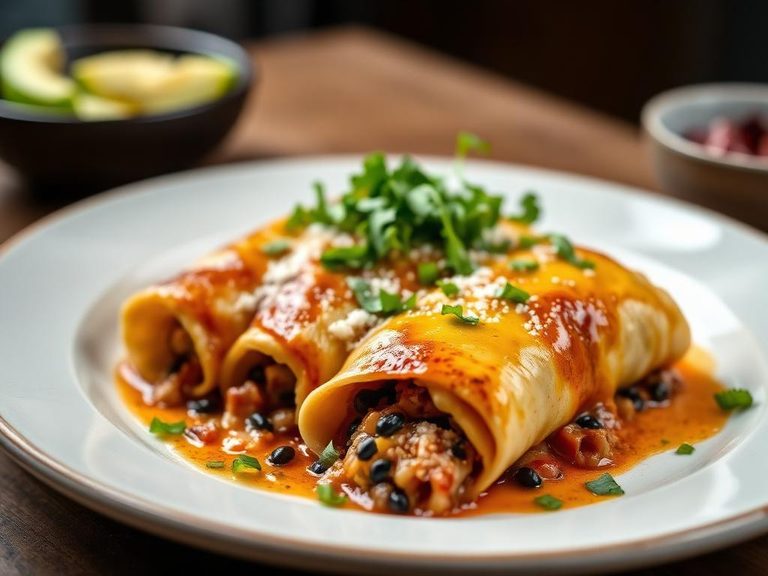
🌍 Where it's eaten
💡 Did you know?
The blue color comes from anthocyanins, the same antioxidants found in blueberries, which develop in the corn as it grows.
Full nutrition (USDA data · scales with serving)
| Water | 55.0 g |
| Energy | 186 kcal |
| Energy | 776 kj |
| Protein | 3.1 g |
| Total lipid (fat) | 1.5 g |
| Ash | 0.52 g |
| Carbohydrate, by difference | 39.8 g |
| Fiber, total dietary | 3.6 g |
| Total Sugars | 12.9 g |
| Sucrose | 12.9 g |
| Glucose | 0.00 g |
| Fructose | 0.00 g |
| Lactose | 0.00 g |
| Maltose | 0.00 g |
| Galactose | 0.00 g |
| Starch | 23.0 g |
| Calcium, Ca | 34.0 mg |
| Iron, Fe | 1.6 mg |
| Magnesium, Mg | 43.0 mg |
| Phosphorus, P | 94.0 mg |
| Potassium, K | 114 mg |
| Sodium, Na | 9.0 mg |
| Zinc, Zn | 0.82 mg |
| Copper, Cu | 0.12 mg |
| Manganese, Mn | 0.41 mg |
| Selenium, Se | 3.0 ug |
| Thiamin | 0.03 mg |
| Riboflavin | 0.00 mg |
| Niacin | 0.55 mg |
| Pantothenic acid | 0.17 mg |
| Vitamin B-6 | 0.17 mg |
| Vitamin A, RAE | 0.00 ug |
| Carotene, beta | 3.0 ug |
| Carotene, alpha | 0.00 ug |
| Cryptoxanthin, beta | 1.0 ug |
| Vitamin A, IU | 5.0 iu |
| Lycopene | 0.00 ug |
| Lutein + zeaxanthin | 18.0 ug |
| Vitamin E (alpha-tocopherol) | 0.34 mg |
| Tocopherol, beta | 0.06 mg |
| Tocopherol, gamma | 0.80 mg |
| Tocopherol, delta | 0.01 mg |
| Tocotrienol, alpha | 0.17 mg |
| Tocotrienol, beta | 0.21 mg |
| Tocotrienol, gamma | 0.00 mg |
| Tocotrienol, delta | 0.00 mg |
Fat & fatty acid profile (per 100g)
| Fatty acids, total saturated | 0.29 g |
| SFA 4:0 | 0.01 g |
| SFA 6:0 | 0.00 g |
| SFA 8:0 | 0.00 g |
| SFA 10:0 | 0.01 g |
| SFA 12:0 | 0.00 g |
| SFA 14:0 | 0.00 g |
| SFA 15:0 | 0.00 g |
| SFA 16:0 | 0.22 g |
| SFA 17:0 | 0.00 g |
| SFA 18:0 | 0.04 g |
| SFA 20:0 | 0.01 g |
| SFA 22:0 | 0.00 g |
| SFA 24:0 | 0.00 g |
| Fatty acids, total monounsaturated | 0.35 g |
| MUFA 14:1 | 0.00 g |
| MUFA 15:1 | 0.00 g |
| MUFA 16:1 | 0.00 g |
| MUFA 16:1 c | 0.00 g |
| MUFA 17:1 | 0.00 g |
| MUFA 18:1 | 0.34 g |
| MUFA 18:1 c | 0.34 g |
| MUFA 20:1 | 0.00 g |
| MUFA 22:1 | 0.00 g |
| MUFA 22:1 c | 0.00 g |
| MUFA 24:1 c | 0.00 g |
| Fatty acids, total polyunsaturated | 0.78 g |
| PUFA 18:2 | 0.76 g |
| PUFA 18:2 n-6 c,c | 0.75 g |
| PUFA 18:2 CLAs | 0.00 g |
| PUFA 18:3 | 0.02 g |
| PUFA 18:3 n-3 c,c,c (ALA) | 0.02 g |
| PUFA 18:3 n-6 c,c,c | 0.00 g |
| PUFA 18:4 | 0.00 g |
| PUFA 20:2 n-6 c,c | 0.00 g |
| PUFA 20:3 | 0.00 g |
| PUFA 20:3 n-3 | 0.00 g |
| PUFA 20:3 n-6 | 0.00 g |
| PUFA 20:4 | 0.00 g |
| PUFA 20:5 n-3 (EPA) | 0.00 g |
| PUFA 22:4 | 0.00 g |
| PUFA 22:5 n-3 (DPA) | 0.00 g |
| PUFA 22:6 n-3 (DHA) | 0.00 g |
| Fatty acids, total trans | 0.01 g |
| Fatty acids, total trans-monoenoic | 0.00 g |
| TFA 16:1 t | 0.00 g |
| TFA 18:1 t | 0.00 g |
| TFA 22:1 t | 0.00 g |
| TFA 18:2 t not further defined | 0.00 g |
| Fatty acids, total trans-polyenoic | 0.00 g |
Amino acid profile (per 100g)
Estimated from Bread, salvadoran sweet cheese (quesadilla salvadorena) — USDA does not publish this profile for Bread.
| Tryptophan | 0.07 g |
| Threonine | 0.21 g |
| Isoleucine | 0.30 g |
| Leucine | 0.65 g |
| Lysine | 0.50 g |
| Methionine | 0.28 g |
| Cystine | 0.06 g |
| Phenylalanine | 0.37 g |
| Tyrosine | 0.23 g |
| Valine | 0.43 g |
| Arginine | 0.25 g |
| Histidine | 0.15 g |
| Alanine | 0.36 g |
| Aspartic acid | 0.59 g |
| Glutamic acid | 1.3 g |
| Glycine | 0.20 g |
| Proline | 0.83 g |
| Serine | 0.45 g |
| Hydroxyproline | 0.00 g |
FAQ
Is blue corn bread the same as regular corn bread?
No. Blue corn bread is made from blue cornmeal, which has a distinct nuttier flavor, denser texture, and higher protein and antioxidant content than typical yellow or white corn bread.
How is Hopi blue corn bread traditionally made?
Traditionally, it is a thin, unleavened flatbread cooked on a hot stone or griddle. The dough is made from finely ground blue cornmeal and water, sometimes with a small amount of ash for flavor and nutrition.
Is it gluten-free?
Yes, pure blue corn bread made from just cornmeal and water is naturally gluten-free. However, always check for cross-contamination or added ingredients in commercial products.
Nutrient density (calculated · NRF9.3)
Nutrient Rich Foods index: beneficial nutrients (protein, fiber, vitamins, minerals) minus saturated fat, added sugar & sodium, per 100 kcal.
NRF9.3 index — Fulgoni, Keast & Drewnowski, 2009. Computed from USDA nutrients.
Weight-loss friendliness (composite index)
Energy density 1.86 kcal/g · 7% calories from protein · 3.6 g fiber · 12.9 g sugar per 100 g.
Composite of energy density (Rolls et al., 1999), protein & fiber satiety, minus sugar. A calculated heuristic — ranks satiety-per-calorie, not a clinical measure.
Dietary load (calculated from USDA values)
Potential renal acid load. Positive = acid-forming, negative = alkaline-forming.
Sodium-to-potassium ratio: 0.08 (lower is better — aim for ≤ 1)
Sodium:potassium per WHO potassium guidance. Computed from USDA nutrients.