

Beef, rib eye steak, boneless, lip off, separable lean only, trimmed to 0" fat, choice, cooked, grilled
Whole food · Beef Products

Photo: Wikipedia
This is a lean, boneless cut from the rib section, meticulously trimmed to remove the outer fat cap and the 'lip' portion, leaving only the pure, deep-red muscle. When grilled, it develops a savory, slightly charred crust while the interior remains tender, juicy, and intensely beefy, with a fine, consistent grain. It's a protein powerhouse, delivering over 27 grams of high-quality protein per 100-gram serving with virtually no carbohydrates.
Calorie split: 51% protein · 0% carbs · 49% fat
↓ Full nutrition💚 Why it's loved
People cherish this cut for its perfect balance of robust, beefy flavor and reliable tenderness, especially when cooked with high, dry heat like grilling. Its versatility allows it to shine as a simple, elegant steak or to be sliced for salads and stir-fries, making it a centerpiece of celebratory meals and casual cookouts alike.
⚠️ Watch-outs & how to enjoy it better
While lean, it can become dry and tough if overcooked due to its low intramuscular fat. Those monitoring saturated fat intake should be mindful of portion size. To counteract dryness, use a meat thermometer to pull it from the grill at 130-135°F (54-57°C) for medium-rare, and let it rest for 5-10 minutes before slicing to allow juices to redistribute.
Key benefits
- Excellent source of complete, high-quality protein for muscle maintenance and growth.
- Rich in bioavailable heme iron, crucial for oxygen transport and energy.
- Provides significant amounts of zinc, supporting immune function and wound healing.
- Contains B vitamins, especially B12 and niacin, vital for nerve function and metabolism.
- Low in carbohydrates, making it suitable for low-carb and ketogenic dietary patterns.
🍽️ Popular dishes

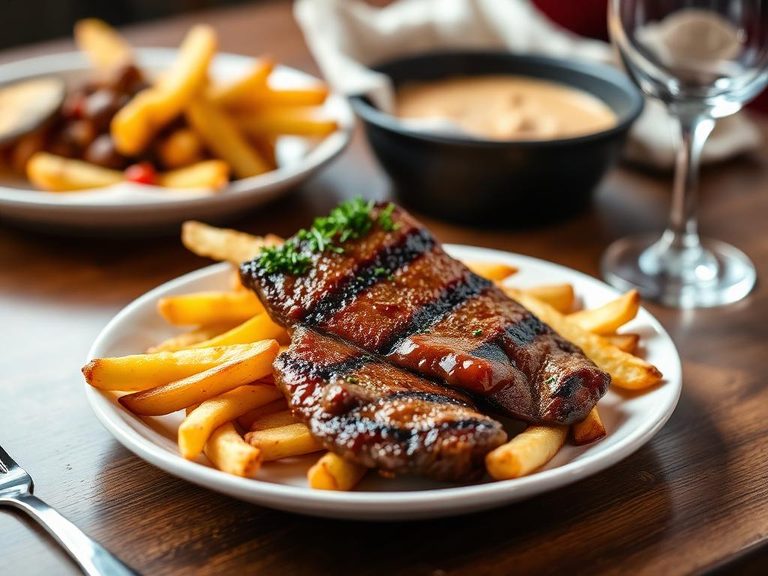
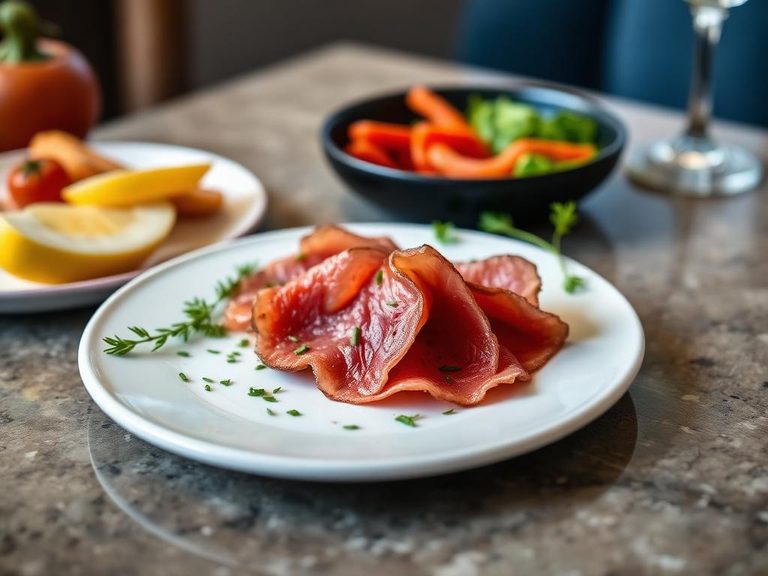
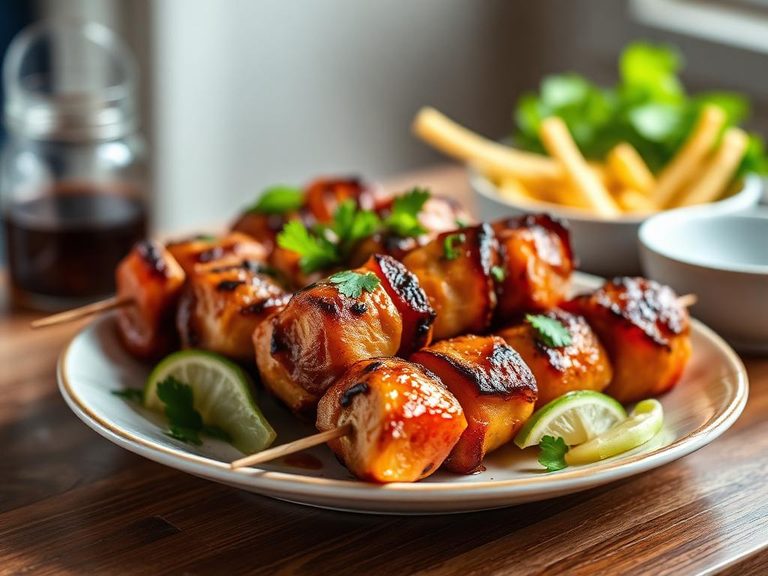
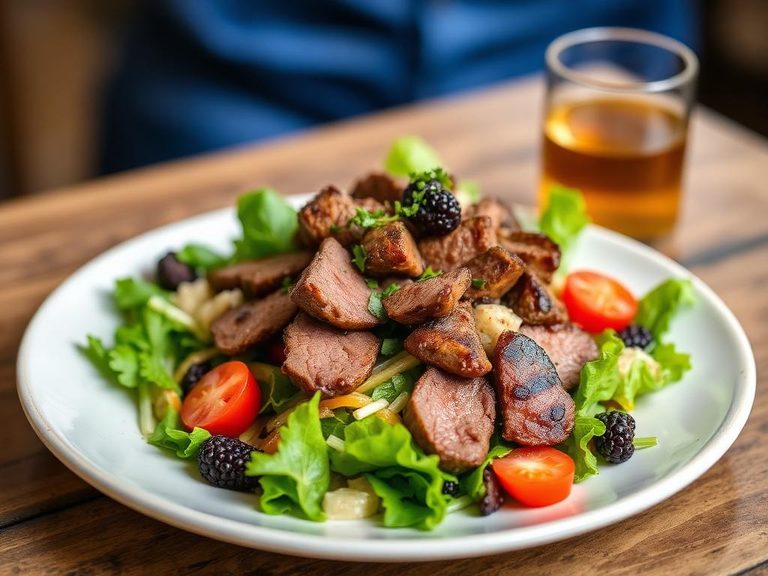
🌍 Where it's eaten
💡 Did you know?
The 'ribeye' name comes from the fact that this steak is cut from the rib primal section of the cow, and the 'eye' refers to the large, central piece of muscle (the longissimus dorsi) that is the star of the cut.
Full nutrition (USDA data · scales with serving)
| Water | 60.1 g |
| Energy | 215 kcal |
| Energy | 901 kj |
| Protein | 27.4 g |
| Total lipid (fat) | 11.8 g |
| Ash | 1.1 g |
| Carbohydrate, by difference | 0.00 g |
| Fiber, total dietary | 0.00 g |
| Total Sugars | 0.00 g |
| Calcium, Ca | 8.0 mg |
| Iron, Fe | 2.6 mg |
| Magnesium, Mg | 25.0 mg |
| Phosphorus, P | 174 mg |
| Potassium, K | 282 mg |
| Sodium, Na | 60.0 mg |
| Zinc, Zn | 7.0 mg |
| Copper, Cu | 0.09 mg |
| Manganese, Mn | 0.09 mg |
| Selenium, Se | 33.0 ug |
| Vitamin C, total ascorbic acid | 0.00 mg |
| Thiamin | 0.08 mg |
| Riboflavin | 0.34 mg |
| Niacin | 5.5 mg |
| Pantothenic acid | 0.59 mg |
| Vitamin B-6 | 0.51 mg |
| Folate, total | 7.0 ug |
| Folic acid | 0.00 ug |
| Folate, food | 7.0 ug |
| Folate, DFE | 7.0 ug |
| Choline, total | 57.7 mg |
| Betaine | 13.9 mg |
| Vitamin B-12 | 2.4 ug |
| Vitamin B-12, added | 0.00 ug |
| Vitamin A, RAE | 1.0 ug |
| Retinol | 1.0 ug |
| Carotene, beta | 0.00 ug |
| Carotene, alpha | 0.00 ug |
| Cryptoxanthin, beta | 0.00 ug |
| Vitamin A, IU | 5.0 iu |
| Lycopene | 0.00 ug |
| Lutein + zeaxanthin | 0.00 ug |
| Vitamin E (alpha-tocopherol) | 0.12 mg |
| Vitamin E, added | 0.00 mg |
| Vitamin D (D2 + D3), International Units | 4.0 iu |
| Vitamin D (D2 + D3) | 0.10 ug |
| Vitamin D3 (cholecalciferol) | 0.10 ug |
| Vitamin K (phylloquinone) | 1.6 ug |
| Alcohol, ethyl | 0.00 g |
| Caffeine | 0.00 mg |
| Theobromine | 0.00 mg |
Fat & fatty acid profile (per 100g)
| Fatty acids, total saturated | 4.6 g |
| SFA 4:0 | 0.00 g |
| SFA 6:0 | 0.00 g |
| SFA 8:0 | 0.00 g |
| SFA 10:0 | 0.01 g |
| SFA 12:0 | 0.01 g |
| SFA 14:0 | 0.29 g |
| SFA 15:0 | 0.06 g |
| SFA 16:0 | 2.6 g |
| SFA 17:0 | 0.15 g |
| SFA 18:0 | 1.5 g |
| SFA 20:0 | 0.00 g |
| SFA 24:0 | 0.01 g |
| Fatty acids, total monounsaturated | 5.4 g |
| MUFA 14:1 | 0.06 g |
| MUFA 15:1 | 0.05 g |
| MUFA 16:1 | 0.36 g |
| MUFA 16:1 c | 0.35 g |
| MUFA 17:1 | 0.11 g |
| MUFA 18:1 | 4.8 g |
| MUFA 18:1 c | 4.3 g |
| MUFA 20:1 | 0.01 g |
| MUFA 22:1 | 0.00 g |
| Fatty acids, total polyunsaturated | 0.55 g |
| PUFA 18:2 | 0.45 g |
| PUFA 18:2 n-6 c,c | 0.41 g |
| PUFA 18:2 CLAs | 0.03 g |
| PUFA 18:3 | 0.02 g |
| PUFA 18:3 n-3 c,c,c (ALA) | 0.02 g |
| PUFA 18:4 | 0.00 g |
| PUFA 20:2 n-6 c,c | 0.00 g |
| PUFA 20:3 | 0.02 g |
| PUFA 20:3 n-6 | 0.02 g |
| PUFA 20:4 | 0.06 g |
| PUFA 20:5 n-3 (EPA) | 0.00 g |
| PUFA 22:5 n-3 (DPA) | 0.01 g |
| PUFA 22:6 n-3 (DHA) | 0.00 g |
| Fatty acids, total trans | 0.57 g |
| Fatty acids, total trans-monoenoic | 0.56 g |
| TFA 16:1 t | 0.01 g |
| TFA 18:1 t | 0.55 g |
| TFA 18:2 t not further defined | 0.01 g |
| Fatty acids, total trans-polyenoic | 0.01 g |
| Cholesterol | 80.0 mg |
Amino acid profile (per 100g)
| Tryptophan | 0.32 g |
| Threonine | 1.3 g |
| Isoleucine | 1.3 g |
| Leucine | 2.4 g |
| Lysine | 2.7 g |
| Methionine | 0.76 g |
| Cystine | 0.28 g |
| Phenylalanine | 1.1 g |
| Tyrosine | 1.1 g |
| Valine | 1.4 g |
| Arginine | 1.9 g |
| Histidine | 1.0 g |
| Alanine | 1.7 g |
| Aspartic acid | 2.7 g |
| Glutamic acid | 4.7 g |
| Glycine | 1.2 g |
| Proline | 1.2 g |
| Serine | 1.2 g |
| Hydroxyproline | 0.14 g |
FAQ
What does 'lip off' and 'separable lean only' mean?
'Lip off' means the fatty lip or edge has been removed. 'Separable lean only' indicates that all visible fat that can be physically separated has been trimmed away, leaving just the lean muscle tissue.
Is this the same as a regular ribeye steak?
Not exactly. A standard ribeye often includes a cap of fat and sometimes a 'lip' of fat. This specific description is for a ribeye that has been extra-trimmed to be an almost entirely lean piece of meat.
What's the best way to cook this lean cut without drying it out?
High, fast heat is key. Grilling, broiling, or pan-searing in a very hot cast-iron skillet are ideal. Cook to medium-rare (130-135°F internal temp) and always let it rest before cutting to retain maximum juiciness.
Nutrient density (calculated · NRF9.3)
Nutrient Rich Foods index: beneficial nutrients (protein, fiber, vitamins, minerals) minus saturated fat, added sugar & sodium, per 100 kcal.
NRF9.3 index — Fulgoni, Keast & Drewnowski, 2009. Computed from USDA nutrients.
Weight-loss friendliness (composite index)
Energy density 2.15 kcal/g · 51% calories from protein · 0.0 g fiber · 0.0 g sugar per 100 g.
Composite of energy density (Rolls et al., 1999), protein & fiber satiety, minus sugar. A calculated heuristic — ranks satiety-per-calorie, not a clinical measure.
Dietary load (calculated from USDA values)
Potential renal acid load. Positive = acid-forming, negative = alkaline-forming.
Sodium-to-potassium ratio: 0.21 (lower is better — aim for ≤ 1)
Sodium:potassium per WHO potassium guidance. Computed from USDA nutrients.