

Beef, ground, 80% lean meat / 20% fat, crumbles, cooked, pan-browned
Whole food · Beef Products
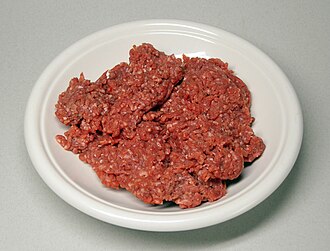
Photo: Wikipedia
This is ground beef that's been cooked until browned and crumbly, with a rich, savory flavor and a satisfyingly juicy, slightly chewy texture. It's a protein powerhouse, delivering about 27 grams of protein per 100g with zero carbs, making it a staple for low-carb and high-protein diets. The 20% fat content gives it excellent flavor and moisture, perfect for building hearty dishes.
Calorie split: 41% protein · 0% carbs · 59% fat
↓ Full nutrition💚 Why it's loved
People love it for its deep, savory umami flavor and remarkable versatility—it's the flavorful foundation for countless comfort foods across cultures. Its ability to absorb seasonings and sauces while providing a satisfying, hearty texture makes it a universal crowd-pleaser.
⚠️ Watch-outs & how to enjoy it better
The 20% fat content means it's high in saturated fat and calories, which may be a concern for those managing heart health or calorie intake. To mitigate this, drain excess fat after cooking, use it as a component in dishes with plenty of vegetables (like chili or bolognese) to increase volume and fiber, or opt for leaner grinds (90/10) for some recipes.
Key benefits
- Excellent source of complete protein for muscle maintenance
- Rich in bioavailable iron (heme iron) and zinc
- Contains B vitamins, especially B12, for energy metabolism
- Zero carbohydrates, ideal for keto and low-carb diets
- High satiety factor helps with appetite control
🍽️ Popular dishes
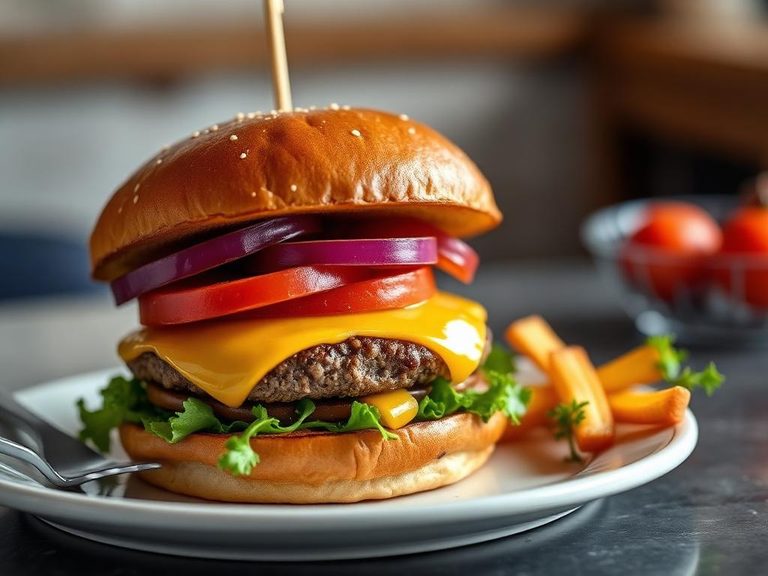
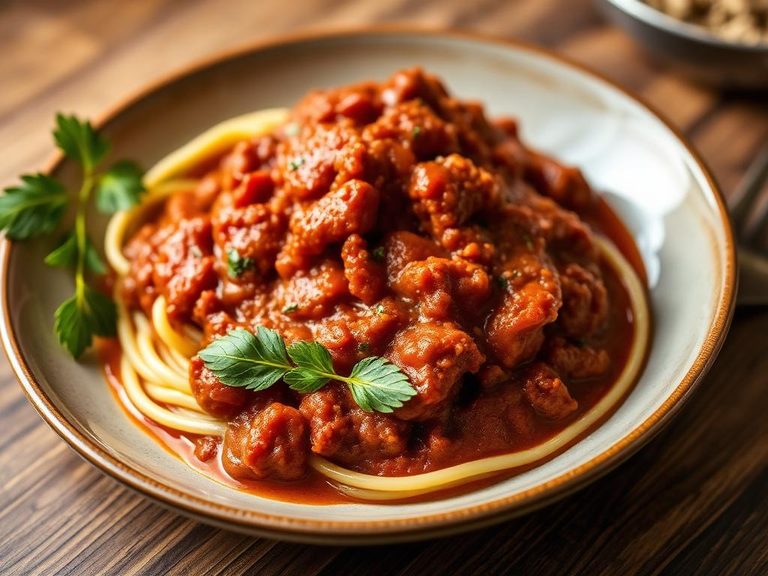
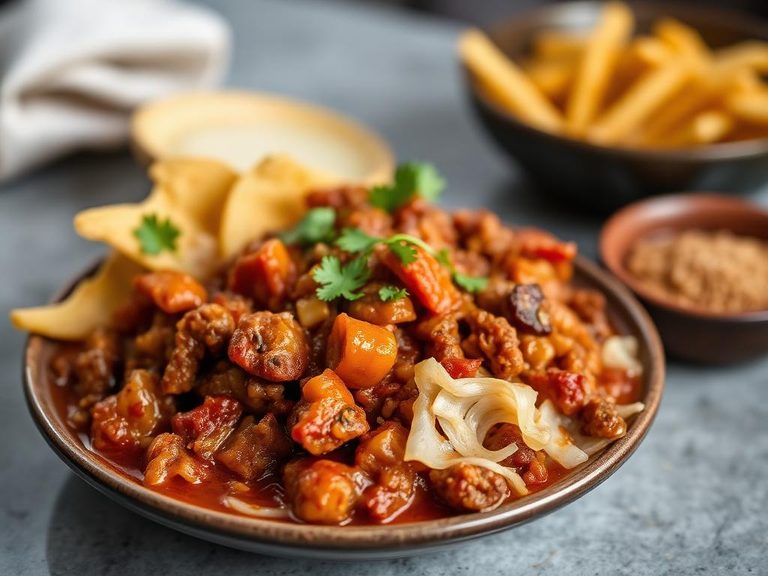
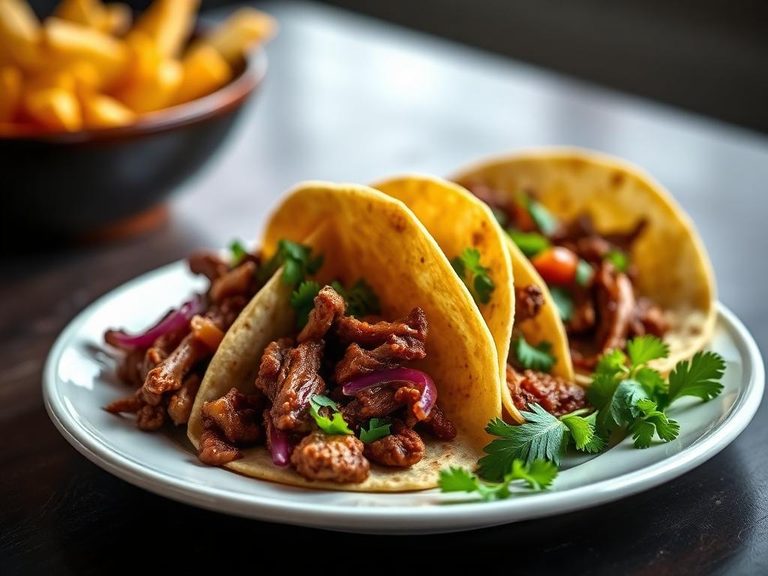
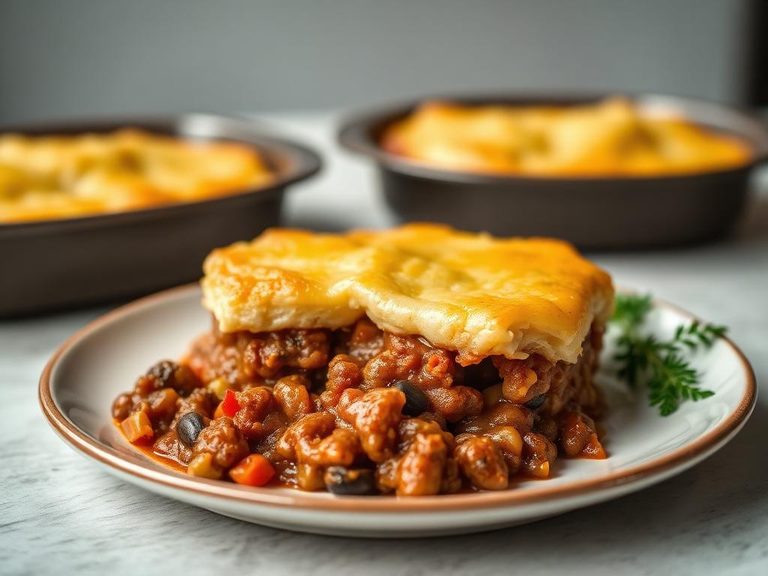
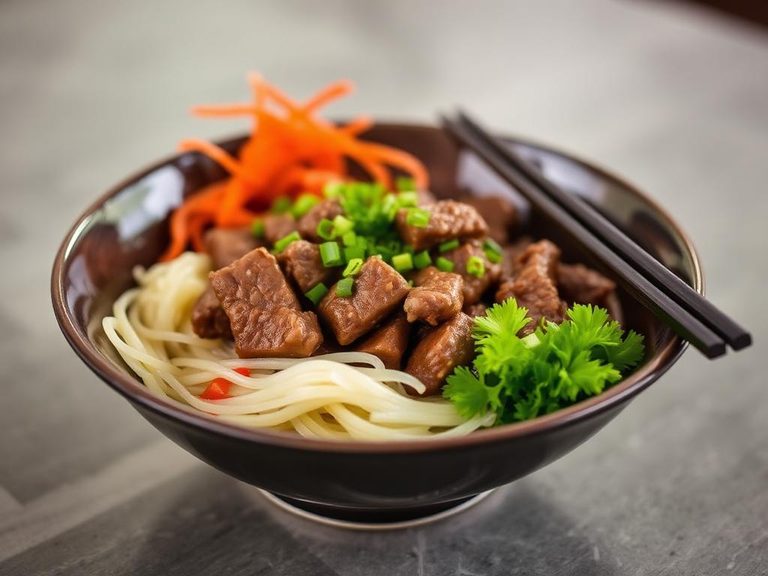
🌍 Where it's eaten
💡 Did you know?
The term 'hamburger' doesn't come from Hamburg, Germany, but likely from the 'Hamburg steak'—a minced beef patty brought to the US by German immigrants in the 19th century, which was then placed between bread to create the sandwich we know today.
Full nutrition (USDA data · scales with serving)
| Water | 54.5 g |
| Energy | 272 kcal |
| Energy | 1138 kj |
| Protein | 27.0 g |
| Total lipid (fat) | 17.4 g |
| Ash | 1.2 g |
| Carbohydrate, by difference | 0.00 g |
| Fiber, total dietary | 0.00 g |
| Total Sugars | 0.00 g |
| Calcium, Ca | 28.0 mg |
| Iron, Fe | 2.8 mg |
| Magnesium, Mg | 23.0 mg |
| Phosphorus, P | 226 mg |
| Potassium, K | 380 mg |
| Sodium, Na | 91.0 mg |
| Zinc, Zn | 6.4 mg |
| Copper, Cu | 0.09 mg |
| Manganese, Mn | 0.01 mg |
| Selenium, Se | 21.6 ug |
| Vitamin C, total ascorbic acid | 0.00 mg |
| Thiamin | 0.04 mg |
| Riboflavin | 0.19 mg |
| Niacin | 5.8 mg |
| Pantothenic acid | 0.81 mg |
| Vitamin B-6 | 0.43 mg |
| Folate, total | 11.0 ug |
| Folic acid | 0.00 ug |
| Folate, food | 11.0 ug |
| Folate, DFE | 11.0 ug |
| Choline, total | 84.8 mg |
| Betaine | 9.5 mg |
| Vitamin B-12 | 2.8 ug |
| Vitamin B-12, added | 0.00 ug |
| Vitamin A, RAE | 3.0 ug |
| Retinol | 3.0 ug |
| Carotene, beta | 0.00 ug |
| Carotene, alpha | 0.00 ug |
| Cryptoxanthin, beta | 0.00 ug |
| Vitamin A, IU | 9.0 iu |
| Lycopene | 0.00 ug |
| Lutein + zeaxanthin | 0.00 ug |
| Vitamin E (alpha-tocopherol) | 0.12 mg |
| Vitamin E, added | 0.00 mg |
| Vitamin D (D2 + D3), International Units | 2.0 iu |
| Vitamin D (D2 + D3) | 0.00 ug |
| Vitamin D3 (cholecalciferol) | 0.00 ug |
| Vitamin K (phylloquinone) | 1.6 ug |
| Vitamin K (Dihydrophylloquinone) | 0.00 ug |
| Alcohol, ethyl | 0.00 g |
| Caffeine | 0.00 mg |
| Theobromine | 0.00 mg |
Fat & fatty acid profile (per 100g)
| Fatty acids, total saturated | 6.5 g |
| SFA 4:0 | 0.00 g |
| SFA 6:0 | 0.00 g |
| SFA 8:0 | 0.00 g |
| SFA 10:0 | 0.00 g |
| SFA 12:0 | 0.01 g |
| SFA 14:0 | 0.44 g |
| SFA 15:0 | 0.07 g |
| SFA 16:0 | 3.3 g |
| SFA 17:0 | 0.17 g |
| SFA 18:0 | 2.5 g |
| SFA 20:0 | 0.01 g |
| Fatty acids, total monounsaturated | 7.6 g |
| MUFA 14:1 | 0.14 g |
| MUFA 16:1 | 0.60 g |
| MUFA 17:1 | 0.16 g |
| MUFA 18:1 | 6.4 g |
| MUFA 20:1 | 0.06 g |
| MUFA 22:1 | 0.00 g |
| Fatty acids, total polyunsaturated | 0.50 g |
| PUFA 18:2 | 0.42 g |
| PUFA 18:3 | 0.01 g |
| PUFA 18:3 n-6 c,c,c | 0.01 g |
| PUFA 18:4 | 0.00 g |
| PUFA 20:4 | 0.05 g |
| PUFA 20:5 n-3 (EPA) | 0.00 g |
| PUFA 22:5 n-3 (DPA) | 0.00 g |
| PUFA 22:6 n-3 (DHA) | 0.00 g |
| Fatty acids, total trans | 0.75 g |
| Fatty acids, total trans-monoenoic | 0.75 g |
| TFA 18:1 t | 0.75 g |
| Cholesterol | 89.0 mg |
Amino acid profile (per 100g)
| Tryptophan | 0.14 g |
| Threonine | 1.0 g |
| Isoleucine | 1.2 g |
| Leucine | 2.1 g |
| Lysine | 2.2 g |
| Methionine | 0.69 g |
| Cystine | 0.28 g |
| Phenylalanine | 1.1 g |
| Tyrosine | 0.83 g |
| Valine | 1.3 g |
| Arginine | 1.8 g |
| Histidine | 0.88 g |
| Alanine | 1.7 g |
| Aspartic acid | 2.4 g |
| Glutamic acid | 4.0 g |
| Glycine | 1.8 g |
| Proline | 1.4 g |
| Serine | 1.1 g |
FAQ
Why does my ground beef sometimes turn out gray instead of brown?
This is a harmless reaction called metmyoglobin formation, which occurs when the meat's surface is exposed to air or certain temperatures during cooking. It's safe to eat. To promote better browning, ensure the pan is hot before adding the meat and avoid overcrowding it.
How can I reduce the grease when cooking it?
After browning, drain the meat in a colander and rinse briefly with hot water to remove excess fat. You can also use the 'leaner' grinds (90/10 or 93/7) or cook it in a way that allows fat to render and be poured off before adding other ingredients.
Is it safe to eat ground beef that's still a little pink inside?
For safety, the USDA recommends cooking ground beef to an internal temperature of 160°F (71°C), which ensures any harmful bacteria like E. coli are destroyed. At this temperature, the meat will no longer be pink.
Nutrient density (calculated · NRF9.3)
Nutrient Rich Foods index: beneficial nutrients (protein, fiber, vitamins, minerals) minus saturated fat, added sugar & sodium, per 100 kcal.
NRF9.3 index — Fulgoni, Keast & Drewnowski, 2009. Computed from USDA nutrients.
Weight-loss friendliness (composite index)
Energy density 2.72 kcal/g · 40% calories from protein · 0.0 g fiber · 0.0 g sugar per 100 g.
Composite of energy density (Rolls et al., 1999), protein & fiber satiety, minus sugar. A calculated heuristic — ranks satiety-per-calorie, not a clinical measure.
Dietary load (calculated from USDA values)
Potential renal acid load. Positive = acid-forming, negative = alkaline-forming.
Sodium-to-potassium ratio: 0.24 (lower is better — aim for ≤ 1)
Sodium:potassium per WHO potassium guidance. Computed from USDA nutrients.