

Beef, composite of trimmed retail cuts, separable lean and fat, trimmed to 0" fat, select, cooked
Whole food · Beef Products

Photo: Wikipedia
This is lean beef, meticulously trimmed of all visible fat and cooked, delivering a pure, dense protein punch. Its texture is firm and chewy with a deep, savory umami flavor, while its nutrition profile is strikingly lean, offering nearly 29 grams of protein and zero carbohydrates per 100-gram serving.
Calorie split: 58% protein · 0% carbs · 42% fat
↓ Full nutrition💚 Why it's loved
People love it for its intense, beefy flavor and satisfying chew, which forms the hearty backbone of countless comfort foods. Its remarkable versatility allows it to be grilled, stewed, or stir-fried, adapting seamlessly to cuisines worldwide.
⚠️ Watch-outs & how to enjoy it better
Without fat, it can become dry and tough if overcooked, requiring careful preparation. Individuals managing iron overload conditions (like hemochromatosis) should monitor intake. Tip: Marinate before cooking or use moist-heat methods like braising to ensure tenderness, and pair with vitamin C-rich foods (like bell peppers or broccoli) to enhance iron absorption if needed.
Key benefits
- Excellent source of complete, high-quality protein for muscle repair and satiety
- Virtually zero carbohydrates, making it ideal for low-carb and ketogenic diets
- Rich in bioavailable iron (heme iron) and zinc for immune function
- Provides B vitamins, especially B12, crucial for nerve health and energy production
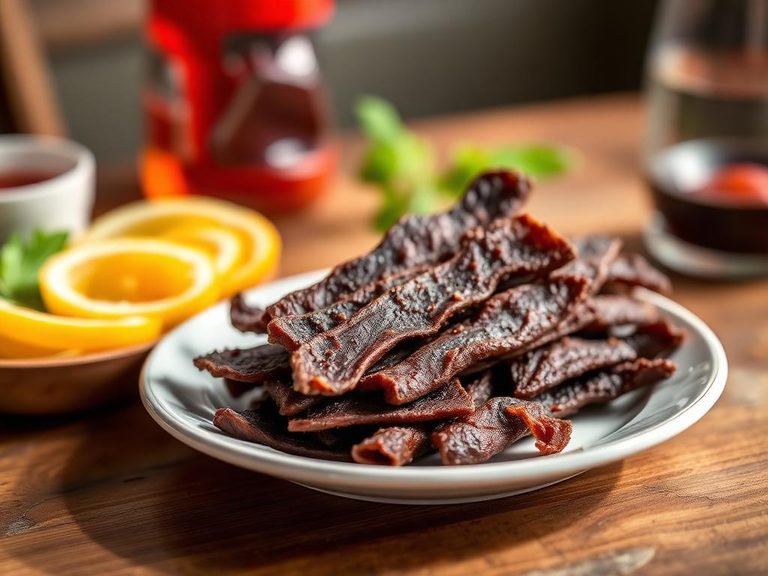
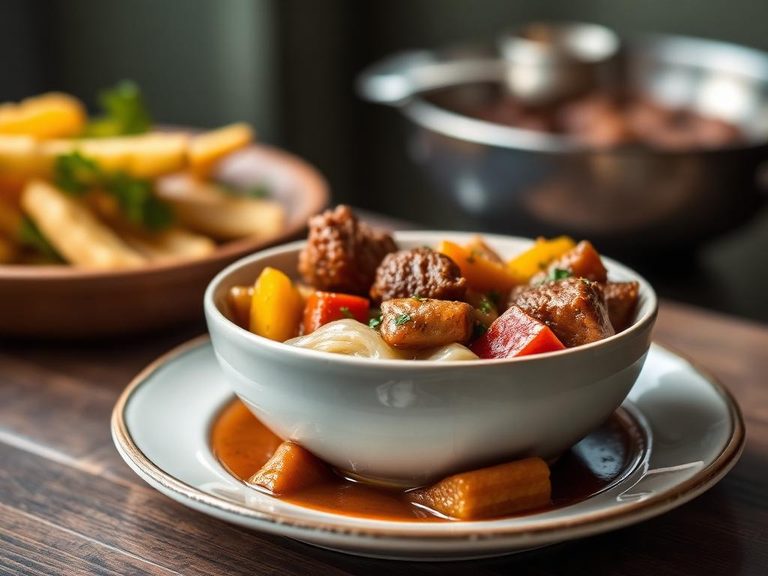
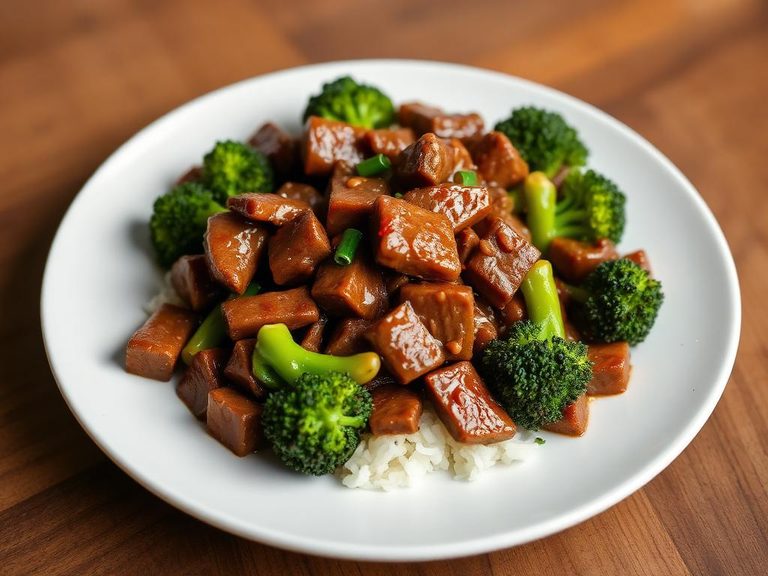
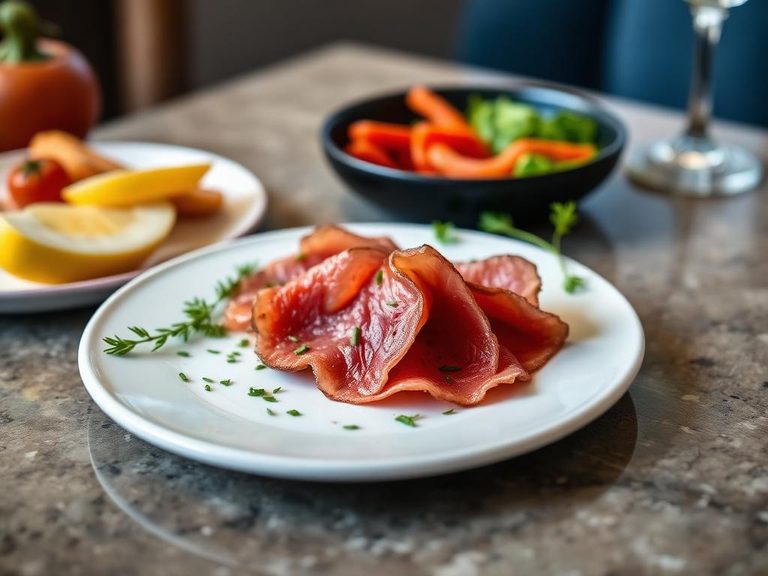
🍽️ Popular dishes
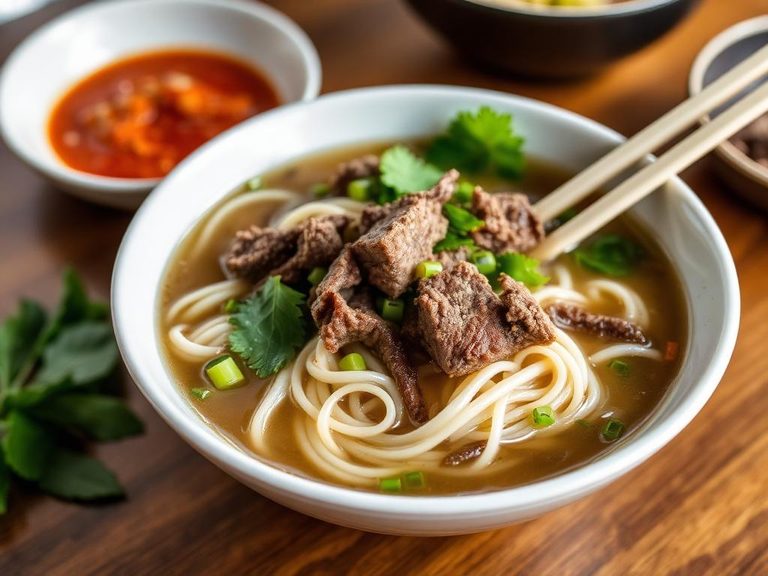
🌍 Where it's eaten
💡 Did you know?
The '0 in 0' fat designation means it's trimmed to a literal zero grams of visible fat, a level of precision more common in scientific analysis than in a typical butcher shop.
Full nutrition (USDA data · scales with serving)
| Water | 61.8 g |
| Energy | 203 kcal |
| Energy | 847 kj |
| Protein | 28.6 g |
| Total lipid (fat) | 9.2 g |
| Ash | 1.2 g |
| Carbohydrate, by difference | 0.00 g |
| Fiber, total dietary | 0.00 g |
| Total Sugars | 0.00 g |
| Calcium, Ca | 15.0 mg |
| Iron, Fe | 2.7 mg |
| Magnesium, Mg | 19.0 mg |
| Phosphorus, P | 231 mg |
| Potassium, K | 333 mg |
| Sodium, Na | 62.0 mg |
| Zinc, Zn | 6.0 mg |
| Copper, Cu | 0.09 mg |
| Manganese, Mn | 0.01 mg |
| Selenium, Se | 28.7 ug |
| Vitamin C, total ascorbic acid | 0.00 mg |
| Thiamin | 0.08 mg |
| Riboflavin | 0.27 mg |
| Niacin | 5.8 mg |
| Pantothenic acid | 0.55 mg |
| Vitamin B-6 | 0.57 mg |
| Folate, total | 7.0 ug |
| Folic acid | 0.00 ug |
| Folate, food | 7.0 ug |
| Folate, DFE | 7.0 ug |
| Choline, total | 86.9 mg |
| Betaine | 10.7 mg |
| Vitamin B-12 | 2.6 ug |
| Vitamin B-12, added | 0.00 ug |
| Vitamin A, RAE | 4.0 ug |
| Retinol | 4.0 ug |
| Carotene, beta | 0.00 ug |
| Carotene, alpha | 0.00 ug |
| Cryptoxanthin, beta | 0.00 ug |
| Vitamin A, IU | 13.0 iu |
| Lycopene | 0.00 ug |
| Lutein + zeaxanthin | 0.00 ug |
| Vitamin E (alpha-tocopherol) | 0.20 mg |
| Vitamin E, added | 0.00 mg |
| Tocopherol, beta | 0.00 mg |
| Tocopherol, gamma | 0.00 mg |
| Tocopherol, delta | 0.00 mg |
| Vitamin D (D2 + D3), International Units | 2.0 iu |
| Vitamin D (D2 + D3) | 0.10 ug |
| Vitamin D3 (cholecalciferol) | 0.10 ug |
| Vitamin K (phylloquinone) | 1.4 ug |
| Alcohol, ethyl | 0.00 g |
| Caffeine | 0.00 mg |
| Theobromine | 0.00 mg |
Fat & fatty acid profile (per 100g)
| Fatty acids, total saturated | 3.7 g |
| SFA 4:0 | 0.00 g |
| SFA 6:0 | 0.00 g |
| SFA 8:0 | 0.00 g |
| SFA 10:0 | 0.01 g |
| SFA 12:0 | 0.01 g |
| SFA 14:0 | 0.25 g |
| SFA 15:0 | 0.01 g |
| SFA 16:0 | 2.1 g |
| SFA 17:0 | 0.07 g |
| SFA 18:0 | 1.2 g |
| SFA 20:0 | 0.01 g |
| SFA 24:0 | 0.00 g |
| Fatty acids, total monounsaturated | 4.1 g |
| MUFA 14:1 | 0.03 g |
| MUFA 16:1 | 0.29 g |
| MUFA 16:1 c | 0.13 g |
| MUFA 17:1 | 0.04 g |
| MUFA 18:1 | 3.7 g |
| MUFA 18:1 c | 2.0 g |
| MUFA 18:1-11 t (18:1t n-7) | 0.08 g |
| MUFA 20:1 | 0.02 g |
| MUFA 22:1 | 0.00 g |
| Fatty acids, total polyunsaturated | 0.55 g |
| PUFA 18:2 | 0.46 g |
| PUFA 18:2 n-6 c,c | 0.22 g |
| PUFA 18:2 CLAs | 0.12 g |
| PUFA 18:3 | 0.03 g |
| PUFA 18:3 n-3 c,c,c (ALA) | 0.01 g |
| PUFA 18:4 | 0.00 g |
| PUFA 20:2 n-6 c,c | 0.00 g |
| PUFA 20:3 | 0.01 g |
| PUFA 20:3 n-6 | 0.01 g |
| PUFA 20:4 | 0.04 g |
| PUFA 20:5 n-3 (EPA) | 0.00 g |
| PUFA 22:5 n-3 (DPA) | 0.01 g |
| PUFA 22:6 n-3 (DHA) | 0.00 g |
| Fatty acids, total trans | 0.33 g |
| Fatty acids, total trans-monoenoic | 0.32 g |
| TFA 16:1 t | 0.01 g |
| TFA 18:1 t | 0.31 g |
| TFA 18:2 t not further defined | 0.01 g |
| Fatty acids, total trans-polyenoic | 0.01 g |
| Cholesterol | 85.0 mg |
Amino acid profile (per 100g)
| Tryptophan | 0.29 g |
| Threonine | 1.3 g |
| Isoleucine | 1.3 g |
| Leucine | 2.4 g |
| Lysine | 2.7 g |
| Methionine | 0.79 g |
| Cystine | 0.32 g |
| Phenylalanine | 1.2 g |
| Tyrosine | 1.0 g |
| Valine | 1.4 g |
| Arginine | 1.9 g |
| Histidine | 1.0 g |
| Alanine | 1.8 g |
| Aspartic acid | 2.8 g |
| Glutamic acid | 4.6 g |
| Glycine | 1.5 g |
| Proline | 1.3 g |
| Serine | 1.2 g |
| Hydroxyproline | 0.21 g |
FAQ
How do I cook this lean cut without it becoming dry?
Use quick, high-heat methods like searing or stir-frying, or slow, moist methods like braising. Always use a meat thermometer to avoid overcooking—aim for an internal temperature of 135°F (57°C) for medium-rare.
Is this a healthy choice for weight loss?
Yes, its extremely high protein content promotes fullness and helps preserve muscle mass during calorie restriction, while its zero-carb nature fits many weight-loss diets.
What's the difference between this and regular ground beef?
This is whole muscle meat (like from a loin or round) that has been meticulously trimmed, offering a denser texture and even leaner profile than most ground beef, which often contains added fat.
Nutrient density (calculated · NRF9.3)
Nutrient Rich Foods index: beneficial nutrients (protein, fiber, vitamins, minerals) minus saturated fat, added sugar & sodium, per 100 kcal.
NRF9.3 index — Fulgoni, Keast & Drewnowski, 2009. Computed from USDA nutrients.
Weight-loss friendliness (composite index)
Energy density 2.03 kcal/g · 56% calories from protein · 0.0 g fiber · 0.0 g sugar per 100 g.
Composite of energy density (Rolls et al., 1999), protein & fiber satiety, minus sugar. A calculated heuristic — ranks satiety-per-calorie, not a clinical measure.
Dietary load (calculated from USDA values)
Potential renal acid load. Positive = acid-forming, negative = alkaline-forming.
Sodium-to-potassium ratio: 0.19 (lower is better — aim for ≤ 1)
Sodium:potassium per WHO potassium guidance. Computed from USDA nutrients.