

Beans, navy, mature seeds, cooked, boiled, with salt
Whole food · Legumes and Legume Products

Photo: Wikipedia
Navy beans, also known as haricot beans, are small, oval-shaped legumes that turn creamy and tender when boiled, with a mild, slightly nutty flavor. Their smooth, velvety texture makes them ideal for soups, stews, and purees. Nutritionally, they are a powerhouse of plant-based protein and fiber, with minimal fat and sugar.
Calorie split: 23% protein · 73% carbs · 4% fat
↓ Full nutrition💚 Why it's loved
People love navy beans for their incredibly creamy texture and ability to absorb flavors from herbs, spices, and broths. They are a staple in comfort foods like baked beans and soups, offering a satisfying, hearty bite that's both nutritious and versatile.
⚠️ Watch-outs & how to enjoy it better
Navy beans contain oligosaccharides that can cause gas and bloating in some individuals. To reduce this, soak dried beans overnight before cooking and discard the soaking water. They also have a moderate sodium content when cooked with salt, so rinsing or using low-sodium broth can help, and pairing with vitamin C-rich foods like tomatoes can enhance iron absorption.
Key benefits
- Excellent source of plant-based protein (8.23g per 100g)
- High in dietary fiber (10.5g per 100g) for digestive health
- Low in fat (0.62g per 100g) and sugar (0.37g per 100g)
- Rich in minerals like iron, magnesium, and potassium
- Provides complex carbohydrates for sustained energy
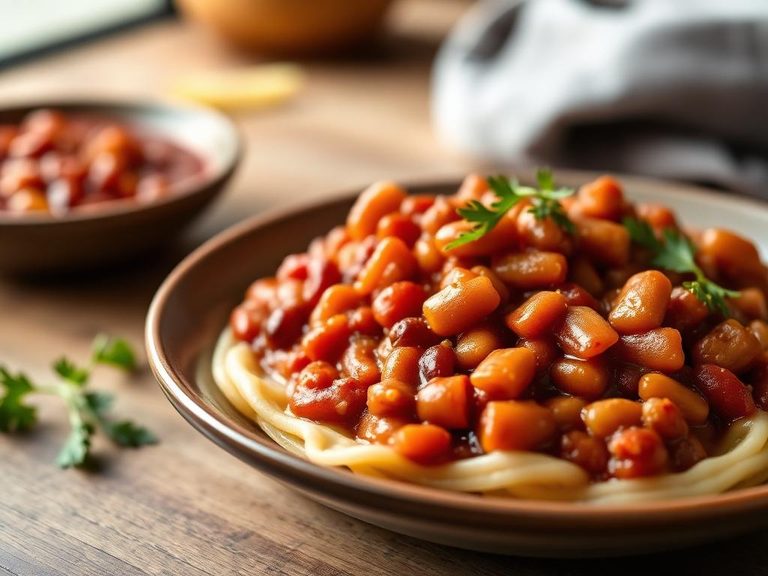
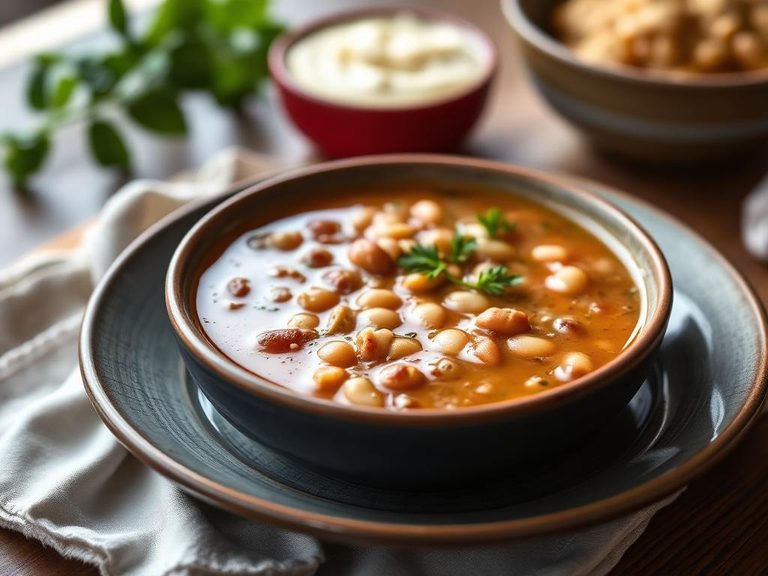
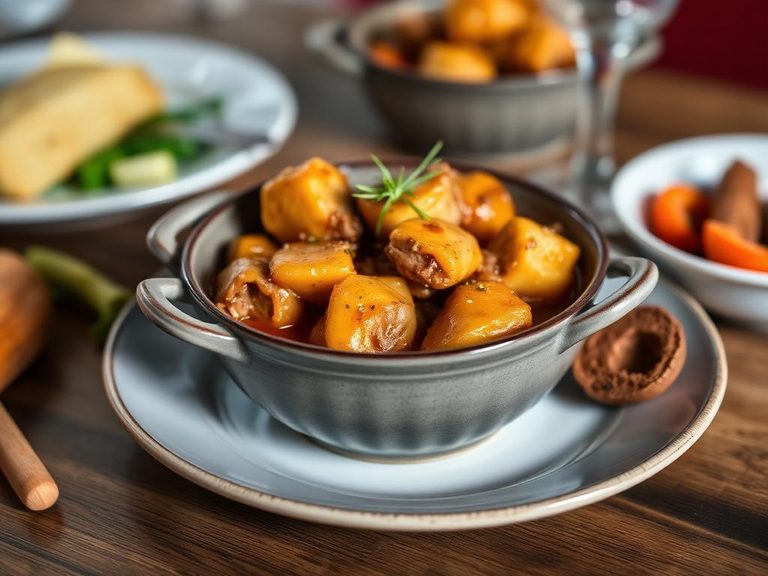
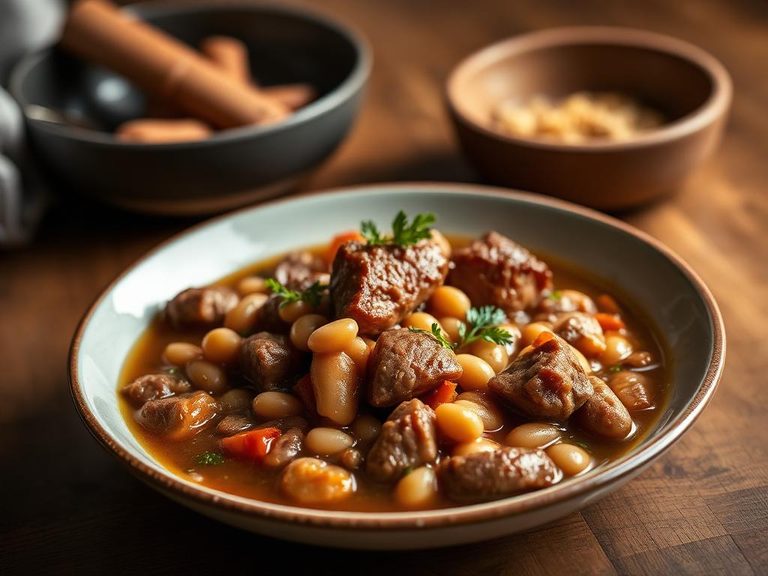
🍽️ Popular dishes
🌍 Where it's eaten
💡 Did you know?
Navy beans were a staple food for the United States Navy in the early 20th century, so much so that they were nicknamed 'Navy beans' and served to sailors as a primary source of protein and fiber.
Full nutrition (USDA data · scales with serving)
| Water | 63.8 g |
| Energy | 140 kcal |
| Energy | 585 kj |
| Protein | 8.2 g |
| Total lipid (fat) | 0.62 g |
| Ash | 1.3 g |
| Carbohydrate, by difference | 26.1 g |
| Fiber, total dietary | 10.5 g |
| Total Sugars | 0.37 g |
| Sucrose | 0.37 g |
| Glucose | 0.00 g |
| Fructose | 0.00 g |
| Lactose | 0.00 g |
| Maltose | 0.00 g |
| Galactose | 0.00 g |
| Starch | 15.4 g |
| Calcium, Ca | 69.0 mg |
| Iron, Fe | 2.4 mg |
| Magnesium, Mg | 53.0 mg |
| Phosphorus, P | 144 mg |
| Potassium, K | 389 mg |
| Sodium, Na | 237 mg |
| Zinc, Zn | 1.0 mg |
| Copper, Cu | 0.21 mg |
| Manganese, Mn | 0.53 mg |
| Selenium, Se | 2.9 ug |
| Vitamin C, total ascorbic acid | 0.90 mg |
| Thiamin | 0.24 mg |
| Riboflavin | 0.07 mg |
| Niacin | 0.65 mg |
| Pantothenic acid | 0.27 mg |
| Vitamin B-6 | 0.14 mg |
| Folate, total | 140 ug |
| Folic acid | 0.00 ug |
| Folate, food | 140 ug |
| Folate, DFE | 140 ug |
| Choline, total | 44.7 mg |
| Betaine | 0.10 mg |
| Vitamin B-12 | 0.00 ug |
| Vitamin B-12, added | 0.00 ug |
| Vitamin A, RAE | 0.00 ug |
| Retinol | 0.00 ug |
| Carotene, beta | 0.00 ug |
| Carotene, alpha | 0.00 ug |
| Cryptoxanthin, beta | 0.00 ug |
| Vitamin A, IU | 0.00 iu |
| Lycopene | 0.00 ug |
| Lutein + zeaxanthin | 0.00 ug |
| Vitamin E (alpha-tocopherol) | 0.01 mg |
| Vitamin E, added | 0.00 mg |
| Tocopherol, beta | 0.00 mg |
| Tocopherol, gamma | 1.3 mg |
| Tocopherol, delta | 0.09 mg |
| Tocotrienol, alpha | 0.00 mg |
| Tocotrienol, beta | 0.00 mg |
| Tocotrienol, gamma | 0.00 mg |
| Tocotrienol, delta | 0.00 mg |
| Vitamin D (D2 + D3), International Units | 0.00 iu |
| Vitamin D (D2 + D3) | 0.00 ug |
| Vitamin K (phylloquinone) | 0.60 ug |
| Vitamin K (Dihydrophylloquinone) | 0.00 ug |
| Alcohol, ethyl | 0.00 g |
| Caffeine | 0.00 mg |
| Theobromine | 0.00 mg |
Fat & fatty acid profile (per 100g)
| Fatty acids, total saturated | 0.03 g |
| SFA 4:0 | 0.00 g |
| SFA 6:0 | 0.00 g |
| SFA 8:0 | 0.00 g |
| SFA 10:0 | 0.00 g |
| SFA 12:0 | 0.00 g |
| SFA 13:0 | 0.00 g |
| SFA 14:0 | 0.00 g |
| SFA 15:0 | 0.00 g |
| SFA 16:0 | 0.03 g |
| SFA 17:0 | 0.00 g |
| SFA 18:0 | 0.01 g |
| SFA 20:0 | 0.00 g |
| SFA 22:0 | 0.00 g |
| SFA 24:0 | 0.00 g |
| Fatty acids, total monounsaturated | 0.05 g |
| MUFA 14:1 | 0.00 g |
| MUFA 15:1 | 0.00 g |
| MUFA 16:1 | 0.00 g |
| MUFA 17:1 | 0.00 g |
| MUFA 18:1 | 0.05 g |
| MUFA 18:1 c | 0.07 g |
| MUFA 20:1 | 0.00 g |
| MUFA 22:1 | 0.00 g |
| Fatty acids, total polyunsaturated | 0.16 g |
| PUFA 18:2 | 0.07 g |
| PUFA 18:3 | 0.09 g |
| PUFA 18:3 n-3 c,c,c (ALA) | 0.21 g |
| PUFA 18:3 n-6 c,c,c | 0.00 g |
| PUFA 20:2 n-6 c,c | 0.00 g |
| PUFA 20:3 | 0.00 g |
| PUFA 20:4 | 0.00 g |
| PUFA 20:5 n-3 (EPA) | 0.00 g |
| PUFA 22:6 n-3 (DHA) | 0.00 g |
| Fatty acids, total trans | 0.00 g |
| Fatty acids, total trans-monoenoic | 0.00 g |
| TFA 18:1 t | 0.00 g |
| Cholesterol | 0.00 mg |
Amino acid profile (per 100g)
| Tryptophan | 0.10 g |
| Threonine | 0.29 g |
| Isoleucine | 0.39 g |
| Leucine | 0.70 g |
| Lysine | 0.52 g |
| Methionine | 0.11 g |
| Cystine | 0.08 g |
| Phenylalanine | 0.47 g |
| Tyrosine | 0.20 g |
| Valine | 0.50 g |
| Arginine | 0.41 g |
| Histidine | 0.21 g |
| Alanine | 0.37 g |
| Aspartic acid | 1.1 g |
| Glutamic acid | 1.3 g |
| Glycine | 0.33 g |
| Proline | 0.45 g |
| Serine | 0.48 g |
FAQ
Are navy beans the same as great northern beans?
No, they are different varieties. Navy beans are smaller, oval, and cream-colored, while great northern beans are larger and more kidney-shaped. Both are white beans but have slightly different textures and cooking times.
How do I reduce the gas-causing effects of navy beans?
Soak dried beans for at least 8 hours or overnight, then rinse and discard the soaking water before cooking. Cooking them with a piece of kombu seaweed or adding ginger to the pot can also help reduce gas.
Can I use canned navy beans instead of dried?
Yes, canned navy beans are convenient and pre-cooked. Rinse them under water to reduce sodium content. They work well in soups, salads, and purees, but may have a slightly softer texture than freshly cooked dried beans.
Nutrient density (calculated · NRF9.3)
Nutrient Rich Foods index: beneficial nutrients (protein, fiber, vitamins, minerals) minus saturated fat, added sugar & sodium, per 100 kcal.
NRF9.3 index — Fulgoni, Keast & Drewnowski, 2009. Computed from USDA nutrients.
Weight-loss friendliness (composite index)
Energy density 1.40 kcal/g · 24% calories from protein · 10.5 g fiber · 0.4 g sugar per 100 g.
Composite of energy density (Rolls et al., 1999), protein & fiber satiety, minus sugar. A calculated heuristic — ranks satiety-per-calorie, not a clinical measure.
Dietary load (calculated from USDA values)
Potential renal acid load. Positive = acid-forming, negative = alkaline-forming.
Sodium-to-potassium ratio: 0.61 (lower is better — aim for ≤ 1)
Sodium:potassium per WHO potassium guidance. Computed from USDA nutrients.