

Avocados, raw, California
Whole food · Fruits and Fruit Juices

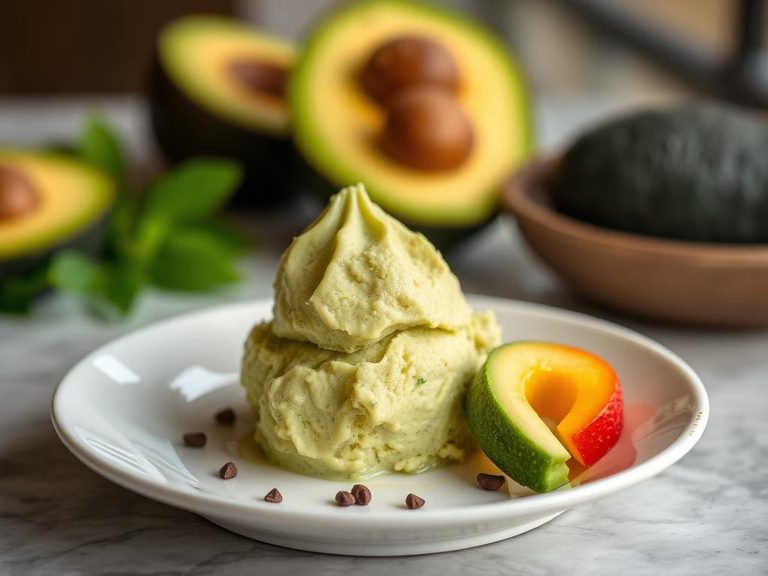
Photo: Wikipedia
The California avocado is a creamy, rich fruit with a buttery, mild flavor and smooth, pale green flesh. It's a nutritional powerhouse, offering an impressive amount of heart-healthy monounsaturated fats and fiber for its calorie count. This particular variety is prized for its high oil content, which gives it that signature velvety texture.
Calorie split: 4% protein · 19% carbs · 77% fat
↓ Full nutrition💚 Why it's loved
People adore it for its uniquely creamy, rich texture that acts as a natural, healthy fat in both savory and sweet dishes. Its mild, nutty flavor makes it an incredibly versatile base, from classic guacamole to smoothies and toast.
⚠️ Watch-outs & how to enjoy it better
Its high calorie and fat density means portion control is key for those monitoring energy intake. Some individuals may experience digestive discomfort from the high fiber content if eaten in large quantities, and the fruit can trigger latex-fruit syndrome in those with a latex allergy. To manage, start with small portions and pair it with high-fiber foods you already tolerate well.
Key benefits
- Excellent source of monounsaturated fats for heart health
- High in dietary fiber to support digestion
- Rich in potassium, more than a banana per serving
- Contains fat-soluble vitamins like K and E
- Provides plant-based protein
🍽️ Popular dishes
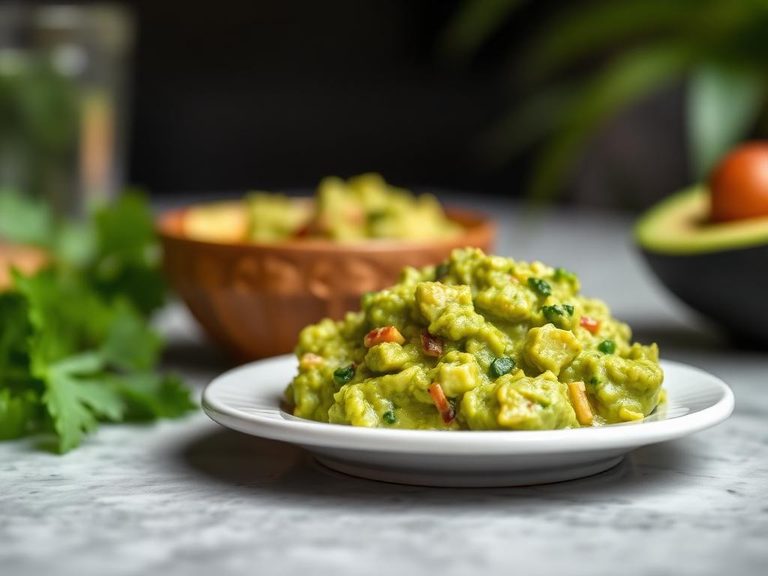

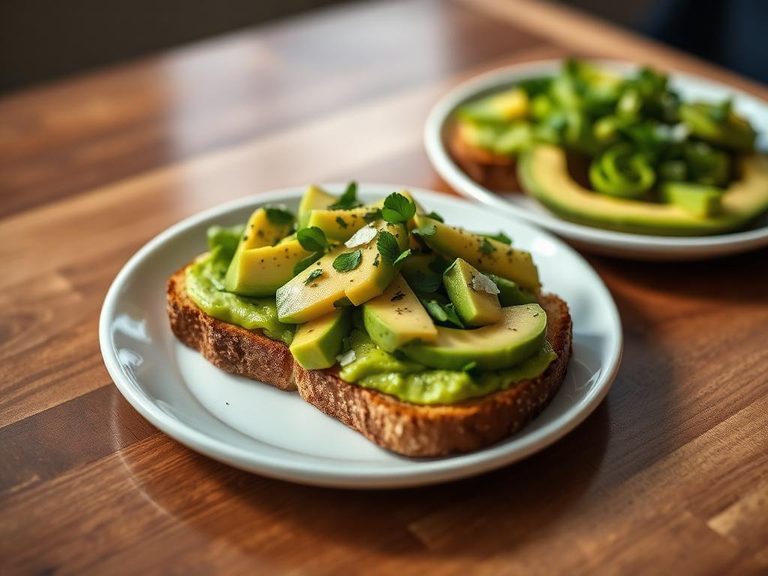
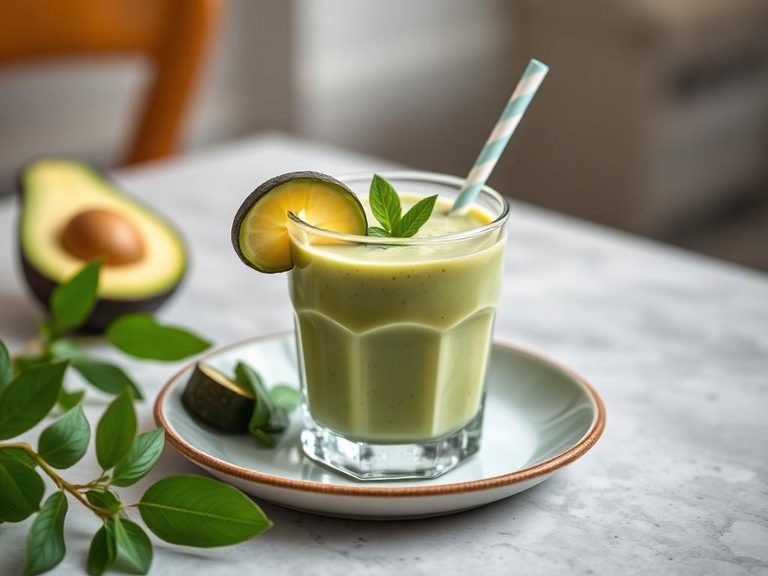
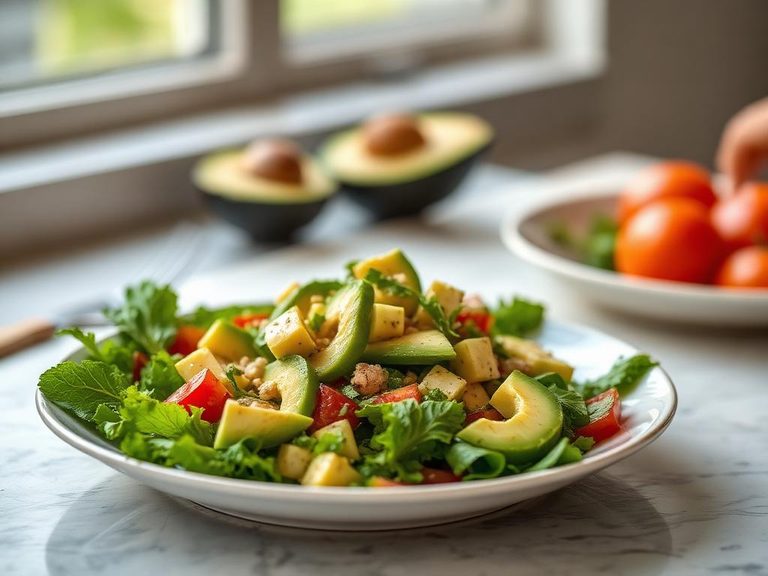
🌍 Where it's eaten
💡 Did you know?
California produces about 90% of the U.S. avocado crop, but the state's 'Avocado Belt' is only about 10 miles wide in coastal counties.
Full nutrition (USDA data · scales with serving)
| Water | 72.3 g |
| Energy | 167 kcal |
| Energy | 697 kj |
| Protein | 2.0 g |
| Total lipid (fat) | 15.4 g |
| Ash | 1.7 g |
| Carbohydrate, by difference | 8.6 g |
| Fiber, total dietary | 6.8 g |
| Total Sugars | 0.30 g |
| Sucrose | 0.06 g |
| Glucose | 0.08 g |
| Fructose | 0.08 g |
| Lactose | 0.00 g |
| Maltose | 0.00 g |
| Galactose | 0.08 g |
| Starch | 0.11 g |
| Calcium, Ca | 13.0 mg |
| Iron, Fe | 0.61 mg |
| Magnesium, Mg | 29.0 mg |
| Phosphorus, P | 54.0 mg |
| Potassium, K | 507 mg |
| Sodium, Na | 8.0 mg |
| Zinc, Zn | 0.68 mg |
| Copper, Cu | 0.17 mg |
| Manganese, Mn | 0.15 mg |
| Selenium, Se | 0.40 ug |
| Vitamin C, total ascorbic acid | 8.8 mg |
| Thiamin | 0.07 mg |
| Riboflavin | 0.14 mg |
| Niacin | 1.9 mg |
| Pantothenic acid | 1.5 mg |
| Vitamin B-6 | 0.29 mg |
| Folate, total | 89.0 ug |
| Folic acid | 0.00 ug |
| Folate, food | 89.0 ug |
| Folate, DFE | 89.0 ug |
| Choline, total | 14.2 mg |
| Betaine | 0.70 mg |
| Vitamin B-12 | 0.00 ug |
| Vitamin A, RAE | 7.0 ug |
| Retinol | 0.00 ug |
| Carotene, beta | 63.0 ug |
| Carotene, alpha | 24.0 ug |
| Cryptoxanthin, beta | 27.0 ug |
| Vitamin A, IU | 147 iu |
| Lycopene | 0.00 ug |
| Lutein + zeaxanthin | 271 ug |
| Vitamin E (alpha-tocopherol) | 2.0 mg |
| Tocopherol, beta | 0.04 mg |
| Tocopherol, gamma | 0.32 mg |
| Tocopherol, delta | 0.02 mg |
| Tocotrienol, alpha | 0.01 mg |
| Tocotrienol, beta | 0.00 mg |
| Tocotrienol, gamma | 0.00 mg |
| Tocotrienol, delta | 0.00 mg |
| Vitamin D (D2 + D3), International Units | 0.00 iu |
| Vitamin D (D2 + D3) | 0.00 ug |
| Vitamin K (phylloquinone) | 21.0 ug |
| Vitamin K (Dihydrophylloquinone) | 0.00 ug |
Fat & fatty acid profile (per 100g)
| Fatty acids, total saturated | 2.1 g |
| SFA 8:0 | 0.00 g |
| SFA 10:0 | 0.00 g |
| SFA 12:0 | 0.00 g |
| SFA 14:0 | 0.00 g |
| SFA 15:0 | 0.00 g |
| SFA 16:0 | 2.1 g |
| SFA 17:0 | 0.00 g |
| SFA 18:0 | 0.05 g |
| SFA 20:0 | 0.00 g |
| SFA 22:0 | 0.00 g |
| SFA 24:0 | 0.00 g |
| Fatty acids, total monounsaturated | 9.8 g |
| MUFA 14:1 | 0.00 g |
| MUFA 15:1 | 0.00 g |
| MUFA 16:1 | 0.70 g |
| MUFA 17:1 | 0.01 g |
| MUFA 18:1 | 9.1 g |
| MUFA 20:1 | 0.03 g |
| MUFA 22:1 | 0.00 g |
| Fatty acids, total polyunsaturated | 1.8 g |
| PUFA 18:2 | 1.7 g |
| PUFA 18:3 | 0.13 g |
| PUFA 18:3 n-3 c,c,c (ALA) | 0.11 g |
| PUFA 18:3 n-6 c,c,c | 0.01 g |
| PUFA 18:4 | 0.00 g |
| PUFA 20:2 n-6 c,c | 0.00 g |
| PUFA 20:3 | 0.02 g |
| PUFA 20:4 | 0.00 g |
| PUFA 20:5 n-3 (EPA) | 0.00 g |
| PUFA 22:5 n-3 (DPA) | 0.00 g |
| PUFA 22:6 n-3 (DHA) | 0.00 g |
| Fatty acids, total trans | 0.00 g |
| Cholesterol | 0.00 mg |
| Stigmasterol | 2.0 mg |
| Campesterol | 5.0 mg |
| Beta-sitosterol | 76.0 mg |
Amino acid profile (per 100g)
| Tryptophan | 0.03 g |
| Threonine | 0.07 g |
| Isoleucine | 0.08 g |
| Leucine | 0.14 g |
| Lysine | 0.13 g |
| Methionine | 0.04 g |
| Cystine | 0.03 g |
| Phenylalanine | 0.10 g |
| Tyrosine | 0.05 g |
| Valine | 0.10 g |
| Arginine | 0.09 g |
| Histidine | 0.05 g |
| Alanine | 0.11 g |
| Aspartic acid | 0.23 g |
| Glutamic acid | 0.28 g |
| Glycine | 0.10 g |
| Proline | 0.10 g |
| Serine | 0.11 g |
FAQ
How do I pick a ripe California avocado?
Gently press the skin near the stem; it should yield to firm, gentle pressure. Avoid avocados with deep indentations or mushy spots.
Why does my avocado turn brown so quickly?
The flesh oxidizes when exposed to air. To slow browning, leave the pit in, sprinkle with lemon or lime juice, and press plastic wrap directly onto the surface.
Are avocado pits edible?
While sometimes used in small amounts in smoothies, avocado pits are not commonly eaten and can be a choking hazard. The flesh is the primary edible part.
Nutrient density (calculated · NRF9.3)
Nutrient Rich Foods index: beneficial nutrients (protein, fiber, vitamins, minerals) minus saturated fat, added sugar & sodium, per 100 kcal.
NRF9.3 index — Fulgoni, Keast & Drewnowski, 2009. Computed from USDA nutrients.
Weight-loss friendliness (composite index)
Energy density 1.67 kcal/g · 5% calories from protein · 6.8 g fiber · 0.3 g sugar per 100 g.
Composite of energy density (Rolls et al., 1999), protein & fiber satiety, minus sugar. A calculated heuristic — ranks satiety-per-calorie, not a clinical measure.
Dietary load (calculated from USDA values)
Potential renal acid load. Positive = acid-forming, negative = alkaline-forming.
Sodium-to-potassium ratio: 0.02 (lower is better — aim for ≤ 1)
Sodium:potassium per WHO potassium guidance. Computed from USDA nutrients.