Yogurt, Greek, plain, lowfat
Whole food · Dairy and Egg Products

Photo: Wikipedia
Greek yogurt is a strained, thick, and creamy yogurt that has a rich, velvety texture and a tangy, slightly tart flavor profile. Its straining process concentrates the protein, making it a nutritional powerhouse with nearly 10 grams of protein per 100 grams. This plain, low-fat version is a blank canvas, offering a clean, dairy-forward taste without added sugars.
💚 Why it's loved
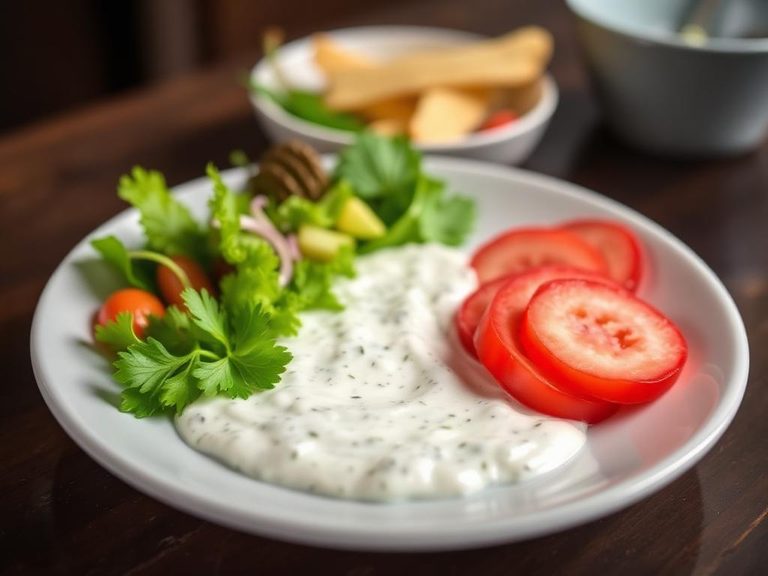
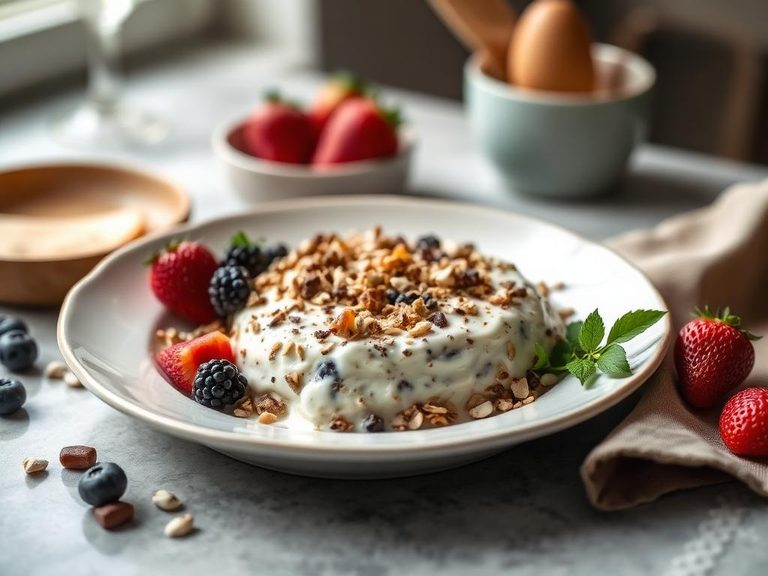
People love its incredibly thick, spoonable texture and satisfying tang, which makes it a versatile staple. It's cherished as a protein-rich breakfast, a healthy baking substitute for sour cream or mayo, and a cooling base for spicy dishes.
⚠️ Watch-outs & how to enjoy it better
Some find its pronounced tanginess or thick texture unappealing. Those with lactose intolerance may experience digestive discomfort, though the straining process reduces lactose. To counteract, choose a lactose-free version, pair it with a small amount of sweet fruit or honey to balance the tartness, or use it in savory dishes where its tang is an asset.
Key benefits
- Excellent source of high-quality protein for muscle repair and sati.g. High in calcium for bone health. Contains probiotics that support gut microbiome health. Low in fat compared to regular yogurt. Provides essential nutrients like phosphorus and potassium.
🍽️ Popular dishes

🌍 Where it's eaten
💡 Did you know?
The straining process that gives Greek yogurt its thickness is called 'labneh' in the Middle East, where it's often strained even further until it's a spreadable cheese-like consistency.
Full nutrition (scales with serving)
| Water | 83.6 g |
| Energy | 73.0 kcal |
| Energy | 305 kj |
| Protein | 9.9 g |
| Total lipid (fat) | 1.9 g |
| Ash | 0.63 g |
| Carbohydrate, by difference | 3.9 g |
| Fiber, total dietary | 0.00 g |
| Total Sugars | 3.6 g |
| Sucrose | 0.00 g |
| Glucose | 0.00 g |
| Fructose | 0.00 g |
| Lactose | 2.9 g |
| Maltose | 0.00 g |
| Galactose | 0.64 g |
| Starch | 0.00 g |
| Calcium, Ca | 115 mg |
| Iron, Fe | 0.04 mg |
| Magnesium, Mg | 11.0 mg |
| Phosphorus, P | 137 mg |
| Potassium, K | 141 mg |
| Sodium, Na | 34.0 mg |
| Zinc, Zn | 0.60 mg |
| Copper, Cu | 0.02 mg |
| Manganese, Mn | 0.01 mg |
| Selenium, Se | 12.4 ug |
| Vitamin C, total ascorbic acid | 0.80 mg |
| Thiamin | 0.04 mg |
| Riboflavin | 0.23 mg |
| Niacin | 0.20 mg |
| Pantothenic acid | 0.47 mg |
| Vitamin B-6 | 0.06 mg |
| Folate, total | 12.0 ug |
| Folic acid | 0.00 ug |
| Folate, food | 12.0 ug |
| Folate, DFE | 12.0 ug |
| Choline, total | 15.2 mg |
| Vitamin B-12 | 0.52 ug |
| Vitamin B-12, added | 0.00 ug |
| Vitamin A, RAE | 90.0 ug |
| Retinol | 90.0 ug |
| Carotene, beta | 6.0 ug |
| Carotene, alpha | 0.00 ug |
| Cryptoxanthin, beta | 0.00 ug |
| Vitamin A, IU | 309 iu |
| Lycopene | 0.00 ug |
| Lutein + zeaxanthin | 1.0 ug |
| Vitamin E (alpha-tocopherol) | 0.04 mg |
| Vitamin E, added | 0.00 mg |
| Vitamin D (D2 + D3), International Units | 0.00 iu |
| Vitamin D (D2 + D3) | 0.00 ug |
| Vitamin K (phylloquinone) | 0.20 ug |
| Alcohol, ethyl | 0.00 g |
| Caffeine | 0.00 mg |
| Theobromine | 0.00 mg |
Fat & fatty acid profile (per 100g)
| Fatty acids, total saturated | 1.2 g |
| SFA 4:0 | 0.05 g |
| SFA 6:0 | 0.04 g |
| SFA 8:0 | 0.02 g |
| SFA 10:0 | 0.07 g |
| SFA 12:0 | 0.06 g |
| SFA 14:0 | 0.19 g |
| SFA 15:0 | 0.02 g |
| SFA 16:0 | 0.57 g |
| SFA 17:0 | 0.01 g |
| SFA 18:0 | 0.20 g |
| SFA 20:0 | 0.00 g |
| SFA 22:0 | 0.00 g |
| SFA 24:0 | 0.00 g |
| Fatty acids, total monounsaturated | 0.49 g |
| MUFA 14:1 | 0.02 g |
| MUFA 15:1 | 0.00 g |
| MUFA 16:1 | 0.03 g |
| MUFA 16:1 c | 0.03 g |
| MUFA 17:1 | 0.00 g |
| MUFA 18:1 | 0.43 g |
| MUFA 18:1 c | 0.38 g |
| MUFA 20:1 | 0.00 g |
| MUFA 22:1 | 0.00 g |
| MUFA 22:1 c | 0.00 g |
| MUFA 24:1 c | 0.00 g |
| Fatty acids, total polyunsaturated | 0.08 g |
| PUFA 18:2 | 0.07 g |
| PUFA 18:2 n-6 c,c | 0.05 g |
| PUFA 18:2 CLAs | 0.01 g |
| PUFA 18:3 | 0.01 g |
| PUFA 18:3 n-3 c,c,c (ALA) | 0.01 g |
| PUFA 18:3 n-6 c,c,c | 0.00 g |
| PUFA 18:3i | 0.00 g |
| PUFA 18:4 | 0.00 g |
| PUFA 20:2 n-6 c,c | 0.00 g |
| PUFA 20:3 | 0.00 g |
| PUFA 20:3 n-3 | 0.00 g |
| PUFA 20:3 n-6 | 0.00 g |
| PUFA 20:4 | 0.00 g |
| PUFA 20:5 n-3 (EPA) | 0.00 g |
| PUFA 22:4 | 0.00 g |
| PUFA 22:5 n-3 (DPA) | 0.00 g |
| PUFA 22:6 n-3 (DHA) | 0.00 g |
| Fatty acids, total trans | 0.06 g |
| Fatty acids, total trans-monoenoic | 0.05 g |
| TFA 16:1 t | 0.01 g |
| TFA 18:1 t | 0.05 g |
| TFA 22:1 t | 0.00 g |
| TFA 18:2 t not further defined | 0.01 g |
| Fatty acids, total trans-polyenoic | 0.01 g |
| Cholesterol | 10.0 mg |
Amino acid profile (per 100g)
| Tryptophan | 0.03 g |
| Threonine | 0.22 g |
| Isoleucine | 0.29 g |
| Leucine | 0.53 g |
| Lysine | 0.47 g |
| Methionine | 0.15 g |
| Cystine | 0.05 g |
| Phenylalanine | 0.29 g |
| Tyrosine | 0.27 g |
| Valine | 0.43 g |
| Arginine | 0.16 g |
| Histidine | 0.13 g |
| Alanine | 0.23 g |
| Aspartic acid | 0.42 g |
| Glutamic acid | 1.0 g |
| Glycine | 0.13 g |
| Proline | 0.62 g |
| Serine | 0.33 g |
FAQ
Is Greek yogurt just regular yogurt with the whey drained out?
Essentially, yes. Regular yogurt is strained to remove some whey, which concentrates the milk solids, resulting in a thicker texture, higher protein, and lower lactose content per serving.
Why is plain Greek yogurt so high in protein?
The straining process removes liquid whey and lactose, concentrating the remaining milk solids. This significantly boosts the protein content by weight, often nearly doubling that of regular yogurt.
Can I use Greek yogurt in baking?
Absolutely. It's a popular substitute for sour cream, buttermilk, or oil in recipes like muffins, cakes, and pancakes. It adds moisture, a slight tang, and a protein boost while reducing fat content.