Squash, summer, crookneck and straightneck, raw
Whole food · Vegetables and Vegetable Products
Summer squash, specifically crookneck and straightneck varieties, offers a tender, slightly spongy flesh with a mild, subtly sweet flavor and a thin, edible skin. Its high water content (over 90%) makes it incredibly low in calories at just 19 kcal per 100g, while providing a good source of vitamin C and a modest amount of fiber. This versatile vegetable is a staple in summer cooking, prized for its ability to absorb flavors and its delicate, non-bitter taste.
💚 Why it's loved
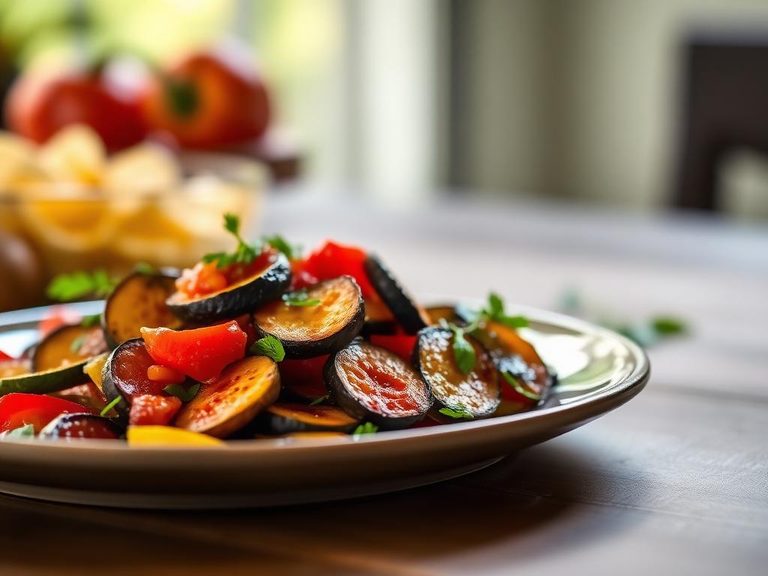
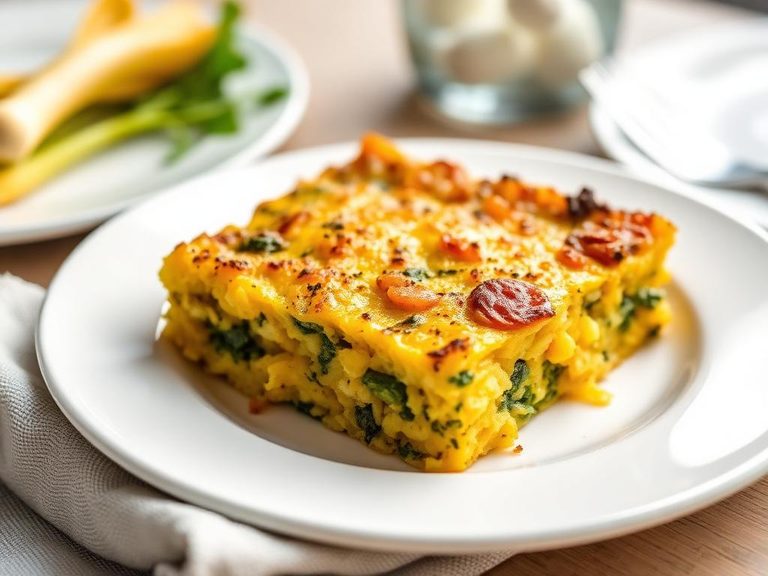
People love summer squash for its incredibly mild, non-bitter flavor and tender texture that readily absorbs herbs, spices, and sauces. Its versatility shines in everything from quick sautés and grilled dishes to raw salads and baked gratins, making it a beloved summer garden staple.
⚠️ Watch-outs & how to enjoy it better
The high water content can lead to a mushy texture if overcooked, and its mild flavor can be perceived as bland without proper seasoning. To counteract sogginess, cook it quickly over high heat (like grilling or sautéing) or use it in dishes where moisture is desirable, like soups or stews. Pairing it with bold flavors like garlic, lemon, or cheese can enhance its taste.
Key benefits
- Very low in calories and high in water content, aiding hydration.
- Good source of antioxidant vitamin C, supporting immune function.
- Contains fiber for digestive health and satiety.
- Provides potassium, which is important for blood pressure regulation.
- Low in fat and naturally cholesterol-free.
🍽️ Popular dishes
🌍 Where it's eaten
💡 Did you know?
The 'crookneck' variety gets its name from the distinctive curved neck of the fruit, a trait that is purely cosmetic and doesn't affect the flavor or nutritional value compared to its straightneck cousin.
Full nutrition (scales with serving)
| Water | 94.3 g |
| Energy | 19.0 kcal |
| Energy | 78.0 kj |
| Protein | 1.0 g |
| Total lipid (fat) | 0.27 g |
| Ash | 0.56 g |
| Carbohydrate, by difference | 3.9 g |
| Fiber, total dietary | 1.0 g |
| Total Sugars | 2.9 g |
| Sucrose | 0.06 g |
| Glucose | 1.2 g |
| Fructose | 1.6 g |
| Lactose | 0.00 g |
| Maltose | 0.00 g |
| Galactose | 0.00 g |
| Starch | 0.00 g |
| Calcium, Ca | 21.0 mg |
| Iron, Fe | 0.44 mg |
| Magnesium, Mg | 20.0 mg |
| Phosphorus, P | 32.0 mg |
| Potassium, K | 222 mg |
| Sodium, Na | 2.0 mg |
| Zinc, Zn | 0.29 mg |
| Copper, Cu | 0.09 mg |
| Manganese, Mn | 0.17 mg |
| Selenium, Se | 0.20 ug |
| Vitamin C, total ascorbic acid | 19.3 mg |
| Thiamin | 0.05 mg |
| Riboflavin | 0.04 mg |
| Niacin | 0.45 mg |
| Pantothenic acid | 0.16 mg |
| Vitamin B-6 | 0.10 mg |
| Folate, total | 19.0 ug |
| Folic acid | 0.00 ug |
| Folate, food | 19.0 ug |
| Folate, DFE | 19.0 ug |
| Choline, total | 7.1 mg |
| Vitamin B-12 | 0.00 ug |
| Vitamin B-12, added | 0.00 ug |
| Vitamin A, RAE | 8.0 ug |
| Retinol | 0.00 ug |
| Carotene, beta | 90.0 ug |
| Carotene, alpha | 0.00 ug |
| Cryptoxanthin, beta | 0.00 ug |
| Vitamin A, IU | 150 iu |
| Lycopene | 0.00 ug |
| Lutein + zeaxanthin | 290 ug |
| Vitamin E (alpha-tocopherol) | 0.13 mg |
| Vitamin E, added | 0.00 mg |
| Vitamin D (D2 + D3), International Units | 0.00 iu |
| Vitamin D (D2 + D3) | 0.00 ug |
| Vitamin K (phylloquinone) | 3.2 ug |
| Alcohol, ethyl | 0.00 g |
| Caffeine | 0.00 mg |
| Theobromine | 0.00 mg |
Fat & fatty acid profile (per 100g)
| Fatty acids, total saturated | 0.09 g |
| SFA 4:0 | 0.00 g |
| SFA 6:0 | 0.00 g |
| SFA 8:0 | 0.00 g |
| SFA 10:0 | 0.01 g |
| SFA 12:0 | 0.00 g |
| SFA 14:0 | 0.00 g |
| SFA 15:0 | 0.00 g |
| SFA 16:0 | 0.07 g |
| SFA 17:0 | 0.00 g |
| SFA 18:0 | 0.01 g |
| SFA 20:0 | 0.00 g |
| SFA 22:0 | 0.00 g |
| SFA 24:0 | 0.00 g |
| Fatty acids, total monounsaturated | 0.01 g |
| MUFA 14:1 | 0.00 g |
| MUFA 15:1 | 0.00 g |
| MUFA 16:1 | 0.00 g |
| MUFA 16:1 c | 0.00 g |
| MUFA 17:1 | 0.00 g |
| MUFA 18:1 | 0.01 g |
| MUFA 18:1 c | 0.01 g |
| MUFA 20:1 | 0.00 g |
| MUFA 22:1 | 0.00 g |
| MUFA 22:1 c | 0.00 g |
| MUFA 24:1 c | 0.00 g |
| Fatty acids, total polyunsaturated | 0.08 g |
| PUFA 18:2 | 0.04 g |
| PUFA 18:2 n-6 c,c | 0.04 g |
| PUFA 18:2 CLAs | 0.00 g |
| PUFA 18:3 | 0.04 g |
| PUFA 18:3 n-3 c,c,c (ALA) | 0.04 g |
| PUFA 18:3 n-6 c,c,c | 0.00 g |
| PUFA 18:4 | 0.00 g |
| PUFA 20:2 n-6 c,c | 0.00 g |
| PUFA 20:3 | 0.00 g |
| PUFA 20:3 n-3 | 0.00 g |
| PUFA 20:3 n-6 | 0.00 g |
| PUFA 20:4 | 0.00 g |
| PUFA 20:5 n-3 (EPA) | 0.00 g |
| PUFA 22:4 | 0.00 g |
| PUFA 22:5 n-3 (DPA) | 0.00 g |
| PUFA 22:6 n-3 (DHA) | 0.00 g |
| Fatty acids, total trans | 0.00 g |
| Fatty acids, total trans-monoenoic | 0.00 g |
| TFA 16:1 t | 0.00 g |
| TFA 18:1 t | 0.00 g |
| TFA 22:1 t | 0.00 g |
| TFA 18:2 t not further defined | 0.00 g |
| Fatty acids, total trans-polyenoic | 0.00 g |
| Cholesterol | 0.00 mg |
Amino acid profile (per 100g)
| Tryptophan | 0.01 g |
| Threonine | 0.02 g |
| Isoleucine | 0.03 g |
| Leucine | 0.06 g |
| Lysine | 0.05 g |
| Methionine | 0.01 g |
| Cystine | 0.01 g |
| Phenylalanine | 0.03 g |
| Tyrosine | 0.03 g |
| Valine | 0.04 g |
| Arginine | 0.04 g |
| Histidine | 0.02 g |
| Alanine | 0.05 g |
| Aspartic acid | 0.12 g |
| Glutamic acid | 0.10 g |
| Glycine | 0.04 g |
| Proline | 0.03 g |
| Serine | 0.04 g |
FAQ
What's the difference between crookneck and straightneck squash?
The primary difference is the shape of the neck. Crookneck has a curved, bulbous neck, while straightneck has a more uniform, tapered shape. Nutritionally and in taste, they are nearly identical.
Do I need to peel summer squash before eating?
No, the skin is thin, tender, and edible, especially for younger, smaller squash. Peeling is optional and usually only done for very large, mature squash with tough skin.
How do I prevent summer squash from getting watery in recipes?
To reduce moisture, you can salt the sliced squash and let it sit for 10-15 minutes to draw out water, then pat dry. Cooking methods like grilling, broiling, or sautéing over high heat also help evaporate moisture quickly.