

Wheat flour, whole-grain (Includes foods for USDA's Food Distribution Program)
Whole food · Cereal Grains and Pasta
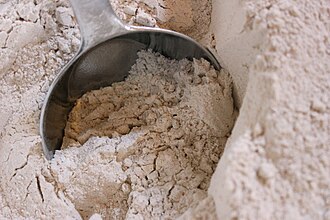
Photo: Wikipedia
Whole-wheat flour is the rustic, nutty backbone of hearty baking, milled from the entire wheat kernel to retain its bran and germ. Its texture is denser and more textured than refined white flour, with a robust, earthy flavor that deepens the character of breads and pastries. Nutritionally, it's a powerhouse, delivering over 10 grams of fiber per 100g, which supports digestive health and sustained energy.
Calorie split: 15% protein · 79% carbs · 6% fat
↓ Full nutrition💚 Why it's loved
People love it for its deep, nutty flavor and the satisfying, substantial texture it brings to baked goods. It's a versatile staple that connects home cooks to a tradition of wholesome, hearty meals across many cultures.
⚠️ Watch-outs & how to enjoy it better
Its dense texture can make baked goods feel heavy or dry if not balanced properly, and its high fiber content may cause digestive discomfort for some if introduced too quickly. For those managing blood sugar, its carbohydrates still require mindful portioning; pairing it with protein or healthy fats (like nuts or eggs) can help moderate the glycemic response.
Key benefits
- High in dietary fiber (10.7g per 100g) for digestive health.
- Rich in plant-based protein (13.21g per 100g).
- Provides complex carbohydrates for sustained energy release.
- Contains essential minerals like magnesium, zinc, and iron from the bran and germ.
- Lower glycemic index than refined white flour.
🍽️ Popular dishes
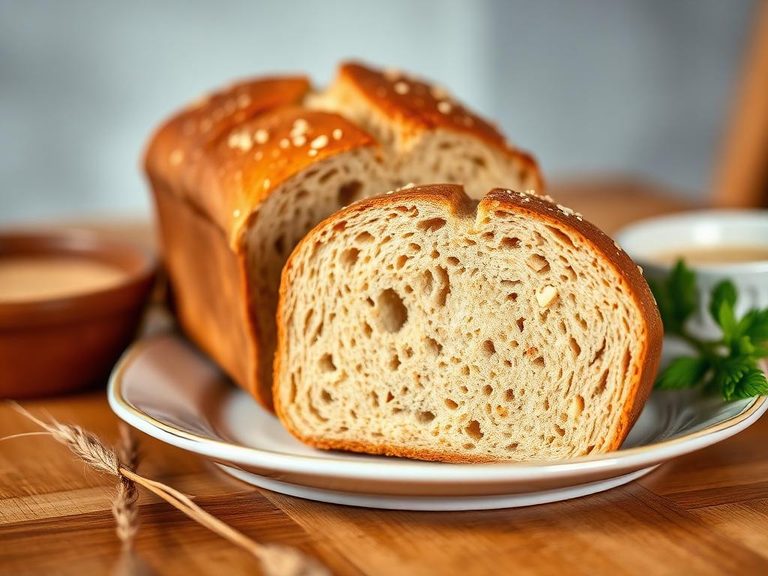





🌍 Where it's eaten
💡 Did you know?
The bran in whole-wheat flour is a natural source of phytic acid, which can bind minerals like iron and zinc; traditional soaking or fermenting (as in sourdough) can help reduce this effect and improve nutrient absorption.
Full nutrition (USDA data · scales with serving)
| Water | 10.7 g |
| Energy | 340 kcal |
| Energy | 1424 kj |
| Protein | 13.2 g |
| Total lipid (fat) | 2.5 g |
| Ash | 1.6 g |
| Carbohydrate, by difference | 72.0 g |
| Fiber, total dietary | 10.7 g |
| Total Sugars | 0.41 g |
| Sucrose | 0.36 g |
| Glucose | 0.00 g |
| Fructose | 0.05 g |
| Starch | 57.8 g |
| Calcium, Ca | 34.0 mg |
| Iron, Fe | 3.6 mg |
| Magnesium, Mg | 137 mg |
| Phosphorus, P | 357 mg |
| Potassium, K | 363 mg |
| Sodium, Na | 2.0 mg |
| Zinc, Zn | 2.6 mg |
| Copper, Cu | 0.41 mg |
| Manganese, Mn | 4.1 mg |
| Selenium, Se | 61.8 ug |
| Vitamin C, total ascorbic acid | 0.00 mg |
| Thiamin | 0.50 mg |
| Riboflavin | 0.17 mg |
| Niacin | 5.0 mg |
| Pantothenic acid | 0.60 mg |
| Vitamin B-6 | 0.41 mg |
| Folate, total | 44.0 ug |
| Folic acid | 0.00 ug |
| Folate, food | 44.0 ug |
| Folate, DFE | 44.0 ug |
| Choline, total | 31.2 mg |
| Betaine | 72.8 mg |
| Vitamin B-12 | 0.00 ug |
| Vitamin B-12, added | 0.00 ug |
| Vitamin A, RAE | 0.00 ug |
| Retinol | 0.00 ug |
| Carotene, beta | 5.0 ug |
| Carotene, alpha | 0.00 ug |
| Cryptoxanthin, beta | 0.00 ug |
| Vitamin A, IU | 9.0 iu |
| Lycopene | 0.00 ug |
| Lutein + zeaxanthin | 220 ug |
| Vitamin E (alpha-tocopherol) | 0.71 mg |
| Vitamin E, added | 0.00 mg |
| Tocopherol, beta | 0.23 mg |
| Tocopherol, gamma | 1.9 mg |
| Tocopherol, delta | 0.00 mg |
| Tocotrienol, alpha | 0.30 mg |
| Tocotrienol, beta | 0.00 mg |
| Tocotrienol, gamma | 0.03 mg |
| Tocotrienol, delta | 0.00 mg |
| Vitamin D (D2 + D3), International Units | 0.00 iu |
| Vitamin D (D2 + D3) | 0.00 ug |
| Vitamin K (phylloquinone) | 1.9 ug |
| Alcohol, ethyl | 0.00 g |
| Caffeine | 0.00 mg |
| Theobromine | 0.00 mg |
Fat & fatty acid profile (per 100g)
| Fatty acids, total saturated | 0.43 g |
| SFA 4:0 | 0.00 g |
| SFA 6:0 | 0.00 g |
| SFA 8:0 | 0.00 g |
| SFA 10:0 | 0.00 g |
| SFA 12:0 | 0.00 g |
| SFA 14:0 | 0.00 g |
| SFA 15:0 | 0.00 g |
| SFA 16:0 | 0.41 g |
| SFA 17:0 | 0.00 g |
| SFA 18:0 | 0.02 g |
| SFA 20:0 | 0.00 g |
| SFA 22:0 | 0.00 g |
| SFA 24:0 | 0.00 g |
| Fatty acids, total monounsaturated | 0.28 g |
| MUFA 14:1 | 0.00 g |
| MUFA 15:1 | 0.00 g |
| MUFA 16:1 | 0.00 g |
| MUFA 17:1 | 0.00 g |
| MUFA 18:1 | 0.27 g |
| MUFA 20:1 | 0.01 g |
| MUFA 22:1 | 0.00 g |
| MUFA 24:1 c | 0.00 g |
| Fatty acids, total polyunsaturated | 1.2 g |
| PUFA 18:2 | 1.1 g |
| PUFA 18:3 | 0.07 g |
| PUFA 18:4 | 0.00 g |
| PUFA 20:2 n-6 c,c | 0.00 g |
| PUFA 20:3 | 0.00 g |
| PUFA 20:4 | 0.00 g |
| PUFA 20:5 n-3 (EPA) | 0.00 g |
| PUFA 21:5 | 0.00 g |
| PUFA 22:4 | 0.00 g |
| PUFA 22:5 n-3 (DPA) | 0.00 g |
| PUFA 22:6 n-3 (DHA) | 0.00 g |
| Cholesterol | 0.00 mg |
Amino acid profile (per 100g)
| Tryptophan | 0.17 g |
| Threonine | 0.37 g |
| Isoleucine | 0.44 g |
| Leucine | 0.90 g |
| Lysine | 0.36 g |
| Methionine | 0.23 g |
| Cystine | 0.28 g |
| Phenylalanine | 0.68 g |
| Tyrosine | 0.28 g |
| Valine | 0.56 g |
| Arginine | 0.65 g |
| Histidine | 0.36 g |
| Alanine | 0.49 g |
| Aspartic acid | 0.72 g |
| Glutamic acid | 4.3 g |
| Glycine | 0.57 g |
| Proline | 2.1 g |
| Serine | 0.62 g |
FAQ
What's the difference between whole-wheat flour and white flour?
Whole-wheat flour includes the bran, germ, and endosperm, making it higher in fiber, protein, and nutrients. White flour is refined, removing the bran and germ, which results in a lighter texture but fewer nutrients.
Can I substitute whole-wheat flour for white flour in recipes?
Yes, but it's often best to start with a 50/50 blend to maintain texture. Whole-wheat flour absorbs more liquid, so you may need to adjust the recipe's moisture content.
Is whole-wheat flour gluten-free?
No, it contains gluten, which is the protein that gives bread its structure. People with celiac disease or gluten sensitivity should avoid it.
Nutrient density (calculated · NRF9.3)
Nutrient Rich Foods index: beneficial nutrients (protein, fiber, vitamins, minerals) minus saturated fat, added sugar & sodium, per 100 kcal.
NRF9.3 index — Fulgoni, Keast & Drewnowski, 2009. Computed from USDA nutrients.
Weight-loss friendliness (composite index)
Energy density 3.40 kcal/g · 16% calories from protein · 10.7 g fiber · 0.4 g sugar per 100 g.
Composite of energy density (Rolls et al., 1999), protein & fiber satiety, minus sugar. A calculated heuristic — ranks satiety-per-calorie, not a clinical measure.
Dietary load (calculated from USDA values)
Potential renal acid load. Positive = acid-forming, negative = alkaline-forming.
Sodium-to-potassium ratio: 0.01 (lower is better — aim for ≤ 1)
Sodium:potassium per WHO potassium guidance. Computed from USDA nutrients.