

Whole-wheat bread
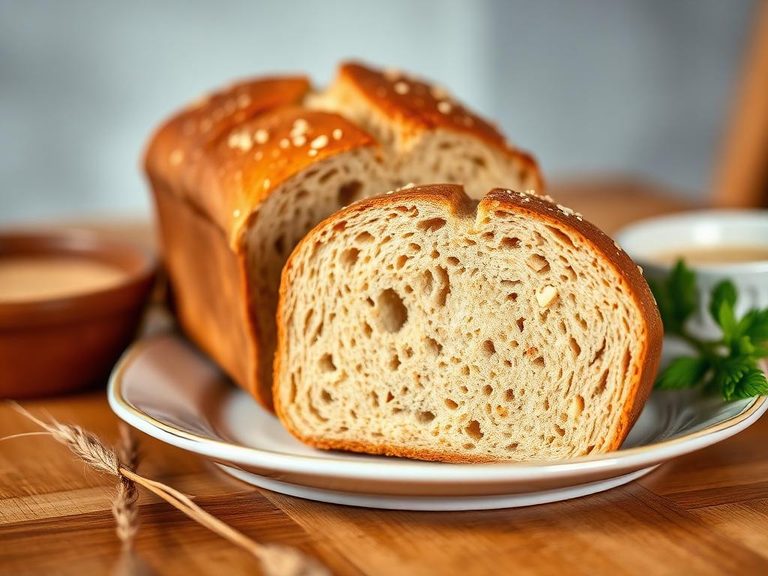
Whole-wheat bread is a hearty, nutty-flavored bread made from flour that includes the entire wheat kernel—the bran, germ, and endosperm. Its typical ingredients are whole-wheat flour, water, yeast, salt, and often a sweetener like honey or molasses. This staple food has ancient origins and is now a global dietary cornerstone.
🍳 View the full Whole-wheat bread recipe →
🍽️ Nutrition at a glance
It is a complex carbohydrate-rich food that provides a good source of dietary fiber, B vitamins, and minerals like iron and magnesium. A standard slice (about 28-30g) typically contains around 70-80 calories.
Nutrition breakdown
| Calories | 100 kcal |
| Protein | 4 g |
| Carbs | 18 g |
| Fat | 1.5 g |
| Fiber | 2.5 g |
| Sugar | 3 g |
| Sodium | 150 mg |
| Manganese | 1.0 mg |
| Selenium | 15 mcg |
| Thiamin (B1) | 0.15 mg |
| Niacin (B3) | 2.0 mg |
| Folate | 30 mcg |
| Iron | 1.0 mg |
| Magnesium | 25 mg |
| Phosphorus | 60 mg |
Per 1 slice (about 40 g) · estimated, varies by recipe
💡 What's interesting
Nutritionally, it's unique because the intact wheat germ provides natural vitamin E and healthy fats, which are stripped from refined white flour. Culturally, it represents a shift towards health-conscious eating and is often a symbol of simple, wholesome sustenance.
🍽️ Related dishes






AI estimate may be inaccurate · Terms