

Roti or chapati
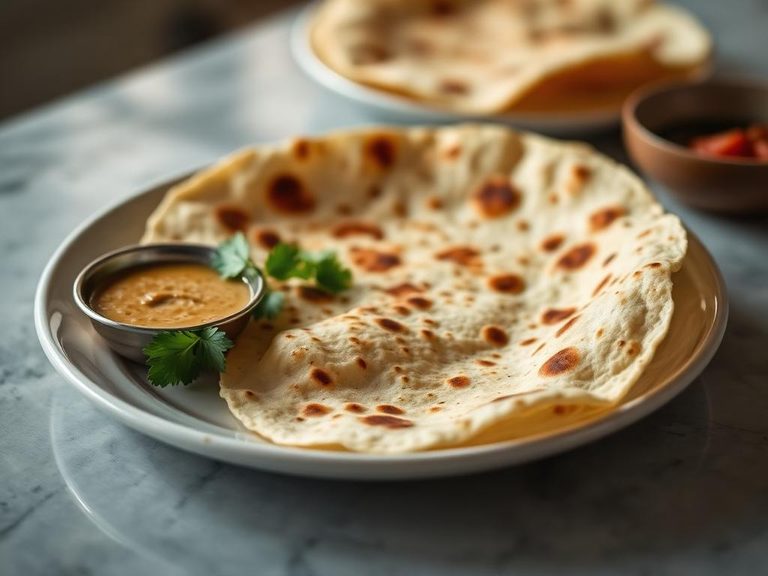
Roti, also known as chapati, is a simple, unleavened flatbread traditionally made from whole wheat flour (atta), water, and a pinch of salt. It is a staple food originating from the Indian subcontinent and is a fundamental part of daily meals across India, Pakistan, Bangladesh, Nepal, and Sri Lanka.
🍳 View the full Roti or chapati recipe →
🍽️ Nutrition at a glance
Roti is a carbohydrate-rich food that provides a good source of dietary fiber and complex carbs for sustained energy. A typical medium-sized roti contains approximately 70-100 calories, with minimal fat and a small amount of plant-based protein.
Nutrition breakdown
| Calories | 170 kcal |
| Protein | 4.5 g |
| Carbs | 33 g |
| Fat | 2 g |
| Fiber | 4 g |
| Sugar | 1 g |
| Sodium | 190 mg |
| Iron | 2.5 mg |
| Thiamin (B1) | 0.3 mg |
| Niacin (B3) | 3.5 mg |
| Folate | 60 µg |
| Magnesium | 45 mg |
| Phosphorus | 100 mg |
| Potassium | 120 mg |
| Selenium | 12 µg |
Per 1 medium chapati (about 60 g) · estimated, varies by recipe
💡 What's interesting
Culturally, roti is deeply symbolic of home and sustenance, often eaten with hands by tearing off pieces to scoop up curries and dals. Nutritionally, its whole-grain base makes it a healthier, lower-glycemic alternative to refined flour breads, and it is naturally vegan and gluten-free if made with millet flours like jowar or bajra.
🍽️ Related dishes

AI estimate may be inaccurate · Terms