

Pasta
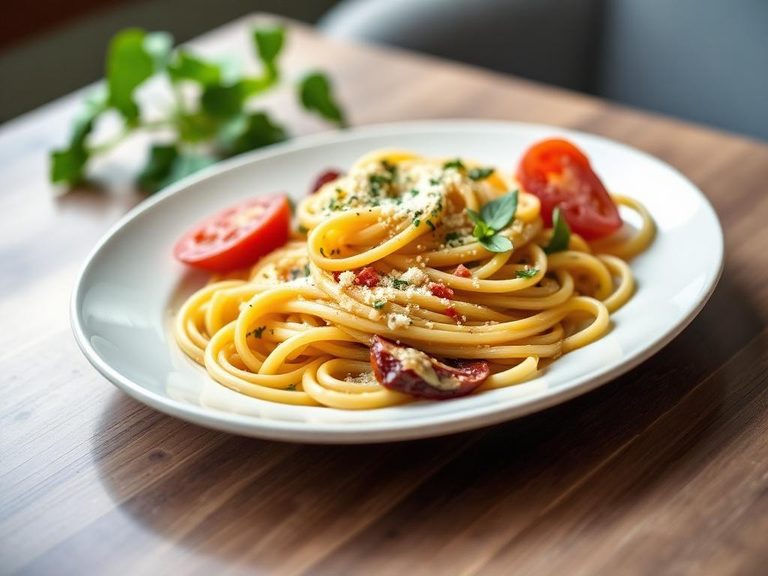
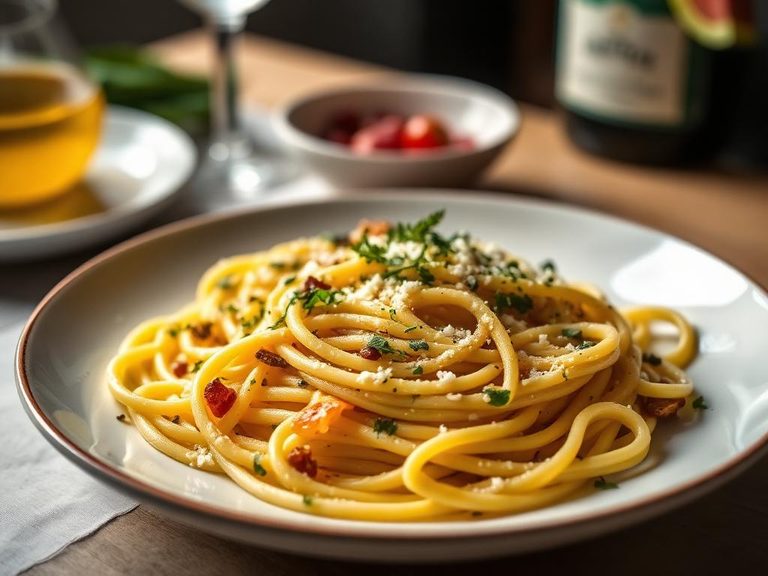
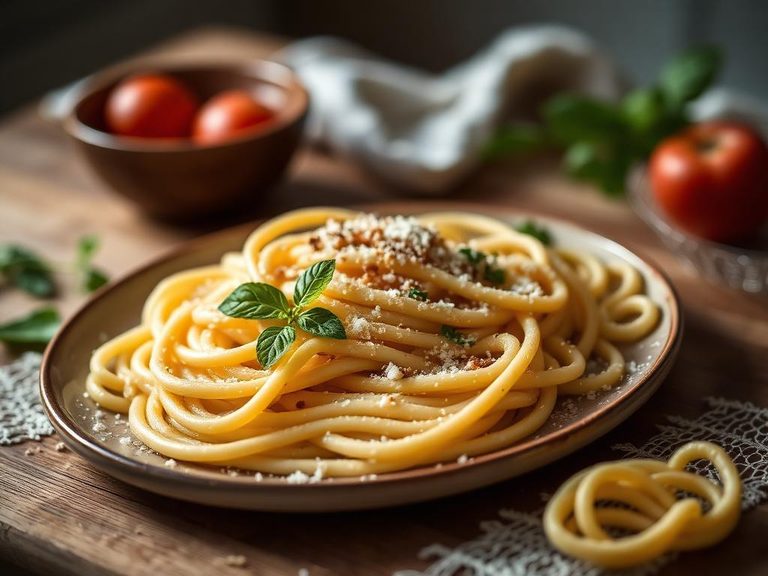
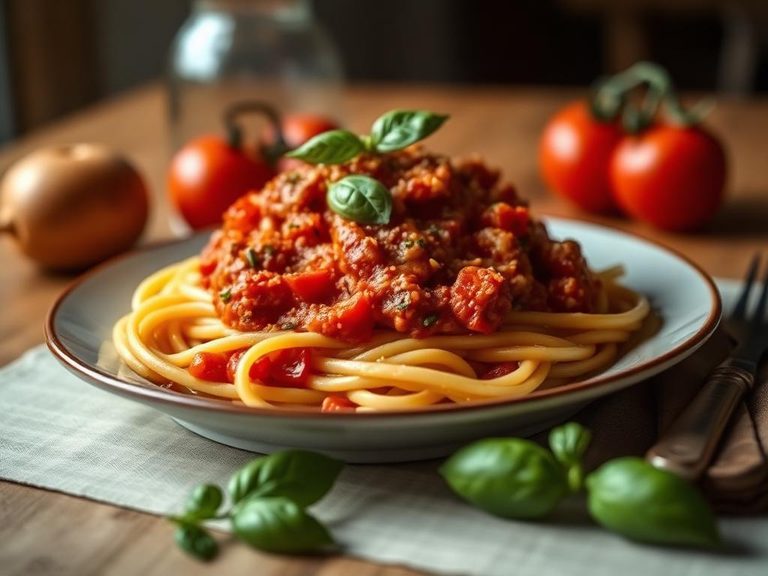
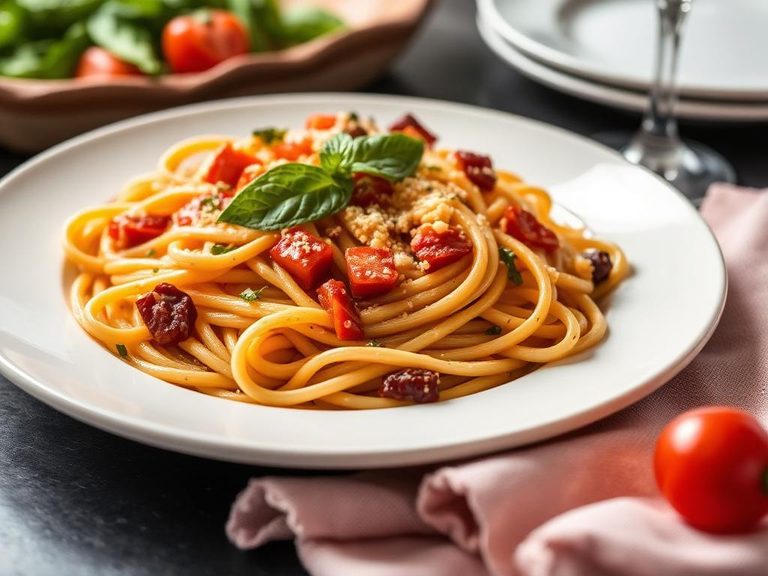
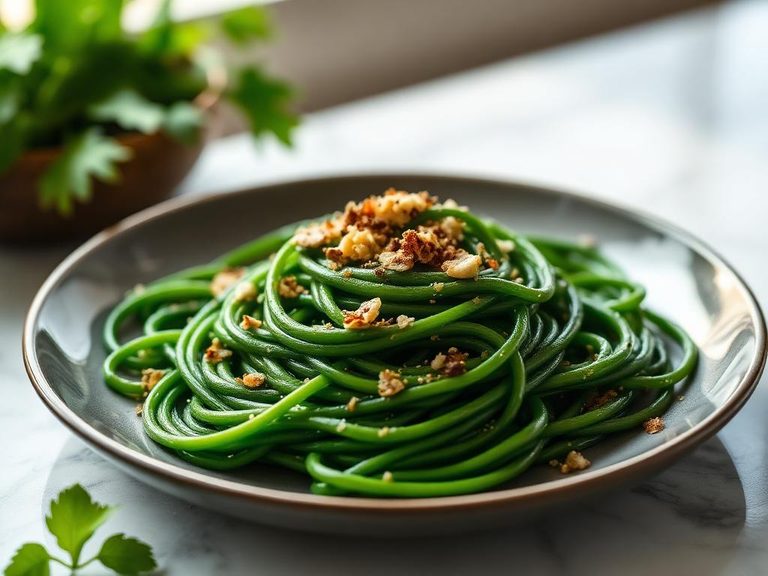
Pasta is a staple food of Italian origin, typically made from an unleavened dough of durum wheat flour mixed with water or eggs, and formed into various shapes like spaghetti, penne, or farfalle. It is most commonly served with a sauce—such as tomato-based marinara, creamy Alfredo, or a simple olive oil and garlic—and often accompanied by cheese, herbs, and proteins like meat or seafood.
🍳 View the full Pasta recipe →
🍽️ Nutrition at a glance
Pasta is primarily a high-carbohydrate food, providing a good source of energy, along with some protein and minimal fat. A standard serving (about 2 ounces dry) offers key nutrients like B vitamins, iron, and fiber, especially in whole-grain varieties, and typically contains around 200-220 calories before sauces are added.
Nutrition breakdown
| Calories | 220 kcal |
| Protein | 8 g |
| Carbs | 43 g |
| Fat | 1.3 g |
| Fiber | 2.5 g |
| Sugar | 0.8 g |
| Sodium | 1 mg |
| Potassium | 63 mg |
| Phosphorus | 76 mg |
| Magnesium | 25 mg |
| Iron | 1.8 mg |
| Thiamin (B1) | 0.5 mg |
| Folate | 107 µg |
| Niacin (B3) | 2.3 mg |
| Selenium | 37 µg |
Per 1 cup (140 g) cooked pasta · estimated, varies by recipe
💡 What's interesting
Culturally, pasta is a cornerstone of Italian cuisine with hundreds of regional shapes and preparations, each designed to pair with specific sauces for optimal texture and flavor. Nutritionally, when made from whole grains and paired with vegetables and lean proteins, it can be part of a balanced diet, and its low glycemic index helps provide sustained energy.
🍽️ Related dishes
AI estimate may be inaccurate · Terms