

Sweet potato, cooked, baked in skin, flesh, without salt
Whole food · Vegetables and Vegetable Products
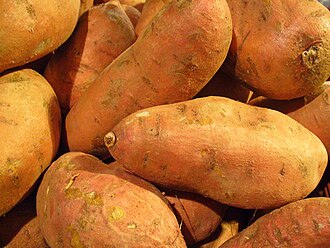
Photo: Wikipedia
A whole baked sweet potato, skin-on, is a naturally sweet, creamy, and comforting root vegetable. Its flesh becomes soft and caramelized when baked, offering a rich, earthy sweetness without any added salt. Nutritionally, it's a standout for providing over 3 grams of fiber and a wealth of complex carbs for sustained energy.
Calorie split: 9% protein · 90% carbs · 1% fat
↓ Full nutrition💚 Why it's loved
People adore its simple, caramelized sweetness and velvety texture, which feels like a wholesome treat. It's beloved for its incredible versatility, serving as a comforting side, a hearty main, or a base for both sweet and savory toppings across global cuisines.
⚠️ Watch-outs & how to enjoy it better
Its high carbohydrate content can cause blood sugar spikes if eaten alone in large portions. To counteract this, pair it with a source of protein (like Greek yogurt or black beans) or healthy fat (like avocado or a drizzle of olive oil) to slow digestion. For those monitoring oxalates, note that the skin contains a higher concentration; peeling before consumption is a simple mitigation step.
Key benefits
- Excellent source of dietary fiber for digestive health.
- Naturally low in fat and sodium.
- Provides complex carbohydrates for steady energy release.
- Rich in beta-carotene, a precursor to vitamin A.
- Contains essential minerals like potassium and manganese.
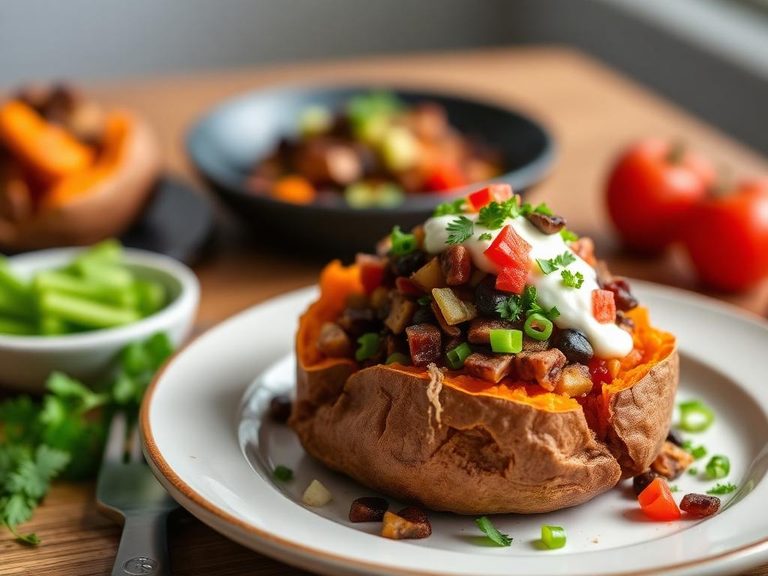
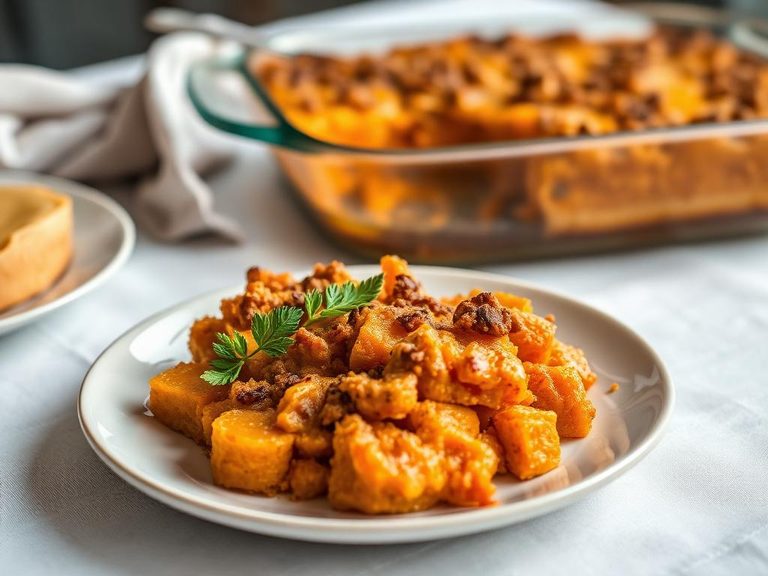
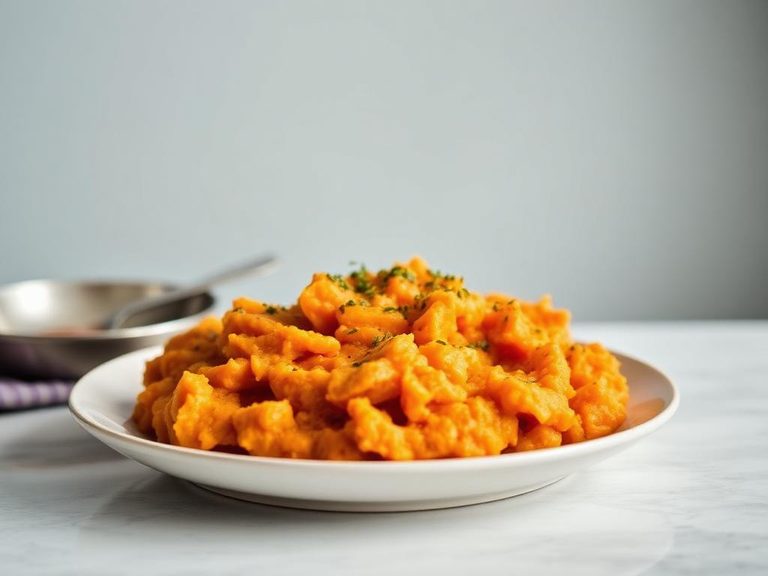
🍽️ Popular dishes

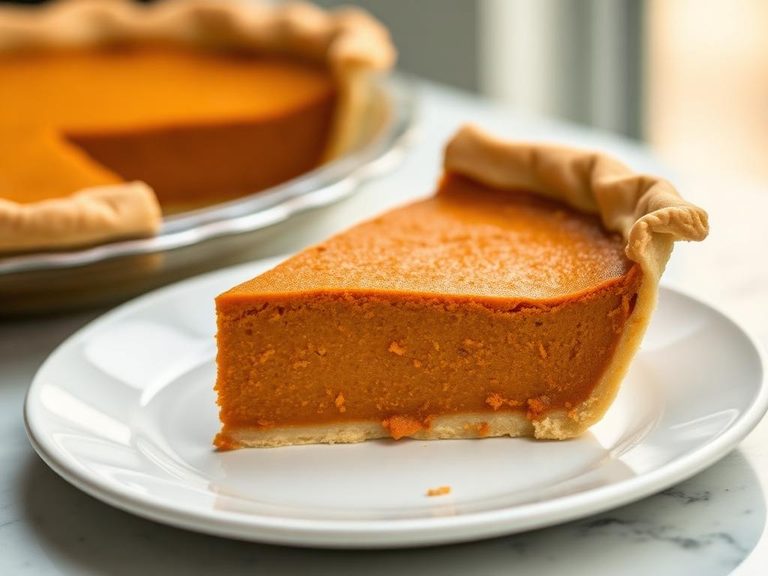
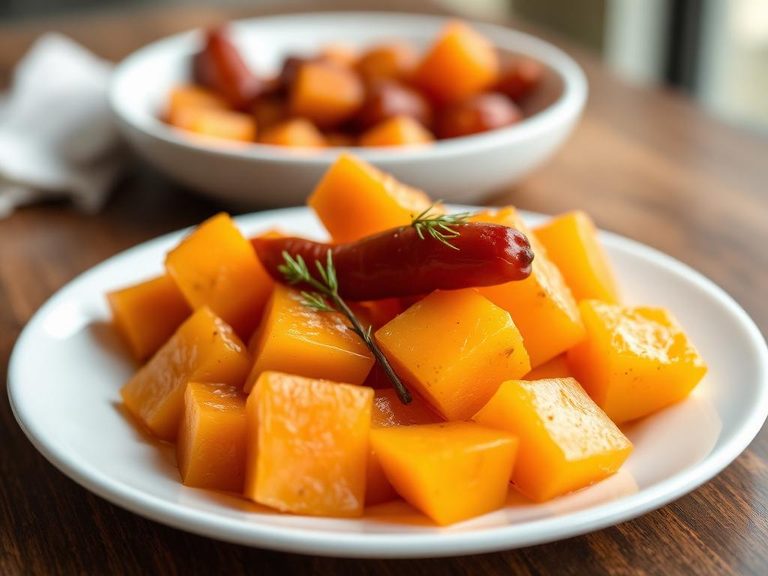
🌍 Where it's eaten
💡 Did you know?
The flesh color is directly linked to its nutrient content; deep orange varieties are packed with beta-carotene, while purple-fleshed types contain anthocyanins, the same antioxidants found in blueberries.
Full nutrition (USDA data · scales with serving)
| Water | 75.8 g |
| Energy | 90.0 kcal |
| Energy | 378 kj |
| Protein | 2.0 g |
| Total lipid (fat) | 0.15 g |
| Ash | 1.4 g |
| Carbohydrate, by difference | 20.7 g |
| Fiber, total dietary | 3.3 g |
| Total Sugars | 6.5 g |
| Sucrose | 2.3 g |
| Glucose | 0.57 g |
| Fructose | 0.50 g |
| Lactose | 0.00 g |
| Maltose | 3.1 g |
| Galactose | 0.00 g |
| Starch | 7.0 g |
| Calcium, Ca | 38.0 mg |
| Iron, Fe | 0.69 mg |
| Magnesium, Mg | 27.0 mg |
| Phosphorus, P | 54.0 mg |
| Potassium, K | 475 mg |
| Sodium, Na | 36.0 mg |
| Zinc, Zn | 0.32 mg |
| Copper, Cu | 0.16 mg |
| Manganese, Mn | 0.50 mg |
| Selenium, Se | 0.20 ug |
| Vitamin C, total ascorbic acid | 19.6 mg |
| Thiamin | 0.11 mg |
| Riboflavin | 0.11 mg |
| Niacin | 1.5 mg |
| Pantothenic acid | 0.88 mg |
| Vitamin B-6 | 0.29 mg |
| Folate, total | 6.0 ug |
| Folic acid | 0.00 ug |
| Folate, food | 6.0 ug |
| Folate, DFE | 6.0 ug |
| Choline, total | 13.1 mg |
| Betaine | 34.6 mg |
| Vitamin B-12 | 0.00 ug |
| Vitamin B-12, added | 0.00 ug |
| Vitamin A, RAE | 961 ug |
| Retinol | 0.00 ug |
| Carotene, beta | 11509 ug |
| Carotene, alpha | 43.0 ug |
| Cryptoxanthin, beta | 0.00 ug |
| Vitamin A, IU | 19218 iu |
| Lycopene | 0.00 ug |
| Lutein + zeaxanthin | 0.00 ug |
| Vitamin E (alpha-tocopherol) | 0.71 mg |
| Vitamin E, added | 0.00 mg |
| Tocopherol, beta | 0.00 mg |
| Tocopherol, gamma | 0.01 mg |
| Tocopherol, delta | 0.00 mg |
| Tocotrienol, alpha | 0.02 mg |
| Tocotrienol, beta | 0.00 mg |
| Tocotrienol, gamma | 0.00 mg |
| Tocotrienol, delta | 0.00 mg |
| Vitamin D (D2 + D3), International Units | 0.00 iu |
| Vitamin D (D2 + D3) | 0.00 ug |
| Vitamin K (phylloquinone) | 2.3 ug |
| Vitamin K (Dihydrophylloquinone) | 0.00 ug |
| Alcohol, ethyl | 0.00 g |
| Caffeine | 0.00 mg |
| Theobromine | 0.00 mg |
Fat & fatty acid profile (per 100g)
| Fatty acids, total saturated | 0.05 g |
| SFA 4:0 | 0.00 g |
| SFA 6:0 | 0.00 g |
| SFA 8:0 | 0.00 g |
| SFA 10:0 | 0.00 g |
| SFA 12:0 | 0.00 g |
| SFA 14:0 | 0.00 g |
| SFA 15:0 | 0.00 g |
| SFA 16:0 | 0.05 g |
| SFA 17:0 | 0.00 g |
| SFA 18:0 | 0.00 g |
| SFA 20:0 | 0.00 g |
| SFA 22:0 | 0.00 g |
| SFA 24:0 | 0.00 g |
| Fatty acids, total monounsaturated | 0.00 g |
| MUFA 14:1 | 0.00 g |
| MUFA 15:1 | 0.00 g |
| MUFA 16:1 | 0.00 g |
| MUFA 17:1 | 0.00 g |
| MUFA 18:1 | 0.00 g |
| MUFA 20:1 | 0.00 g |
| MUFA 22:1 | 0.00 g |
| Fatty acids, total polyunsaturated | 0.09 g |
| PUFA 18:2 | 0.09 g |
| PUFA 18:3 | 0.01 g |
| PUFA 18:4 | 0.00 g |
| PUFA 20:2 n-6 c,c | 0.00 g |
| PUFA 20:3 | 0.00 g |
| PUFA 20:4 | 0.00 g |
| PUFA 20:5 n-3 (EPA) | 0.00 g |
| PUFA 22:5 n-3 (DPA) | 0.00 g |
| PUFA 22:6 n-3 (DHA) | 0.00 g |
| Fatty acids, total trans | 0.00 g |
| Cholesterol | 0.00 mg |
Amino acid profile (per 100g)
| Tryptophan | 0.04 g |
| Threonine | 0.11 g |
| Isoleucine | 0.07 g |
| Leucine | 0.12 g |
| Lysine | 0.08 g |
| Methionine | 0.04 g |
| Cystine | 0.03 g |
| Phenylalanine | 0.11 g |
| Tyrosine | 0.04 g |
| Valine | 0.11 g |
| Arginine | 0.07 g |
| Histidine | 0.04 g |
| Alanine | 0.10 g |
| Aspartic acid | 0.49 g |
| Glutamic acid | 0.20 g |
| Glycine | 0.08 g |
| Proline | 0.07 g |
| Serine | 0.11 g |
FAQ
Is the skin edible and nutritious?
Yes, the skin is edible and adds extra fiber and nutrients. Simply scrub it well before baking. If you prefer a smoother texture or are concerned about oxalates, you can peel it after cooking.
Why does my baked sweet potato sometimes get watery?
This can happen if the potato was stored in a very cold environment or if it was baked at too low a temperature. Baking at a high heat (around 400°F/200°C) helps caramelize the natural sugars and evaporate excess moisture.
How does it differ from a yam?
In North America, the terms are often used interchangeably, but true yams (Dioscorea) are starchy, less sweet, and have rough, bark-like skin. The orange-fleshed 'sweet potato' (Ipomoea batatas) is what is most commonly baked and sold as a 'yam' in US supermarkets.
Nutrient density (calculated · NRF9.3)
Nutrient Rich Foods index: beneficial nutrients (protein, fiber, vitamins, minerals) minus saturated fat, added sugar & sodium, per 100 kcal.
NRF9.3 index — Fulgoni, Keast & Drewnowski, 2009. Computed from USDA nutrients.
Weight-loss friendliness (composite index)
Energy density 0.90 kcal/g · 9% calories from protein · 3.3 g fiber · 6.5 g sugar per 100 g.
Composite of energy density (Rolls et al., 1999), protein & fiber satiety, minus sugar. A calculated heuristic — ranks satiety-per-calorie, not a clinical measure.
Dietary load (calculated from USDA values)
Potential renal acid load. Positive = acid-forming, negative = alkaline-forming.
Sodium-to-potassium ratio: 0.08 (lower is better — aim for ≤ 1)
Sodium:potassium per WHO potassium guidance. Computed from USDA nutrients.