

Pork, fresh, loin, blade (chops or roasts), bone-in, separable lean and fat, raw
Whole food · Pork Products

Photo: Wikipedia
This is a bone-in cut from the upper shoulder or blade area of the pork loin, offering a robust, meaty flavor with a satisfying balance of lean muscle and marbled fat. When raw, it presents a deep pink hue with visible white fat striations that promise juiciness and richness upon cooking. It's a protein-packed staple, delivering nearly 20 grams of high-quality protein per 100-gram serving with a moderate calorie count.
Calorie split: 41% protein · 0% carbs · 59% fat
↓ Full nutrition💚 Why it's loved
People love it for its deep, savory pork flavor and the way the fat renders during cooking to baste the meat, ensuring it stays moist and tender. Its versatility makes it a favorite for both quick pan-searing and slow, comforting braises.
⚠️ Watch-outs & how to enjoy it better
The relatively high fat content (over 12g per 100g) means it's calorie-dense, which may be a consideration for those managing fat intake. To counteract this, trim excess visible fat before cooking and pair it with fiber-rich, non-starchy vegetables like roasted Brussels sprouts or a vinegar-based slaw to balance the meal.
Key benefits
- Excellent source of complete protein for muscle maintenance
- Provides essential B vitamins like thiamine (B1) and niacin (B3)
- Rich in minerals such as selenium and phosphorus
- The bone-in cut can enhance flavor and moisture during cooking
- The marbled fat contributes to a tender, flavorful result
🍽️ Popular dishes
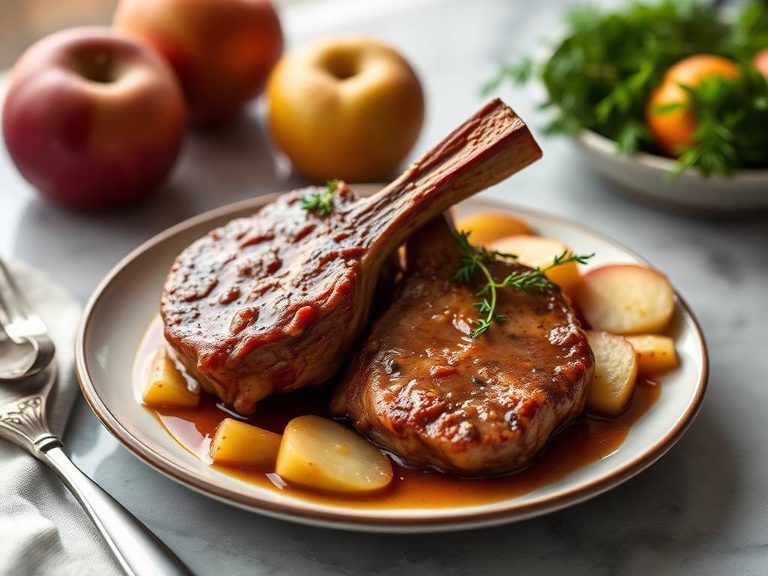
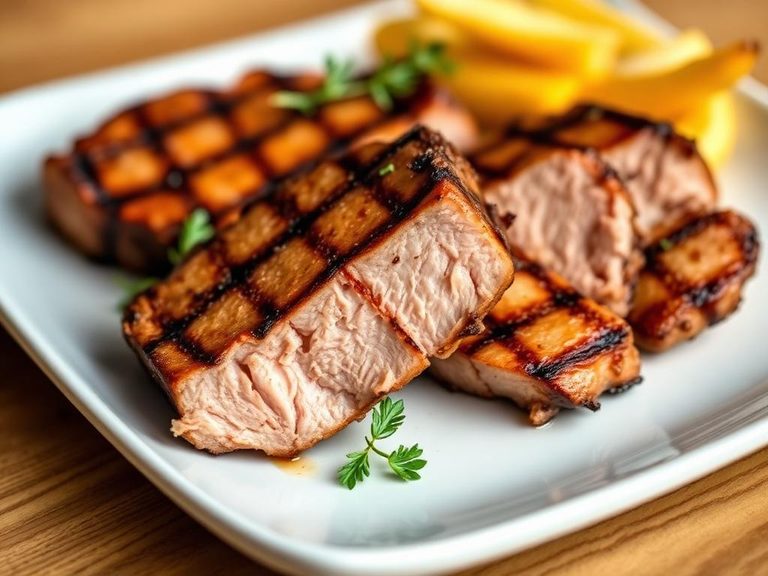

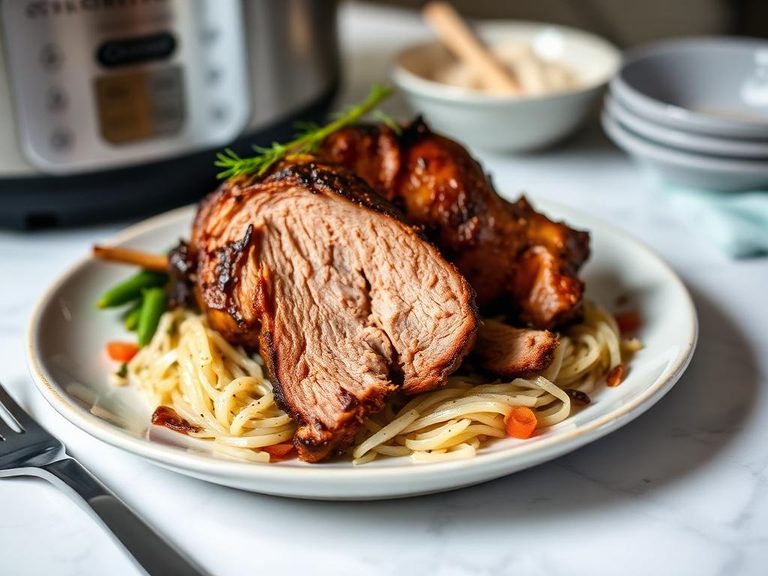
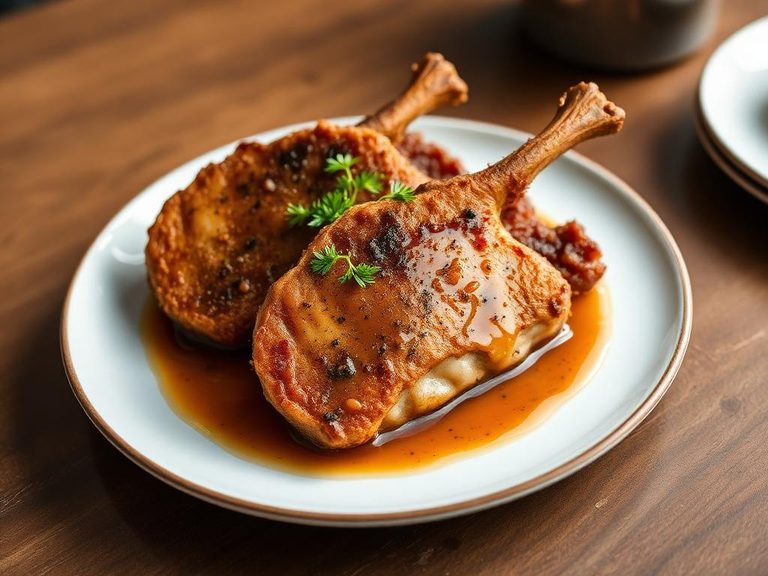
🌍 Where it's eaten
💡 Did you know?
The 'blade' in its name refers to the shoulder blade bone (scapula) that runs through this section of the loin, which can be removed or left in for added flavor and presentation.
Full nutrition (USDA data · scales with serving)
| Water | 67.6 g |
| Energy | 194 kcal |
| Energy | 813 kj |
| Protein | 19.6 g |
| Total lipid (fat) | 12.3 g |
| Ash | 1.0 g |
| Carbohydrate, by difference | 0.00 g |
| Fiber, total dietary | 0.00 g |
| Total Sugars | 0.00 g |
| Calcium, Ca | 35.0 mg |
| Iron, Fe | 0.66 mg |
| Magnesium, Mg | 17.0 mg |
| Phosphorus, P | 207 mg |
| Potassium, K | 288 mg |
| Sodium, Na | 69.0 mg |
| Zinc, Zn | 2.6 mg |
| Copper, Cu | 0.08 mg |
| Manganese, Mn | 0.01 mg |
| Selenium, Se | 29.4 ug |
| Vitamin C, total ascorbic acid | 0.00 mg |
| Thiamin | 0.50 mg |
| Riboflavin | 0.31 mg |
| Niacin | 6.7 mg |
| Pantothenic acid | 1.0 mg |
| Vitamin B-6 | 0.43 mg |
| Folate, total | 0.00 ug |
| Folic acid | 0.00 ug |
| Folate, food | 0.00 ug |
| Folate, DFE | 0.00 ug |
| Choline, total | 67.2 mg |
| Betaine | 2.6 mg |
| Vitamin B-12 | 0.55 ug |
| Vitamin B-12, added | 0.00 ug |
| Vitamin A, RAE | 6.0 ug |
| Retinol | 6.0 ug |
| Carotene, beta | 0.00 ug |
| Carotene, alpha | 0.00 ug |
| Cryptoxanthin, beta | 0.00 ug |
| Vitamin A, IU | 20.0 iu |
| Lycopene | 0.00 ug |
| Lutein + zeaxanthin | 0.00 ug |
| Vitamin E (alpha-tocopherol) | 0.21 mg |
| Vitamin E, added | 0.00 mg |
| Vitamin D (D2 + D3), International Units | 29.0 iu |
| Vitamin D (D2 + D3) | 0.70 ug |
| Vitamin D3 (cholecalciferol) | 0.70 ug |
| Vitamin K (phylloquinone) | 0.00 ug |
| Vitamin K (Dihydrophylloquinone) | 0.00 ug |
| Alcohol, ethyl | 0.00 g |
| Caffeine | 0.00 mg |
| Theobromine | 0.00 mg |
Fat & fatty acid profile (per 100g)
| Fatty acids, total saturated | 4.3 g |
| SFA 4:0 | 0.00 g |
| SFA 6:0 | 0.00 g |
| SFA 8:0 | 0.00 g |
| SFA 10:0 | 0.01 g |
| SFA 12:0 | 0.01 g |
| SFA 14:0 | 0.15 g |
| SFA 15:0 | 0.01 g |
| SFA 16:0 | 2.6 g |
| SFA 17:0 | 0.04 g |
| SFA 18:0 | 1.4 g |
| SFA 20:0 | 0.02 g |
| SFA 22:0 | 0.00 g |
| SFA 24:0 | 0.00 g |
| Fatty acids, total monounsaturated | 4.9 g |
| MUFA 14:1 | 0.00 g |
| MUFA 15:1 | 0.00 g |
| MUFA 16:1 | 0.25 g |
| MUFA 17:1 | 0.00 g |
| MUFA 18:1 | 4.6 g |
| MUFA 18:1 c | 4.5 g |
| MUFA 20:1 | 0.08 g |
| MUFA 22:1 | 0.00 g |
| MUFA 22:1 c | 0.00 g |
| Fatty acids, total polyunsaturated | 1.9 g |
| PUFA 18:2 | 1.7 g |
| PUFA 18:2 n-6 c,c | 1.7 g |
| PUFA 18:3 | 0.08 g |
| PUFA 18:3 n-3 c,c,c (ALA) | 0.07 g |
| PUFA 18:3 n-6 c,c,c | 0.00 g |
| PUFA 18:3i | 0.01 g |
| PUFA 18:4 | 0.00 g |
| PUFA 20:2 n-6 c,c | 0.07 g |
| PUFA 20:3 | 0.01 g |
| PUFA 20:4 | 0.08 g |
| PUFA 20:5 n-3 (EPA) | 0.00 g |
| PUFA 22:5 n-3 (DPA) | 0.01 g |
| PUFA 22:6 n-3 (DHA) | 0.00 g |
| Fatty acids, total trans | 0.08 g |
| Fatty acids, total trans-monoenoic | 0.06 g |
| TFA 18:1 t | 0.06 g |
| TFA 18:2 t not further defined | 0.01 g |
| Fatty acids, total trans-polyenoic | 0.02 g |
| Cholesterol | 63.0 mg |
Amino acid profile (per 100g)
| Tryptophan | 0.23 g |
| Threonine | 0.84 g |
| Isoleucine | 0.91 g |
| Leucine | 1.6 g |
| Lysine | 1.7 g |
| Methionine | 0.52 g |
| Cystine | 0.22 g |
| Phenylalanine | 0.79 g |
| Tyrosine | 0.76 g |
| Valine | 0.97 g |
| Arginine | 1.2 g |
| Histidine | 0.78 g |
| Alanine | 1.1 g |
| Aspartic acid | 1.8 g |
| Glutamic acid | 2.9 g |
| Glycine | 0.86 g |
| Proline | 0.77 g |
| Serine | 0.80 g |
| Hydroxyproline | 0.07 g |
FAQ
What's the best cooking method for this cut?
For chops, pan-searing or grilling works well to develop a flavorful crust. For roasts, slow roasting or braising helps break down connective tissue for tenderness. Always ensure it reaches an internal temperature of 145°F (63°C) followed by a rest.
How is it different from a standard pork loin chop?
Blade chops come from the shoulder end, so they have more fat, connective tissue, and often a bone, making them more flavorful and forgiving than the leaner, more uniform center-cut loin chops.
Can I freeze this cut raw?
Yes, it freezes well. Wrap tightly in plastic wrap and foil or use a freezer bag, and it will maintain good quality for up to 4 months. Thaw in the refrigerator before cooking.
Nutrient density (calculated · NRF9.3)
Nutrient Rich Foods index: beneficial nutrients (protein, fiber, vitamins, minerals) minus saturated fat, added sugar & sodium, per 100 kcal.
NRF9.3 index — Fulgoni, Keast & Drewnowski, 2009. Computed from USDA nutrients.
Weight-loss friendliness (composite index)
Energy density 1.94 kcal/g · 40% calories from protein · 0.0 g fiber · 0.0 g sugar per 100 g.
Composite of energy density (Rolls et al., 1999), protein & fiber satiety, minus sugar. A calculated heuristic — ranks satiety-per-calorie, not a clinical measure.
Dietary load (calculated from USDA values)
Potential renal acid load. Positive = acid-forming, negative = alkaline-forming.
Sodium-to-potassium ratio: 0.24 (lower is better — aim for ≤ 1)
Sodium:potassium per WHO potassium guidance. Computed from USDA nutrients.