

Pork, cured, ham with natural juices, rump, bone-in, separable lean and fat, unheated
Whole food · Pork Products
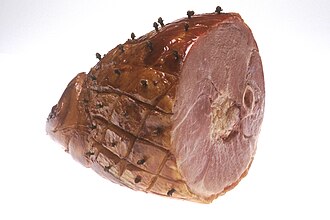
Photo: Wikipedia
This is a classic, uncooked bone-in ham rump, a cut from the hind leg of a pig that has been cured for preservation and flavor. Its texture is firm yet tender, with a rich, savory pork taste and a distinct saltiness from the curing process, often with a satisfying marbling of lean meat and fat. Nutritionally, it's a powerhouse of high-quality protein with minimal carbohydrates, making it a substantial, low-carb centerpiece.
Calorie split: 39% protein · 1% carbs · 60% fat
↓ Full nutrition💚 Why it's loved
People cherish it for its deep, salty-savory flavor that forms the backbone of many comforting meals, from holiday feasts to simple sandwiches. Its versatility allows it to be served cold, baked, glazed, or simmered, making it a reliable and flavorful ingredient across cuisines.
⚠️ Watch-outs & how to enjoy it better
The primary concern is its high sodium content from curing, which can be problematic for those monitoring blood pressure. It is also a processed meat, so moderation is advised. To counteract sodium, pair it with potassium-rich foods like leafy greens or potatoes, and ensure plenty of water is consumed. Opt for fresh, unprocessed pork for regular meals, reserving cured ham for occasional enjoyment.
Key benefits
- Excellent source of complete protein for muscle maintenance.
- Very low in carbohydrates and sugars.
- Rich in B vitamins, particularly thiamine (B1) and niacin (B3).
- Contains essential minerals like zinc and selenium.
- Curing process makes it shelf-stable and ready to eat.
🍽️ Popular dishes
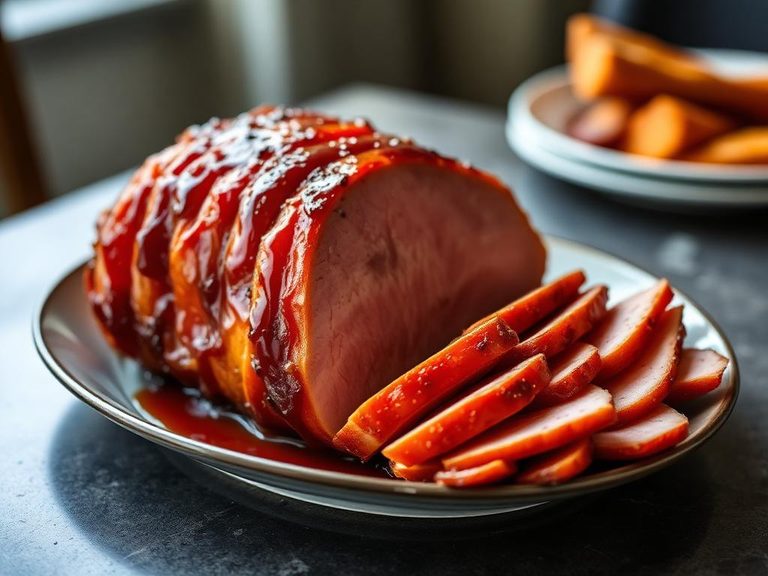
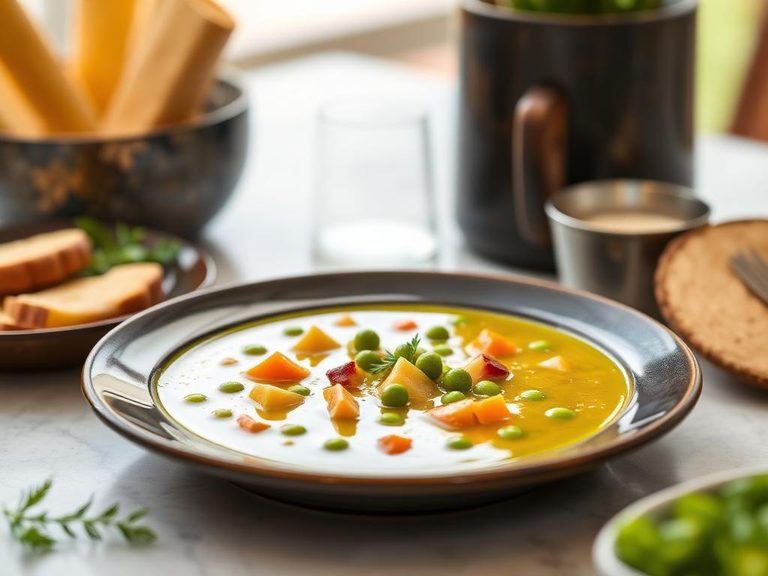

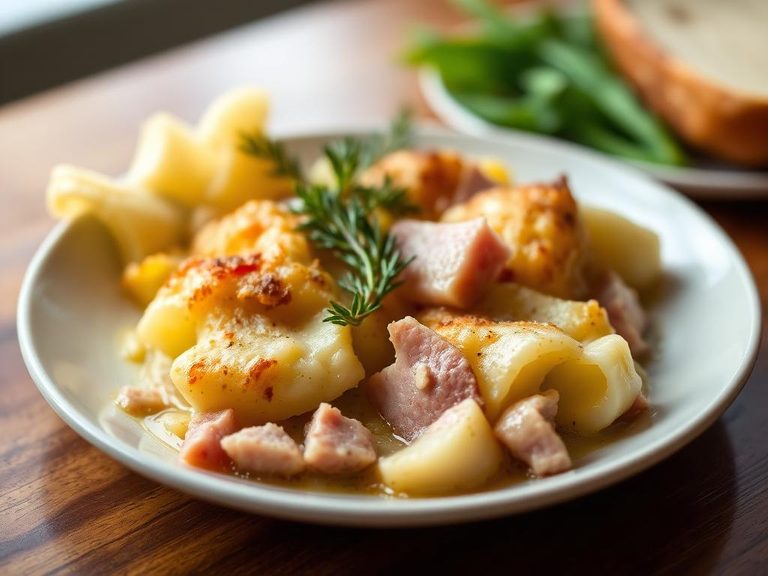


🌍 Where it's eaten
💡 Did you know?
The tradition of curing ham with salt and smoking dates back to ancient times as a vital method of food preservation, long before refrigeration existed.
Full nutrition (USDA data · scales with serving)
| Water | 63.9 g |
| Energy | 200 kcal |
| Energy | 836 kj |
| Protein | 19.7 g |
| Total lipid (fat) | 13.3 g |
| Ash | 2.8 g |
| Carbohydrate, by difference | 0.43 g |
| Fiber, total dietary | 0.00 g |
| Total Sugars | 0.43 g |
| Sucrose | 0.05 g |
| Glucose | 0.26 g |
| Fructose | 0.12 g |
| Lactose | 0.00 g |
| Maltose | 0.00 g |
| Galactose | 0.00 g |
| Calcium, Ca | 8.0 mg |
| Iron, Fe | 0.94 mg |
| Magnesium, Mg | 19.0 mg |
| Phosphorus, P | 231 mg |
| Potassium, K | 278 mg |
| Sodium, Na | 838 mg |
| Zinc, Zn | 2.1 mg |
| Copper, Cu | 0.11 mg |
| Manganese, Mn | 0.02 mg |
| Selenium, Se | 36.0 ug |
| Vitamin C, total ascorbic acid | 0.00 mg |
| Thiamin | 0.26 mg |
| Riboflavin | 0.18 mg |
| Niacin | 6.3 mg |
| Pantothenic acid | 0.37 mg |
| Vitamin B-6 | 0.31 mg |
| Folate, total | 1.0 ug |
| Folic acid | 0.00 ug |
| Folate, food | 1.0 ug |
| Folate, DFE | 1.0 ug |
| Choline, total | 88.1 mg |
| Betaine | 2.6 mg |
| Vitamin B-12 | 0.47 ug |
| Vitamin B-12, added | 0.00 ug |
| Vitamin A, RAE | 11.0 ug |
| Retinol | 11.0 ug |
| Carotene, beta | 0.00 ug |
| Carotene, alpha | 0.00 ug |
| Cryptoxanthin, beta | 0.00 ug |
| Vitamin A, IU | 36.0 iu |
| Lycopene | 0.00 ug |
| Lutein + zeaxanthin | 0.00 ug |
| Vitamin E (alpha-tocopherol) | 0.34 mg |
| Vitamin E, added | 0.00 mg |
| Tocopherol, beta | 0.00 mg |
| Tocopherol, gamma | 0.07 mg |
| Tocopherol, delta | 0.00 mg |
| Tocotrienol, alpha | 0.04 mg |
| Tocotrienol, beta | 0.00 mg |
| Tocotrienol, gamma | 0.02 mg |
| Tocotrienol, delta | 0.00 mg |
| Vitamin K (phylloquinone) | 0.00 ug |
| Vitamin K (Dihydrophylloquinone) | 0.00 ug |
| Vitamin K (Menaquinone-4) | 0.00 ug |
| Alcohol, ethyl | 0.00 g |
| Caffeine | 0.00 mg |
| Theobromine | 0.00 mg |
Fat & fatty acid profile (per 100g)
| Fatty acids, total saturated | 4.4 g |
| SFA 4:0 | 0.00 g |
| SFA 6:0 | 0.00 g |
| SFA 8:0 | 0.00 g |
| SFA 10:0 | 0.00 g |
| SFA 12:0 | 0.00 g |
| SFA 14:0 | 0.16 g |
| SFA 15:0 | 0.00 g |
| SFA 16:0 | 2.8 g |
| SFA 17:0 | 0.04 g |
| SFA 18:0 | 1.3 g |
| SFA 20:0 | 0.02 g |
| SFA 22:0 | 0.02 g |
| Fatty acids, total monounsaturated | 6.0 g |
| MUFA 14:1 | 0.00 g |
| MUFA 15:1 | 0.00 g |
| MUFA 16:1 | 0.31 g |
| MUFA 17:1 | 0.00 g |
| MUFA 18:1 | 5.6 g |
| MUFA 20:1 | 0.09 g |
| MUFA 22:1 | 0.00 g |
| Fatty acids, total polyunsaturated | 1.8 g |
| PUFA 18:2 | 1.6 g |
| PUFA 18:3 | 0.07 g |
| PUFA 18:4 | 0.00 g |
| PUFA 20:2 n-6 c,c | 0.07 g |
| PUFA 20:3 | 0.00 g |
| PUFA 20:4 | 0.08 g |
| PUFA 20:5 n-3 (EPA) | 0.00 g |
| PUFA 22:5 n-3 (DPA) | 0.00 g |
| PUFA 22:6 n-3 (DHA) | 0.00 g |
| Fatty acids, total trans | 0.10 g |
| Cholesterol | 67.0 mg |
Amino acid profile (per 100g)
| Tryptophan | 0.18 g |
| Threonine | 0.87 g |
| Isoleucine | 0.88 g |
| Leucine | 1.6 g |
| Lysine | 1.6 g |
| Methionine | 0.47 g |
| Cystine | 0.22 g |
| Phenylalanine | 0.78 g |
| Tyrosine | 0.63 g |
| Valine | 0.99 g |
| Arginine | 1.3 g |
| Histidine | 0.86 g |
| Alanine | 1.2 g |
| Aspartic acid | 1.7 g |
| Glutamic acid | 2.8 g |
| Glycine | 1.1 g |
| Proline | 0.85 g |
| Serine | 0.77 g |
| Hydroxyproline | 0.15 g |
FAQ
Is this ham ready to eat?
Yes, as a cured product, it is pre-cooked and safe to eat cold. However, it is often reheated or glazed for enhanced flavor and texture in dishes.
What does 'separable lean and fat' mean?
It indicates that the nutritional values account for the entire edible portion of the cut, including both the lean muscle and the attached fat, providing a complete picture of what you consume.
How should I store leftover cooked ham?
Wrap it tightly in plastic wrap or foil and refrigerate for up to 5 days. For longer storage, freeze slices or chunks in airtight bags for up to 1-2 months.
Nutrient density (calculated · NRF9.3)
Nutrient Rich Foods index: beneficial nutrients (protein, fiber, vitamins, minerals) minus saturated fat, added sugar & sodium, per 100 kcal.
NRF9.3 index — Fulgoni, Keast & Drewnowski, 2009. Computed from USDA nutrients.
Weight-loss friendliness (composite index)
Energy density 2.00 kcal/g · 39% calories from protein · 0.0 g fiber · 0.4 g sugar per 100 g.
Composite of energy density (Rolls et al., 1999), protein & fiber satiety, minus sugar. A calculated heuristic — ranks satiety-per-calorie, not a clinical measure.
Dietary load (calculated from USDA values)
Potential renal acid load. Positive = acid-forming, negative = alkaline-forming.
Sodium-to-potassium ratio: 3.01 (lower is better — aim for ≤ 1)
Sodium:potassium per WHO potassium guidance. Computed from USDA nutrients.