

Nuts, cashew nuts, oil roasted, with salt added
Whole food · Nut and Seed Products

Photo: Wikipedia
These are whole cashew kernels roasted in oil and lightly salted, resulting in a rich, buttery flavor with a satisfying crunch. Nutritionally, they are a calorie-dense powerhouse, providing nearly 48g of healthy fats and almost 17g of protein per 100g, making them a very satiating snack.
Calorie split: 11% protein · 20% carbs · 70% fat
↓ Full nutrition💚 Why it's loved
People adore them for their uniquely creamy, buttery taste and satisfying crunch that feels indulgent yet wholesome. Their versatility makes them a perfect standalone snack, a salad topper, or a base for rich sauces and desserts.
⚠️ Watch-outs & how to enjoy it better
The added salt and high calorie density can be a concern for those managing sodium intake or calorie goals. As a tree nut, they are a common allergen, and their oxalate content may be a consideration for individuals prone to kidney stones. To counteract, practice strict portion control (e.g., a small handful), choose unsalted versions when possible, and pair them with high-fiber foods to mitigate any blood sugar impact.
Key benefits
- Excellent source of heart-healthy monounsaturated fats.
- High in plant-based protein for muscle maintenance.
- Provides essential minerals like magnesium, zinc, and copper.
- Contains antioxidants that support overall health.
🍽️ Popular dishes
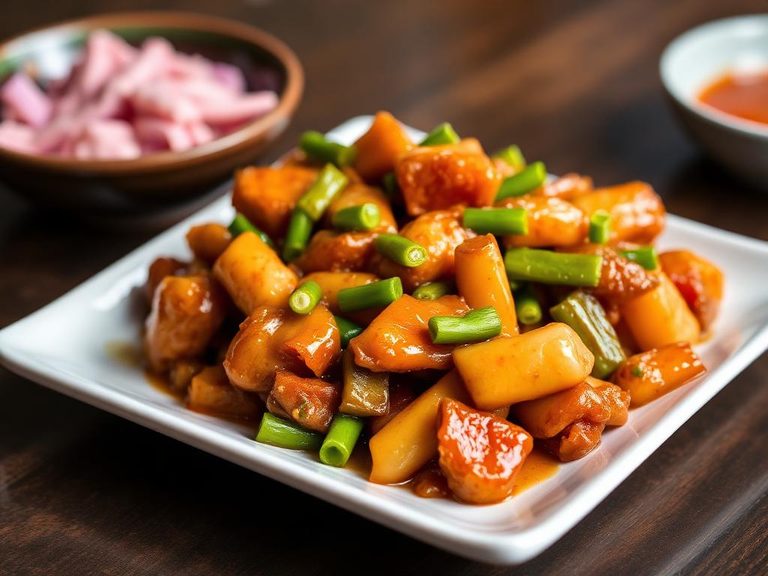
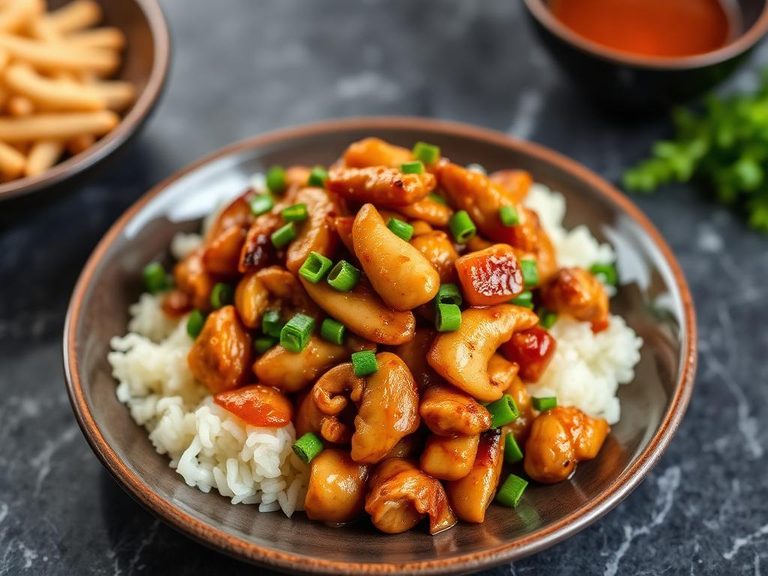
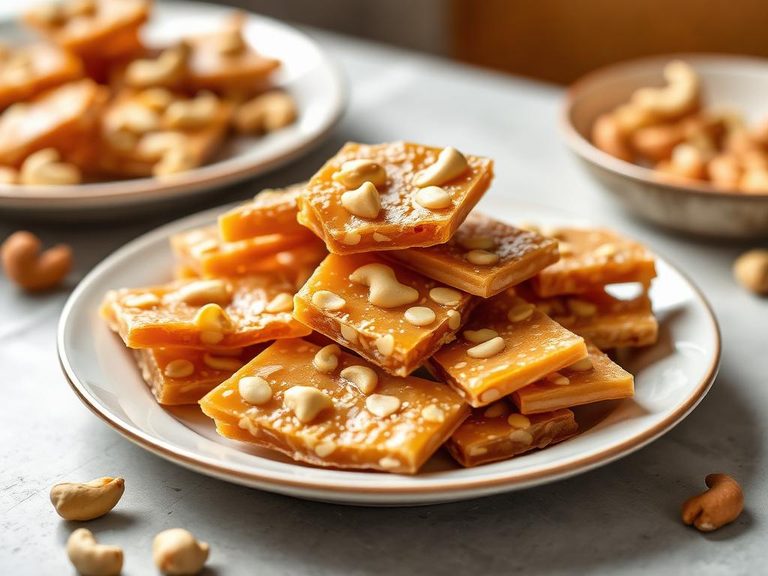
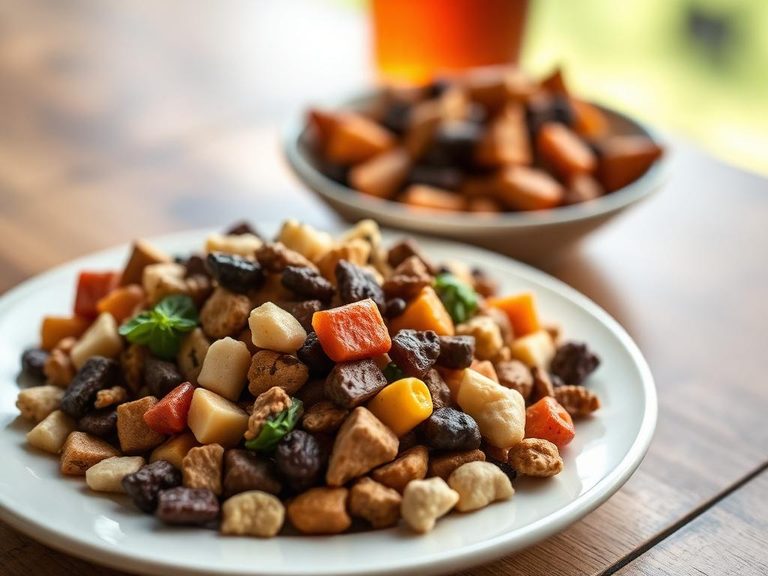
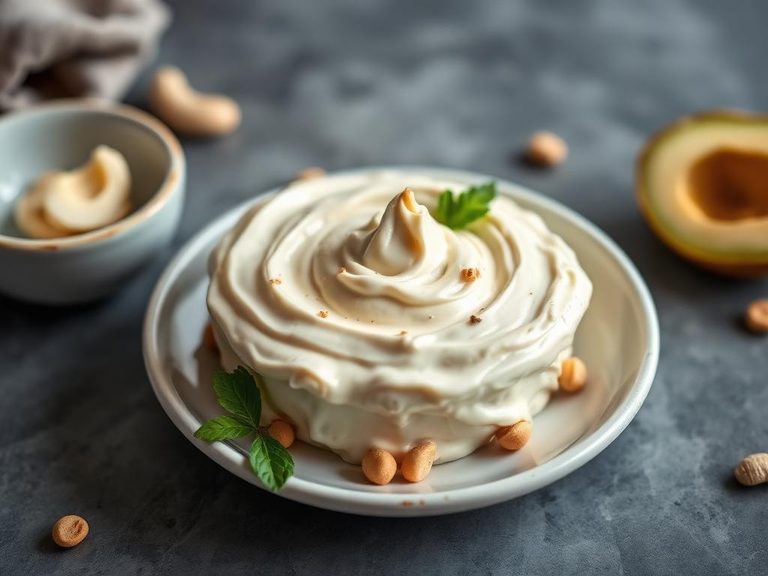
🌍 Where it's eaten
💡 Did you know?
The cashew 'apple' is not a true apple but a fleshy, pear-shaped stalk that develops above the nut; it's juicy and used in some regions to make jams, juices, and even alcoholic drinks.
Full nutrition (USDA data · scales with serving)
| Water | 2.3 g |
| Energy | 581 kcal |
| Energy | 2431 kj |
| Protein | 16.8 g |
| Total lipid (fat) | 47.8 g |
| Ash | 2.9 g |
| Carbohydrate, by difference | 30.2 g |
| Fiber, total dietary | 3.3 g |
| Total Sugars | 5.0 g |
| Sucrose | 4.8 g |
| Glucose | 0.08 g |
| Fructose | 0.08 g |
| Lactose | 0.00 g |
| Maltose | 0.00 g |
| Galactose | 0.00 g |
| Starch | 10.9 g |
| Calcium, Ca | 43.0 mg |
| Iron, Fe | 6.0 mg |
| Magnesium, Mg | 273 mg |
| Phosphorus, P | 531 mg |
| Potassium, K | 632 mg |
| Sodium, Na | 308 mg |
| Zinc, Zn | 5.3 mg |
| Copper, Cu | 2.0 mg |
| Manganese, Mn | 1.7 mg |
| Selenium, Se | 20.3 ug |
| Vitamin C, total ascorbic acid | 0.30 mg |
| Thiamin | 0.36 mg |
| Riboflavin | 0.22 mg |
| Niacin | 1.7 mg |
| Pantothenic acid | 0.88 mg |
| Vitamin B-6 | 0.32 mg |
| Folate, total | 25.0 ug |
| Folic acid | 0.00 ug |
| Folate, food | 25.0 ug |
| Folate, DFE | 25.0 ug |
| Choline, total | 61.0 mg |
| Betaine | 11.2 mg |
| Vitamin B-12 | 0.00 ug |
| Vitamin B-12, added | 0.00 ug |
| Vitamin A, RAE | 0.00 ug |
| Retinol | 0.00 ug |
| Carotene, beta | 0.00 ug |
| Carotene, alpha | 0.00 ug |
| Cryptoxanthin, beta | 0.00 ug |
| Vitamin A, IU | 0.00 iu |
| Lycopene | 0.00 ug |
| Lutein + zeaxanthin | 23.0 ug |
| Vitamin E (alpha-tocopherol) | 0.92 mg |
| Vitamin E, added | 0.00 mg |
| Tocopherol, beta | 0.03 mg |
| Tocopherol, gamma | 5.4 mg |
| Tocopherol, delta | 0.37 mg |
| Tocotrienol, alpha | 0.00 mg |
| Tocotrienol, beta | 0.10 mg |
| Tocotrienol, gamma | 0.20 mg |
| Tocotrienol, delta | 0.00 mg |
| Vitamin D (D2 + D3), International Units | 0.00 iu |
| Vitamin D (D2 + D3) | 0.00 ug |
| Vitamin K (phylloquinone) | 34.7 ug |
| Vitamin K (Dihydrophylloquinone) | 0.00 ug |
| Alcohol, ethyl | 0.00 g |
| Caffeine | 0.00 mg |
| Theobromine | 0.00 mg |
Fat & fatty acid profile (per 100g)
| Fatty acids, total saturated | 8.5 g |
| SFA 4:0 | 0.00 g |
| SFA 6:0 | 0.00 g |
| SFA 8:0 | 0.02 g |
| SFA 10:0 | 0.02 g |
| SFA 12:0 | 0.02 g |
| SFA 14:0 | 0.02 g |
| SFA 15:0 | 0.00 g |
| SFA 16:0 | 4.3 g |
| SFA 17:0 | 0.05 g |
| SFA 18:0 | 3.5 g |
| SFA 20:0 | 0.29 g |
| SFA 22:0 | 0.19 g |
| SFA 24:0 | 0.11 g |
| Fatty acids, total monounsaturated | 25.9 g |
| MUFA 14:1 | 0.00 g |
| MUFA 15:1 | 0.00 g |
| MUFA 16:1 | 0.15 g |
| MUFA 17:1 | 0.00 g |
| MUFA 18:1 | 25.6 g |
| MUFA 20:1 | 0.15 g |
| MUFA 22:1 | 0.00 g |
| Fatty acids, total polyunsaturated | 8.5 g |
| PUFA 18:2 | 8.5 g |
| PUFA 18:3 | 0.07 g |
| PUFA 18:4 | 0.00 g |
| PUFA 20:2 n-6 c,c | 0.00 g |
| PUFA 20:3 | 0.00 g |
| PUFA 20:4 | 0.00 g |
| PUFA 20:5 n-3 (EPA) | 0.00 g |
| PUFA 22:5 n-3 (DPA) | 0.00 g |
| PUFA 22:6 n-3 (DHA) | 0.00 g |
| Cholesterol | 0.00 mg |
| Stigmasterol | 0.00 mg |
| Campesterol | 10.0 mg |
| Beta-sitosterol | 119 mg |
Amino acid profile (per 100g)
| Tryptophan | 0.27 g |
| Threonine | 0.64 g |
| Isoleucine | 0.73 g |
| Leucine | 1.4 g |
| Lysine | 0.86 g |
| Methionine | 0.33 g |
| Cystine | 0.36 g |
| Phenylalanine | 0.88 g |
| Tyrosine | 0.47 g |
| Valine | 1.0 g |
| Arginine | 2.0 g |
| Histidine | 0.42 g |
| Alanine | 0.77 g |
| Aspartic acid | 1.7 g |
| Glutamic acid | 4.2 g |
| Glycine | 0.87 g |
| Proline | 0.75 g |
| Serine | 1.00 g |
FAQ
Why are cashews often more expensive than other nuts?
Cashews have a labor-intensive harvesting and processing method. The nut grows inside a hard shell attached to the cashew apple, and the shell contains a caustic oil (urushiol) that must be carefully removed through roasting or steaming before the nut is safe to eat.
Are the fats in oil-roasted cashews unhealthy?
The majority of fats in cashews are monounsaturated and polyunsaturated fats, which are considered heart-healthy. The concern with oil-roasting is the added calories and potentially less healthy oils used. For the healthiest option, choose dry-roasted or raw cashews.
How should I store them to keep them fresh?
Due to their high fat content, cashews can go rancid. Store them in an airtight container in a cool, dark place for a few weeks, or in the refrigerator or freezer for several months to maintain freshness and prevent oil oxidation.
Nutrient density (calculated · NRF9.3)
Nutrient Rich Foods index: beneficial nutrients (protein, fiber, vitamins, minerals) minus saturated fat, added sugar & sodium, per 100 kcal.
NRF9.3 index — Fulgoni, Keast & Drewnowski, 2009. Computed from USDA nutrients.
Weight-loss friendliness (composite index)
Energy density 5.81 kcal/g · 12% calories from protein · 3.3 g fiber · 5.0 g sugar per 100 g.
Composite of energy density (Rolls et al., 1999), protein & fiber satiety, minus sugar. A calculated heuristic — ranks satiety-per-calorie, not a clinical measure.
Dietary load (calculated from USDA values)
Potential renal acid load. Positive = acid-forming, negative = alkaline-forming.
Sodium-to-potassium ratio: 0.49 (lower is better — aim for ≤ 1)
Sodium:potassium per WHO potassium guidance. Computed from USDA nutrients.