

Fish, sheefish, raw (Alaska Native)
Whole food · American Indian/Alaska Native Foods
Sheefish, or inconnu, is a large, prized freshwater whitefish of the northern rivers, celebrated by Alaska Natives for its clean, sweet flavor and firm, meaty texture. Its raw flesh is translucent and dense, offering a mild, non-fishy taste with a satisfying, almost steak-like chew. Nutritionally, it is a powerhouse of lean protein with virtually no fat or carbohydrates.
Calorie split: 78% protein · 0% carbs · 22% fat
↓ Full nutrition💚 Why it's loved
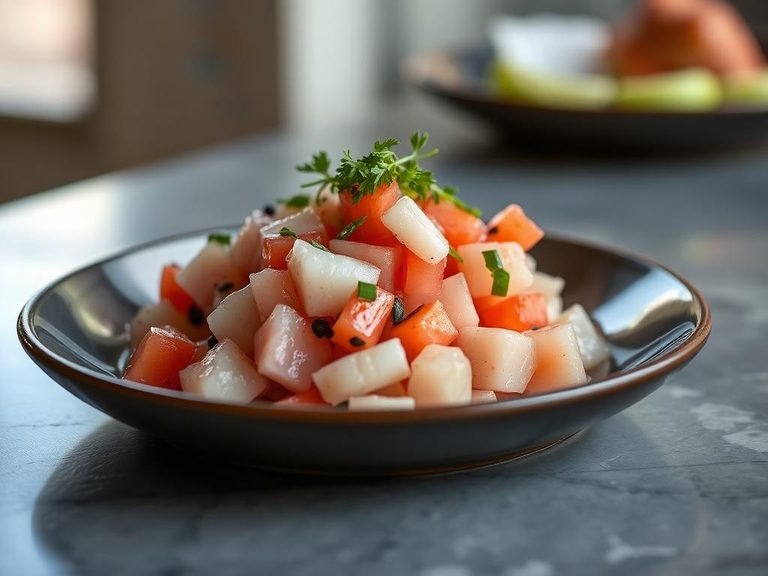
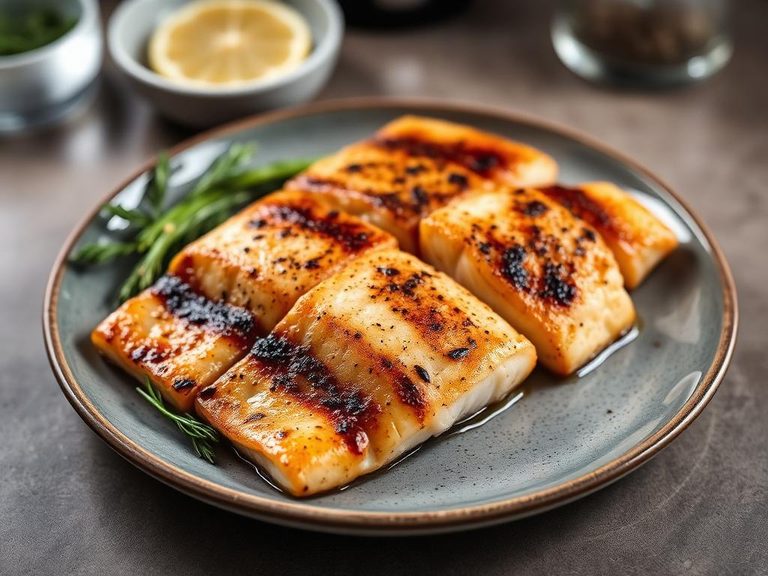
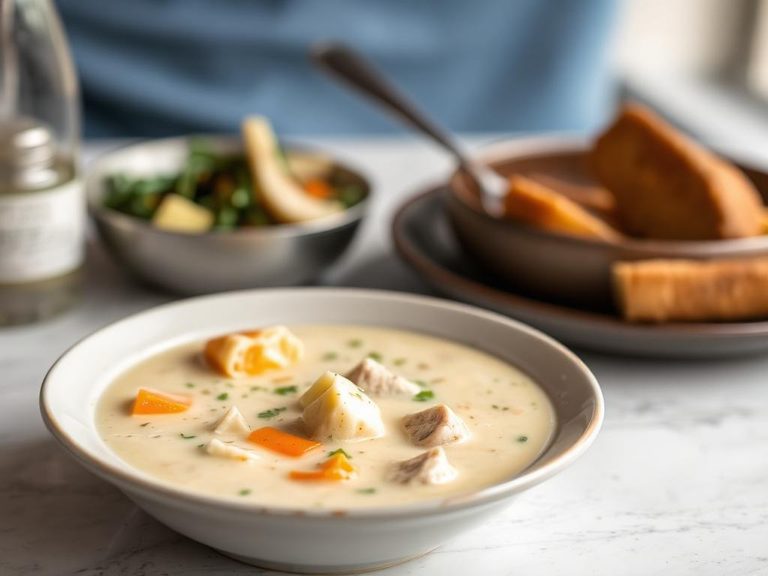
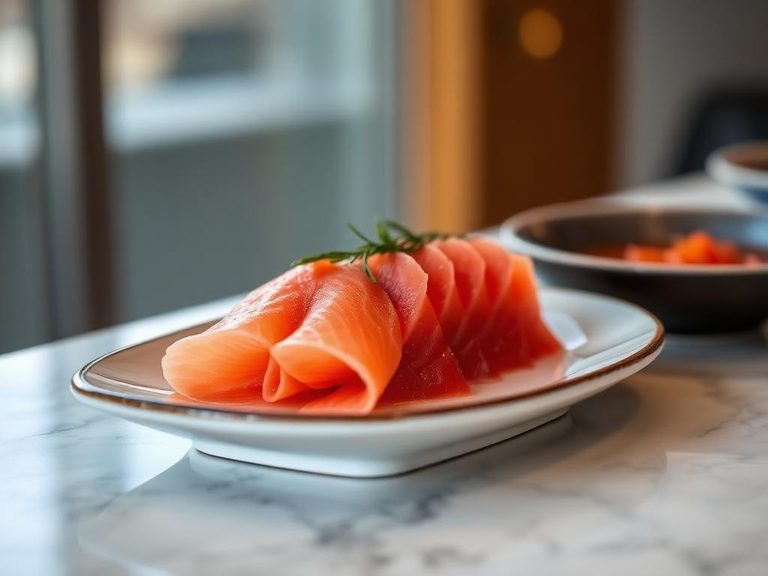
People love sheefish for its clean, sweet flavor that doesn't overpower, making it incredibly versatile for both raw preparations like ceviche and cooked dishes. It holds a deep cultural significance as a traditional food of the Gwich'in and other Alaska Native peoples, symbolizing connection to the land and river.
⚠️ Watch-outs & how to enjoy it better
As a raw fish, it carries a risk of parasites or bacteria, making proper freezing or sourcing from sushi-grade suppliers essential for safety. Its mild flavor can be lost if overcooked, and it's a common fish allergen. To enjoy it safely, always use fish prepared for raw consumption or cook it thoroughly to an internal temperature of 145°F (63°C).
Key benefits
- Excellent source of complete, lean protein
- Very low in fat and calories
- Zero carbohydrates or sugars
- Rich in essential nutrients like selenium and B vitamins
- A sustainable, wild-caught protein source
🍽️ Popular dishes
🌍 Where it's eaten
💡 Did you know?
The name 'inconnu' is French for 'unknown,' given by early French-Canadian traders who were unfamiliar with this large, unfamiliar whitefish of the northern rivers.
Full nutrition (USDA data · scales with serving)
| Water | 74.6 g |
| Energy | 115 kcal |
| Energy | 479 kj |
| Protein | 22.3 g |
| Total lipid (fat) | 2.8 g |
| Ash | 1.6 g |
| Carbohydrate, by difference | 0.00 g |
| Fiber, total dietary | 0.00 g |
| Total Sugars | 0.00 g |
| Sucrose | 0.00 g |
| Glucose | 0.00 g |
| Fructose | 0.00 g |
| Lactose | 0.00 g |
| Maltose | 0.00 g |
| Galactose | 0.00 g |
| Starch | 0.00 g |
| Calcium, Ca | 140 mg |
| Iron, Fe | 0.50 mg |
| Magnesium, Mg | 25.0 mg |
| Phosphorus, P | 300 mg |
| Potassium, K | 390 mg |
| Sodium, Na | 52.0 mg |
| Zinc, Zn | 0.60 mg |
| Copper, Cu | 0.15 mg |
| Manganese, Mn | 0.04 mg |
| Selenium, Se | 42.3 ug |
| Vitamin C, total ascorbic acid | 0.00 mg |
| Thiamin | 0.04 mg |
| Riboflavin | 0.13 mg |
| Niacin | 2.1 mg |
| Pantothenic acid | 0.65 mg |
| Vitamin B-6 | 0.16 mg |
| Folate, total | 9.0 ug |
| Folic acid | 0.00 ug |
| Folate, food | 9.0 ug |
| Folate, DFE | 9.0 ug |
| Choline, total | 109 mg |
| Betaine | 124 mg |
| Vitamin B-12 | 5.9 ug |
| Vitamin B-12, added | 0.00 ug |
| Vitamin A, RAE | 0.00 ug |
| Carotene, beta | 0.00 ug |
| Carotene, alpha | 0.00 ug |
| Cryptoxanthin, beta | 0.00 ug |
| Vitamin A, IU | 0.00 iu |
| Lycopene | 0.00 ug |
| Lutein + zeaxanthin | 0.00 ug |
| Vitamin E (alpha-tocopherol) | 0.44 mg |
| Vitamin E, added | 0.00 mg |
| Tocopherol, beta | 0.00 mg |
| Tocopherol, gamma | 0.01 mg |
| Tocopherol, delta | 0.00 mg |
| Tocotrienol, alpha | 0.00 mg |
| Tocotrienol, beta | 0.00 mg |
| Tocotrienol, gamma | 0.00 mg |
| Tocotrienol, delta | 0.00 mg |
| Vitamin K (phylloquinone) | 0.00 ug |
| Vitamin K (Dihydrophylloquinone) | 0.00 ug |
| Vitamin K (Menaquinone-4) | 0.00 ug |
| Alcohol, ethyl | 0.00 g |
| Caffeine | 0.00 mg |
| Theobromine | 0.00 mg |
Fat & fatty acid profile (per 100g)
| Fatty acids, total saturated | 0.49 g |
| SFA 8:0 | 0.00 g |
| SFA 10:0 | 0.00 g |
| SFA 12:0 | 0.00 g |
| SFA 14:0 | 0.08 g |
| SFA 15:0 | 0.00 g |
| SFA 16:0 | 0.35 g |
| SFA 17:0 | 0.00 g |
| SFA 18:0 | 0.06 g |
| SFA 20:0 | 0.00 g |
| SFA 22:0 | 0.00 g |
| SFA 24:0 | 0.00 g |
| Fatty acids, total monounsaturated | 1.1 g |
| MUFA 14:1 | 0.00 g |
| MUFA 15:1 | 0.00 g |
| MUFA 16:1 | 0.26 g |
| MUFA 17:1 | 0.00 g |
| MUFA 18:1 | 0.54 g |
| MUFA 20:1 | 0.19 g |
| MUFA 22:1 | 0.08 g |
| MUFA 24:1 c | 0.01 g |
| Fatty acids, total polyunsaturated | 0.70 g |
| PUFA 18:2 | 0.03 g |
| PUFA 18:3 | 0.04 g |
| PUFA 18:4 | 0.01 g |
| PUFA 20:2 n-6 c,c | 0.00 g |
| PUFA 20:3 | 0.00 g |
| PUFA 20:4 | 0.05 g |
| PUFA 20:5 n-3 (EPA) | 0.17 g |
| PUFA 21:5 | 0.00 g |
| PUFA 22:4 | 0.00 g |
| PUFA 22:5 n-3 (DPA) | 0.08 g |
| PUFA 22:6 n-3 (DHA) | 0.32 g |
| Cholesterol | 56.0 mg |
Amino acid profile (per 100g)
| Tryptophan | 0.21 g |
| Threonine | 0.94 g |
| Isoleucine | 0.86 g |
| Leucine | 1.5 g |
| Lysine | 1.8 g |
| Methionine | 0.63 g |
| Cystine | 0.20 g |
| Phenylalanine | 0.85 g |
| Tyrosine | 0.68 g |
| Valine | 1.0 g |
| Arginine | 1.3 g |
| Histidine | 0.52 g |
| Alanine | 1.4 g |
| Aspartic acid | 2.1 g |
| Glutamic acid | 3.0 g |
| Glycine | 1.5 g |
| Proline | 1.1 g |
| Serine | 0.85 g |
FAQ
What does sheefish taste like?
Sheefish has a clean, sweet, and mild flavor, often described as less 'fishy' than many other species. Its texture is firm, dense, and meaty, making it satisfying to eat.
Is raw sheefish safe to eat?
It is safe only if the fish has been properly frozen to kill parasites (typically at -4°F/-20°C for 7 days) or is sourced from a trusted supplier labeled as 'sushi-grade' or 'sashimi-grade.' Always prioritize food safety.
How is sheefish traditionally prepared by Alaska Natives?
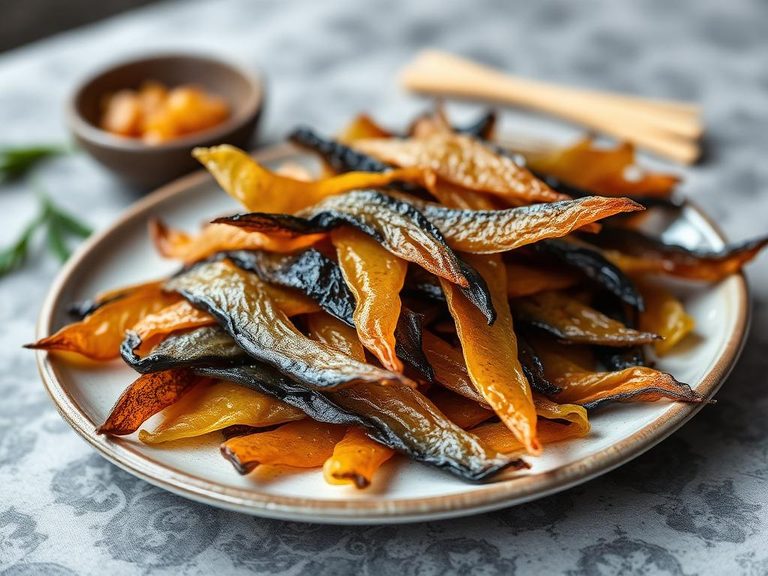
Traditionally, it is often cut into strips and air-dried or smoked for preservation, creating a nutrient-dense, portable food for winter months.
Nutrient density (calculated · NRF9.3)
Nutrient Rich Foods index: beneficial nutrients (protein, fiber, vitamins, minerals) minus saturated fat, added sugar & sodium, per 100 kcal.
NRF9.3 index — Fulgoni, Keast & Drewnowski, 2009. Computed from USDA nutrients.
Weight-loss friendliness (composite index)
Energy density 1.15 kcal/g · 77% calories from protein · 0.0 g fiber · 0.0 g sugar per 100 g.
Composite of energy density (Rolls et al., 1999), protein & fiber satiety, minus sugar. A calculated heuristic — ranks satiety-per-calorie, not a clinical measure.
Dietary load (calculated from USDA values)
Potential renal acid load. Positive = acid-forming, negative = alkaline-forming.
Sodium-to-potassium ratio: 0.13 (lower is better — aim for ≤ 1)
Sodium:potassium per WHO potassium guidance. Computed from USDA nutrients.