

Crustaceans, lobster, northern, raw
Whole food · Finfish and Shellfish Products

Photo: Wikipedia
Northern lobster is the sweet, firm-fleshed tail and claw meat of the cold-water American lobster, prized for its clean, oceanic flavor and satisfying, slightly snappy texture. Nutritionally, it's a lean protein powerhouse with virtually no fat or carbohydrates, making it a pure source of muscle-building nutrients.
Calorie split: 91% protein · 0% carbs · 9% fat
↓ Full nutrition💚 Why it's loved
People cherish lobster for its luxurious, sweet taste and the celebratory ritual of cracking the shell, which makes it a centerpiece for special occasions and fine dining. Its versatility allows it to shine in simple preparations like steaming or in rich, complex dishes.
⚠️ Watch-outs & how to enjoy it better
As a shellfish, lobster is a common and potentially severe allergen, requiring strict avoidance for those with sensitivities. Its preparation often involves high-sodium butter or sauces, and the cholesterol content, while not a direct concern for most, is noted for individuals managing specific dietary conditions. To counteract sodium, serve with lemon and fresh herbs instead of heavy butter, and practice portion control.
Key benefits
- Excellent source of high-quality, complete protein
- Very low in fat and calories
- Contains selenium, zinc, and B vitamins
- Naturally free of carbohydrates and sugar
- Provides omega-3 fatty acids in small amounts
🍽️ Popular dishes
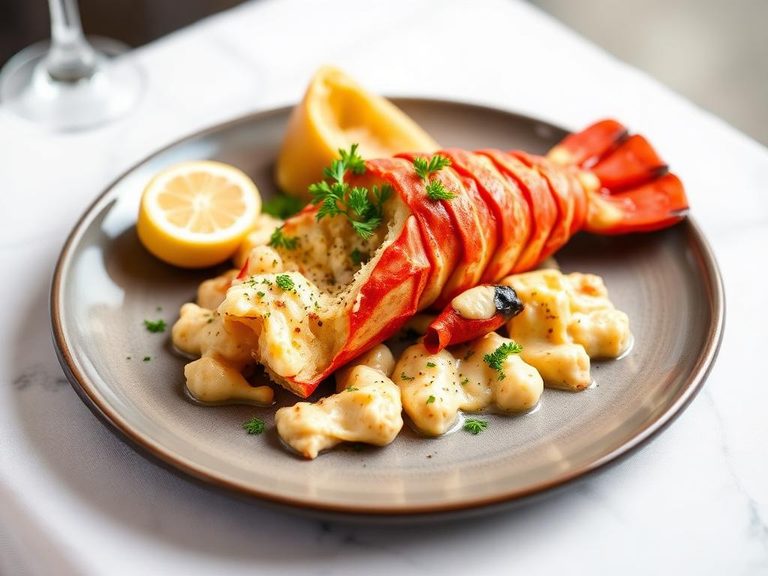
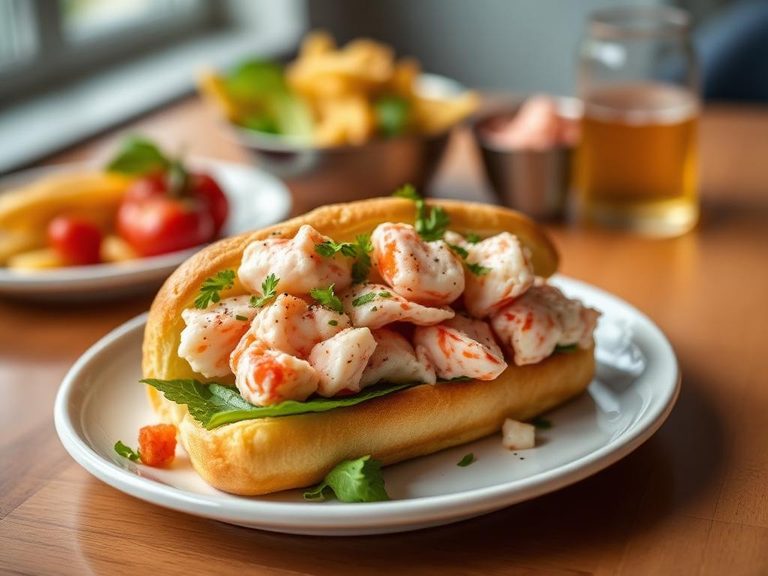
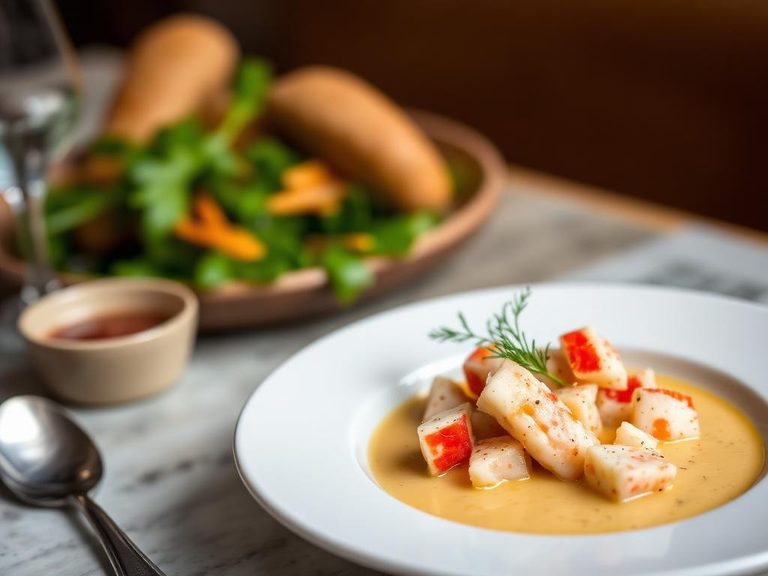
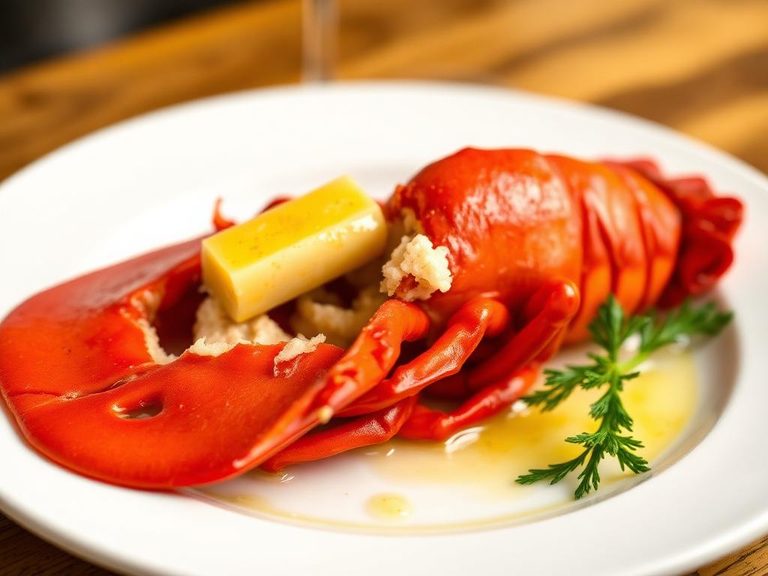
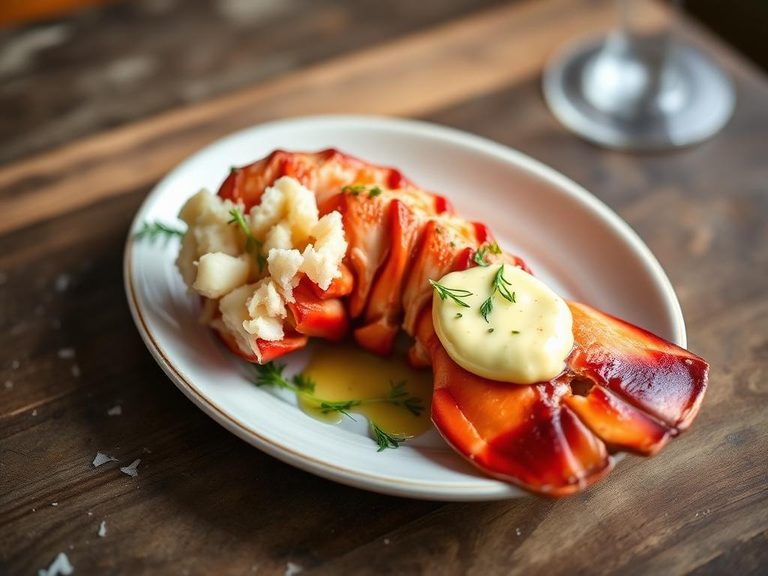
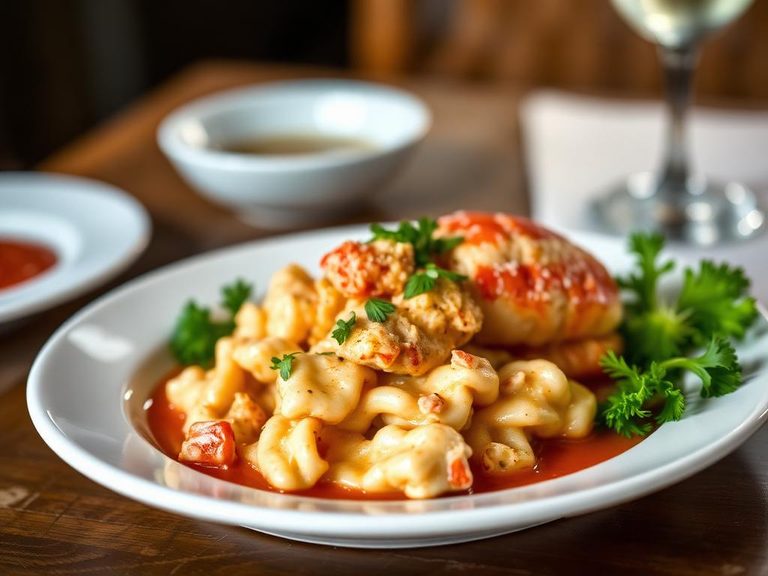
🌍 Where it's eaten
💡 Did you know?
The red color of a cooked lobster comes from a pigment called astaxanthin, which is bound to proteins in the shell; heat breaks these bonds, releasing the free pigment and causing the dramatic color change.
Full nutrition (USDA data · scales with serving)
| Water | 81.0 g |
| Energy | 77.0 kcal |
| Energy | 324 kj |
| Protein | 16.5 g |
| Total lipid (fat) | 0.75 g |
| Ash | 1.9 g |
| Carbohydrate, by difference | 0.00 g |
| Fiber, total dietary | 0.00 g |
| Total Sugars | 0.00 g |
| Sucrose | 0.00 g |
| Glucose | 0.00 g |
| Fructose | 0.00 g |
| Lactose | 0.00 g |
| Maltose | 0.00 g |
| Galactose | 0.00 g |
| Starch | 0.00 g |
| Calcium, Ca | 84.0 mg |
| Iron, Fe | 0.26 mg |
| Magnesium, Mg | 38.0 mg |
| Phosphorus, P | 161 mg |
| Potassium, K | 200 mg |
| Sodium, Na | 423 mg |
| Zinc, Zn | 3.5 mg |
| Copper, Cu | 1.3 mg |
| Manganese, Mn | 0.06 mg |
| Selenium, Se | 63.6 ug |
| Fluoride, F | 10.6 ug |
| Vitamin C, total ascorbic acid | 0.00 mg |
| Thiamin | 0.02 mg |
| Riboflavin | 0.01 mg |
| Niacin | 1.6 mg |
| Pantothenic acid | 1.4 mg |
| Vitamin B-6 | 0.10 mg |
| Folate, total | 10.0 ug |
| Folic acid | 0.00 ug |
| Folate, food | 10.0 ug |
| Folate, DFE | 10.0 ug |
| Choline, total | 70.3 mg |
| Vitamin B-12 | 1.3 ug |
| Vitamin B-12, added | 0.00 ug |
| Vitamin A, RAE | 1.0 ug |
| Retinol | 1.0 ug |
| Carotene, beta | 0.00 ug |
| Carotene, alpha | 0.00 ug |
| Cryptoxanthin, beta | 0.00 ug |
| Vitamin A, IU | 4.0 iu |
| Lycopene | 0.00 ug |
| Lutein + zeaxanthin | 0.00 ug |
| Vitamin E (alpha-tocopherol) | 0.87 mg |
| Vitamin E, added | 0.00 mg |
| Vitamin D (D2 + D3), International Units | 1.0 iu |
| Vitamin D (D2 + D3) | 0.00 ug |
| Vitamin D3 (cholecalciferol) | 0.00 ug |
| Vitamin K (phylloquinone) | 0.00 ug |
| Vitamin K (Dihydrophylloquinone) | 0.00 ug |
| Vitamin K (Menaquinone-4) | 0.00 ug |
| Alcohol, ethyl | 0.00 g |
| Caffeine | 0.00 mg |
| Theobromine | 0.00 mg |
Fat & fatty acid profile (per 100g)
| Fatty acids, total saturated | 0.18 g |
| SFA 4:0 | 0.00 g |
| SFA 6:0 | 0.00 g |
| SFA 8:0 | 0.00 g |
| SFA 10:0 | 0.00 g |
| SFA 12:0 | 0.00 g |
| SFA 14:0 | 0.01 g |
| SFA 15:0 | 0.01 g |
| SFA 16:0 | 0.11 g |
| SFA 17:0 | 0.00 g |
| SFA 18:0 | 0.04 g |
| SFA 20:0 | 0.00 g |
| SFA 22:0 | 0.00 g |
| SFA 24:0 | 0.00 g |
| Fatty acids, total monounsaturated | 0.22 g |
| MUFA 14:1 | 0.00 g |
| MUFA 15:1 | 0.00 g |
| MUFA 16:1 | 0.03 g |
| MUFA 17:1 | 0.00 g |
| MUFA 18:1 | 0.16 g |
| MUFA 20:1 | 0.03 g |
| MUFA 22:1 | 0.00 g |
| MUFA 24:1 c | 0.00 g |
| Fatty acids, total polyunsaturated | 0.30 g |
| PUFA 18:2 | 0.03 g |
| PUFA 18:3 | 0.04 g |
| PUFA 18:4 | 0.00 g |
| PUFA 20:2 n-6 c,c | 0.01 g |
| PUFA 20:3 | 0.01 g |
| PUFA 20:4 | 0.03 g |
| PUFA 20:5 n-3 (EPA) | 0.10 g |
| PUFA 22:4 | 0.00 g |
| PUFA 22:5 n-3 (DPA) | 0.01 g |
| PUFA 22:6 n-3 (DHA) | 0.07 g |
| Fatty acids, total trans | 0.01 g |
| Cholesterol | 127 mg |
Amino acid profile (per 100g)
| Tryptophan | 0.21 g |
| Threonine | 0.65 g |
| Isoleucine | 0.72 g |
| Leucine | 1.2 g |
| Lysine | 1.2 g |
| Methionine | 0.41 g |
| Cystine | 0.18 g |
| Phenylalanine | 0.68 g |
| Tyrosine | 0.59 g |
| Valine | 0.74 g |
| Arginine | 1.5 g |
| Histidine | 0.41 g |
| Alanine | 0.88 g |
| Aspartic acid | 1.6 g |
| Glutamic acid | 2.4 g |
| Glycine | 1.1 g |
| Proline | 0.74 g |
| Serine | 0.64 g |
FAQ
Is raw lobster safe to eat?
No, raw lobster should never be eaten. It can harbor harmful bacteria like Vibrio and parasites, and must be cooked to an internal temperature of 140°F (60°C) to be safe.
How is the nutrition different from cooked lobster?
Cooking primarily removes water, so cooked lobster has a more concentrated nutrient profile per 100g—higher protein and calories, but similar fat and zero carbs. The base nutritional qualities remain excellent.
What's the best way to preserve its texture when cooking?
Avoid overcooking, which makes the meat rubbery. For tails, steam or bake just until the flesh turns opaque and firm. For a whole lobster, plunge it headfirst into a large pot of rapidly boiling salted water.
Nutrient density (calculated · NRF9.3)
Nutrient Rich Foods index: beneficial nutrients (protein, fiber, vitamins, minerals) minus saturated fat, added sugar & sodium, per 100 kcal.
NRF9.3 index — Fulgoni, Keast & Drewnowski, 2009. Computed from USDA nutrients.
Weight-loss friendliness (composite index)
Energy density 0.77 kcal/g · 86% calories from protein · 0.0 g fiber · 0.0 g sugar per 100 g.
Composite of energy density (Rolls et al., 1999), protein & fiber satiety, minus sugar. A calculated heuristic — ranks satiety-per-calorie, not a clinical measure.
Dietary load (calculated from USDA values)
Potential renal acid load. Positive = acid-forming, negative = alkaline-forming.
Sodium-to-potassium ratio: 2.12 (lower is better — aim for ≤ 1)
Sodium:potassium per WHO potassium guidance. Computed from USDA nutrients.