

Cheese spread, American or Cheddar cheese base, reduced fat
Whole food · Dairy and Egg Products

Photo: Wikipedia
A smooth, creamy spread made from reduced-fat American or Cheddar cheese, offering a milder, tangier taste and softer texture than its full-fat counterpart. It delivers a notable protein punch (13.4g per 100g) while cutting back on fat and calories, making it a practical choice for sandwiches and snacks. Its spreadable consistency and consistent melt make it a convenient, functional ingredient in both home kitchens and commercial food preparation.
Calorie split: 30% protein · 24% carbs · 45% fat
↓ Full nutrition💚 Why it's loved
People love it for its foolproof creaminess and mild, familiar cheesy flavor that appeals to a wide range of palates, especially children. Its versatility is unmatched—it spreads effortlessly on crackers, melts into a quick sauce, or forms the base of a creamy dip.
⚠️ Watch-outs & how to enjoy it better
The reduced-fat formulation can sometimes lead to a less rich mouthfeel and a slightly rubbery texture when overheated. It often contains added sodium and emulsifiers; those monitoring salt intake or preferring whole foods should use it sparingly. Tip: Pair it with high-fiber crackers or fresh vegetables to slow sugar absorption and add texture.
Key benefits
- Good source of protein for muscle maintenance
- Lower in fat and calories than regular cheese spreads
- Provides calcium and phosphorus for bone health
- Convenient, shelf-stable, and pre-portioned for quick use
- Melts smoothly for hot dishes and sauces
🍽️ Popular dishes
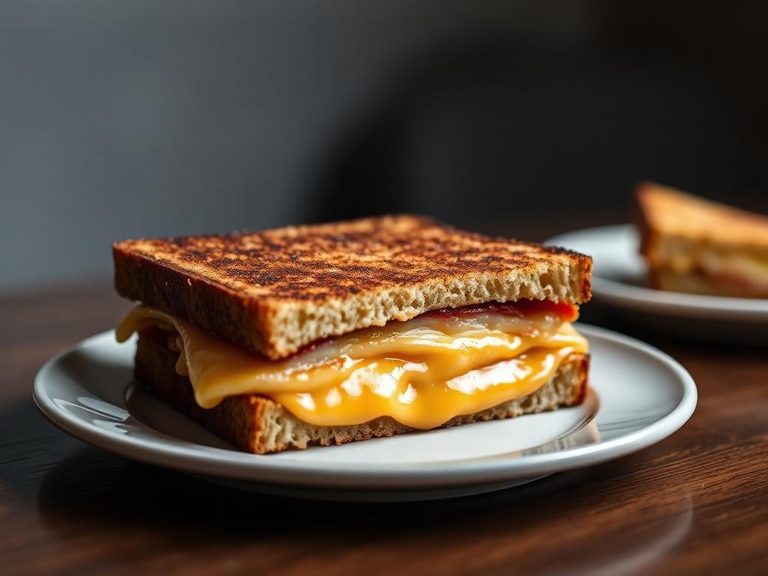
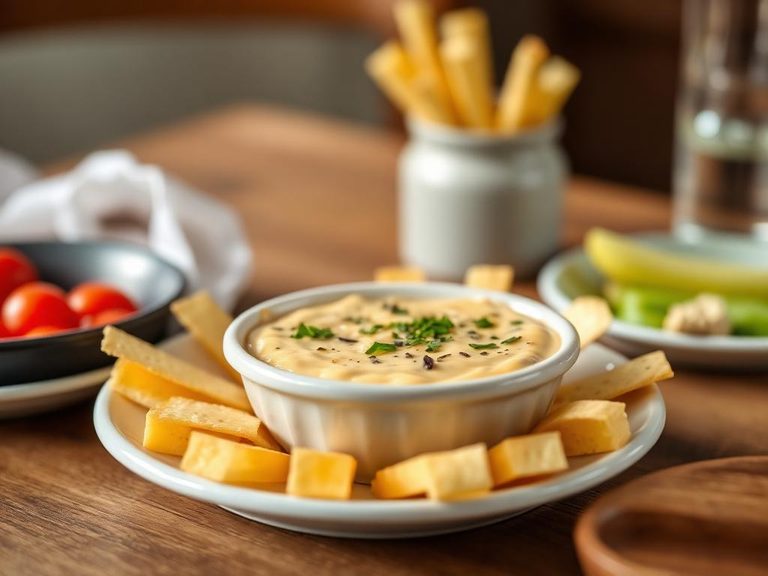
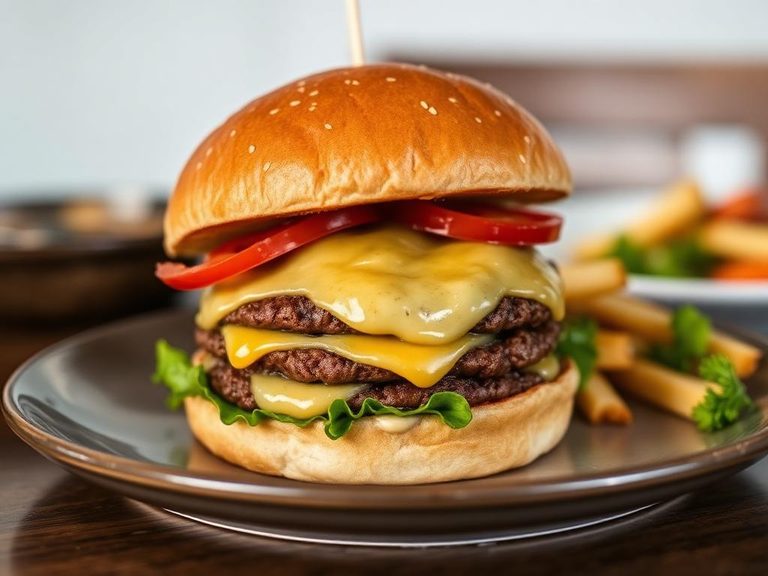
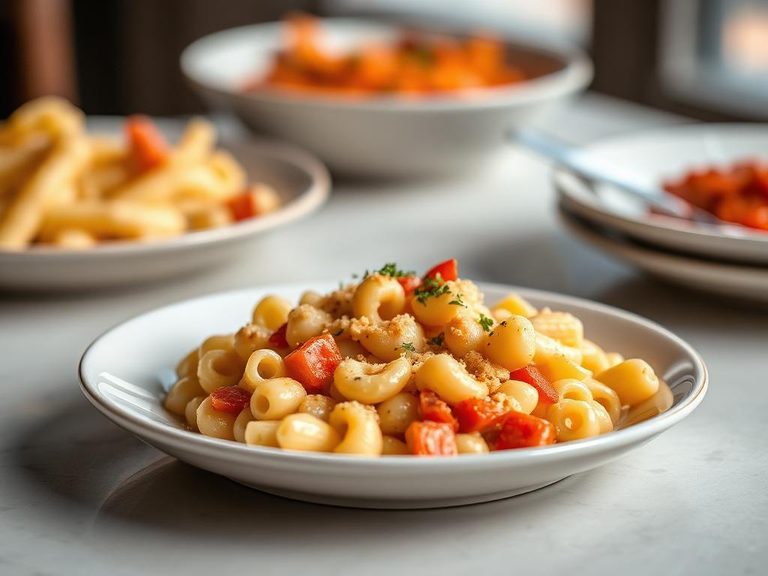

🌍 Where it's eaten
💡 Did you know?
The 'American cheese' base for many spreads is technically a 'pasteurized process cheese product,' a designation that allows for the addition of emulsifiers to prevent separation and create that perfectly smooth, sliceable melt.
Full nutrition (USDA data · scales with serving)
| Water | 61.8 g |
| Energy | 176 kcal |
| Energy | 738 kj |
| Protein | 13.4 g |
| Total lipid (fat) | 8.9 g |
| Ash | 5.2 g |
| Carbohydrate, by difference | 10.7 g |
| Fiber, total dietary | 0.00 g |
| Total Sugars | 7.1 g |
| Calcium, Ca | 557 mg |
| Iron, Fe | 0.36 mg |
| Magnesium, Mg | 27.0 mg |
| Phosphorus, P | 931 mg |
| Potassium, K | 250 mg |
| Sodium, Na | 1102 mg |
| Zinc, Zn | 1.8 mg |
| Copper, Cu | 0.03 mg |
| Manganese, Mn | 0.03 mg |
| Selenium, Se | 15.5 ug |
| Vitamin C, total ascorbic acid | 0.00 mg |
| Thiamin | 0.04 mg |
| Riboflavin | 0.44 mg |
| Niacin | 0.15 mg |
| Pantothenic acid | 0.80 mg |
| Vitamin B-6 | 0.10 mg |
| Folate, total | 0.00 ug |
| Folic acid | 0.00 ug |
| Folate, food | 0.00 ug |
| Folate, DFE | 0.00 ug |
| Choline, total | 42.6 mg |
| Vitamin B-12 | 1.2 ug |
| Vitamin B-12, added | 0.00 ug |
| Vitamin A, RAE | 185 ug |
| Retinol | 183 ug |
| Carotene, beta | 27.0 ug |
| Carotene, alpha | 0.00 ug |
| Cryptoxanthin, beta | 1.0 ug |
| Vitamin A, IU | 656 iu |
| Lycopene | 0.00 ug |
| Lutein + zeaxanthin | 11.0 ug |
| Vitamin E (alpha-tocopherol) | 0.46 mg |
| Vitamin E, added | 0.00 mg |
| Vitamin D (D2 + D3), International Units | 0.00 iu |
| Vitamin D (D2 + D3) | 0.00 ug |
| Vitamin K (phylloquinone) | 0.00 ug |
| Alcohol, ethyl | 0.00 g |
| Caffeine | 0.00 mg |
| Theobromine | 0.00 mg |
Fat & fatty acid profile (per 100g)
| Fatty acids, total saturated | 5.6 g |
| SFA 4:0 | 0.20 g |
| SFA 6:0 | 0.16 g |
| SFA 8:0 | 0.10 g |
| SFA 10:0 | 0.25 g |
| SFA 12:0 | 0.28 g |
| SFA 14:0 | 0.91 g |
| SFA 15:0 | 0.10 g |
| SFA 16:0 | 2.6 g |
| SFA 17:0 | 0.06 g |
| SFA 18:0 | 0.96 g |
| SFA 20:0 | 0.01 g |
| SFA 22:0 | 0.00 g |
| SFA 24:0 | 0.00 g |
| Fatty acids, total monounsaturated | 2.5 g |
| MUFA 14:1 | 0.09 g |
| MUFA 15:1 | 0.00 g |
| MUFA 16:1 | 0.15 g |
| MUFA 16:1 c | 0.12 g |
| MUFA 17:1 | 0.02 g |
| MUFA 18:1 | 2.2 g |
| MUFA 18:1 c | 1.9 g |
| MUFA 20:1 | 0.02 g |
| MUFA 22:1 | 0.00 g |
| MUFA 22:1 c | 0.00 g |
| MUFA 24:1 c | 0.01 g |
| Fatty acids, total polyunsaturated | 0.41 g |
| PUFA 18:2 | 0.33 g |
| PUFA 18:2 n-6 c,c | 0.23 g |
| PUFA 18:2 CLAs | 0.04 g |
| PUFA 18:3 | 0.04 g |
| PUFA 18:3 n-3 c,c,c (ALA) | 0.04 g |
| PUFA 18:3 n-6 c,c,c | 0.00 g |
| PUFA 18:3i | 0.00 g |
| PUFA 18:4 | 0.00 g |
| PUFA 20:2 n-6 c,c | 0.00 g |
| PUFA 20:3 | 0.01 g |
| PUFA 20:3 n-3 | 0.00 g |
| PUFA 20:3 n-6 | 0.01 g |
| PUFA 20:4 | 0.02 g |
| PUFA 20:5 n-3 (EPA) | 0.00 g |
| PUFA 22:4 | 0.00 g |
| PUFA 22:5 n-3 (DPA) | 0.01 g |
| PUFA 22:6 n-3 (DHA) | 0.00 g |
| Fatty acids, total trans | 0.33 g |
| Fatty acids, total trans-monoenoic | 0.27 g |
| TFA 16:1 t | 0.03 g |
| TFA 18:1 t | 0.23 g |
| TFA 22:1 t | 0.00 g |
| TFA 18:2 t not further defined | 0.06 g |
| Fatty acids, total trans-polyenoic | 0.06 g |
| Cholesterol | 38.0 mg |
Amino acid profile (per 100g)
Estimated from Cheese spread, pasteurized process, American — USDA does not publish this profile for Cheese spread.
| Tryptophan | 0.24 g |
| Threonine | 0.63 g |
| Isoleucine | 0.83 g |
| Leucine | 1.8 g |
| Lysine | 1.5 g |
| Methionine | 0.54 g |
| Cystine | 0.10 g |
| Phenylalanine | 0.93 g |
| Tyrosine | 0.89 g |
| Valine | 1.4 g |
| Arginine | 0.55 g |
| Histidine | 0.51 g |
| Alanine | 0.60 g |
| Aspartic acid | 1.1 g |
| Glutamic acid | 3.5 g |
| Glycine | 0.31 g |
| Proline | 2.3 g |
| Serine | 1.0 g |
FAQ
How is reduced-fat cheese spread different from regular cheese spread?
Reduced-fat versions use low-fat cheese bases and often include stabilizers to mimic the creamy texture of full-fat products. They typically have 25-50% less fat and fewer calories per serving, but may have slightly higher sodium or carbohydrate content to compensate for flavor.
Can I use this for cooking and baking?
Yes, it's excellent for melting into sauces, dips, or casseroles. However, due to its lower fat content, it may not brown or crisp as well as full-fat cheese. It's best used where smoothness is key, like in a grilled cheese or a creamy pasta sauce.
Is it suitable for a low-carb or keto diet?
While lower in fat, it still contains about 10.7g of carbohydrates per 100g, primarily from added sugars and milk solids. It can fit in moderation, but those on strict low-carb diets should account for these carbs and may prefer full-fat, unprocessed cheeses.
Nutrient density (calculated · NRF9.3)
Nutrient Rich Foods index: beneficial nutrients (protein, fiber, vitamins, minerals) minus saturated fat, added sugar & sodium, per 100 kcal.
NRF9.3 index — Fulgoni, Keast & Drewnowski, 2009. Computed from USDA nutrients.
Weight-loss friendliness (composite index)
Energy density 1.76 kcal/g · 30% calories from protein · 0.0 g fiber · 7.1 g sugar per 100 g.
Composite of energy density (Rolls et al., 1999), protein & fiber satiety, minus sugar. A calculated heuristic — ranks satiety-per-calorie, not a clinical measure.
Dietary load (calculated from USDA values)
Potential renal acid load. Positive = acid-forming, negative = alkaline-forming.
Sodium-to-potassium ratio: 4.41 (lower is better — aim for ≤ 1)
Sodium:potassium per WHO potassium guidance. Computed from USDA nutrients.