

Caribou, rump meat, half dried (Alaska Native)
Whole food · American Indian/Alaska Native Foods

Photo: Wikipedia
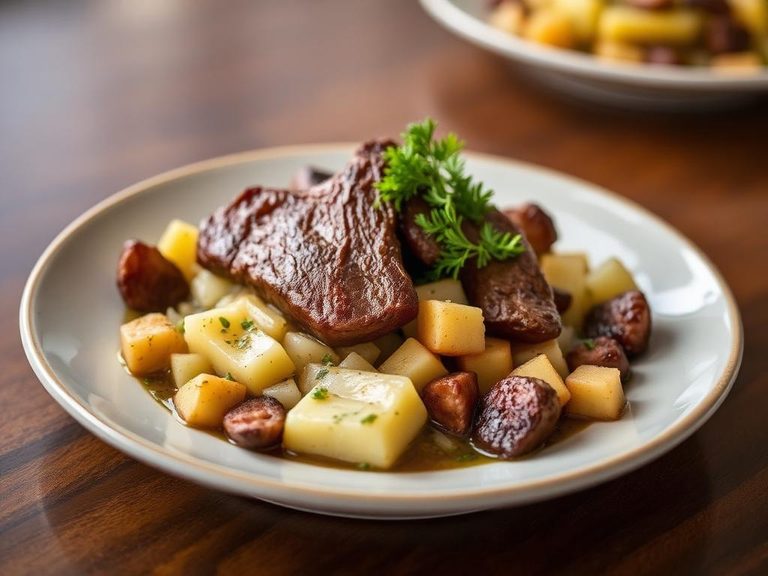
This is lean, dried caribou rump, a traditional Alaska Native staple with a dense, chewy texture and a deep, gamey, slightly sweet flavor. It's a nutritional powerhouse, packing an extraordinary 52 grams of protein per 100g with virtually no fat or carbohydrates.
Calorie split: 82% protein · 0% carbs · 18% fat
↓ Full nutrition💚 Why it's loved
People cherish it for its intense, concentrated meaty flavor that forms the backbone of hearty stews and soups. It's also valued for its practicality, providing reliable, portable nutrition in harsh climates.
⚠️ Watch-outs & how to enjoy it better
Its very lean, dry texture can be tough if not rehydrated or cooked properly. To counteract this, it's best simmered slowly in broths or stews to tenderize it, or rehydrated before pan-frying with a small amount of fat.
Key benefits
- Exceptionally high in complete protein for muscle maintenance.
- Naturally low in fat and carbohydrates.
- A dense source of iron and B vitamins.
- Lightweight and shelf-stable for long-term storage.
- A culturally significant traditional food.
🍽️ Popular dishes
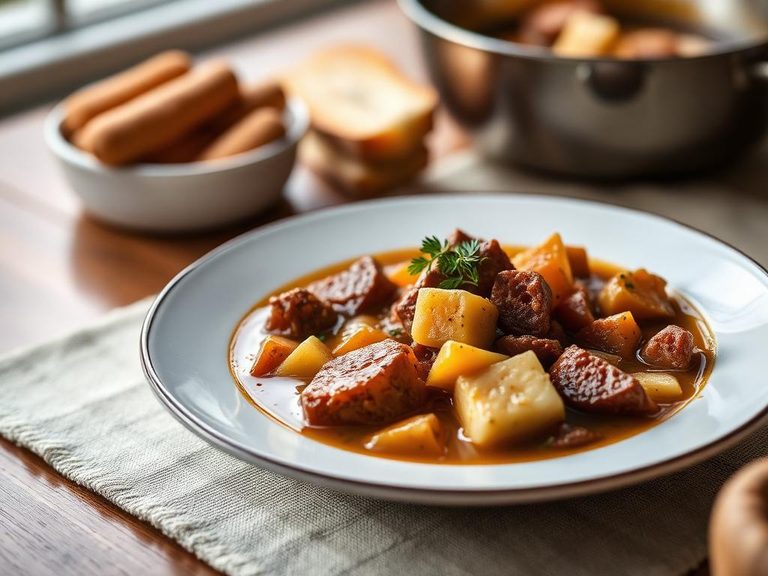
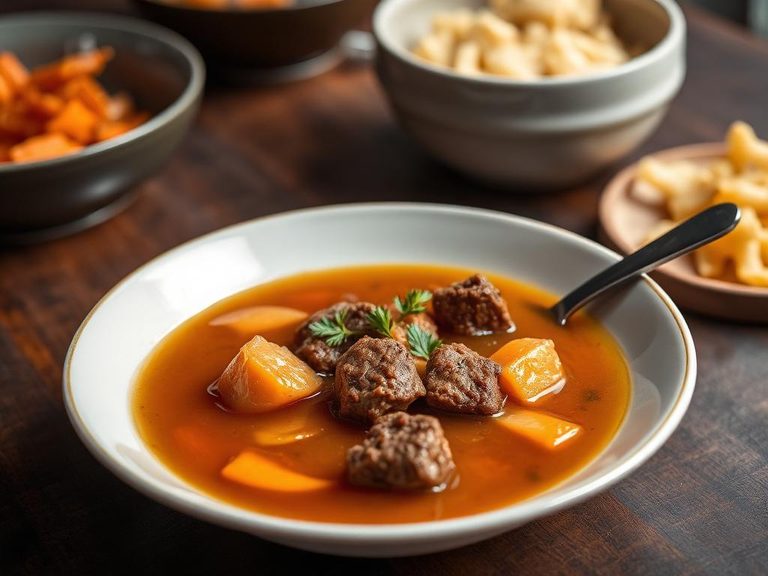
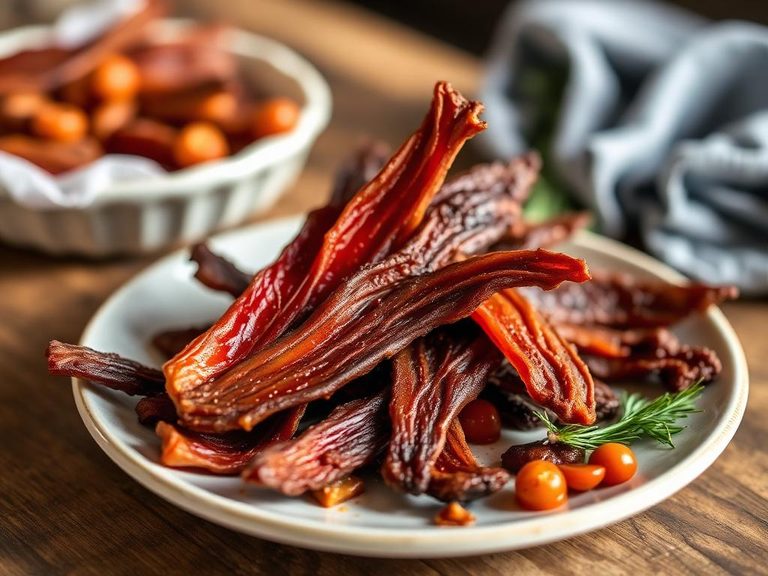
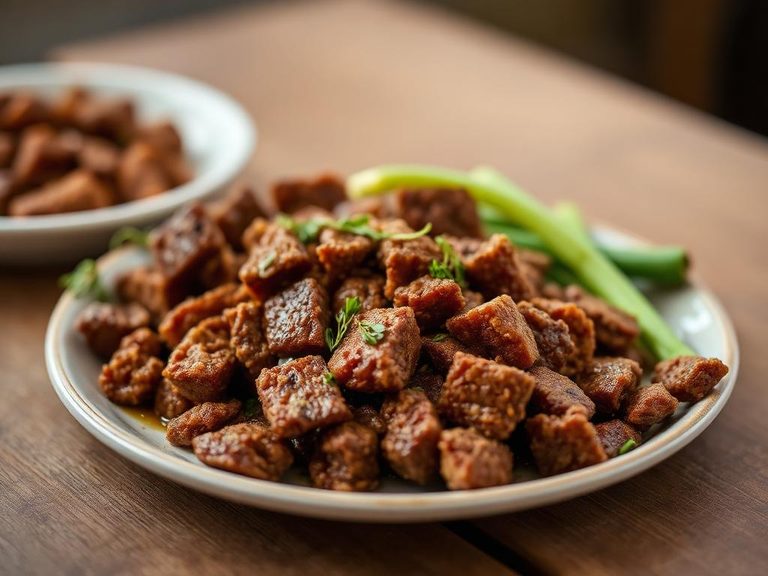
🌍 Where it's eaten
💡 Did you know?
Traditional drying methods often involve smoking the meat over alder or willow wood, which imparts a distinct, subtle smokiness to the final product.
Full nutrition (USDA data · scales with serving)
| Water | 38.0 g |
| Energy | 255 kcal |
| Energy | 1068 kj |
| Protein | 52.1 g |
| Total lipid (fat) | 5.2 g |
| Ash | 3.1 g |
| Carbohydrate, by difference | 0.00 g |
| Fiber, total dietary | 0.00 g |
| Total Sugars | 0.00 g |
| Sucrose | 0.00 g |
| Glucose | 0.00 g |
| Fructose | 0.00 g |
| Lactose | 0.00 g |
| Maltose | 0.00 g |
| Galactose | 0.00 g |
| Starch | 0.00 g |
| Calcium, Ca | 14.0 mg |
| Iron, Fe | 11.0 mg |
| Magnesium, Mg | 60.0 mg |
| Phosphorus, P | 480 mg |
| Potassium, K | 710 mg |
| Sodium, Na | 390 mg |
| Zinc, Zn | 9.4 mg |
| Copper, Cu | 0.60 mg |
| Manganese, Mn | 0.10 mg |
| Selenium, Se | 30.5 ug |
| Vitamin C, total ascorbic acid | 0.00 mg |
| Thiamin | 0.33 mg |
| Riboflavin | 1.2 mg |
| Niacin | 13.2 mg |
| Pantothenic acid | 2.9 mg |
| Vitamin B-6 | 0.62 mg |
| Folate, total | 3.0 ug |
| Folic acid | 0.00 ug |
| Folate, food | 3.0 ug |
| Folate, DFE | 3.0 ug |
| Choline, total | 203 mg |
| Betaine | 29.3 mg |
| Vitamin B-12 | 7.2 ug |
| Vitamin B-12, added | 0.00 ug |
| Vitamin A, RAE | 52.0 ug |
| Retinol | 52.0 ug |
| Carotene, beta | 0.00 ug |
| Carotene, alpha | 0.00 ug |
| Cryptoxanthin, beta | 0.00 ug |
| Vitamin A, IU | 173 iu |
| Lycopene | 0.00 ug |
| Lutein + zeaxanthin | 0.00 ug |
| Vitamin E (alpha-tocopherol) | 0.09 mg |
| Vitamin E, added | 0.00 mg |
| Tocopherol, beta | 0.00 mg |
| Tocopherol, gamma | 0.00 mg |
| Tocopherol, delta | 0.00 mg |
| Tocotrienol, alpha | 0.16 mg |
| Tocotrienol, beta | 0.00 mg |
| Tocotrienol, gamma | 0.00 mg |
| Tocotrienol, delta | 0.00 mg |
| Vitamin K (phylloquinone) | 1.1 ug |
| Vitamin K (Dihydrophylloquinone) | 0.00 ug |
| Vitamin K (Menaquinone-4) | 0.60 ug |
| Caffeine | 0.00 mg |
Fat & fatty acid profile (per 100g)
| Fatty acids, total saturated | 1.6 g |
| SFA 8:0 | 0.00 g |
| SFA 10:0 | 0.00 g |
| SFA 12:0 | 0.00 g |
| SFA 14:0 | 0.04 g |
| SFA 15:0 | 0.01 g |
| SFA 16:0 | 0.79 g |
| SFA 17:0 | 0.04 g |
| SFA 18:0 | 0.67 g |
| SFA 20:0 | 0.00 g |
| SFA 22:0 | 0.00 g |
| SFA 24:0 | 0.00 g |
| Fatty acids, total monounsaturated | 1.2 g |
| MUFA 14:1 | 0.00 g |
| MUFA 15:1 | 0.00 g |
| MUFA 16:1 | 0.08 g |
| MUFA 17:1 | 0.02 g |
| MUFA 18:1 | 1.1 g |
| MUFA 20:1 | 0.02 g |
| MUFA 22:1 | 0.00 g |
| MUFA 24:1 c | 0.00 g |
| Fatty acids, total polyunsaturated | 0.63 g |
| PUFA 18:2 | 0.33 g |
| PUFA 18:3 | 0.04 g |
| PUFA 18:4 | 0.00 g |
| PUFA 20:2 n-6 c,c | 0.02 g |
| PUFA 20:3 | 0.01 g |
| PUFA 20:4 | 0.15 g |
| PUFA 20:5 n-3 (EPA) | 0.02 g |
| PUFA 21:5 | 0.00 g |
| PUFA 22:4 | 0.00 g |
| PUFA 22:5 n-3 (DPA) | 0.04 g |
| PUFA 22:6 n-3 (DHA) | 0.02 g |
| Cholesterol | 141 mg |
Amino acid profile (per 100g)
Estimated from Game meat, caribou, raw — USDA does not publish this profile for Caribou.
| Tryptophan | 0.35 g |
| Threonine | 0.97 g |
| Isoleucine | 1.0 g |
| Leucine | 1.9 g |
| Lysine | 2.0 g |
| Methionine | 0.51 g |
| Cystine | 0.16 g |
| Phenylalanine | 1.0 g |
| Tyrosine | 0.74 g |
| Valine | 1.1 g |
| Arginine | 1.3 g |
| Histidine | 0.90 g |
| Alanine | 1.2 g |
| Aspartic acid | 2.0 g |
| Glutamic acid | 3.6 g |
| Glycine | 0.95 g |
| Proline | 0.70 g |
| Serine | 0.80 g |
FAQ
How do I rehydrate dried caribou?
Soak the pieces in cold water or broth for several hours or overnight in the refrigerator. The rehydrated meat can then be used in recipes like fresh meat.
Is this different from beef jerky?
Yes. While both are dried meat, caribou rump is typically leaner, has a distinct game flavor, and is often prepared as an ingredient for cooking rather than just a ready-to-eat snack.
Can I eat it straight from the package?
Traditionally, it can be eaten as is, but it will be very tough and chewy. Most modern preparations involve rehydrating or cooking it to improve texture.
Nutrient density (calculated · NRF9.3)
Nutrient Rich Foods index: beneficial nutrients (protein, fiber, vitamins, minerals) minus saturated fat, added sugar & sodium, per 100 kcal.
NRF9.3 index — Fulgoni, Keast & Drewnowski, 2009. Computed from USDA nutrients.
Weight-loss friendliness (composite index)
Energy density 2.55 kcal/g · 82% calories from protein · 0.0 g fiber · 0.0 g sugar per 100 g.
Composite of energy density (Rolls et al., 1999), protein & fiber satiety, minus sugar. A calculated heuristic — ranks satiety-per-calorie, not a clinical measure.
Dietary load (calculated from USDA values)
Potential renal acid load. Positive = acid-forming, negative = alkaline-forming.
Sodium-to-potassium ratio: 0.55 (lower is better — aim for ≤ 1)
Sodium:potassium per WHO potassium guidance. Computed from USDA nutrients.