Caribou Jerky
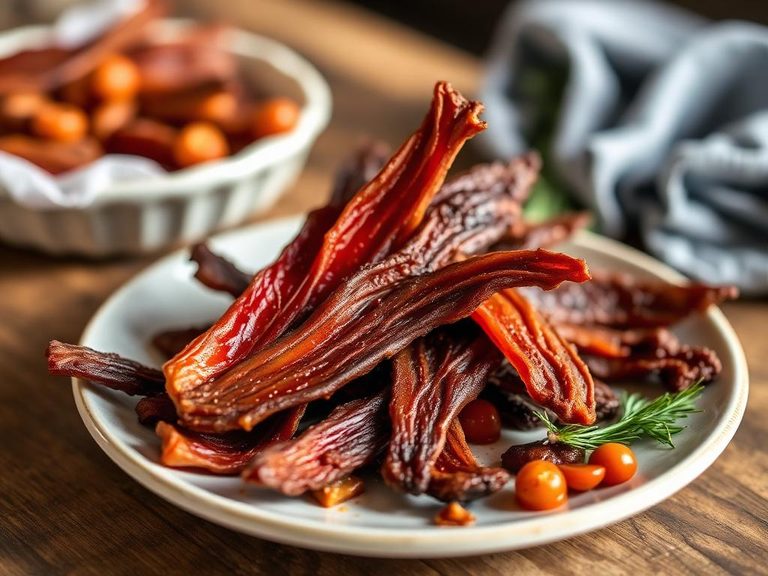
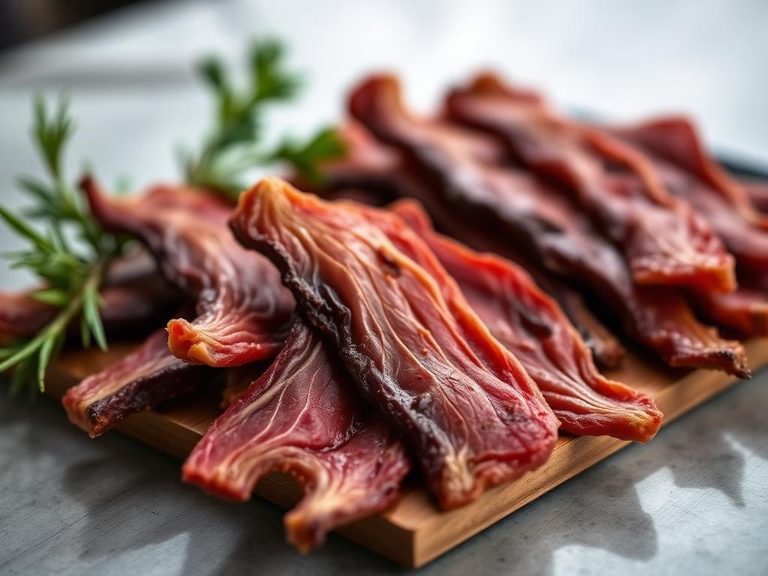
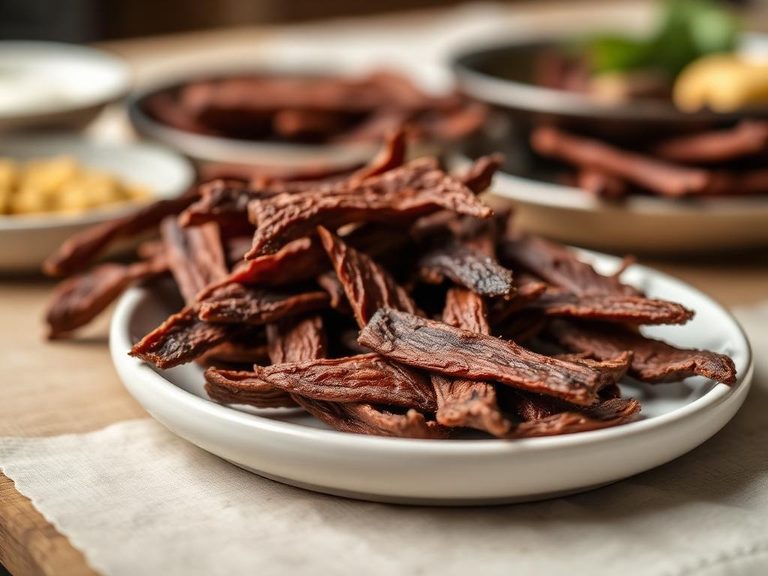
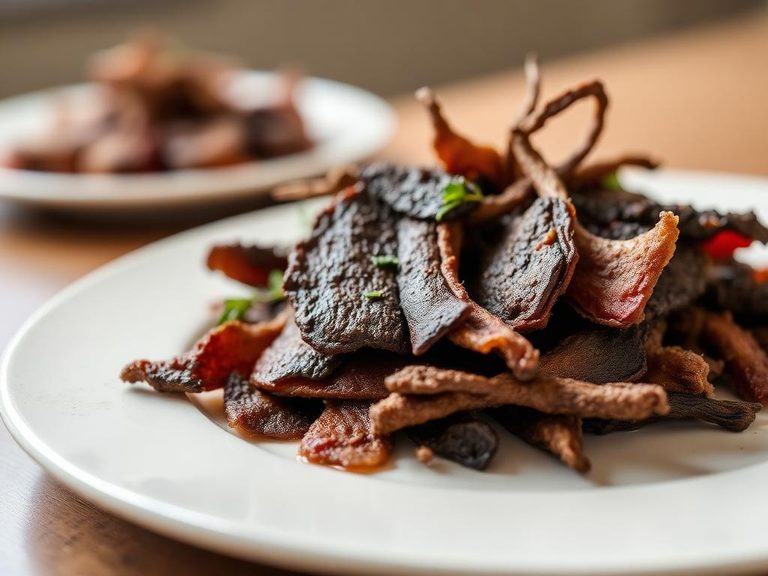
Caribou jerky is a lean, dried meat snack made from the muscle meat of caribou (reindeer), seasoned and preserved through dehydration. It's a traditional food of Indigenous peoples across the Arctic and subarctic regions of North America, including Canada, Alaska, and Greenland.
🍽️ Nutrition at a glance
Caribou jerky is an exceptionally high-protein, low-fat, and low-carbohydrate food, making it a dense source of energy. A typical serving provides a significant amount of iron, zinc, and B vitamins, with a calorie count roughly around 100-150 kcal per ounce (28g).
Nutrition breakdown
| Calories | 116 kcal |
| Protein | 20 g |
| Carbs | 3 g |
| Fat | 2.5 g |
| Fiber | 0 g |
| Sugar | 1 g |
| Sodium | 450 mg |
| Iron | 3.5 mg |
| Zinc | 4.2 mg |
| Niacin (B3) | 5.8 mg |
| Vitamin B6 | 0.4 mg |
| Phosphorus | 220 mg |
| Potassium | 310 mg |
| Selenium | 18 mcg |
| Vitamin B12 | 1.8 mcg |
Per 1 ounce (28 g) · estimated, varies by recipe
💡 What's interesting
Culturally, caribou jerky has been a vital survival food for millennia, providing portable, non-perishable nutrition during long hunts and harsh winters. Nutritionally, caribou meat is notably leaner than beef and is a wild game source, often containing higher levels of omega-3 fatty acids.