Caribou Tongue Jerky
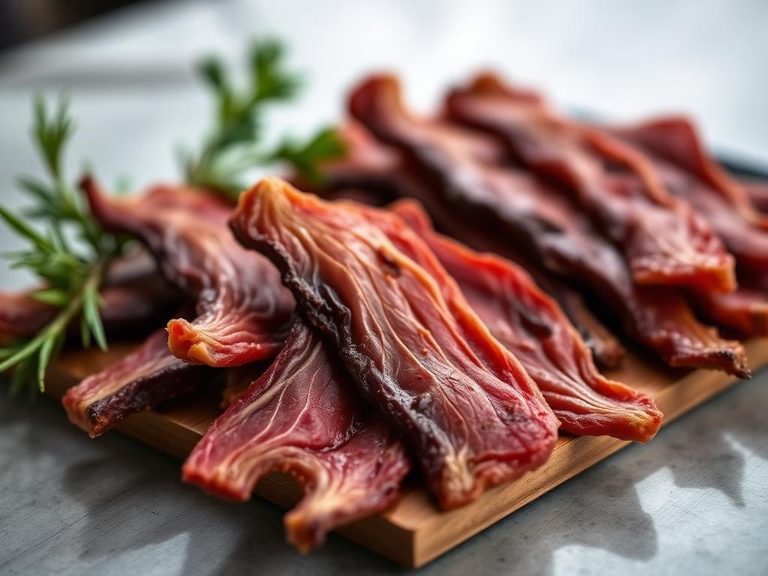
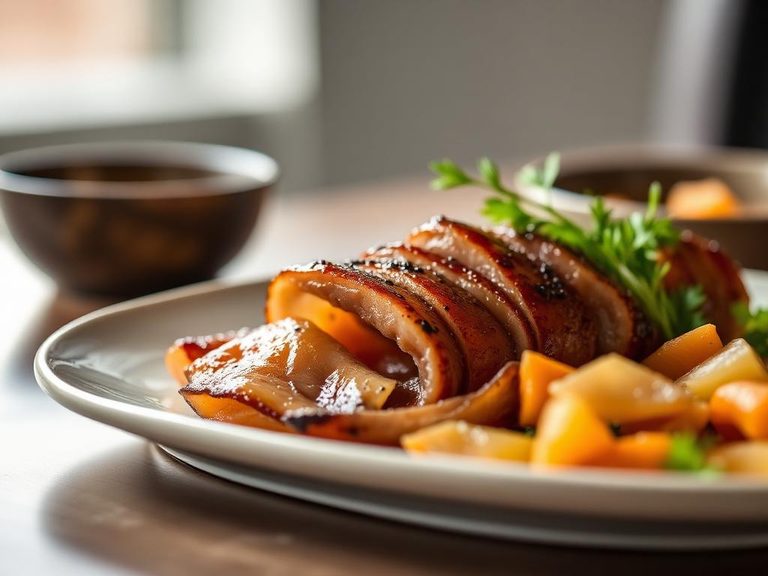
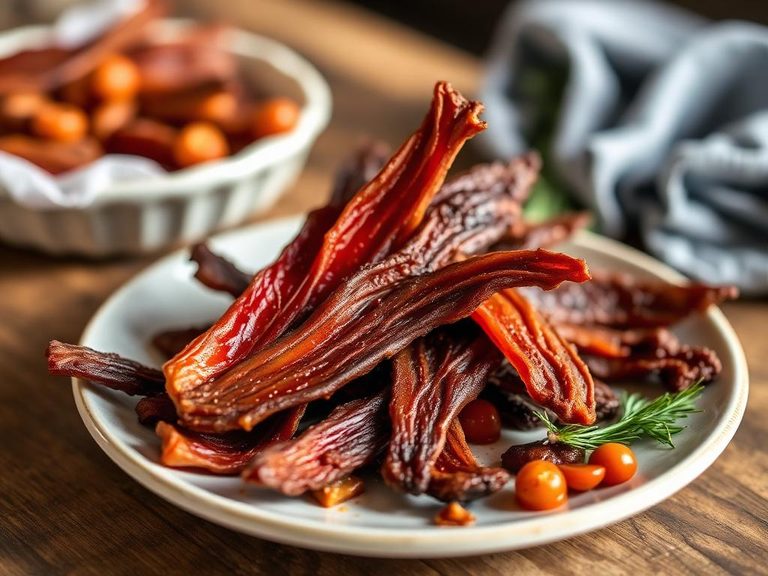
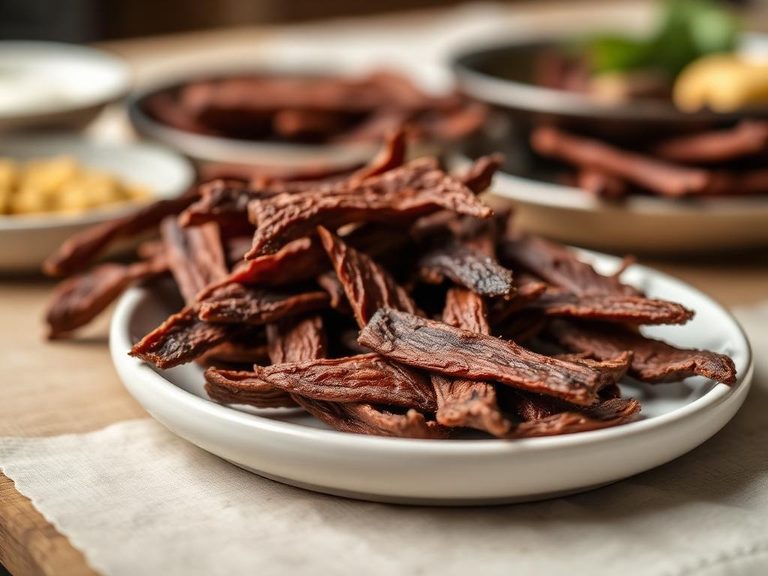
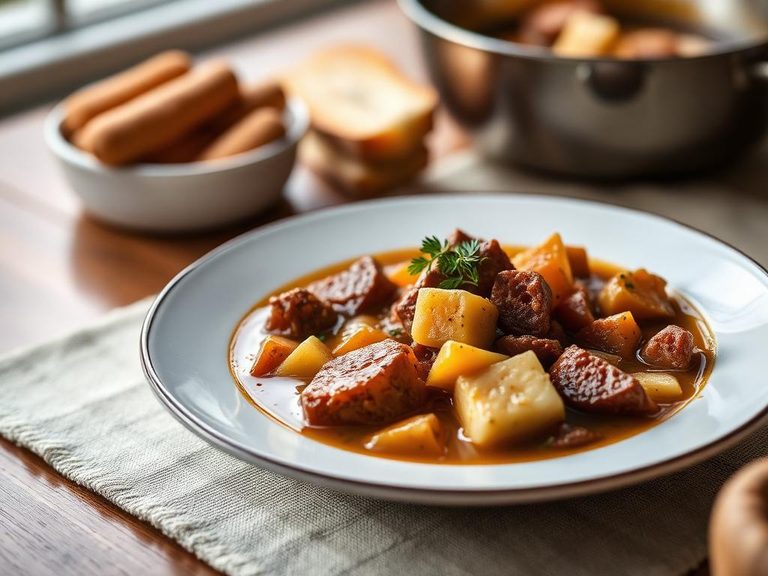
Caribou tongue jerky is a traditional preserved meat snack made from the tongue of caribou (reindeer), typically seasoned with salt, smoke, and sometimes berries or spices. It originates from Indigenous cultures in Arctic and subarctic regions like Alaska, Canada, and Scandinavia, where it was historically a vital source of sustenance during harsh winters.
🍽️ Nutrition at a glance
This jerky is extremely high in protein and relatively low in carbohydrates, with a moderate amount of fat. It provides essential nutrients like iron, zinc, and B vitamins, and a typical serving (about 30 grams) contains roughly 90-110 calories.
Nutrition breakdown
| Calories | 95 kcal |
| Protein | 14 g |
| Carbs | 1 g |
| Fat | 4 g |
| Fiber | 0 g |
| Sugar | 0 g |
| Sodium | 480 mg |
| Iron | 2.5 mg |
| Zinc | 3.8 mg |
| Vitamin B12 | 6.0 mcg |
| Niacin (B3) | 4.5 mg |
| Phosphorus | 180 mg |
| Selenium | 15 mcg |
| Potassium | 220 mg |
| Vitamin B6 | 0.3 mg |
Per 1 ounce (28 g) · estimated, varies by recipe
💡 What's interesting
Culturally, caribou tongue jerky is a prized traditional food among Dene, Inuit, and Sami peoples, often prepared during communal hunts or celebrations. Nutritionally, the tongue is a nutrient-dense organ meat, offering a unique combination of high-quality protein and micronutrients not always found in muscle meats.