Caribou Jerky or Dried Meat
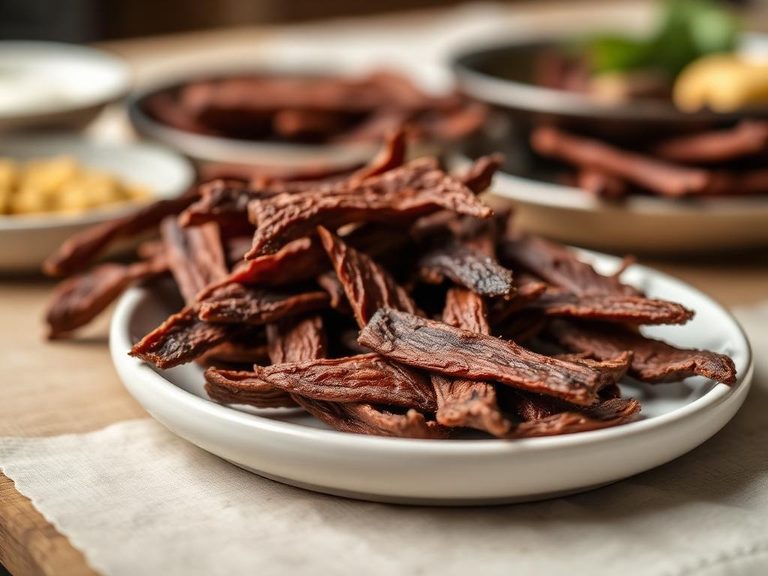
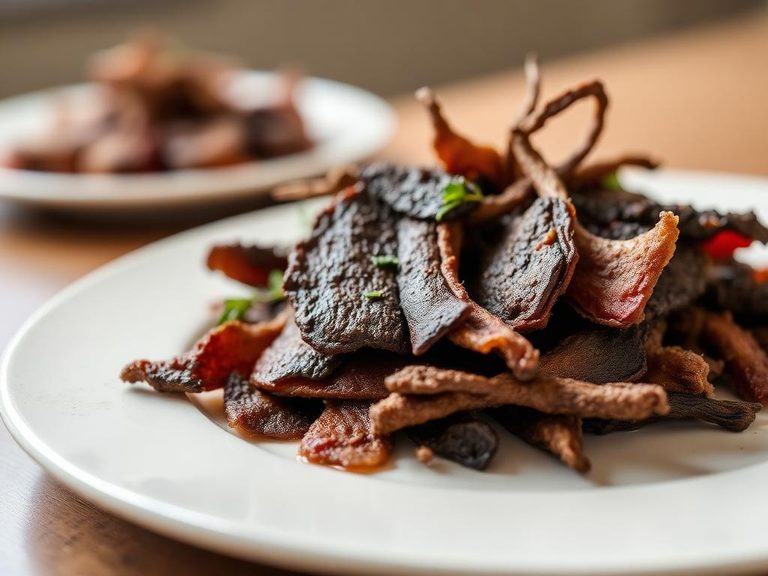
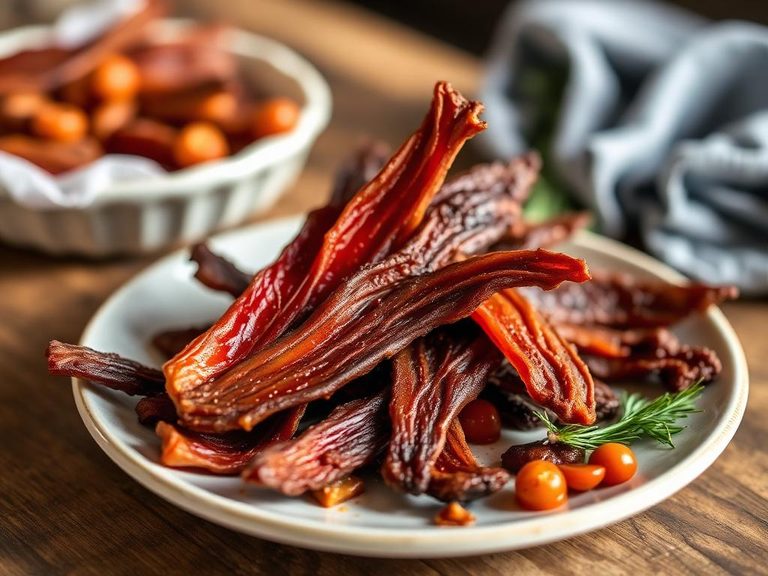
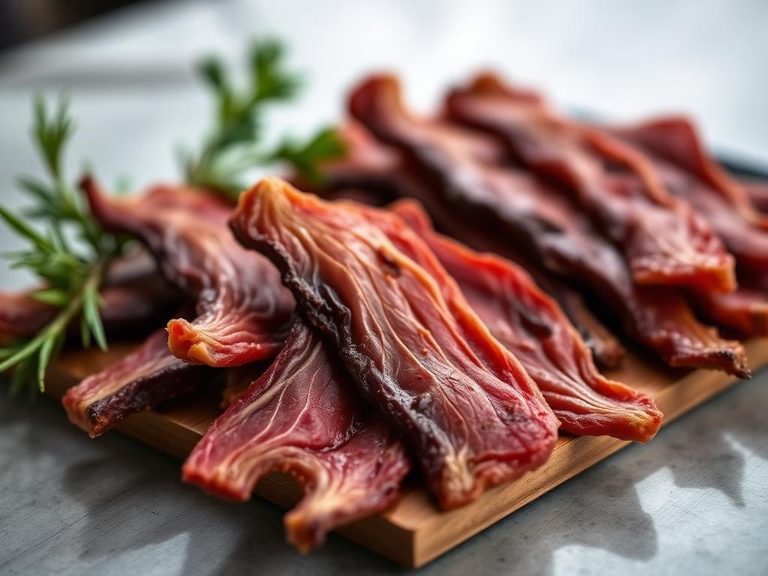
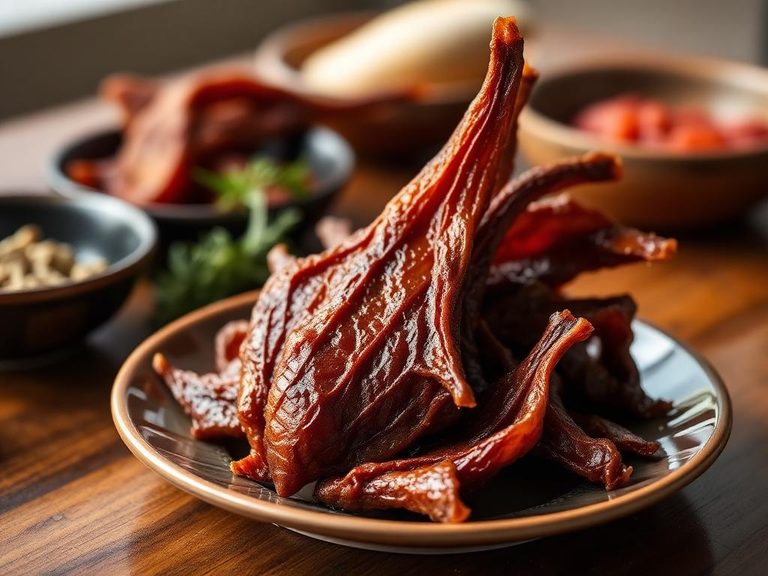
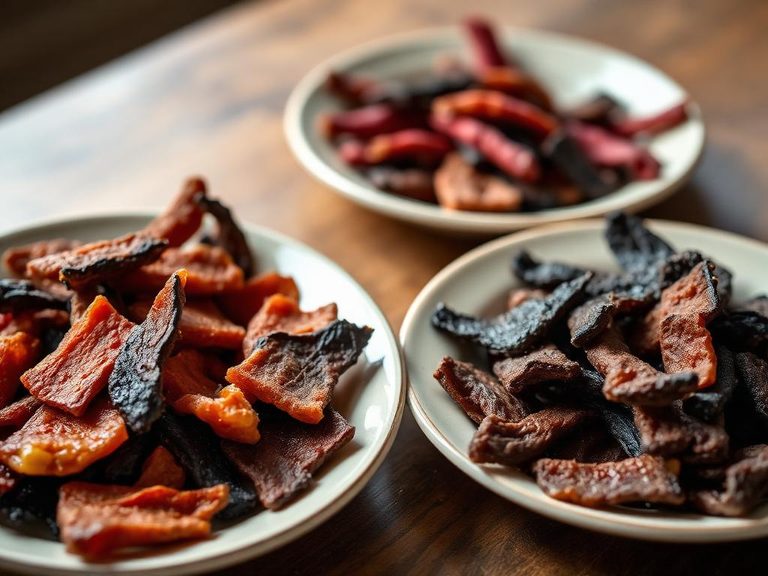
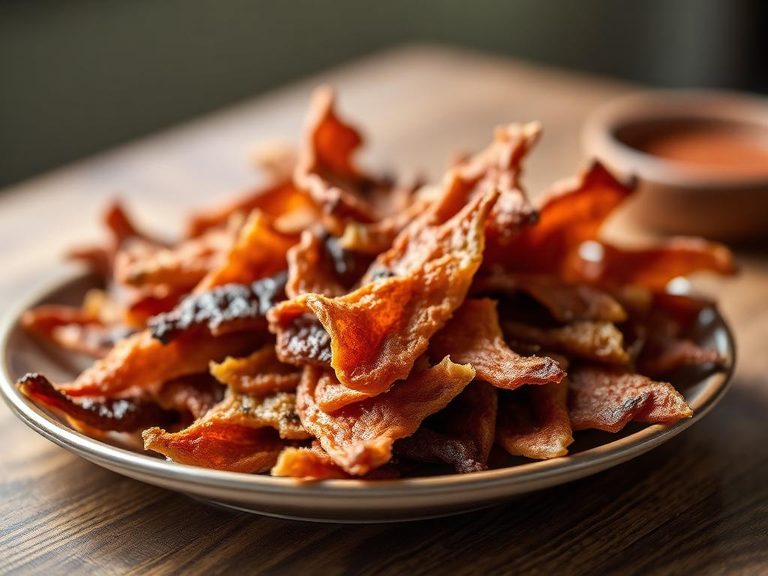
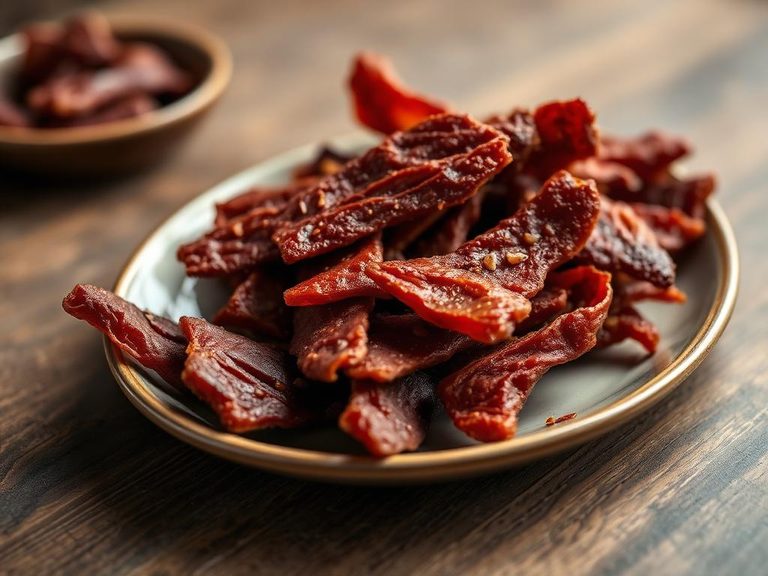
Caribou jerky is a traditional dried meat snack made from the lean muscle of caribou, a species of deer native to Arctic and subarctic regions. It is typically seasoned with salt, pepper, and sometimes smoke or local herbs before being air-dried or dehydrated to preserve it. This food is deeply rooted in the culinary traditions of Indigenous peoples across Northern Canada, Alaska, and Scandinavia.
🍽️ Nutrition at a glance
Caribou jerky is an extremely high-protein, low-carbohydrate food with minimal fat, making it a dense source of energy and muscle-building nutrients. A typical serving provides a significant amount of iron, zinc, and B vitamins, with a rough calorie ballpark of 150-200 kcal per ounce (28g).
Nutrition breakdown
| Calories | 170 kcal |
| Protein | 25 g |
| Carbs | 2 g |
| Fat | 7 g |
| Fiber | 0 g |
| Sugar | 1 g |
| Sodium | 480 mg |
| Iron | 3.5 mg |
| Zinc | 4.2 mg |
| Potassium | 300 mg |
| Phosphorus | 220 mg |
| Niacin (B3) | 5.0 mg |
| Vitamin B12 | 2.5 mcg |
| Selenium | 18 mcg |
| Magnesium | 25 mg |
Per 1 ounce (28 g) · estimated, varies by recipe
💡 What's interesting
Culturally, caribou jerky has been a vital survival food for millennia, enabling travel and sustenance in harsh Arctic climates. Nutritionally, it is unique for its exceptionally high protein-to-weight ratio and its natural concentration of heme iron, which is more easily absorbed by the body than plant-based iron.