Dried/jerky preparations
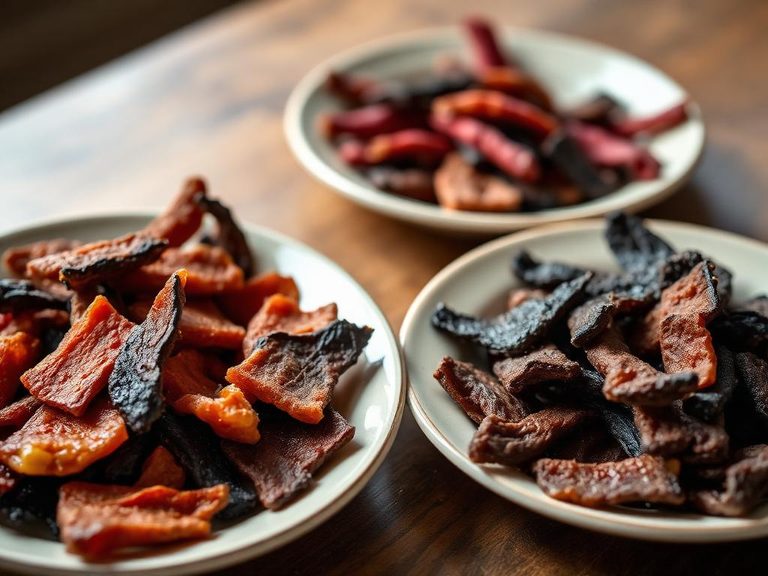
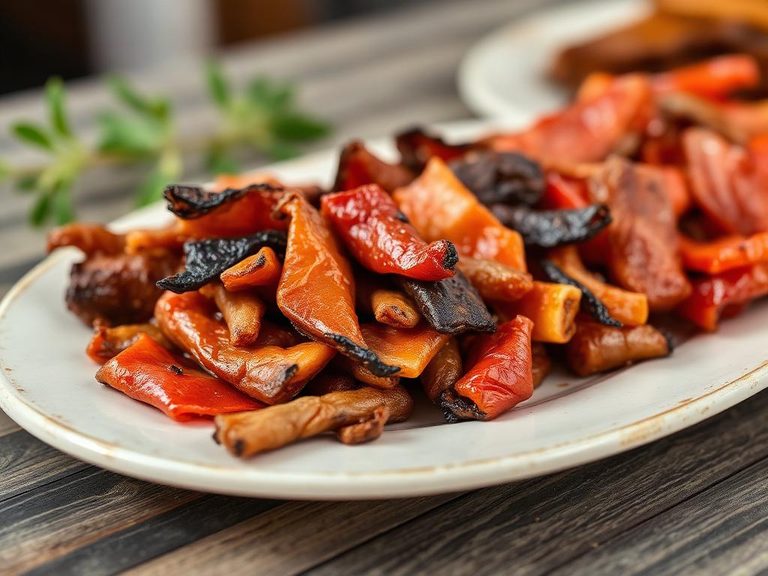
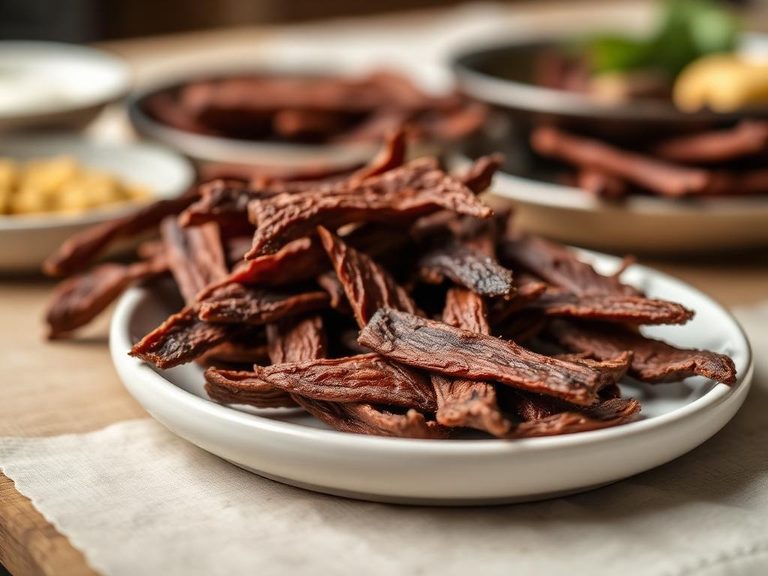
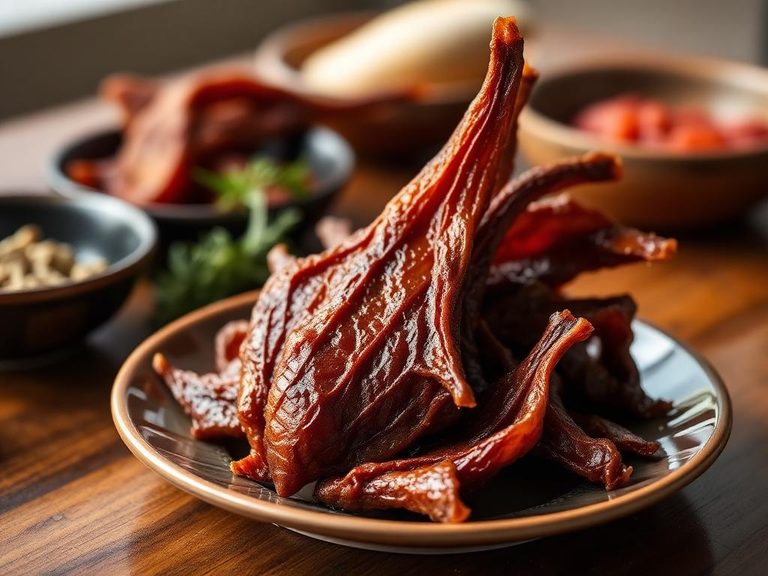
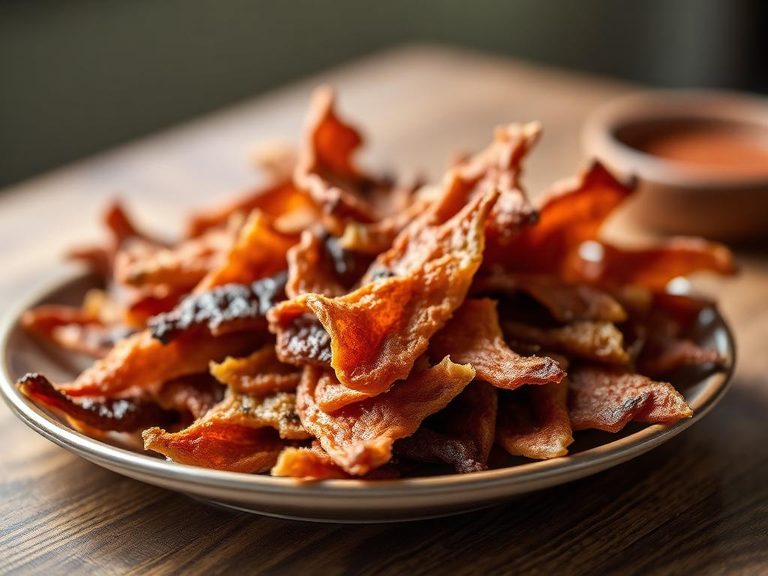
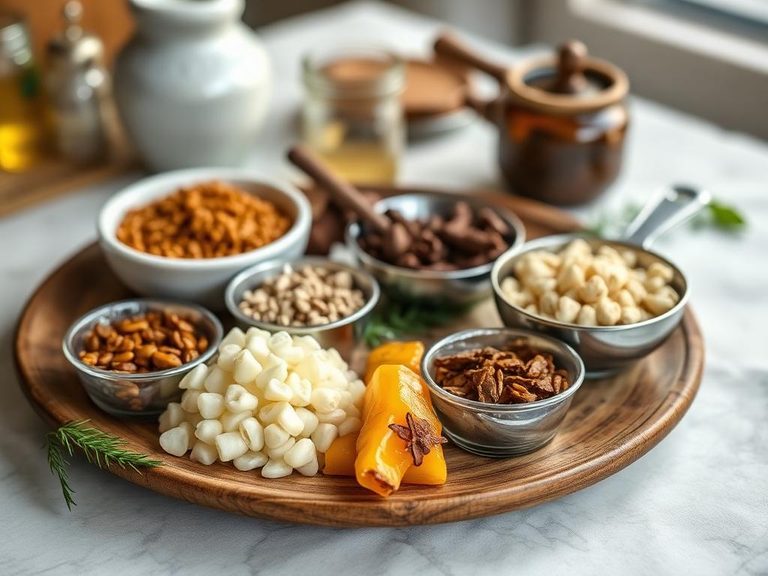
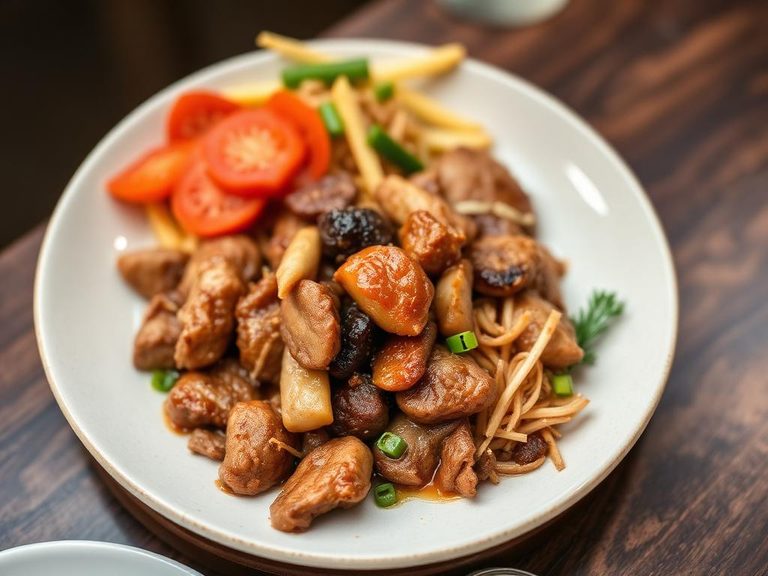
Dried or jerky preparations are meats, fish, or sometimes fruits and vegetables that have been preserved by removing most of their moisture through sun-drying, smoking, or using a dehydrator. Common ingredients include lean cuts of beef, venison, or fish, often seasoned with salt, spices, and sometimes soy sauce or sugar. This method of preservation is ancient and found in virtually every culinary tradition worldwide, from American beef jerky to South African biltong and Chinese dried squid.
🍽️ Nutrition at a glance
Dried jerky is a high-protein, low-carbohydrate food, making it a popular snack for sustained energy. A typical serving provides a significant amount of protein and iron, with a calorie range that can vary widely from about 80 to 160 calories per ounce (28g) depending on the fat content and added seasonings.
Nutrition breakdown
| Calories | 116 kcal |
| Protein | 9.4 g |
| Carbs | 3.1 g |
| Fat | 7.3 g |
| Fiber | 0.5 g |
| Sugar | 2 g |
| Sodium | 440 mg |
| Iron | 1.4 mg |
| Zinc | 2.3 mg |
| Potassium | 176 mg |
| Phosphorus | 100 mg |
| Niacin (B3) | 3.2 mg |
| Vitamin B12 | 0.7 mcg |
| Magnesium | 12 mg |
| Selenium | 10.1 mcg |
Per 1 ounce (28 g) · estimated, varies by recipe
💡 What's interesting
Nutritionally, the drying process concentrates nutrients, making jerky a dense source of protein and minerals like zinc and iron. Culturally, it represents one of humanity's oldest food preservation techniques, essential for nomadic peoples, long journeys, and survival before refrigeration.