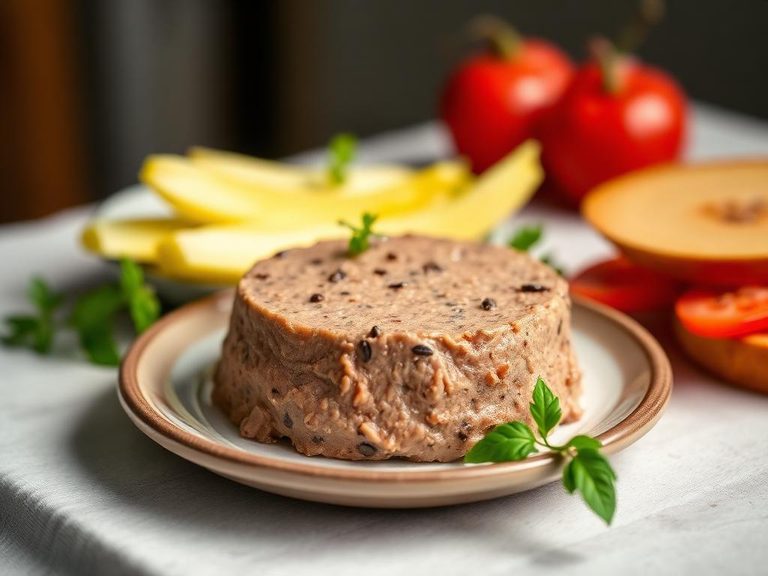
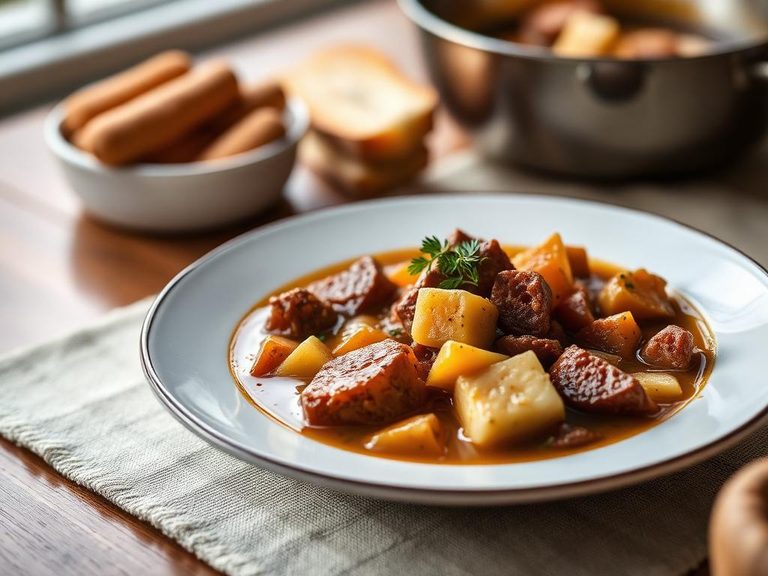
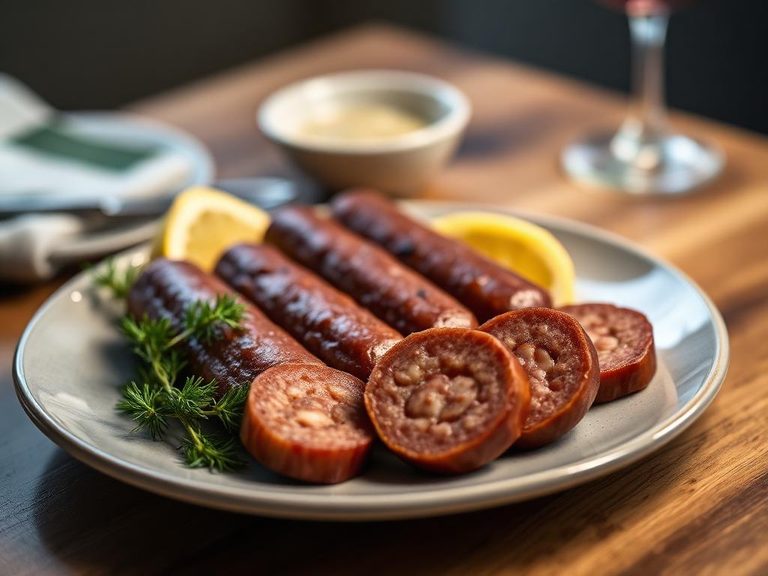
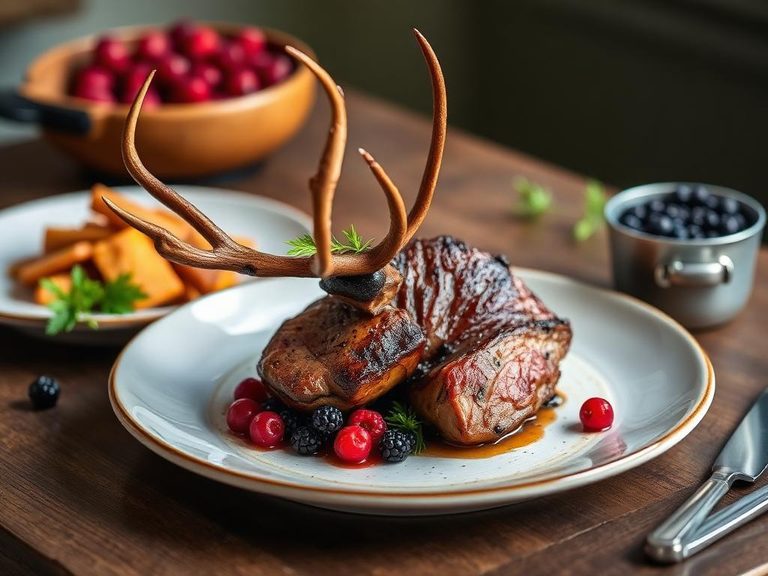
Caribou liver pâté
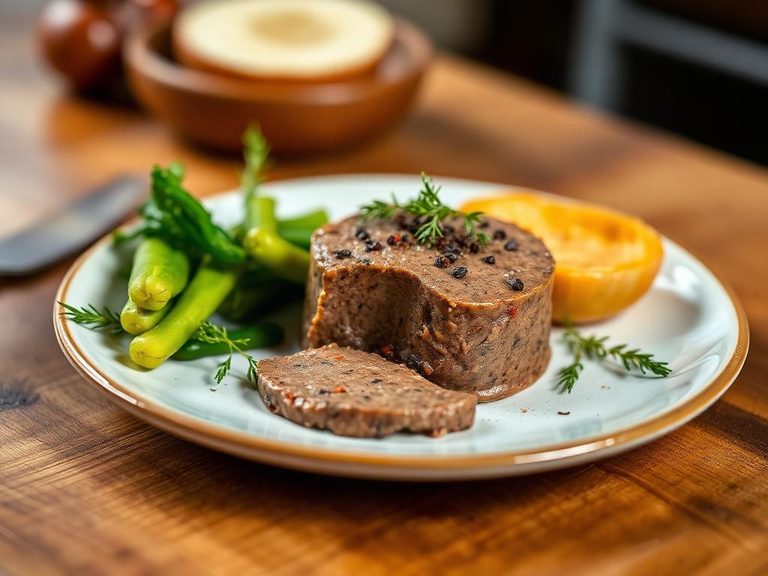
Caribou liver pâté is a rich, savory spread made from the liver of the caribou (reindeer), typically blended with ingredients like butter, onions, herbs, and sometimes brandy or cognac. This dish originates from Arctic and subarctic regions, particularly among Indigenous communities in North America (like the Inuit, Dene, and Cree) and in Scandinavia, where reindeer herding is traditional.
🍽️ Nutrition at a glance
This pâté is an extremely high-protein, high-fat food with negligible carbohydrates, making it a dense source of energy. It is exceptionally rich in key nutrients like vitamin A, vitamin B12, iron, and copper, with a single serving providing well over the daily recommended intake for several of these vitamins.
Nutrition breakdown
| Calories | 110 kcal |
| Protein | 4.5 g |
| Carbs | 0.5 g |
| Fat | 10 g |
| Fiber | 0 g |
| Sugar | 0 g |
| Sodium | 180 mg |
| Vitamin A | 850 mcg RAE |
| Vitamin B12 | 18 mcg |
| Iron | 3.5 mg |
| Copper | 0.4 mg |
| Riboflavin (B2) | 0.6 mg |
| Niacin (B3) | 4 mg |
| Phosphorus | 95 mg |
| Selenium | 12 mcg |
Per 2 tablespoons (30 g) · estimated, varies by recipe
💡 What's interesting
Culturally, this pâté represents a traditional method of preserving and utilizing a highly nutritious organ meat from an animal central to the subsistence and heritage of Arctic peoples. Nutritionally, it is a powerhouse; a small serving can deliver a massive dose of preformed vitamin A (retinol) and heme iron, which is more easily absorbed than plant-based iron.