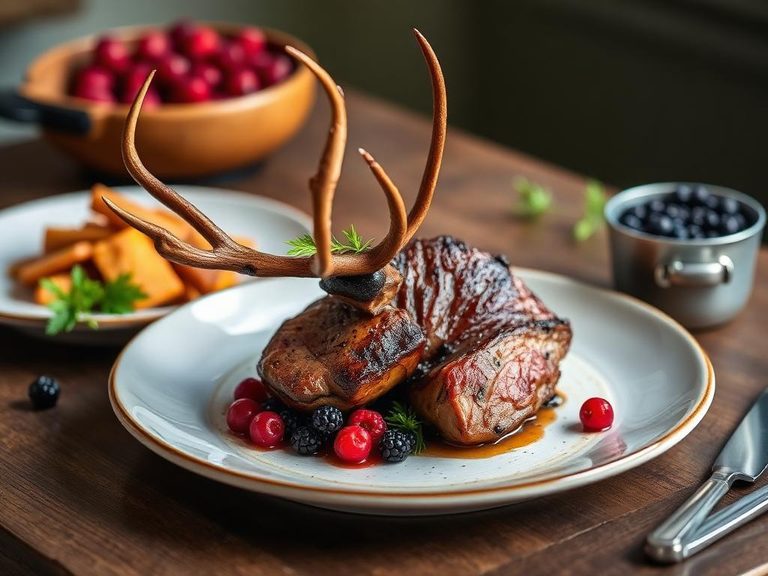
Smoked Caribou Tongue
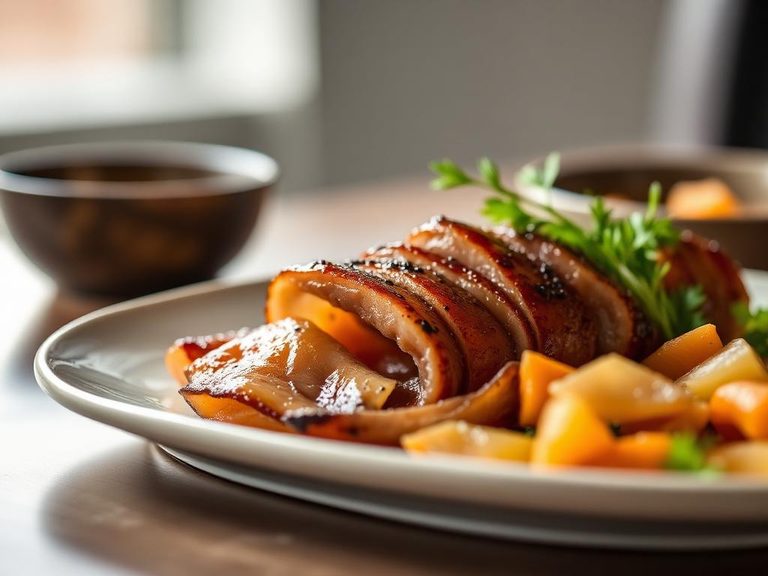
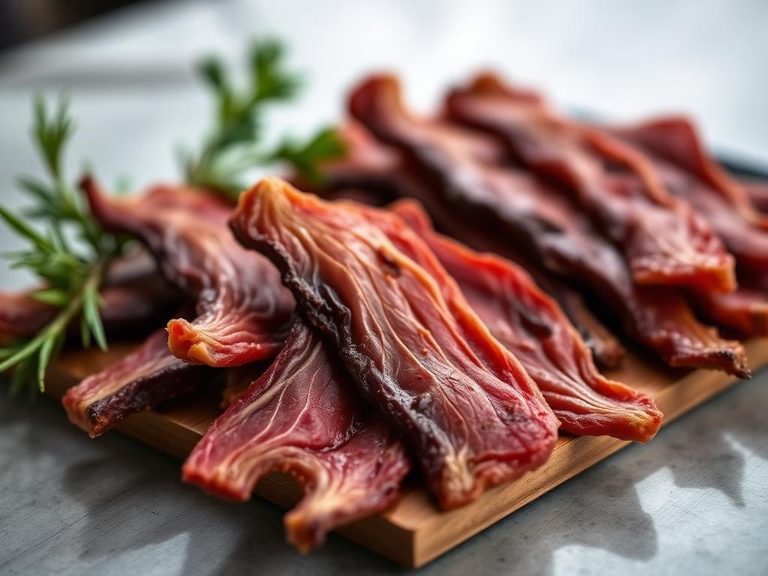
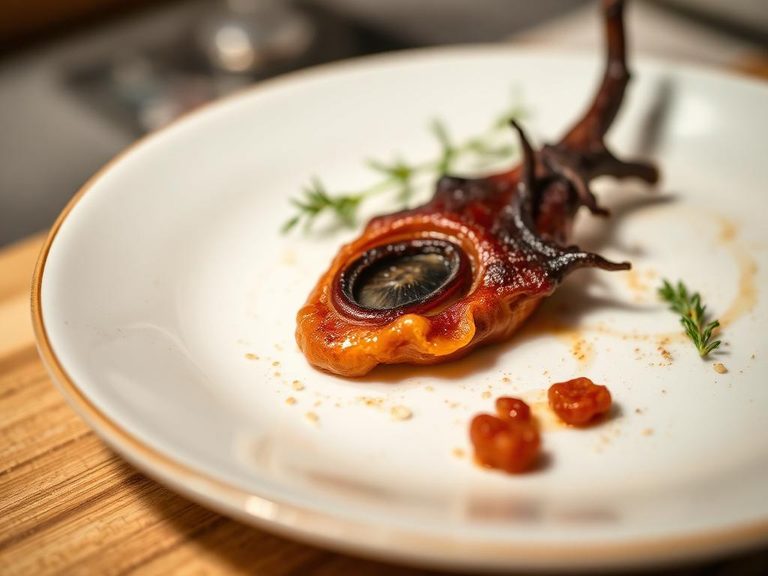
Smoked Caribou Tongue is a traditional delicacy from Arctic and subarctic regions, particularly among Indigenous communities in Canada, Alaska, and Greenland. It involves slow-smoking the tongue of the caribou (a type of reindeer) over wood or smoldering materials, often after brining or seasoning with salt and spices.
🍽️ Nutrition at a glance
This dish is very high in protein and fat, with virtually no carbohydrates, making it a dense source of energy and essential amino acids. A typical serving provides significant amounts of iron, zinc, and B vitamins, with a calorie count roughly around 250-350 kcal per 100 grams.
Nutrition breakdown
| Calories | 300 kcal |
| Protein | 22 g |
| Carbs | 0 g |
| Fat | 23 g |
| Fiber | 0 g |
| Sugar | 0 g |
| Sodium | 450 mg |
| Iron | 4.5 mg |
| Zinc | 6 mg |
| Vitamin B12 | 8 µg |
| Niacin (B3) | 7 mg |
| Phosphorus | 220 mg |
| Selenium | 30 µg |
| Potassium | 280 mg |
| Vitamin B6 | 0.4 mg |
Per 1 piece (100 g) · estimated, varies by recipe
💡 What's interesting
Culturally, smoked caribou tongue represents a traditional method of preserving meat for long winters, showcasing Indigenous food knowledge and sustainability. Nutritionally, the tongue is one of the most nutrient-dense cuts, rich in collagen and minerals often lacking in modern diets.