

Caribou, hind quarter meat, raw (Alaska Native)
Whole food · American Indian/Alaska Native Foods

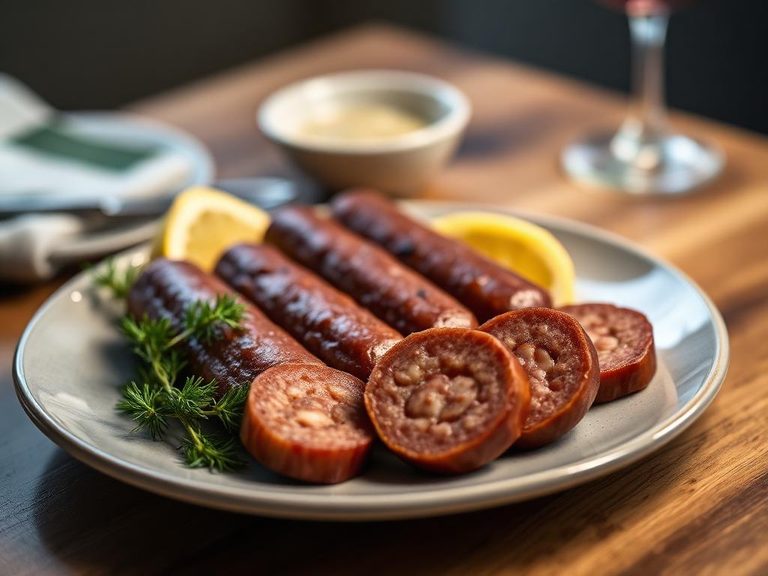
Photo: Wikipedia
Caribou hind quarter is a lean, deeply-flavored game meat prized by Alaska Native communities. Its texture is fine-grained and tender when prepared correctly, with a taste often described as a cleaner, slightly sweeter version of beef. Nutritionally, it is a powerhouse of high-quality protein with minimal fat.
Calorie split: 75% protein · 0% carbs · 25% fat
↓ Full nutrition💚 Why it's loved
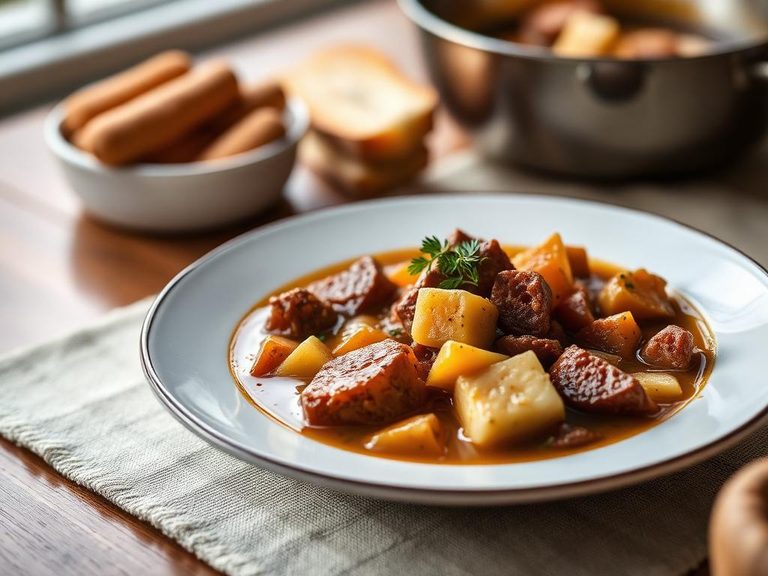
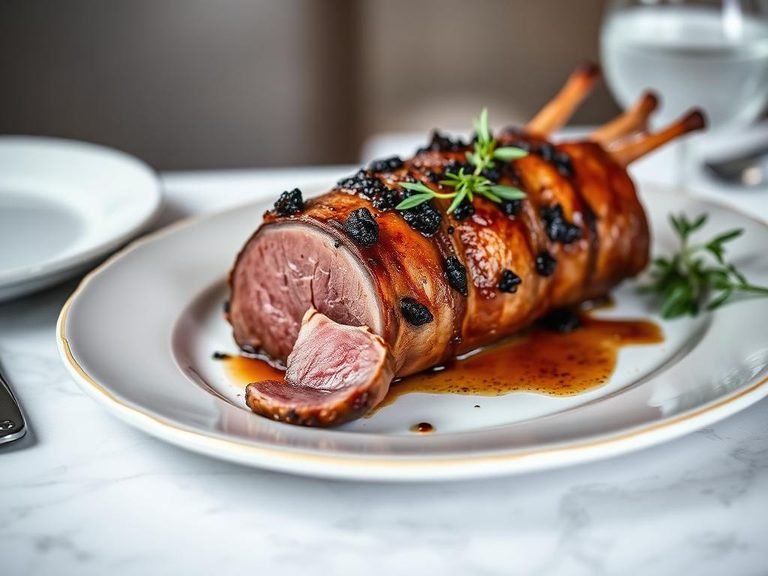
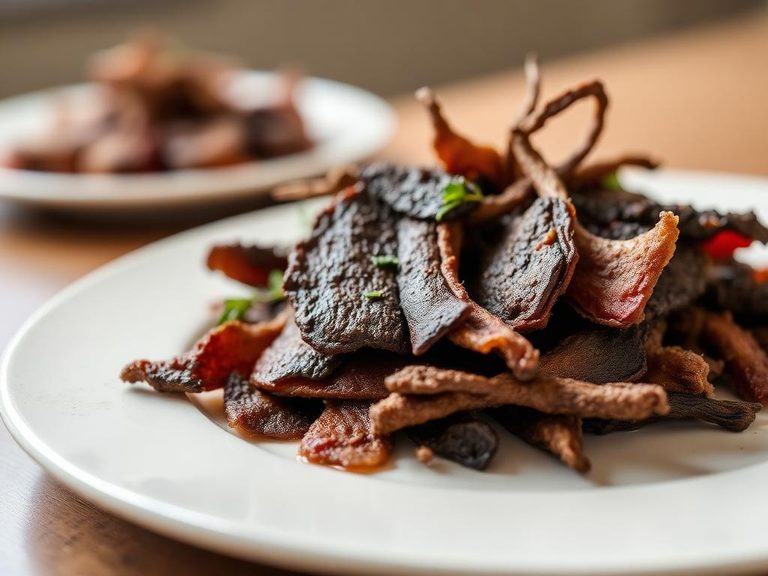
People love caribou for its rich, unique flavor that connects them to the land and traditional subsistence practices. Its versatility allows it to shine in everything from hearty stews to delicate, seared steaks.
⚠️ Watch-outs & how to enjoy it better
As an extremely lean meat, it can become tough and dry if overcooked, which may disappoint those used to fattier cuts. To counteract this, use slow, moist cooking methods like braising or stewing, or cook quickly to medium-rare and slice thinly against the grain.
Key benefits
- Exceptionally high in protein (22.63g per 100g)
- Very low in fat (3.37g per 100g) and contains no carbohydrates or sugar
- A rich source of iron and B vitamins, especially B12
- Lean protein supports muscle maintenance and satiety
🍽️ Popular dishes
🌍 Where it's eaten
💡 Did you know?
The hind quarter is considered the prime cut, often reserved for special occasions or guests as a sign of respect and generosity in many Arctic cultures.
Full nutrition (USDA data · scales with serving)
| Water | 72.6 g |
| Energy | 122 kcal |
| Energy | 508 kj |
| Protein | 22.6 g |
| Total lipid (fat) | 3.4 g |
| Ash | 1.2 g |
| Carbohydrate, by difference | 0.00 g |
| Fiber, total dietary | 0.00 g |
| Total Sugars | 0.00 g |
| Sucrose | 0.00 g |
| Glucose | 0.00 g |
| Fructose | 0.00 g |
| Lactose | 0.00 g |
| Maltose | 0.00 g |
| Galactose | 0.00 g |
| Starch | 0.00 g |
| Calcium, Ca | 5.0 mg |
| Iron, Fe | 4.1 mg |
| Magnesium, Mg | 26.0 mg |
| Phosphorus, P | 230 mg |
| Potassium, K | 320 mg |
| Sodium, Na | 52.0 mg |
| Zinc, Zn | 2.1 mg |
| Copper, Cu | 0.27 mg |
| Manganese, Mn | 0.04 mg |
| Selenium, Se | 12.5 ug |
| Vitamin C, total ascorbic acid | 0.00 mg |
| Thiamin | 0.44 mg |
| Riboflavin | 0.96 mg |
| Niacin | 7.2 mg |
| Pantothenic acid | 2.1 mg |
| Vitamin B-6 | 0.35 mg |
| Folate, total | 4.0 ug |
| Folic acid | 0.00 ug |
| Folate, food | 4.0 ug |
| Folate, DFE | 4.0 ug |
| Vitamin B-12 | 7.0 ug |
| Vitamin B-12, added | 0.00 ug |
| Vitamin A, RAE | 94.0 ug |
| Retinol | 94.0 ug |
| Carotene, beta | 0.00 ug |
| Carotene, alpha | 0.00 ug |
| Cryptoxanthin, beta | 0.00 ug |
| Vitamin A, IU | 312 iu |
| Lycopene | 0.00 ug |
| Lutein + zeaxanthin | 0.00 ug |
| Vitamin E (alpha-tocopherol) | 0.69 mg |
| Vitamin E, added | 0.00 mg |
| Tocopherol, beta | 0.00 mg |
| Tocopherol, gamma | 0.00 mg |
| Tocopherol, delta | 0.00 mg |
| Tocotrienol, alpha | 0.09 mg |
| Tocotrienol, beta | 0.00 mg |
| Tocotrienol, gamma | 0.00 mg |
| Tocotrienol, delta | 0.00 mg |
| Vitamin K (phylloquinone) | 1.4 ug |
| Vitamin K (Dihydrophylloquinone) | 0.00 ug |
| Vitamin K (Menaquinone-4) | 0.00 ug |
| Alcohol, ethyl | 0.00 g |
| Caffeine | 0.00 mg |
Fat & fatty acid profile (per 100g)
| Fatty acids, total saturated | 1.3 g |
| SFA 8:0 | 0.00 g |
| SFA 10:0 | 0.00 g |
| SFA 12:0 | 0.00 g |
| SFA 14:0 | 0.03 g |
| SFA 15:0 | 0.00 g |
| SFA 16:0 | 0.61 g |
| SFA 17:0 | 0.03 g |
| SFA 18:0 | 0.59 g |
| SFA 20:0 | 0.01 g |
| SFA 22:0 | 0.00 g |
| SFA 24:0 | 0.00 g |
| Fatty acids, total monounsaturated | 0.94 g |
| MUFA 14:1 | 0.00 g |
| MUFA 15:1 | 0.00 g |
| MUFA 16:1 | 0.07 g |
| MUFA 17:1 | 0.00 g |
| MUFA 18:1 | 0.86 g |
| MUFA 20:1 | 0.01 g |
| MUFA 22:1 | 0.00 g |
| MUFA 24:1 c | 0.00 g |
| Fatty acids, total polyunsaturated | 0.56 g |
| PUFA 18:2 | 0.26 g |
| PUFA 18:3 | 0.10 g |
| PUFA 18:4 | 0.00 g |
| PUFA 20:2 n-6 c,c | 0.00 g |
| PUFA 20:3 | 0.00 g |
| PUFA 20:4 | 0.10 g |
| PUFA 20:5 n-3 (EPA) | 0.03 g |
| PUFA 21:5 | 0.00 g |
| PUFA 22:4 | 0.00 g |
| PUFA 22:5 n-3 (DPA) | 0.05 g |
| PUFA 22:6 n-3 (DHA) | 0.02 g |
| Cholesterol | 81.0 mg |
Amino acid profile (per 100g)
Estimated from Game meat, caribou, raw — USDA does not publish this profile for Caribou.
| Tryptophan | 0.35 g |
| Threonine | 0.97 g |
| Isoleucine | 1.0 g |
| Leucine | 1.9 g |
| Lysine | 2.0 g |
| Methionine | 0.51 g |
| Cystine | 0.16 g |
| Phenylalanine | 1.0 g |
| Tyrosine | 0.74 g |
| Valine | 1.1 g |
| Arginine | 1.3 g |
| Histidine | 0.90 g |
| Alanine | 1.2 g |
| Aspartic acid | 2.0 g |
| Glutamic acid | 3.6 g |
| Glycine | 0.95 g |
| Proline | 0.70 g |
| Serine | 0.80 g |
FAQ
How does caribou taste compared to beef?
Caribou has a milder, sweeter, and 'cleaner' flavor than beef, with less of the metallic tang some associate with game. It's often described as a cross between beef and venison but leaner.
What's the best way to cook lean caribou hind quarter?
For tenderness, quick-sear to medium-rare for steaks or use low-and-slow moist heat (braising, stewing) for tougher muscles. Marinating can also help add moisture and flavor.
Is caribou meat sustainable?
When sourced from managed, wild populations (like in Alaska or Canada), caribou is considered a sustainable, wild-harvested protein. Its harvesting is often integral to the cultural and nutritional practices of Indigenous communities.
Nutrient density (calculated · NRF9.3)
Nutrient Rich Foods index: beneficial nutrients (protein, fiber, vitamins, minerals) minus saturated fat, added sugar & sodium, per 100 kcal.
NRF9.3 index — Fulgoni, Keast & Drewnowski, 2009. Computed from USDA nutrients.
Weight-loss friendliness (composite index)
Energy density 1.22 kcal/g · 74% calories from protein · 0.0 g fiber · 0.0 g sugar per 100 g.
Composite of energy density (Rolls et al., 1999), protein & fiber satiety, minus sugar. A calculated heuristic — ranks satiety-per-calorie, not a clinical measure.
Dietary load (calculated from USDA values)
Potential renal acid load. Positive = acid-forming, negative = alkaline-forming.
Sodium-to-potassium ratio: 0.16 (lower is better — aim for ≤ 1)
Sodium:potassium per WHO potassium guidance. Computed from USDA nutrients.