

Caribou, hind quarter, meat, cooked (Alaska Native)
Whole food · American Indian/Alaska Native Foods

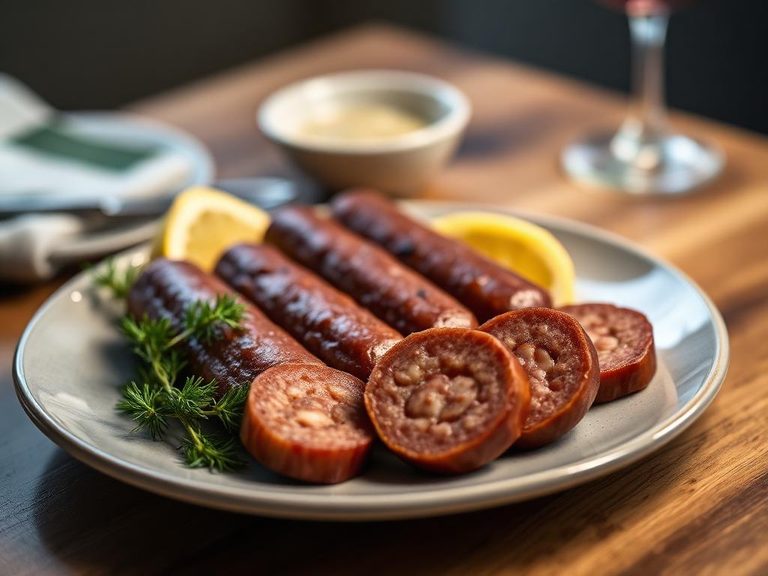
Photo: Wikipedia
Caribou hind quarter meat, when cooked, offers a lean, deeply savory flavor reminiscent of a cross between venison and high-quality beef, with a firm, fine-grained texture. Its nutritional profile is exceptionally high in protein while being virtually free of carbohydrates and sugar, making it a powerhouse for muscle maintenance and satiety. This is a traditional, nutrient-dense protein source central to the diets of many Alaska Native communities.
Calorie split: 73% protein · 0% carbs · 27% fat
↓ Full nutrition💚 Why it's loved
People love it for its rich, clean, and gamey flavor that stands up well to bold seasonings and slow-cooking methods. Its cultural significance and connection to subsistence living also make it a deeply valued and respected food.
⚠️ Watch-outs & how to enjoy it better
The lean nature of the meat can lead to dryness if overcooked, which is a common pitfall for those unfamiliar with game. To counteract this, use moist-heat cooking methods like braising or stewing, or marinate it beforehand to add fat and moisture. Individuals with a history of gout may need to moderate intake due to its purine content.
Key benefits
- Exceptionally high in protein for muscle repair and growth
- Very low in fat, especially saturated fat, compared to many red meats
- Carbohydrate-free, suitable for ketogenic and low-carb diets
- Rich in bioavailable iron and B vitamins like B12 and niacin
- A traditional, wild-sourced protein with minimal processing
🍽️ Popular dishes
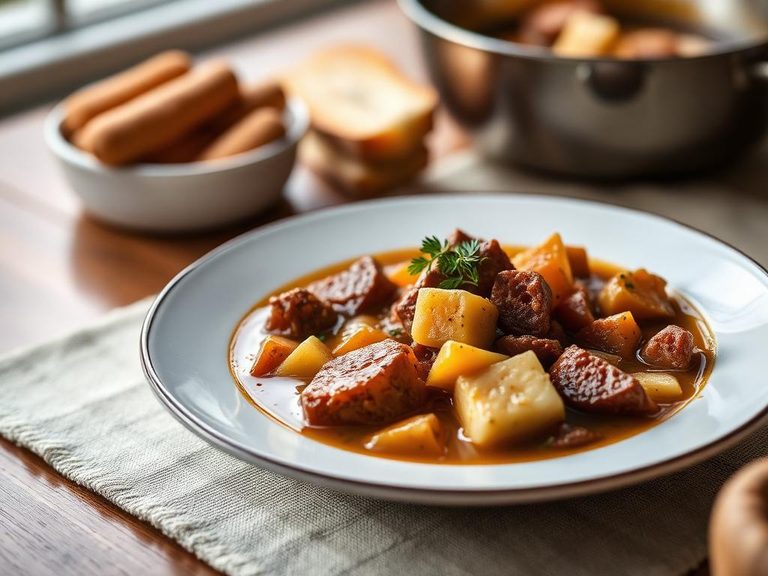
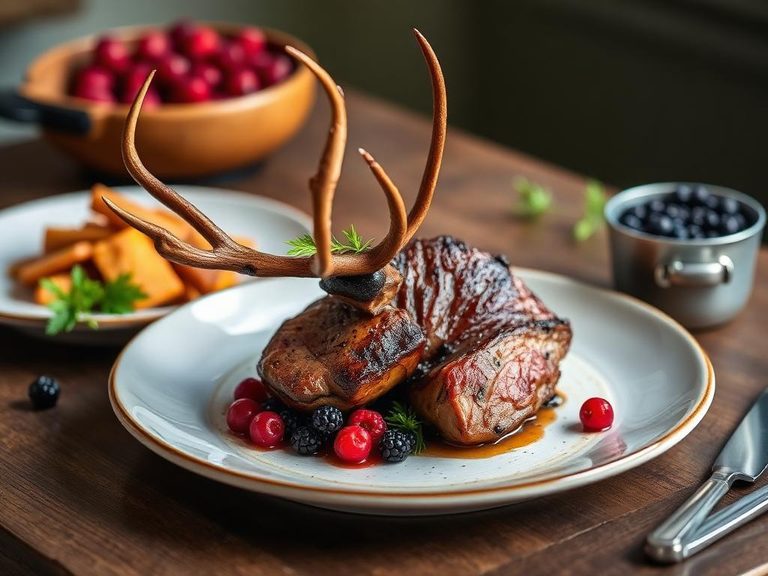
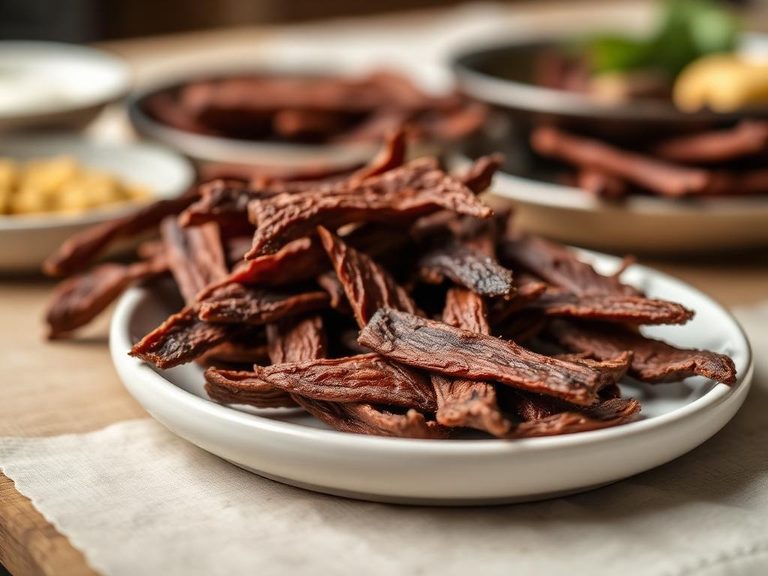
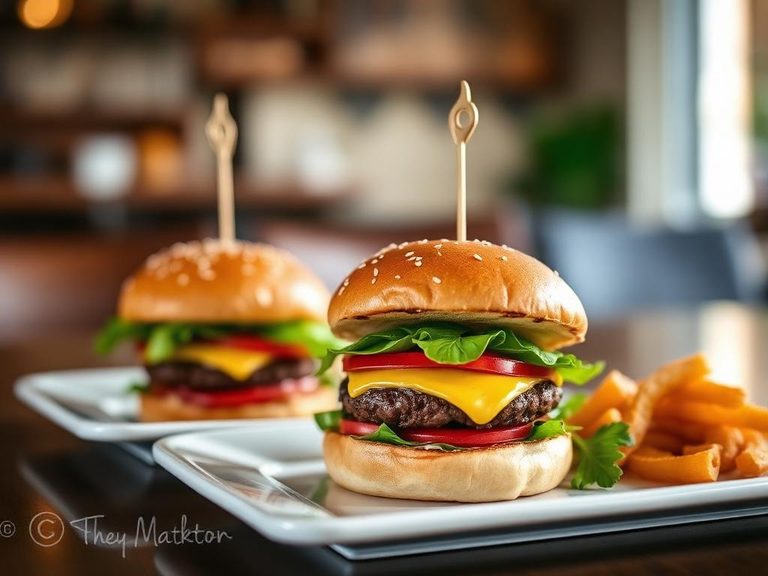
🌍 Where it's eaten
💡 Did you know?
Caribou and reindeer are the same species (*Rangifer tarandus*); the term 'caribou' is generally used for wild populations in North America, while 'reindeer' refers to domesticated herds in Eurasia.
Full nutrition (USDA data · scales with serving)
| Water | 65.5 g |
| Energy | 159 kcal |
| Energy | 664 kj |
| Protein | 28.8 g |
| Total lipid (fat) | 4.8 g |
| Ash | 1.1 g |
| Carbohydrate, by difference | 0.00 g |
| Fiber, total dietary | 0.00 g |
| Total Sugars | 0.00 g |
| Sucrose | 0.00 g |
| Glucose | 0.00 g |
| Fructose | 0.00 g |
| Lactose | 0.00 g |
| Maltose | 0.00 g |
| Galactose | 0.00 g |
| Starch | 0.00 g |
| Calcium, Ca | 5.0 mg |
| Iron, Fe | 4.8 mg |
| Magnesium, Mg | 24.0 mg |
| Phosphorus, P | 215 mg |
| Potassium, K | 245 mg |
| Sodium, Na | 45.0 mg |
| Zinc, Zn | 4.3 mg |
| Copper, Cu | 0.33 mg |
| Manganese, Mn | 0.04 mg |
| Selenium, Se | 16.5 ug |
| Vitamin C, total ascorbic acid | 0.00 mg |
| Thiamin | 0.29 mg |
| Riboflavin | 0.81 mg |
| Niacin | 5.9 mg |
| Pantothenic acid | 1.5 mg |
| Vitamin B-6 | 0.37 mg |
| Folate, total | 4.0 ug |
| Folic acid | 0.00 ug |
| Folate, food | 4.0 ug |
| Folate, DFE | 4.0 ug |
| Choline, total | 120 mg |
| Vitamin B-12 | 6.5 ug |
| Vitamin B-12, added | 0.00 ug |
| Vitamin A, RAE | 94.0 ug |
| Retinol | 94.0 ug |
| Carotene, beta | 0.00 ug |
| Carotene, alpha | 0.00 ug |
| Cryptoxanthin, beta | 0.00 ug |
| Vitamin A, IU | 312 iu |
| Lycopene | 0.00 ug |
| Lutein + zeaxanthin | 0.00 ug |
| Vitamin E (alpha-tocopherol) | 0.88 mg |
| Vitamin E, added | 0.00 mg |
| Tocopherol, beta | 0.00 mg |
| Tocopherol, gamma | 0.00 mg |
| Tocopherol, delta | 0.00 mg |
| Tocotrienol, alpha | 0.05 mg |
| Tocotrienol, beta | 0.00 mg |
| Tocotrienol, gamma | 0.00 mg |
| Tocotrienol, delta | 0.00 mg |
| Vitamin K (phylloquinone) | 1.8 ug |
| Vitamin K (Dihydrophylloquinone) | 0.00 ug |
| Vitamin K (Menaquinone-4) | 1.2 ug |
| Alcohol, ethyl | 0.00 g |
| Caffeine | 0.00 mg |
Fat & fatty acid profile (per 100g)
| Fatty acids, total saturated | 1.9 g |
| SFA 8:0 | 0.00 g |
| SFA 10:0 | 0.00 g |
| SFA 12:0 | 0.00 g |
| SFA 14:0 | 0.06 g |
| SFA 15:0 | 0.01 g |
| SFA 16:0 | 0.95 g |
| SFA 17:0 | 0.04 g |
| SFA 18:0 | 0.80 g |
| SFA 20:0 | 0.01 g |
| SFA 22:0 | 0.00 g |
| SFA 24:0 | 0.01 g |
| Fatty acids, total monounsaturated | 1.5 g |
| MUFA 14:1 | 0.01 g |
| MUFA 15:1 | 0.00 g |
| MUFA 16:1 | 0.09 g |
| MUFA 17:1 | 0.01 g |
| MUFA 18:1 | 1.4 g |
| MUFA 20:1 | 0.01 g |
| MUFA 22:1 | 0.00 g |
| MUFA 24:1 c | 0.00 g |
| Fatty acids, total polyunsaturated | 0.72 g |
| PUFA 18:2 | 0.34 g |
| PUFA 18:3 | 0.13 g |
| PUFA 18:4 | 0.01 g |
| PUFA 20:2 n-6 c,c | 0.01 g |
| PUFA 20:3 | 0.00 g |
| PUFA 20:4 | 0.13 g |
| PUFA 20:5 n-3 (EPA) | 0.04 g |
| PUFA 21:5 | 0.00 g |
| PUFA 22:4 | 0.00 g |
| PUFA 22:5 n-3 (DPA) | 0.06 g |
| PUFA 22:6 n-3 (DHA) | 0.01 g |
| Cholesterol | 107 mg |
Amino acid profile (per 100g)
Estimated from Game meat, caribou, raw — USDA does not publish this profile for Caribou.
| Tryptophan | 0.35 g |
| Threonine | 0.97 g |
| Isoleucine | 1.0 g |
| Leucine | 1.9 g |
| Lysine | 2.0 g |
| Methionine | 0.51 g |
| Cystine | 0.16 g |
| Phenylalanine | 1.0 g |
| Tyrosine | 0.74 g |
| Valine | 1.1 g |
| Arginine | 1.3 g |
| Histidine | 0.90 g |
| Alanine | 1.2 g |
| Aspartic acid | 2.0 g |
| Glutamic acid | 3.6 g |
| Glycine | 0.95 g |
| Proline | 0.70 g |
| Serine | 0.80 g |
FAQ
How does caribou taste compared to beef?
Caribou has a stronger, more pronounced 'gamey' flavor than beef, often described as earthier and slightly sweeter. Its texture is leaner and can be finer-grained.
What's the best way to cook caribou hind quarter?
Due to its leanness, methods that retain moisture are best: braising, stewing, slow-roasting with a fat source, or marinating before grilling. Avoid high-heat, dry cooking for long periods.
Is caribou meat sustainable?
When sourced from well-managed wild herds, particularly through subsistence hunting by Indigenous communities, it is considered a sustainable and ethical wild protein source.
Nutrient density (calculated · NRF9.3)
Nutrient Rich Foods index: beneficial nutrients (protein, fiber, vitamins, minerals) minus saturated fat, added sugar & sodium, per 100 kcal.
NRF9.3 index — Fulgoni, Keast & Drewnowski, 2009. Computed from USDA nutrients.
Weight-loss friendliness (composite index)
Energy density 1.59 kcal/g · 72% calories from protein · 0.0 g fiber · 0.0 g sugar per 100 g.
Composite of energy density (Rolls et al., 1999), protein & fiber satiety, minus sugar. A calculated heuristic — ranks satiety-per-calorie, not a clinical measure.
Dietary load (calculated from USDA values)
Potential renal acid load. Positive = acid-forming, negative = alkaline-forming.
Sodium-to-potassium ratio: 0.18 (lower is better — aim for ≤ 1)
Sodium:potassium per WHO potassium guidance. Computed from USDA nutrients.