

Beef, loin, top loin steak, boneless, lip off, separable lean only, trimmed to 0" fat, all grades, cooked, grilled
Whole food · Beef Products

Photo: Wikipedia
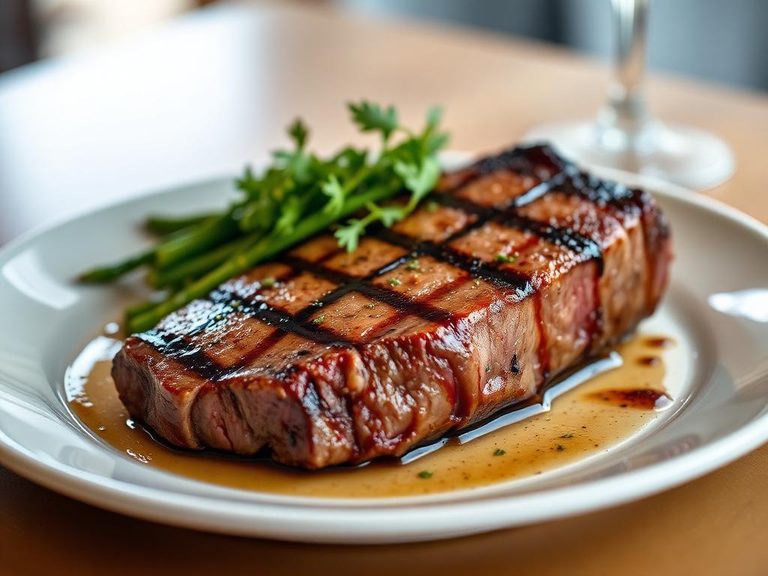
This is a lean, boneless cut from the top loin of the beef, often referred to as a New York strip steak. When grilled, it develops a savory, slightly buttery flavor with a firm yet tender texture that is prized for its clean beef taste. It is an exceptionally high-protein, zero-carb food, making it a staple for low-carb and high-protein diets.
Calorie split: 61% protein · 0% carbs · 39% fat
↓ Full nutrition💚 Why it's loved
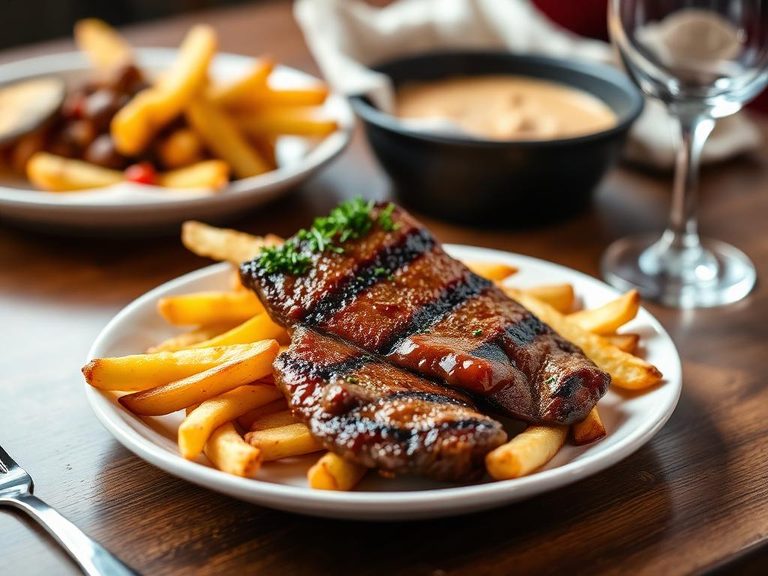
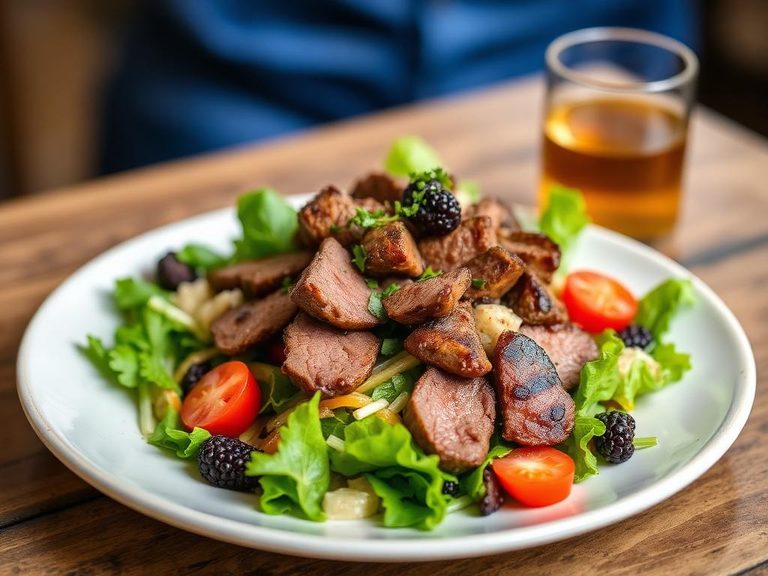
People love it for its robust, beefy flavor and satisfying chew, which is elevated by the smoky char of grilling. Its versatility allows it to be the centerpiece of a simple steak dinner or sliced for salads and sandwiches, making it a cultural icon in American and Western steakhouse cuisine.
⚠️ Watch-outs & how to enjoy it better
As a lean cut, it can become dry and tough if overcooked, requiring careful temperature control. Those watching cholesterol or saturated fat intake should practice portion control, as it still contains animal fats. To counteract dryness, marinate the steak or use a reverse-sear method, and pair it with fiber-rich vegetables like asparagus or a side salad to create a more balanced meal.
Key benefits
- Extremely high in protein (29.5g per 100g) for muscle maintenance and satiety.
- Zero carbohydrates and sugars, ideal for ketogenic and low-carb diets.
- Rich in essential minerals like iron and zinc for immune function and energy.
- Provides B vitamins, particularly B12, crucial for nerve health and red blood cell formation.
- Contains creatine, which can support high-intensity exercise performance.
🍽️ Popular dishes
🌍 Where it's eaten
💡 Did you know?
The 'lip off' specification refers to removing a small piece of fat and muscle from the side of the steak, a process that ensures a more uniform shape and leaner final product, often associated with USDA grading standards.
Full nutrition (USDA data · scales with serving)
| Water | 61.7 g |
| Energy | 202 kcal |
| Energy | 845 kj |
| Protein | 29.5 g |
| Total lipid (fat) | 8.4 g |
| Ash | 1.1 g |
| Carbohydrate, by difference | 0.00 g |
| Fiber, total dietary | 0.00 g |
| Total Sugars | 0.00 g |
| Calcium, Ca | 14.0 mg |
| Iron, Fe | 3.5 mg |
| Magnesium, Mg | 20.0 mg |
| Phosphorus, P | 275 mg |
| Potassium, K | 376 mg |
| Sodium, Na | 61.0 mg |
| Zinc, Zn | 4.5 mg |
| Copper, Cu | 0.10 mg |
| Manganese, Mn | 0.01 mg |
| Selenium, Se | 27.0 ug |
| Vitamin C, total ascorbic acid | 0.00 mg |
| Thiamin | 0.07 mg |
| Riboflavin | 0.42 mg |
| Niacin | 6.0 mg |
| Pantothenic acid | 0.48 mg |
| Vitamin B-6 | 0.74 mg |
| Folate, total | 7.0 ug |
| Folic acid | 0.00 ug |
| Folate, food | 7.0 ug |
| Folate, DFE | 7.0 ug |
| Choline, total | 74.6 mg |
| Betaine | 12.7 mg |
| Vitamin B-12 | 4.4 ug |
| Vitamin B-12, added | 0.00 ug |
| Vitamin A, RAE | 2.0 ug |
| Retinol | 2.0 ug |
| Carotene, beta | 0.00 ug |
| Carotene, alpha | 0.00 ug |
| Cryptoxanthin, beta | 0.00 ug |
| Vitamin A, IU | 6.0 iu |
| Lycopene | 0.00 ug |
| Lutein + zeaxanthin | 0.00 ug |
| Vitamin E (alpha-tocopherol) | 0.33 mg |
| Vitamin E, added | 0.00 mg |
| Tocopherol, beta | 0.00 mg |
| Tocopherol, gamma | 0.00 mg |
| Tocopherol, delta | 0.00 mg |
| Vitamin D (D2 + D3), International Units | 3.0 iu |
| Vitamin D (D2 + D3) | 0.10 ug |
| Vitamin D3 (cholecalciferol) | 0.10 ug |
| Vitamin K (phylloquinone) | 1.6 ug |
| Vitamin K (Dihydrophylloquinone) | 0.00 ug |
| Alcohol, ethyl | 0.00 g |
| Caffeine | 0.00 mg |
| Theobromine | 0.00 mg |
Fat & fatty acid profile (per 100g)
| Fatty acids, total saturated | 3.4 g |
| SFA 4:0 | 0.00 g |
| SFA 6:0 | 0.00 g |
| SFA 8:0 | 0.00 g |
| SFA 10:0 | 0.01 g |
| SFA 12:0 | 0.01 g |
| SFA 14:0 | 0.24 g |
| SFA 15:0 | 0.04 g |
| SFA 16:0 | 2.0 g |
| SFA 17:0 | 0.10 g |
| SFA 18:0 | 1.0 g |
| SFA 20:0 | 0.01 g |
| SFA 24:0 | 0.00 g |
| Fatty acids, total monounsaturated | 3.9 g |
| MUFA 16:1 | 0.29 g |
| MUFA 16:1 c | 0.26 g |
| MUFA 17:1 | 0.07 g |
| MUFA 18:1 | 3.5 g |
| MUFA 18:1 c | 3.1 g |
| MUFA 20:1 | 0.02 g |
| MUFA 22:1 | 0.00 g |
| Fatty acids, total polyunsaturated | 0.48 g |
| PUFA 18:2 | 0.39 g |
| PUFA 18:2 n-6 c,c | 0.30 g |
| PUFA 18:2 CLAs | 0.04 g |
| PUFA 18:3 | 0.01 g |
| PUFA 18:3 n-3 c,c,c (ALA) | 0.01 g |
| PUFA 18:4 | 0.00 g |
| PUFA 20:2 n-6 c,c | 0.00 g |
| PUFA 20:3 | 0.02 g |
| PUFA 20:3 n-6 | 0.02 g |
| PUFA 20:4 | 0.05 g |
| PUFA 20:5 n-3 (EPA) | 0.00 g |
| PUFA 22:5 n-3 (DPA) | 0.01 g |
| PUFA 22:6 n-3 (DHA) | 0.00 g |
| Fatty acids, total trans | 0.44 g |
| Fatty acids, total trans-monoenoic | 0.39 g |
| TFA 16:1 t | 0.03 g |
| TFA 18:1 t | 0.37 g |
| TFA 18:2 t not further defined | 0.04 g |
| Fatty acids, total trans-polyenoic | 0.04 g |
| Cholesterol | 91.0 mg |
Amino acid profile (per 100g)
| Tryptophan | 0.36 g |
| Threonine | 1.5 g |
| Isoleucine | 1.5 g |
| Leucine | 2.8 g |
| Lysine | 3.1 g |
| Methionine | 0.86 g |
| Cystine | 0.32 g |
| Phenylalanine | 1.3 g |
| Tyrosine | 1.2 g |
| Valine | 1.6 g |
| Arginine | 2.2 g |
| Histidine | 1.2 g |
| Alanine | 1.9 g |
| Aspartic acid | 3.1 g |
| Glutamic acid | 5.3 g |
| Glycine | 1.4 g |
| Proline | 1.4 g |
| Serine | 1.3 g |
| Hydroxyproline | 0.15 g |
FAQ
What is the difference between a top loin steak and a sirloin steak?
A top loin steak (New York strip) comes from the short loin, is more tender and has a strip of fat along one edge, while a sirloin steak comes from the rear back, is leaner but can be tougher, and often has a more pronounced beefy flavor.
How should I cook a boneless top loin steak to keep it tender?
Grill or pan-sear it over high heat to a medium-rare internal temperature (130-135°F or 54-57°C), then let it rest for 5-10 minutes before slicing against the grain to maximize tenderness.
Is this cut suitable for a low-cholesterol diet?
While it is lean, it still contains cholesterol and saturated fat. Moderation is key; consider pairing it with high-fiber foods and limiting portion sizes to 3-4 ounces per serving.
Nutrient density (calculated · NRF9.3)
Nutrient Rich Foods index: beneficial nutrients (protein, fiber, vitamins, minerals) minus saturated fat, added sugar & sodium, per 100 kcal.
NRF9.3 index — Fulgoni, Keast & Drewnowski, 2009. Computed from USDA nutrients.
Weight-loss friendliness (composite index)
Energy density 2.02 kcal/g · 58% calories from protein · 0.0 g fiber · 0.0 g sugar per 100 g.
Composite of energy density (Rolls et al., 1999), protein & fiber satiety, minus sugar. A calculated heuristic — ranks satiety-per-calorie, not a clinical measure.
Dietary load (calculated from USDA values)
Potential renal acid load. Positive = acid-forming, negative = alkaline-forming.
Sodium-to-potassium ratio: 0.16 (lower is better — aim for ≤ 1)
Sodium:potassium per WHO potassium guidance. Computed from USDA nutrients.