

Beef, loin, tenderloin steak, boneless, separable lean only, trimmed to 0" fat, select, cooked, grilled
Whole food · Beef Products

Photo: Wikipedia
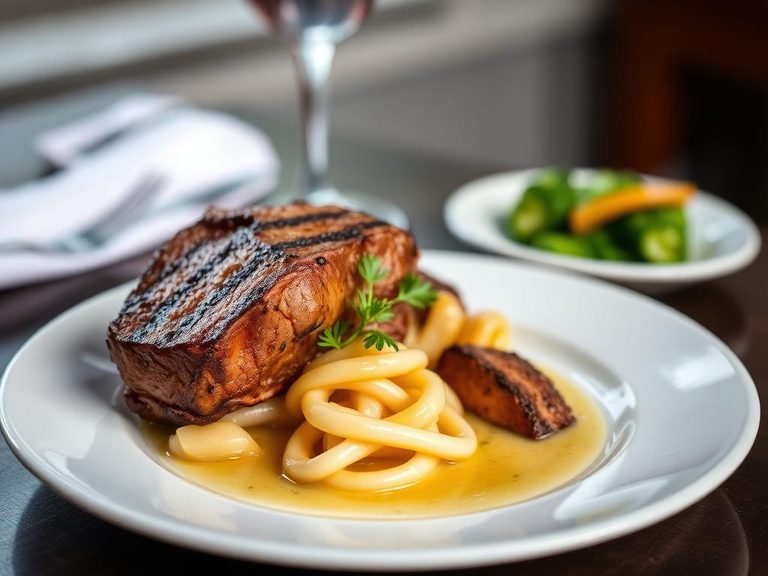
This is the premium, lean cut from the very center of the beef loin, prized for its exceptionally tender, buttery texture and mild, clean beefy flavor. When grilled, it develops a beautiful sear while remaining juicy and succulent inside, with virtually no chew or gristle. It's a nutritional powerhouse, delivering a massive 31 grams of high-quality protein per 100g with minimal fat and zero carbs.
Calorie split: 66% protein · 0% carbs · 34% fat
↓ Full nutrition💚 Why it's loved
People adore it for its unparalleled tenderness and delicate, non-gamey flavor that melts in the mouth, making it a luxurious centerpiece. Its simplicity and quick cooking time also make it a favorite for elegant weeknight dinners or special occasions.
⚠️ Watch-outs & how to enjoy it better
Its extreme leanness means it can dry out quickly if overcooked, requiring careful temperature control. It's also one of the most expensive cuts, and its mild flavor may be less satisfying to those who prefer a robust, fatty beef taste. To counteract dryness, use a meat thermometer (aim for 130-135°F for medium-rare), rest the steak well after cooking, and consider a flavorful pan sauce or compound butter.
Key benefits
- Excellent source of complete, high-quality protein for muscle maintenance and growth.
- Very low in fat, especially saturated fat, compared to other steak cuts.
- Naturally carb-free and sugar-free, suitable for ketogenic and low-carb diets.
- Rich in essential nutrients like iron, zinc, and B vitamins (especially B12).
- Highly satiating due to its protein content, aiding in appetite control.
🍽️ Popular dishes
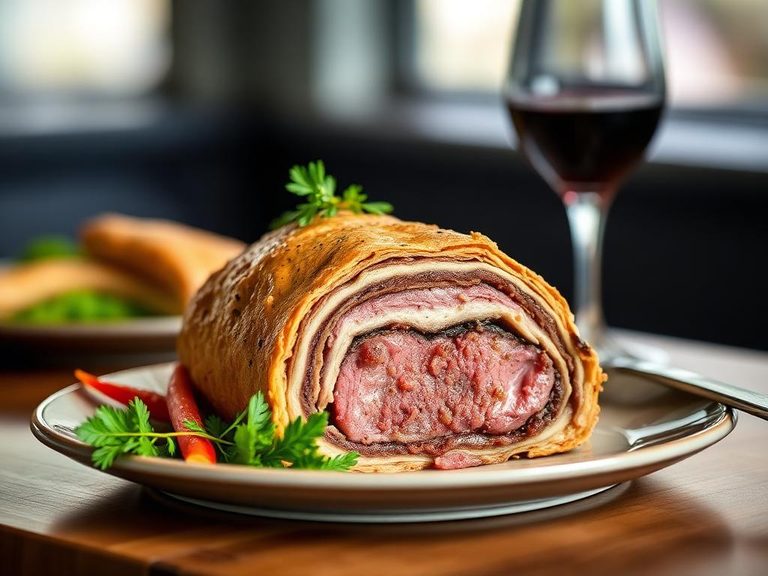
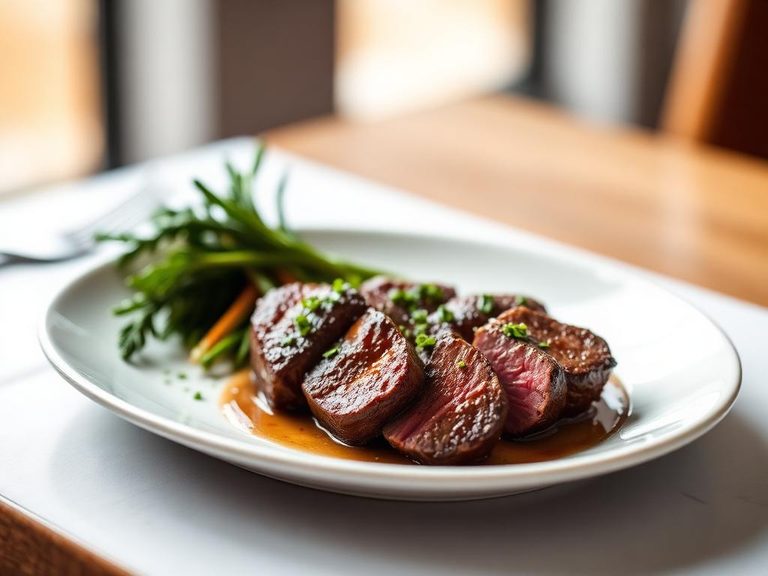
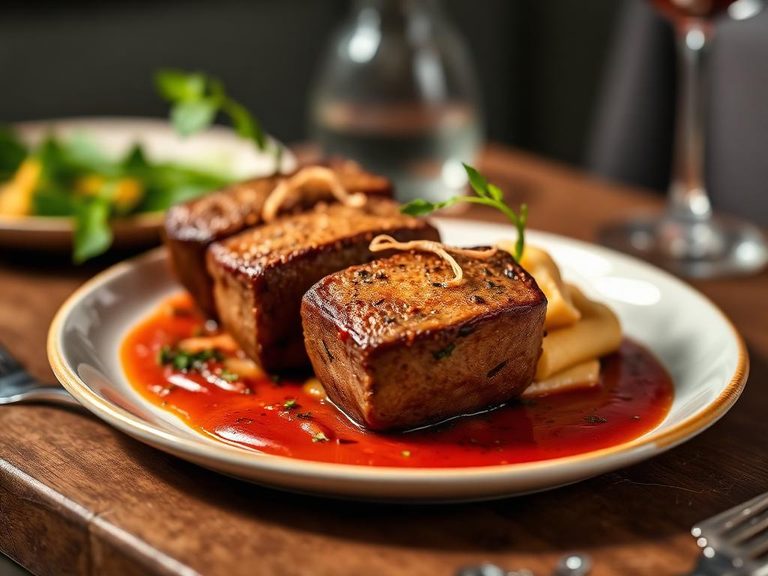
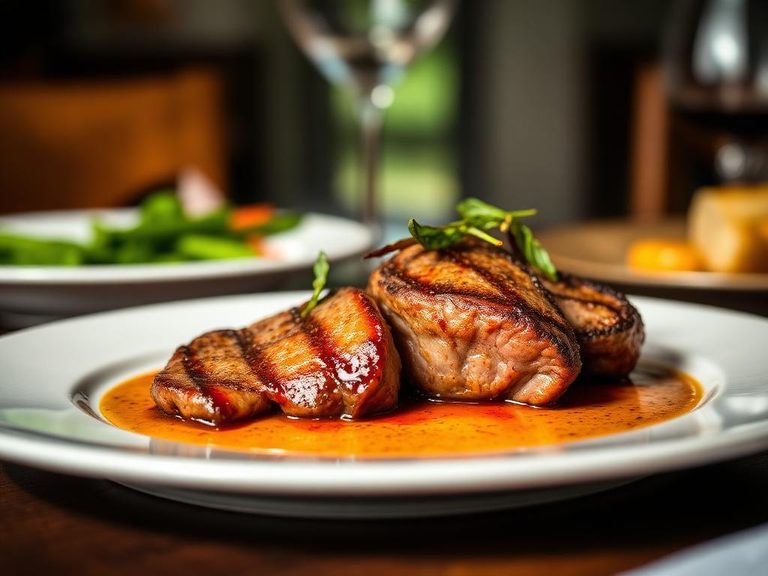
🌍 Where it's eaten
💡 Did you know?
The name 'filet mignon' is French for 'dainty' or 'cute' cut, and it comes from the smaller end of the tenderloin, which is naturally more tapered and tender than the larger 'chateaubriand' portion from the center.
Full nutrition (USDA data · scales with serving)
| Water | 61.6 g |
| Energy | 198 kcal |
| Energy | 829 kj |
| Protein | 31.1 g |
| Total lipid (fat) | 7.3 g |
| Ash | 1.4 g |
| Carbohydrate, by difference | 0.00 g |
| Fiber, total dietary | 0.00 g |
| Total Sugars | 0.00 g |
| Calcium, Ca | 13.0 mg |
| Iron, Fe | 3.1 mg |
| Magnesium, Mg | 14.0 mg |
| Phosphorus, P | 265 mg |
| Potassium, K | 359 mg |
| Sodium, Na | 55.0 mg |
| Zinc, Zn | 3.8 mg |
| Copper, Cu | 0.10 mg |
| Manganese, Mn | 0.01 mg |
| Selenium, Se | 25.9 ug |
| Vitamin C, total ascorbic acid | 0.00 mg |
| Thiamin | 0.08 mg |
| Riboflavin | 0.41 mg |
| Niacin | 5.9 mg |
| Pantothenic acid | 0.49 mg |
| Vitamin B-6 | 0.68 mg |
| Folate, total | 7.0 ug |
| Folic acid | 0.00 ug |
| Folate, food | 7.0 ug |
| Folate, DFE | 7.0 ug |
| Choline, total | 77.5 mg |
| Betaine | 12.5 mg |
| Vitamin B-12 | 4.3 ug |
| Vitamin B-12, added | 0.00 ug |
| Vitamin A, RAE | 2.0 ug |
| Retinol | 2.0 ug |
| Carotene, beta | 0.00 ug |
| Carotene, alpha | 0.00 ug |
| Cryptoxanthin, beta | 0.00 ug |
| Vitamin A, IU | 6.0 iu |
| Lycopene | 0.00 ug |
| Lutein + zeaxanthin | 0.00 ug |
| Vitamin E (alpha-tocopherol) | 0.25 mg |
| Vitamin E, added | 0.00 mg |
| Tocopherol, beta | 0.00 mg |
| Tocopherol, gamma | 0.00 mg |
| Tocopherol, delta | 0.00 mg |
| Vitamin D (D2 + D3), International Units | 3.0 iu |
| Vitamin D (D2 + D3) | 0.10 ug |
| Vitamin D3 (cholecalciferol) | 0.10 ug |
| Vitamin K (phylloquinone) | 1.6 ug |
| Alcohol, ethyl | 0.00 g |
| Caffeine | 0.00 mg |
| Theobromine | 0.00 mg |
Fat & fatty acid profile (per 100g)
| Fatty acids, total saturated | 2.9 g |
| SFA 4:0 | 0.00 g |
| SFA 6:0 | 0.00 g |
| SFA 8:0 | 0.00 g |
| SFA 10:0 | 0.01 g |
| SFA 12:0 | 0.01 g |
| SFA 14:0 | 0.19 g |
| SFA 15:0 | 0.04 g |
| SFA 16:0 | 1.6 g |
| SFA 17:0 | 0.08 g |
| SFA 18:0 | 0.94 g |
| SFA 20:0 | 0.01 g |
| SFA 24:0 | 0.00 g |
| Fatty acids, total monounsaturated | 3.1 g |
| MUFA 14:1 | 0.07 g |
| MUFA 16:1 | 0.23 g |
| MUFA 16:1 c | 0.21 g |
| MUFA 17:1 | 0.06 g |
| MUFA 18:1 | 2.8 g |
| MUFA 18:1 c | 2.5 g |
| MUFA 20:1 | 0.01 g |
| MUFA 22:1 | 0.00 g |
| Fatty acids, total polyunsaturated | 0.53 g |
| PUFA 18:2 | 0.40 g |
| PUFA 18:2 n-6 c,c | 0.33 g |
| PUFA 18:2 CLAs | 0.04 g |
| PUFA 18:3 | 0.02 g |
| PUFA 18:3 n-3 c,c,c (ALA) | 0.02 g |
| PUFA 18:4 | 0.00 g |
| PUFA 20:2 n-6 c,c | 0.00 g |
| PUFA 20:3 | 0.02 g |
| PUFA 20:3 n-6 | 0.02 g |
| PUFA 20:4 | 0.06 g |
| PUFA 20:5 n-3 (EPA) | 0.00 g |
| PUFA 22:5 n-3 (DPA) | 0.01 g |
| PUFA 22:6 n-3 (DHA) | 0.00 g |
| Fatty acids, total trans | 0.39 g |
| Fatty acids, total trans-monoenoic | 0.35 g |
| TFA 16:1 t | 0.03 g |
| TFA 18:1 t | 0.32 g |
| TFA 18:2 t not further defined | 0.04 g |
| Fatty acids, total trans-polyenoic | 0.04 g |
| Cholesterol | 93.0 mg |
Amino acid profile (per 100g)
| Tryptophan | 0.37 g |
| Threonine | 1.6 g |
| Isoleucine | 1.5 g |
| Leucine | 2.9 g |
| Lysine | 3.2 g |
| Methionine | 0.89 g |
| Cystine | 0.34 g |
| Phenylalanine | 1.3 g |
| Tyrosine | 1.3 g |
| Valine | 1.6 g |
| Arginine | 2.3 g |
| Histidine | 1.3 g |
| Alanine | 2.0 g |
| Aspartic acid | 3.2 g |
| Glutamic acid | 5.4 g |
| Glycine | 1.4 g |
| Proline | 1.4 g |
| Serine | 1.4 g |
| Hydroxyproline | 0.14 g |
FAQ
What's the difference between filet mignon and beef tenderloin?
Beef tenderloin is the entire long, narrow muscle. 'Filet mignon' typically refers to the steaks cut from the smaller, more tapered end of that muscle, which are considered the most tender portion. The larger center-cut steaks are often sold as 'tenderloin steaks' or 'chateaubriand'.
How should I cook it to prevent it from being dry?
The key is high heat for a short time. Sear it in a very hot pan or on a grill for 2-3 minutes per side, then finish in a 400°F (200°C) oven until it reaches an internal temperature of 130-135°F (54-57°C) for medium-rare. Always let it rest for 5-10 minutes before slicing.
Is it really worth the high price?
For many, yes. Its unique texture and mild flavor offer a distinct culinary experience different from fattier, more robust steaks like ribeye. Its tenderness makes it ideal for quick cooking and elegant presentations, and a little goes a long way in terms of satisfaction.
Nutrient density (calculated · NRF9.3)
Nutrient Rich Foods index: beneficial nutrients (protein, fiber, vitamins, minerals) minus saturated fat, added sugar & sodium, per 100 kcal.
NRF9.3 index — Fulgoni, Keast & Drewnowski, 2009. Computed from USDA nutrients.
Weight-loss friendliness (composite index)
Energy density 1.98 kcal/g · 63% calories from protein · 0.0 g fiber · 0.0 g sugar per 100 g.
Composite of energy density (Rolls et al., 1999), protein & fiber satiety, minus sugar. A calculated heuristic — ranks satiety-per-calorie, not a clinical measure.
Dietary load (calculated from USDA values)
Potential renal acid load. Positive = acid-forming, negative = alkaline-forming.
Sodium-to-potassium ratio: 0.15 (lower is better — aim for ≤ 1)
Sodium:potassium per WHO potassium guidance. Computed from USDA nutrients.