

Mushrooms, portabella, exposed to ultraviolet light, raw
Whole food · Vegetables and Vegetable Products

Photo: Wikipedia
This is a large, meaty portabella mushroom cap that has been specifically exposed to ultraviolet (UV) light to boost its vitamin D content. It has a deep brown, slightly wrinkled cap and a firm, chewy texture that holds up well to grilling or roasting. Nutritionally, it's a low-calorie powerhouse, with the UV treatment providing a significant amount of vitamin D, a nutrient often lacking in diets.
Calorie split: 31% protein · 57% carbs · 12% fat
↓ Full nutrition💚 Why it's loved
People love it for its substantial, steak-like texture and deep, umami-rich flavor that makes it a satisfying centerpiece for vegetarian meals. Its versatility allows it to be grilled, stuffed, or sliced into burgers, absorbing marinades beautifully while providing a hearty, savory bite.
⚠️ Watch-outs & how to enjoy it better
Some may find the texture too chewy or rubbery if overcooked, and the dark gills can discolor other ingredients in a dish. To counteract this, avoid over-boiling; instead, grill, roast, or sauté it quickly. For those watching carbohydrate intake, note the 3.87g carbs per 100g, though the fiber helps moderate blood sugar impact.
Key benefits
- Excellent source of vitamin D from UV light exposure
- Very low in calories (22 kcal per 100g)
- Provides dietary fiber and B vitamins like riboflavin and niacin
- Contains antioxidants like selenium and ergothioneine
- Naturally low in fat and sodium
🍽️ Popular dishes
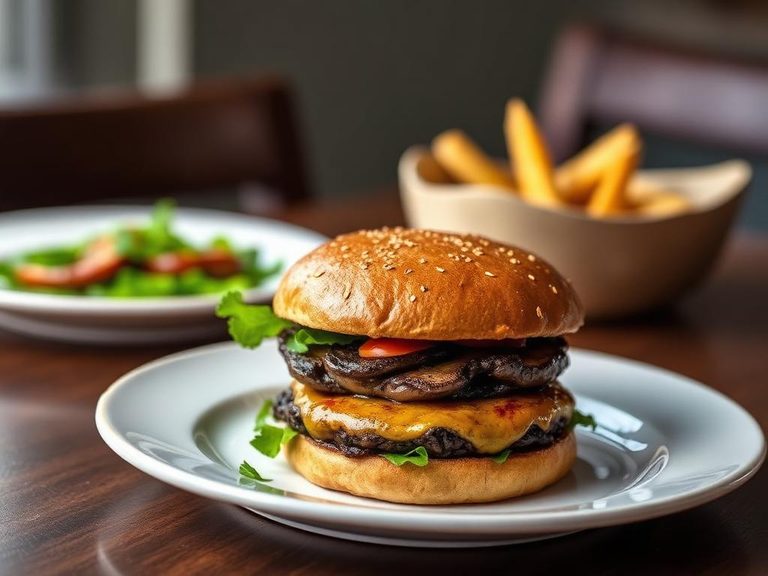
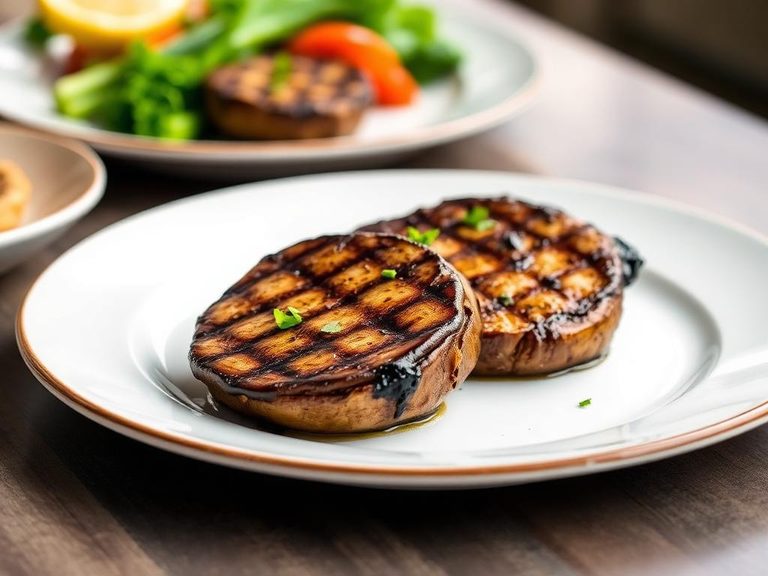
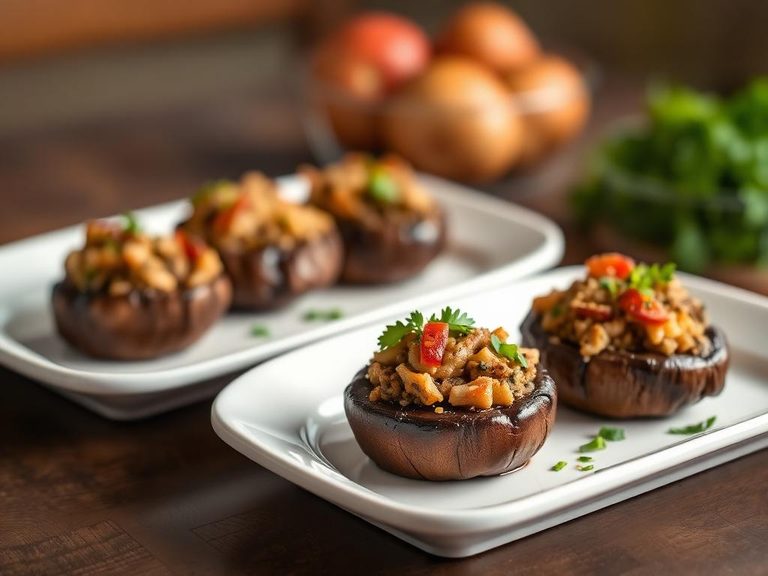
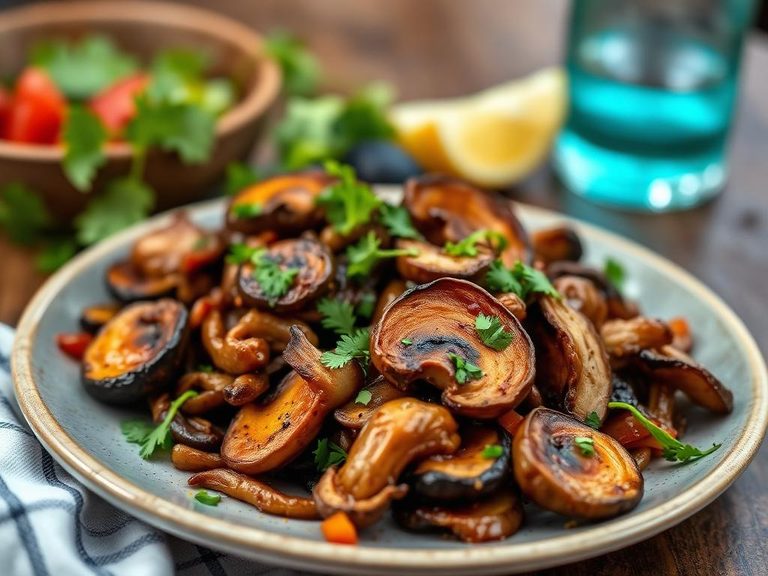
🌍 Where it's eaten
💡 Did you know?
A single serving of UV-exposed portabella can provide more vitamin D than many people get from a whole day's worth of sunlight, making it one of the few non-animal, non-fortified food sources of this crucial nutrient.
Full nutrition (USDA data · scales with serving)
| Water | 92.8 g |
| Energy | 22.0 kcal |
| Energy | 92.0 kj |
| Protein | 2.1 g |
| Total lipid (fat) | 0.35 g |
| Ash | 0.85 g |
| Carbohydrate, by difference | 3.9 g |
| Fiber, total dietary | 1.3 g |
| Total Sugars | 2.5 g |
| Sucrose | 0.00 g |
| Glucose | 2.0 g |
| Fructose | 0.49 g |
| Lactose | 0.00 g |
| Maltose | 0.00 g |
| Galactose | 0.00 g |
| Calcium, Ca | 3.0 mg |
| Iron, Fe | 0.31 mg |
| Magnesium, Mg | 10.0 mg |
| Phosphorus, P | 108 mg |
| Potassium, K | 364 mg |
| Sodium, Na | 9.0 mg |
| Zinc, Zn | 0.53 mg |
| Copper, Cu | 0.29 mg |
| Manganese, Mn | 0.07 mg |
| Selenium, Se | 18.6 ug |
| Vitamin C, total ascorbic acid | 0.00 mg |
| Thiamin | 0.06 mg |
| Riboflavin | 0.13 mg |
| Niacin | 4.5 mg |
| Pantothenic acid | 1.1 mg |
| Vitamin B-6 | 0.15 mg |
| Folate, total | 28.0 ug |
| Folic acid | 0.00 ug |
| Folate, food | 28.0 ug |
| Folate, DFE | 28.0 ug |
| Choline, total | 21.2 mg |
| Betaine | 6.1 mg |
| Vitamin B-12 | 0.05 ug |
| Vitamin A, RAE | 0.00 ug |
| Carotene, beta | 0.00 ug |
| Carotene, alpha | 0.00 ug |
| Cryptoxanthin, beta | 0.00 ug |
| Vitamin A, IU | 0.00 iu |
| Lycopene | 0.00 ug |
| Lutein + zeaxanthin | 0.00 ug |
| Vitamin E (alpha-tocopherol) | 0.02 mg |
| Tocopherol, beta | 0.00 mg |
| Tocopherol, gamma | 0.00 mg |
| Tocopherol, delta | 0.00 mg |
| Tocotrienol, alpha | 0.02 mg |
| Tocotrienol, beta | 0.00 mg |
| Tocotrienol, gamma | 0.00 mg |
| Tocotrienol, delta | 0.00 mg |
| Vitamin D (D2 + D3), International Units | 1135 iu |
| Vitamin D (D2 + D3) | 28.4 ug |
| Vitamin D2 (ergocalciferol) | 28.4 ug |
| Vitamin D3 (cholecalciferol) | 0.00 ug |
| Vitamin K (phylloquinone) | 0.00 ug |
| Vitamin K (Dihydrophylloquinone) | 1.8 ug |
| Vitamin K (Menaquinone-4) | 0.00 ug |
Fat & fatty acid profile (per 100g)
| Fatty acids, total saturated | 0.06 g |
| SFA 4:0 | 0.00 g |
| SFA 15:0 | 0.01 g |
| SFA 17:0 | 0.01 g |
| SFA 20:0 | 0.01 g |
| SFA 22:0 | 0.01 g |
| SFA 24:0 | 0.00 g |
| Fatty acids, total monounsaturated | 0.02 g |
| MUFA 14:1 | 0.00 g |
| MUFA 15:1 | 0.00 g |
| MUFA 16:1 c | 0.00 g |
| MUFA 17:1 | 0.00 g |
| MUFA 18:1 c | 0.01 g |
| MUFA 22:1 c | 0.00 g |
| MUFA 24:1 c | 0.00 g |
| Fatty acids, total polyunsaturated | 0.12 g |
| PUFA 18:2 n-6 c,c | 0.12 g |
| PUFA 18:2 CLAs | 0.00 g |
| PUFA 18:3 n-3 c,c,c (ALA) | 0.00 g |
| PUFA 18:3 n-6 c,c,c | 0.00 g |
| PUFA 20:2 n-6 c,c | 0.00 g |
| PUFA 20:3 | 0.00 g |
| PUFA 20:3 n-3 | 0.00 g |
| PUFA 20:3 n-6 | 0.00 g |
| PUFA 22:4 | 0.00 g |
| Fatty acids, total trans | 0.00 g |
| Fatty acids, total trans-monoenoic | 0.00 g |
| TFA 16:1 t | 0.00 g |
| TFA 18:1 t | 0.00 g |
| TFA 22:1 t | 0.00 g |
| TFA 18:2 t not further defined | 0.00 g |
| Fatty acids, total trans-polyenoic | 0.00 g |
| Cholesterol | 0.00 mg |
| Stigmasterol | 0.00 mg |
| Campesterol | 2.0 mg |
| Beta-sitosterol | 0.00 mg |
Amino acid profile (per 100g)
| Tryptophan | 0.06 g |
| Threonine | 0.11 g |
| Isoleucine | 0.10 g |
| Leucine | 0.15 g |
| Lysine | 0.25 g |
| Methionine | 0.05 g |
| Cystine | 0.01 g |
| Phenylalanine | 0.10 g |
| Tyrosine | 0.05 g |
| Valine | 0.12 g |
| Arginine | 0.12 g |
| Histidine | 0.07 g |
| Alanine | 0.19 g |
| Aspartic acid | 0.23 g |
| Glutamic acid | 0.43 g |
| Glycine | 0.11 g |
| Proline | 0.18 g |
| Serine | 0.13 g |
FAQ
What does 'UV-exposed' mean for mushrooms?
It means the mushrooms were treated with ultraviolet light after harvest, which triggers them to produce vitamin D2, similar to how human skin makes vitamin D from sunlight.
How should I store them?
Keep them in a paper bag in the refrigerator for up to a week. Avoid plastic bags, which can trap moisture and make them slimy.
Can I eat the gills?
Yes, the dark gills are edible. However, they can turn sauces or other foods a murky color, so some cooks scrape them out for aesthetic reasons.
Nutrient density (calculated · NRF9.3)
Nutrient Rich Foods index: beneficial nutrients (protein, fiber, vitamins, minerals) minus saturated fat, added sugar & sodium, per 100 kcal.
NRF9.3 index — Fulgoni, Keast & Drewnowski, 2009. Computed from USDA nutrients.
Weight-loss friendliness (composite index)
Energy density 0.22 kcal/g · 38% calories from protein · 1.3 g fiber · 2.5 g sugar per 100 g.
Composite of energy density (Rolls et al., 1999), protein & fiber satiety, minus sugar. A calculated heuristic — ranks satiety-per-calorie, not a clinical measure.
Dietary load (calculated from USDA values)
Potential renal acid load. Positive = acid-forming, negative = alkaline-forming.
Sodium-to-potassium ratio: 0.02 (lower is better — aim for ≤ 1)
Sodium:potassium per WHO potassium guidance. Computed from USDA nutrients.