

Whale, beluga, meat, dried (Alaska Native)
Whole food · American Indian/Alaska Native Foods

Photo: Wikipedia
Dried beluga whale meat is a dense, jerky-like staple of Alaska Native cuisine, offering a deeply savory, umami-rich flavor with a chewy, fibrous texture. Nutritionally, it is a powerhouse of pure protein, delivering nearly 70 grams per 100 grams with virtually no carbohydrates, making it an exceptionally lean and energy-dense food.
Calorie split: 85% protein · 0% carbs · 15% fat
↓ Full nutrition💚 Why it's loved
People love it for its intense, concentrated meaty flavor and incredible portability, which has sustained hunters and travelers for generations. It is a cherished cultural food, often shared during celebrations and as a symbol of subsistence living.
⚠️ Watch-outs & how to enjoy it better
The extremely high protein content can be taxing on the kidneys for those with pre-existing conditions, and the chewy texture may be difficult for some. It is also a potent source of naturally occurring mercury, so pregnant women and young children should consume it sparingly. To mitigate, consume in small portions and ensure a varied diet with other protein sources.
Key benefits
- Exceptionally high in complete protein for muscle maintenance.
- Virtually carbohydrate-free, suitable for ketogenic diets.
- Extremely energy-dense for long-term storage and portability.
- Source of essential minerals like iron and zinc.
- Traditional, sustainable food source in Arctic ecosystems.
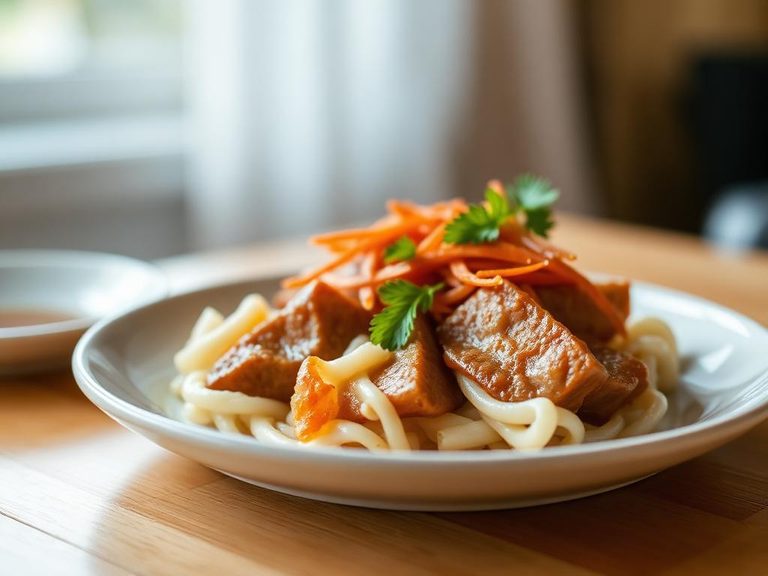
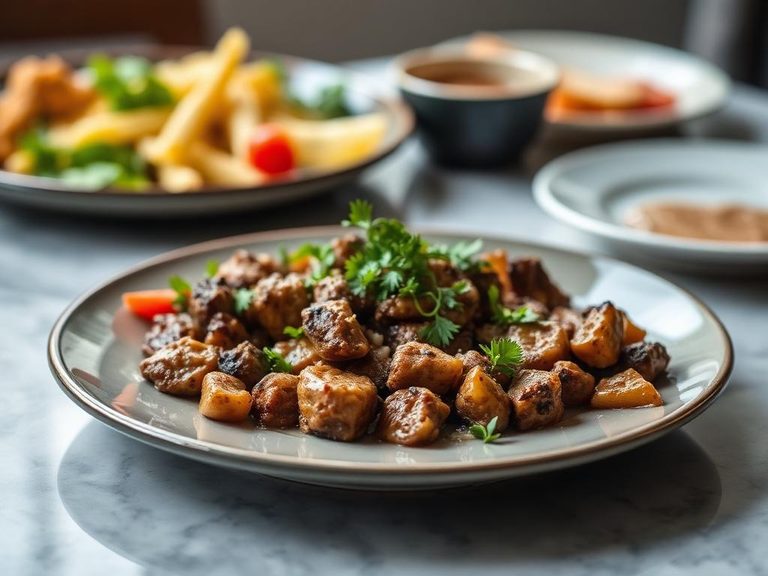
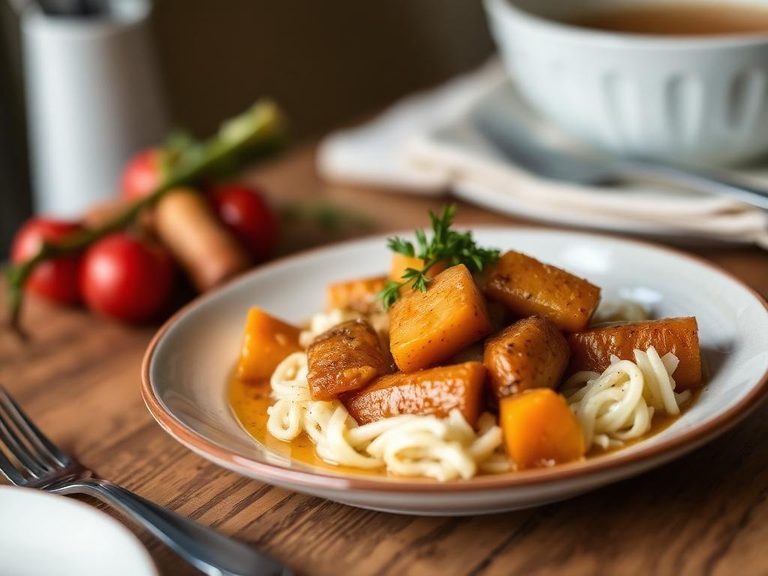
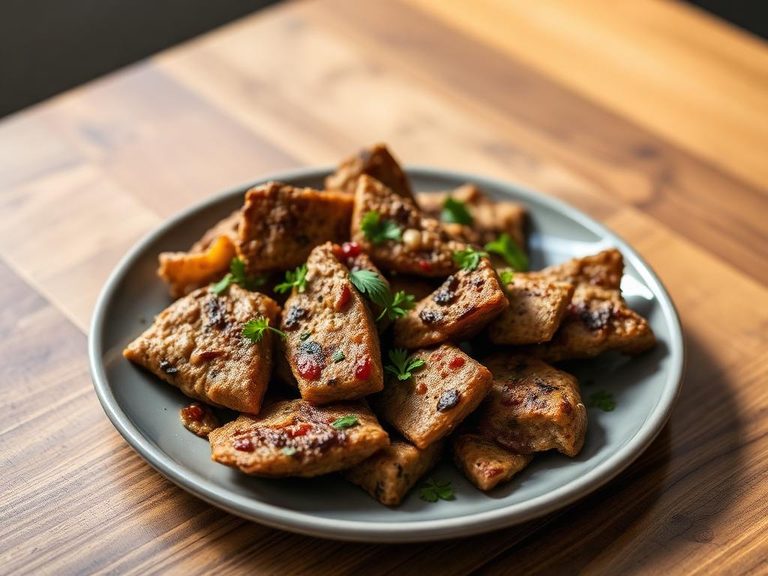
🍽️ Popular dishes

🌍 Where it's eaten
💡 Did you know?
The process of air-drying beluga meat in the cold, dry Arctic wind is a natural preservation method that can last for years without refrigeration, making it a historical 'freezer' for indigenous communities.
Full nutrition (USDA data · scales with serving)
| Water | 22.4 g |
| Energy | 327 kcal |
| Energy | 1370 kj |
| Protein | 69.9 g |
| Total lipid (fat) | 5.3 g |
| Ash | 2.7 g |
| Carbohydrate, by difference | 0.00 g |
| Fiber, total dietary | 0.00 g |
| Total Sugars | 0.00 g |
| Sucrose | 0.00 g |
| Glucose | 0.00 g |
| Fructose | 0.00 g |
| Lactose | 0.00 g |
| Maltose | 0.00 g |
| Galactose | 0.00 g |
| Starch | 0.00 g |
| Calcium, Ca | 22.0 mg |
| Iron, Fe | 72.3 mg |
| Magnesium, Mg | 63.0 mg |
| Phosphorus, P | 549 mg |
| Potassium, K | 800 mg |
| Sodium, Na | 220 mg |
| Zinc, Zn | 7.8 mg |
| Copper, Cu | 0.32 mg |
| Manganese, Mn | 0.13 mg |
| Selenium, Se | 103 ug |
| Vitamin C, total ascorbic acid | 0.00 mg |
| Thiamin | 0.04 mg |
| Riboflavin | 0.52 mg |
| Niacin | 15.2 mg |
| Pantothenic acid | 1.7 mg |
| Vitamin B-6 | 0.13 mg |
| Folate, total | 10.0 ug |
| Folic acid | 0.00 ug |
| Folate, food | 10.0 ug |
| Folate, DFE | 10.0 ug |
| Choline, total | 132 mg |
| Betaine | 23.8 mg |
| Vitamin B-12 | 7.3 ug |
| Vitamin B-12, added | 0.00 ug |
| Vitamin A, RAE | 0.00 ug |
| Carotene, beta | 0.00 ug |
| Carotene, alpha | 0.00 ug |
| Cryptoxanthin, beta | 0.00 ug |
| Vitamin A, IU | 0.00 iu |
| Lycopene | 0.00 ug |
| Lutein + zeaxanthin | 0.00 ug |
| Vitamin E (alpha-tocopherol) | 0.27 mg |
| Vitamin E, added | 0.00 mg |
| Tocopherol, beta | 0.00 mg |
| Tocopherol, gamma | 0.00 mg |
| Tocopherol, delta | 0.00 mg |
| Tocotrienol, alpha | 0.00 mg |
| Tocotrienol, beta | 0.00 mg |
| Tocotrienol, gamma | 0.00 mg |
| Tocotrienol, delta | 0.00 mg |
| Vitamin K (phylloquinone) | 0.00 ug |
| Vitamin K (Dihydrophylloquinone) | 1.3 ug |
| Alcohol, ethyl | 0.00 g |
| Caffeine | 0.00 mg |
| Theobromine | 0.00 mg |
Fat & fatty acid profile (per 100g)
| Fatty acids, total saturated | 1.2 g |
| SFA 8:0 | 0.00 g |
| SFA 10:0 | 0.00 g |
| SFA 12:0 | 0.01 g |
| SFA 14:0 | 0.25 g |
| SFA 15:0 | 0.03 g |
| SFA 16:0 | 0.70 g |
| SFA 17:0 | 0.03 g |
| SFA 18:0 | 0.20 g |
| SFA 20:0 | 0.00 g |
| SFA 22:0 | 0.00 g |
| SFA 24:0 | 0.00 g |
| Fatty acids, total monounsaturated | 3.3 g |
| MUFA 14:1 | 0.03 g |
| MUFA 15:1 | 0.01 g |
| MUFA 16:1 | 1.1 g |
| MUFA 17:1 | 0.00 g |
| MUFA 18:1 | 1.3 g |
| MUFA 20:1 | 0.64 g |
| MUFA 22:1 | 0.24 g |
| MUFA 24:1 c | 0.00 g |
| Fatty acids, total polyunsaturated | 0.32 g |
| PUFA 18:2 | 0.05 g |
| PUFA 18:3 | 0.03 g |
| PUFA 18:4 | 0.01 g |
| PUFA 20:2 n-6 c,c | 0.01 g |
| PUFA 20:3 | 0.00 g |
| PUFA 20:4 | 0.03 g |
| PUFA 20:5 n-3 (EPA) | 0.06 g |
| PUFA 21:5 | 0.00 g |
| PUFA 22:4 | 0.00 g |
| PUFA 22:5 n-3 (DPA) | 0.04 g |
| PUFA 22:6 n-3 (DHA) | 0.09 g |
| Cholesterol | 122 mg |
| Phytosterols | 0.00 mg |
Amino acid profile (per 100g)
| Tryptophan | 0.80 g |
| Threonine | 2.7 g |
| Isoleucine | 2.7 g |
| Leucine | 5.8 g |
| Lysine | 6.3 g |
| Methionine | 1.4 g |
| Cystine | 0.42 g |
| Phenylalanine | 2.9 g |
| Tyrosine | 1.9 g |
| Valine | 2.8 g |
| Arginine | 3.8 g |
| Histidine | 3.0 g |
| Alanine | 4.3 g |
| Aspartic acid | 5.8 g |
| Glutamic acid | 9.6 g |
| Glycine | 4.1 g |
| Proline | 3.5 g |
| Serine | 2.4 g |
FAQ
How is dried beluga whale meat different from beef jerky?
It is typically less processed, with no added sugars or nitrates, and comes from a marine mammal, giving it a distinct, richer flavor profile and even higher protein density.
Is it safe to eat?
For most healthy adults, yes, in moderation. The primary concern is mercury content, which is naturally higher in large marine mammals. It is a traditional food, but modern dietary guidelines suggest limiting intake.
How should I store it?
Properly dried pieces can be stored in a cool, dry place for months or even years. Once opened, keeping it in an airtight container is recommended to maintain texture.
Nutrient density (calculated · NRF9.3)
Nutrient Rich Foods index: beneficial nutrients (protein, fiber, vitamins, minerals) minus saturated fat, added sugar & sodium, per 100 kcal.
NRF9.3 index — Fulgoni, Keast & Drewnowski, 2009. Computed from USDA nutrients.
Weight-loss friendliness (composite index)
Energy density 3.27 kcal/g · 85% calories from protein · 0.0 g fiber · 0.0 g sugar per 100 g.
Composite of energy density (Rolls et al., 1999), protein & fiber satiety, minus sugar. A calculated heuristic — ranks satiety-per-calorie, not a clinical measure.
Dietary load (calculated from USDA values)
Potential renal acid load. Positive = acid-forming, negative = alkaline-forming.
Sodium-to-potassium ratio: 0.28 (lower is better — aim for ≤ 1)
Sodium:potassium per WHO potassium guidance. Computed from USDA nutrients.