Maktaaq
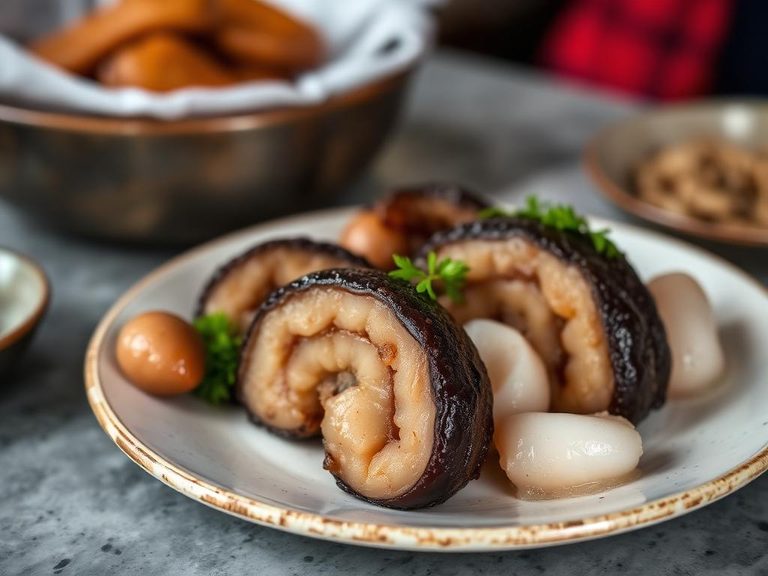
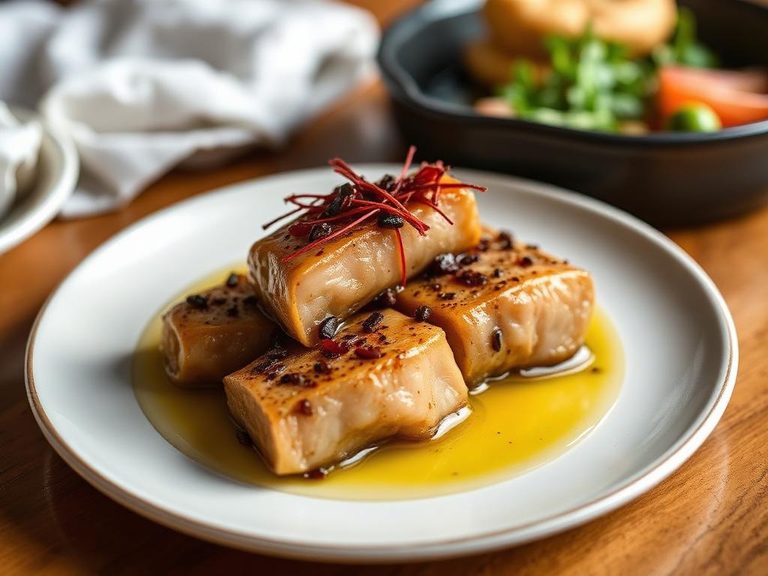
Maktaaq (also spelled Maktaq or Maktak) is a traditional Inuit and Yupik dish consisting of the skin and underlying blubber of marine mammals, most commonly beluga whale, narwhal, or seal. It is typically cut into strips and eaten raw or frozen, and is a vital source of energy and nutrients in Arctic regions.
🍽️ Nutrition at a glance
Maktaaq is extremely high in fat and provides a significant amount of protein, making it a dense source of calories. It is rich in vitamins C and D, as well as omega-3 fatty acids, which are crucial in a diet with limited access to plant-based foods.
Nutrition breakdown
| Calories | 450 kcal |
| Protein | 10 g |
| Carbs | 0 g |
| Fat | 45 g |
| Fiber | 0 g |
| Sugar | 0 g |
| Sodium | 150 mg |
| Vitamin C | 30 mg |
| Vitamin D | 15 µg |
| Vitamin B12 | 12 µg |
| Omega-3 (EPA+DHA) | 2000 mg |
| Selenium | 30 µg |
| Phosphorus | 200 mg |
| Iron | 2 mg |
| Zinc | 3 mg |
Per 1 piece (100 g) · estimated, varies by recipe
💡 What's interesting
Culturally, Maktaaq is a prized delicacy and a symbol of community sharing during celebrations and feasts. Nutritionally, it is one of the few natural food sources that provides substantial vitamin C in an Arctic environment where fruits and vegetables are historically scarce.