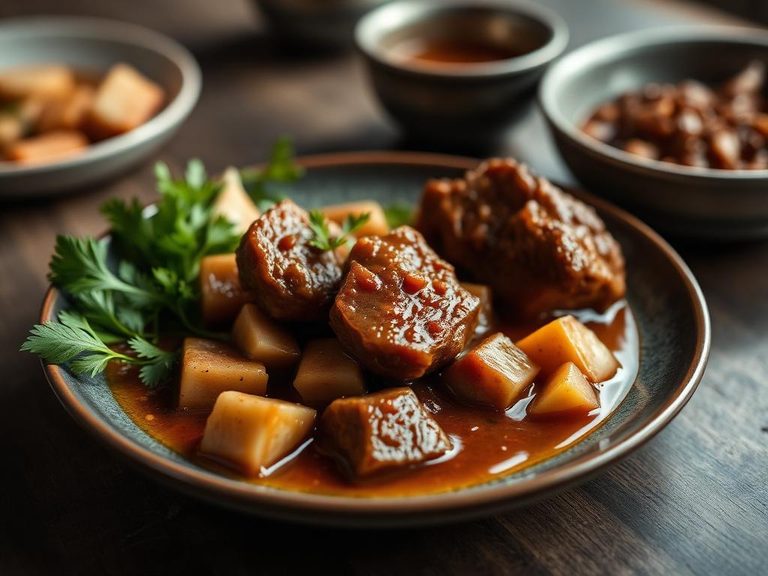
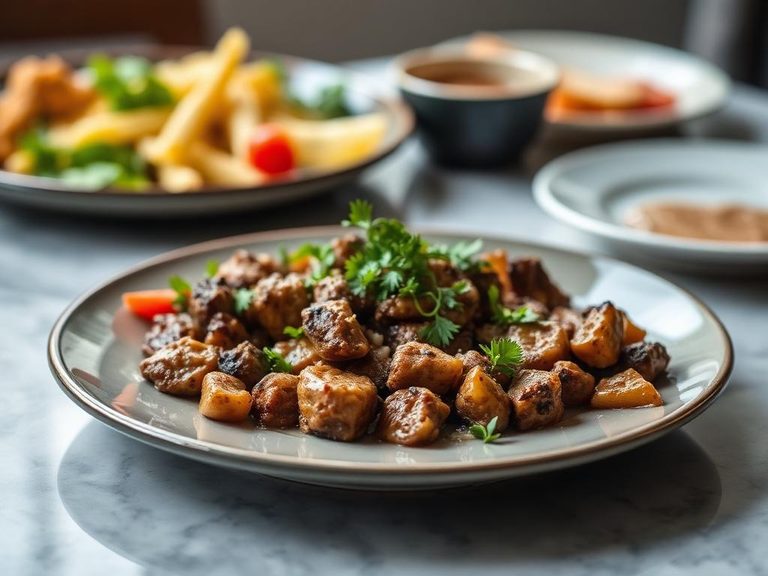
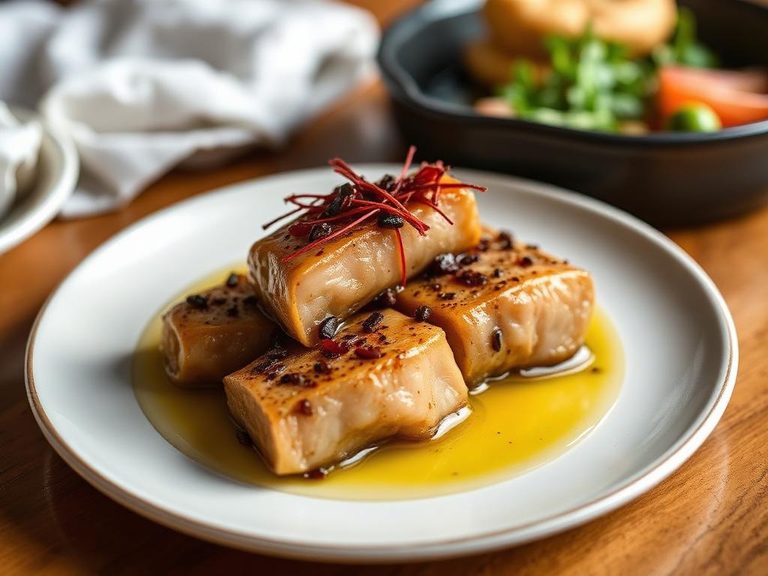
Maktaaq is often served alongside it
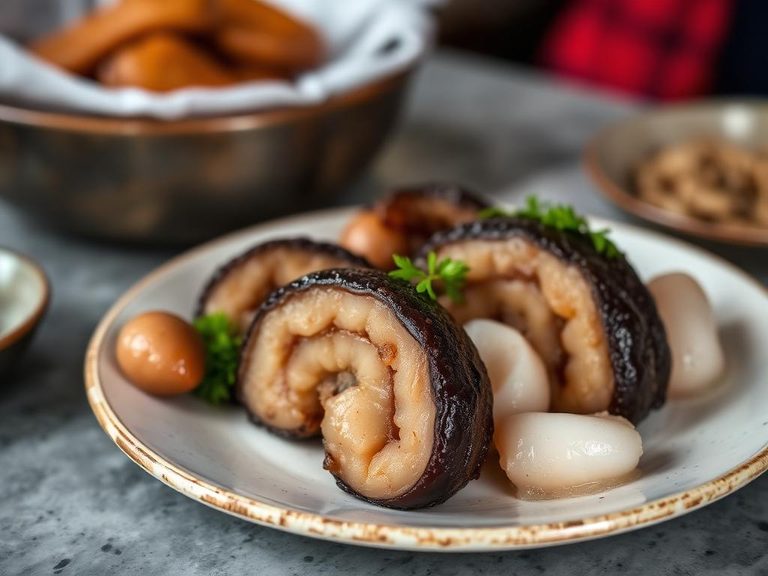
Maktaaq (also spelled Maktouk or Maktaq) is a traditional Inuit and Yupik dish consisting of the skin and underlying blubber of a whale, most commonly the bowhead or beluga whale. It is typically served frozen or raw, cut into small, bite-sized pieces, and is a staple food in Arctic coastal communities. The dish is often accompanied by other traditional foods like dried fish or berries.
🍽️ Nutrition at a glance
Maktaaq is extremely high in fat and calories, providing a dense source of energy essential for survival in cold climates. It is also a good source of protein and contains significant amounts of vitamins A and D, as well as omega-3 fatty acids.
Nutrition breakdown
| Calories | 350 kcal |
| Protein | 15 g |
| Carbs | 0 g |
| Fat | 32 g |
| Fiber | 0 g |
| Sugar | 0 g |
| Sodium | 40 mg |
| Vitamin D | 15 mcg |
| Vitamin A | 300 mcg RAE |
| Omega-3 (EPA+DHA) | 2000 mg |
| Selenium | 30 mcg |
| Vitamin B12 | 15 mcg |
| Iron | 2 mg |
| Zinc | 3 mg |
| Phosphorus | 250 mg |
Per 1 piece (100 g) · estimated, varies by recipe
💡 What's interesting
Culturally, Maktaaq is a cornerstone of the traditional Inuit diet, representing a deep connection to the land, sea, and community hunting practices. Nutritionally, its high caloric density and fat content were historically vital for providing the energy needed to endure the harsh Arctic winter.