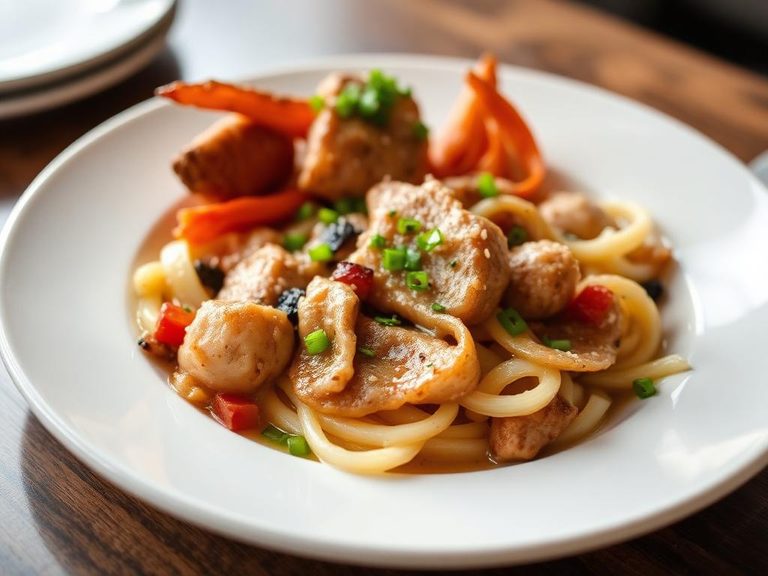
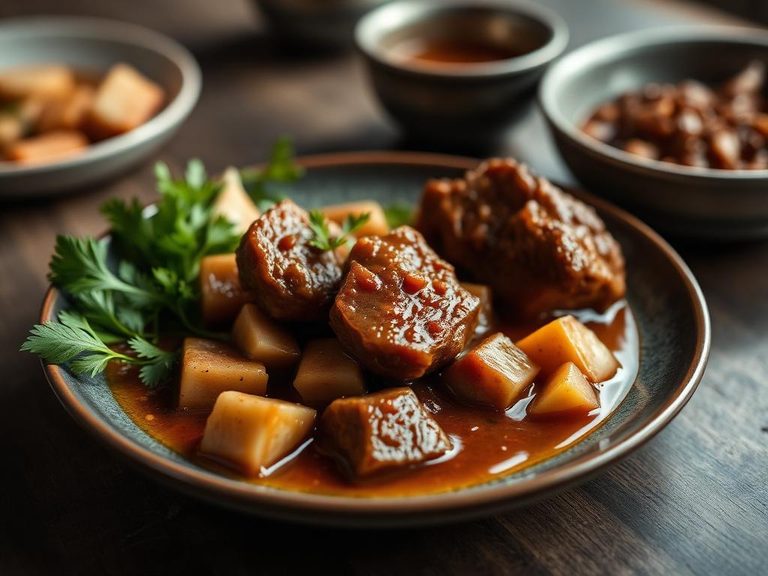
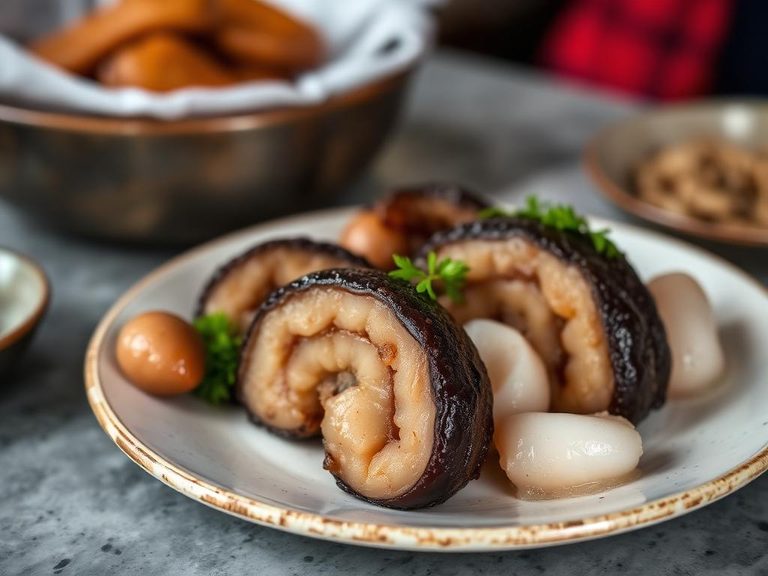
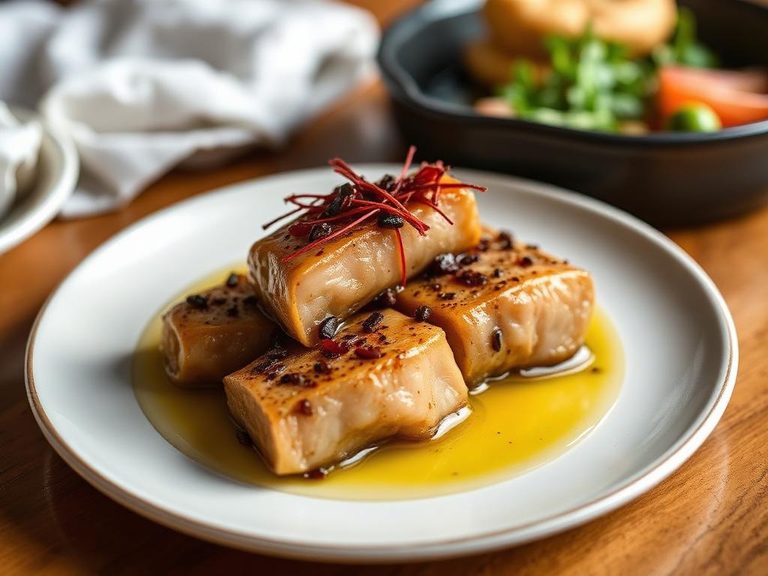
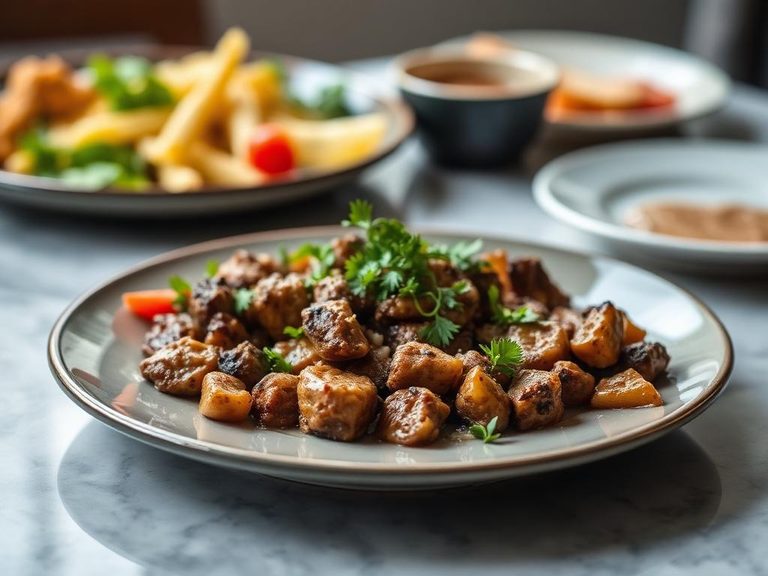
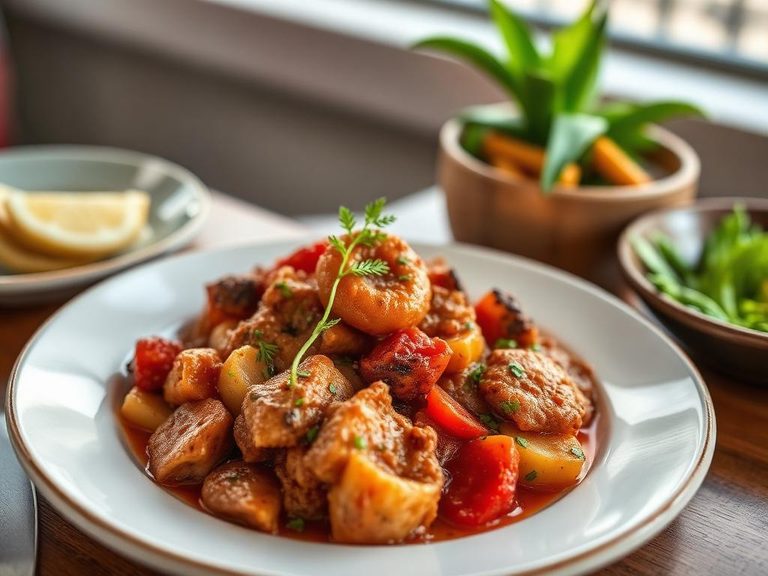
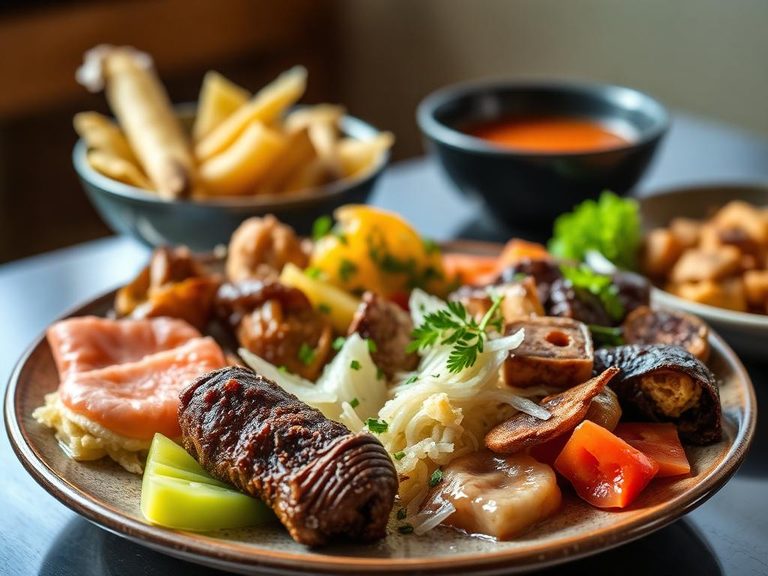
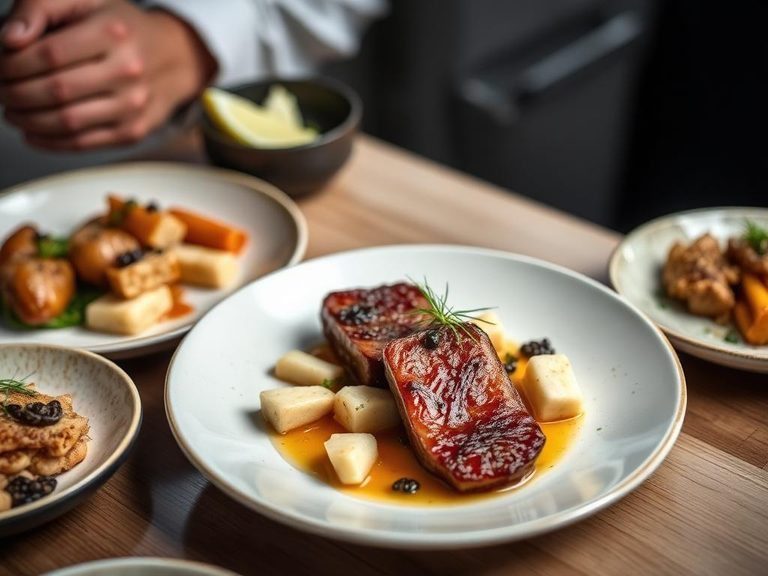
Maktaaq (muktuk) with meat
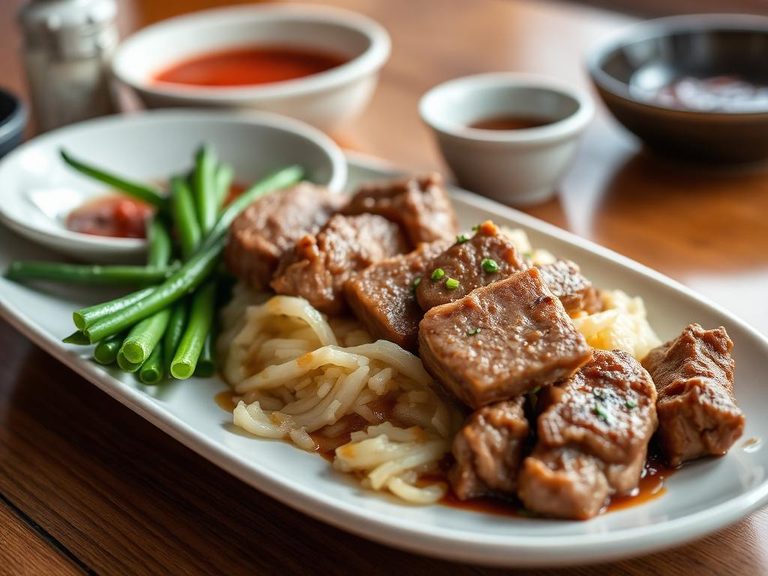
Maktaaq (also known as muktuk) is a traditional Arctic dish consisting of frozen whale skin and blubber, often served with meat such as caribou or seal. It is a staple food in Inuit, Yupik, and other Indigenous communities across the Arctic regions of Canada, Alaska, and Greenland. The dish is typically prepared by freezing, boiling, or fermenting, and is valued for its high-energy content.
🍽️ Nutrition at a glance
Maktaaq is extremely high in fat and protein, with virtually no carbohydrates, making it a dense source of calories. It is particularly rich in vitamins C and D, as well as omega-3 fatty acids, which are essential in the Arctic diet where fresh produce is scarce.
Nutrition breakdown
| Calories | 450 kcal |
| Protein | 25 g |
| Carbs | 0 g |
| Fat | 38 g |
| Fiber | 0 g |
| Sugar | 0 g |
| Sodium | 120 mg |
| Vitamin C | 18 mg |
| Vitamin D | 15 µg |
| Vitamin B12 | 12 µg |
| Omega-3 (EPA+DHA) | 2.5 g |
| Selenium | 45 µg |
| Phosphorus | 320 mg |
| Zinc | 4 mg |
| Iron | 3 mg |
Per 1 serving (150 g) · estimated, varies by recipe
💡 What's interesting
Culturally, maktaaq is central to communal feasts and celebrations, symbolizing resilience and connection to the land and sea. Nutritionally, its high vitamin C content historically helped prevent scurvy in Arctic communities, while its fat provides crucial insulation and energy in extreme cold.