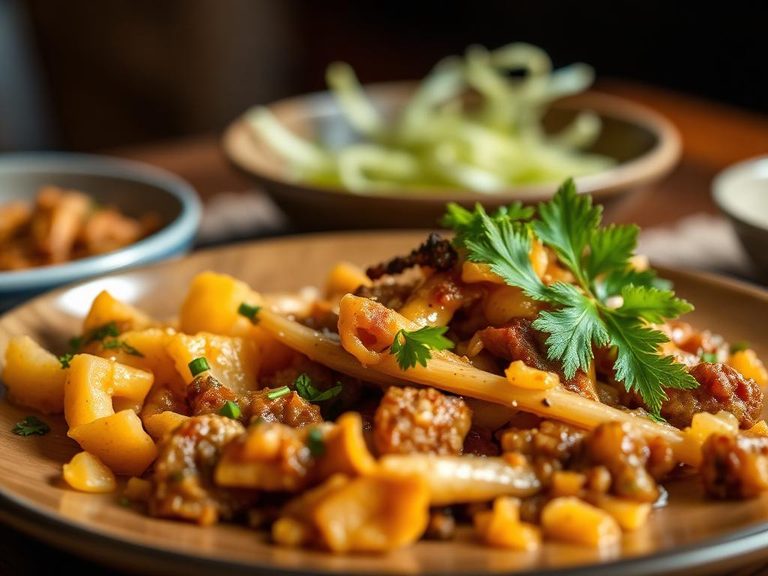
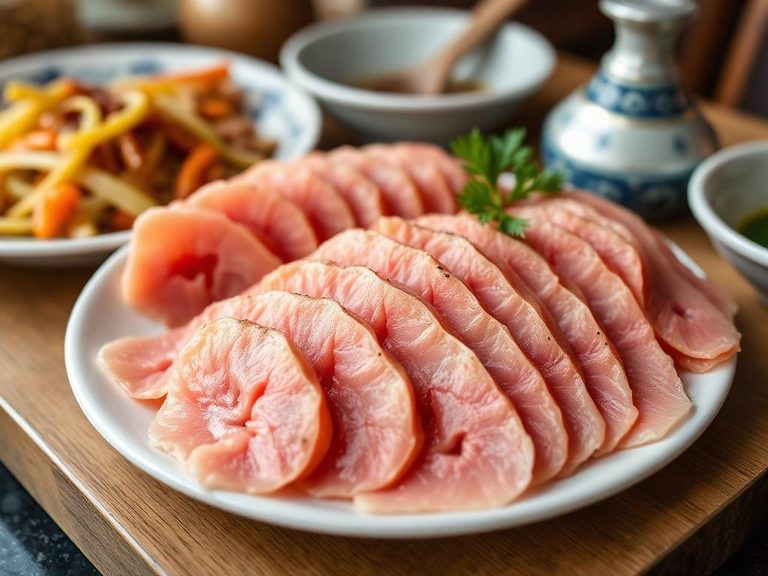
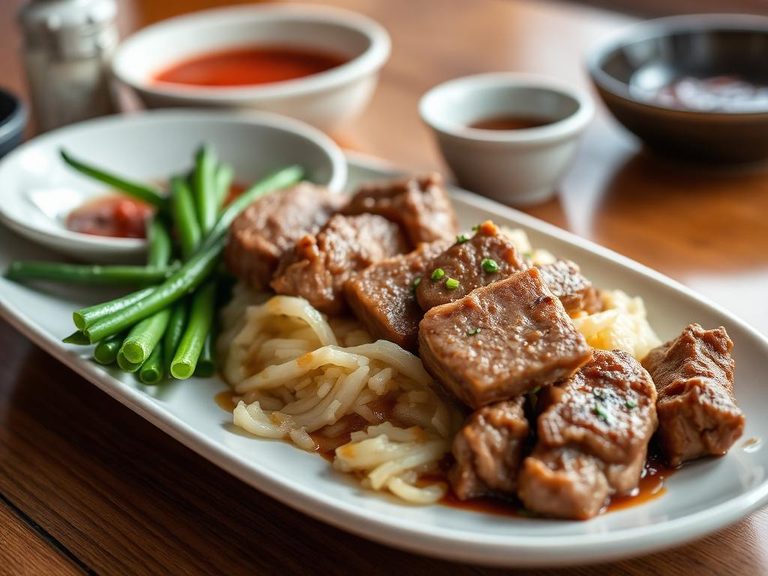
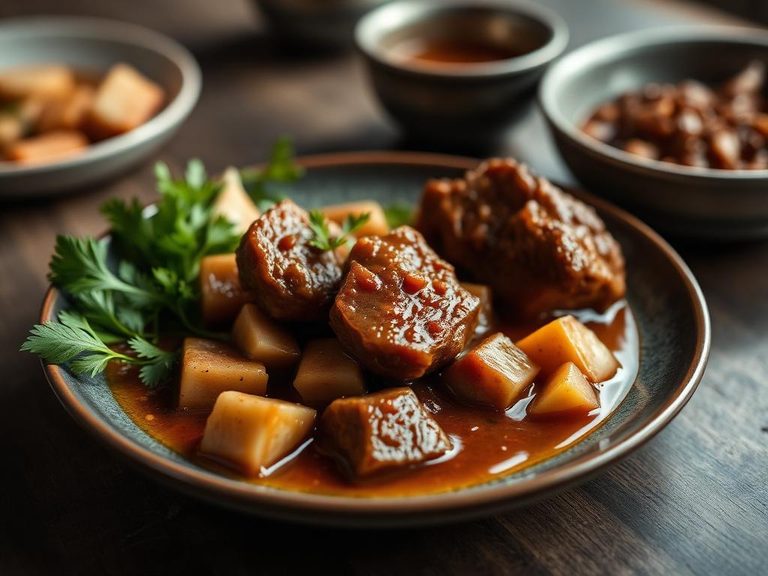
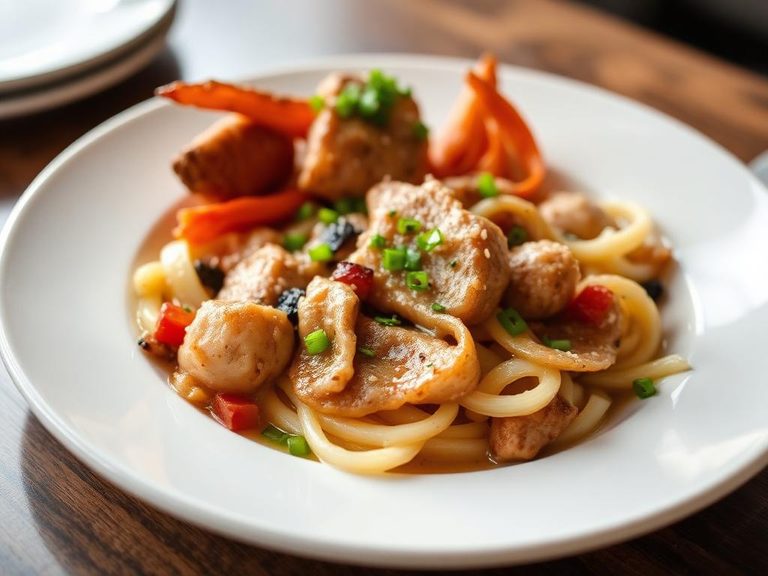
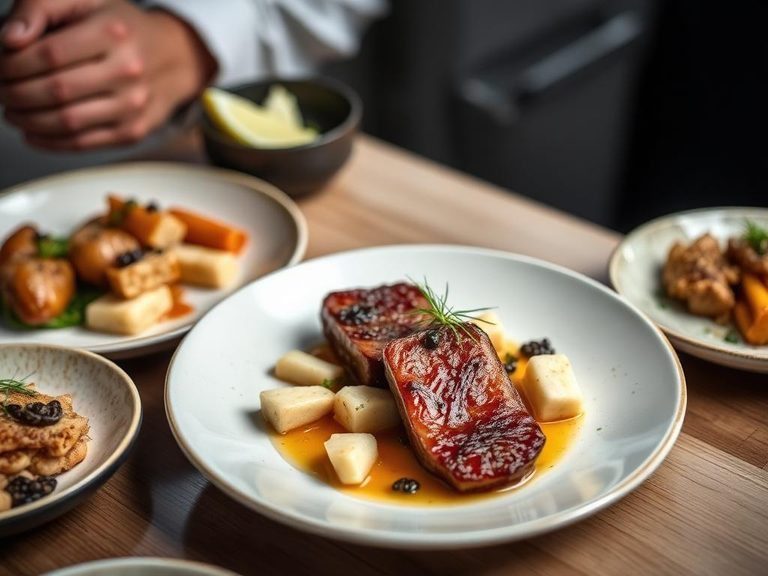
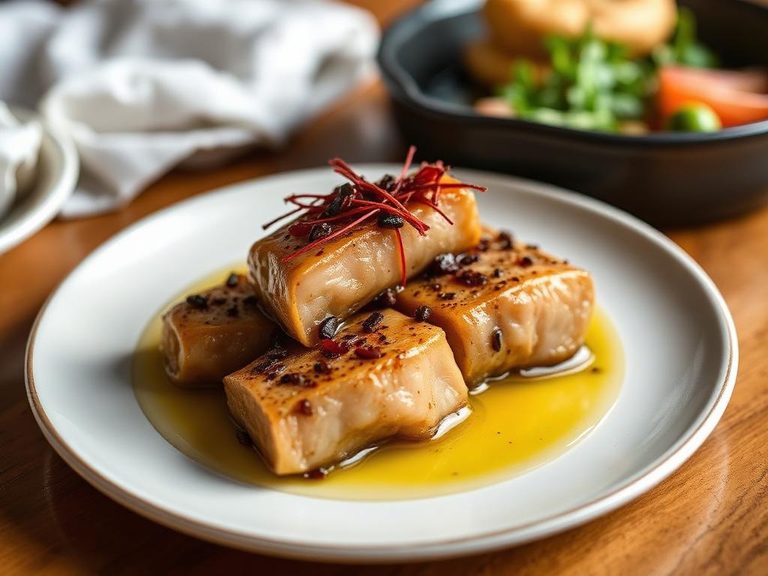
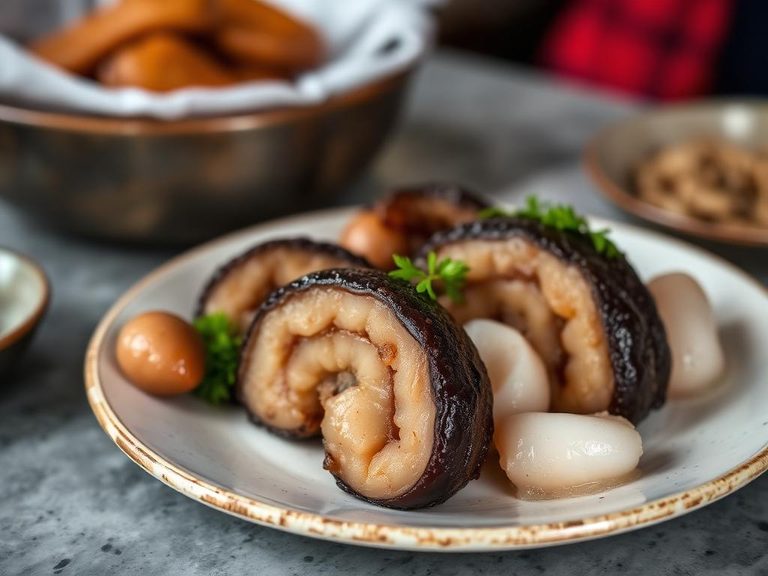
Part of a 'muktuk' or mixed feast platter
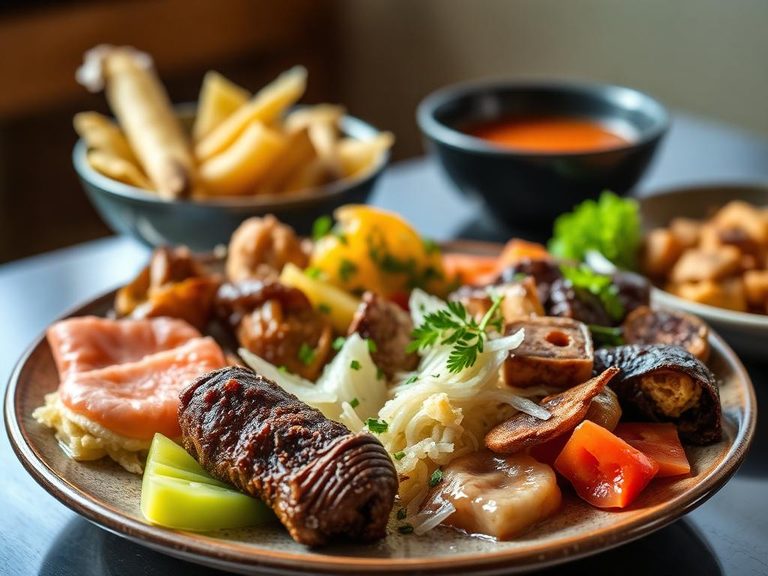
Muktuk is a traditional Arctic dish, primarily from Inuit, Yupik, and Chukchi cultures, consisting of frozen or fermented whale skin and blubber. The mixed feast platter typically includes various parts of bowhead or beluga whale, often served alongside other traditional foods like dried fish or berries. It is a staple food in coastal Arctic communities, particularly in Alaska, Canada, and Greenland.
🍽️ Nutrition at a glance
Muktuk is exceptionally high in fat, providing a dense source of calories and energy crucial for cold climates, while also offering significant protein. It is rich in vitamins C and D, as well as omega-3 fatty acids, with a typical serving containing roughly 300-400 calories.
Nutrition breakdown
| Calories | 350 kcal |
| Protein | 15 g |
| Carbs | 0 g |
| Fat | 32 g |
| Fiber | 0 g |
| Sugar | 0 g |
| Sodium | 120 mg |
| Vitamin C | 18 mg |
| Vitamin D | 10 µg |
| Vitamin B12 | 8 µg |
| Omega-3 (EPA+DHA) | 2.5 g |
| Selenium | 45 µg |
| Phosphorus | 300 mg |
| Iron | 2.1 mg |
| Zinc | 3.5 mg |
Per 1 cup (150 g) · estimated, varies by recipe
💡 What's interesting
Culturally, muktuk is a symbol of community sharing and traditional knowledge, often harvested during communal hunts. Nutritionally, it is one of the few natural food sources that provides both vitamin C and vitamin D, which are vital in regions with limited sunlight and fresh produce.