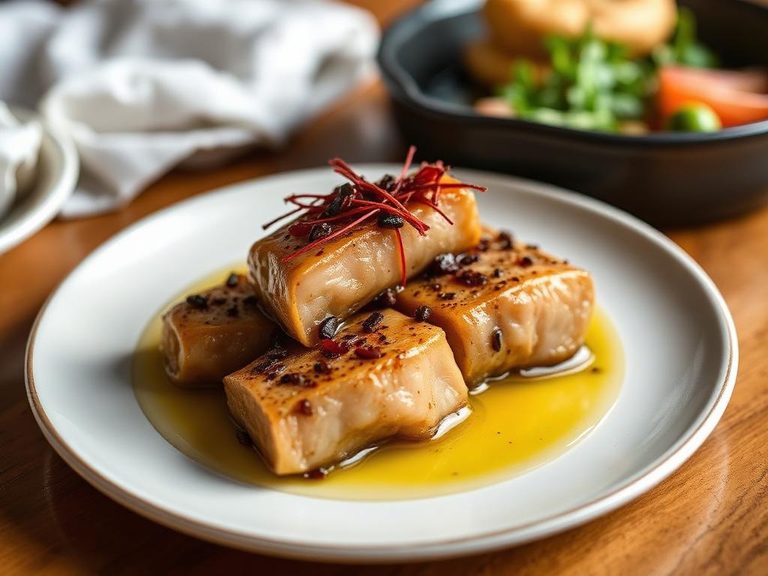
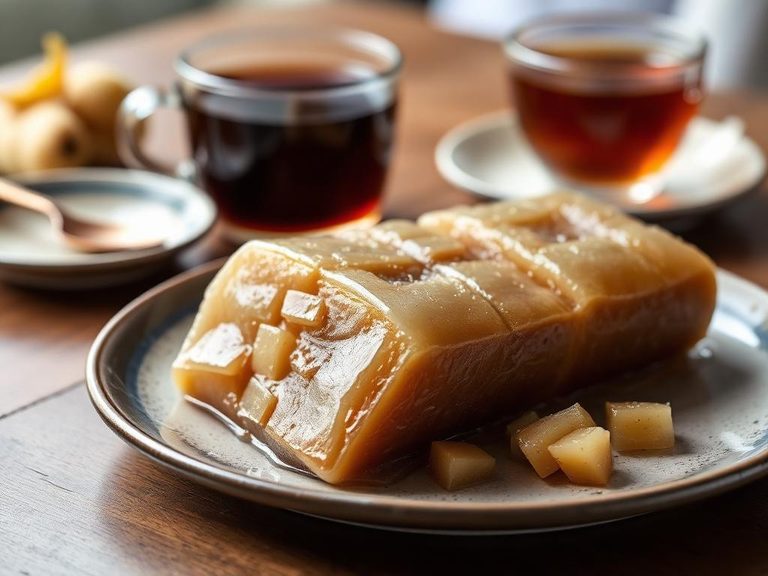
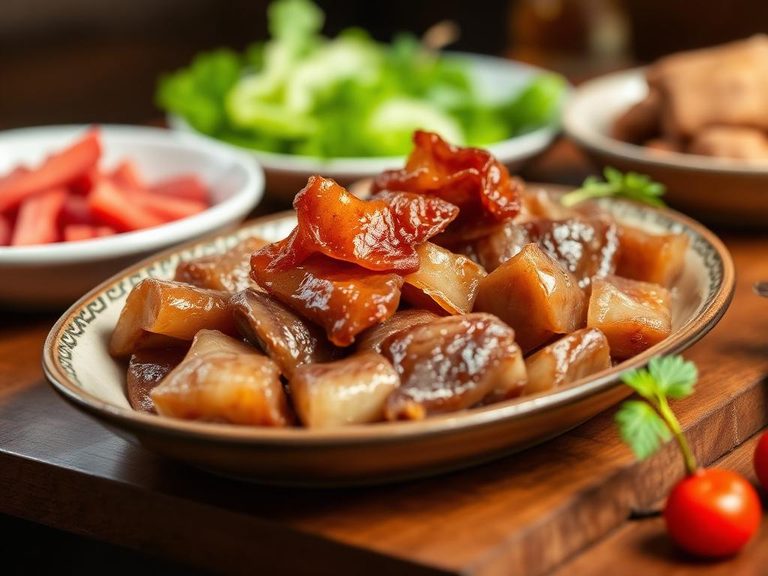
Maktaaq (Muktuk) - often includes bearded seal skin and blubber
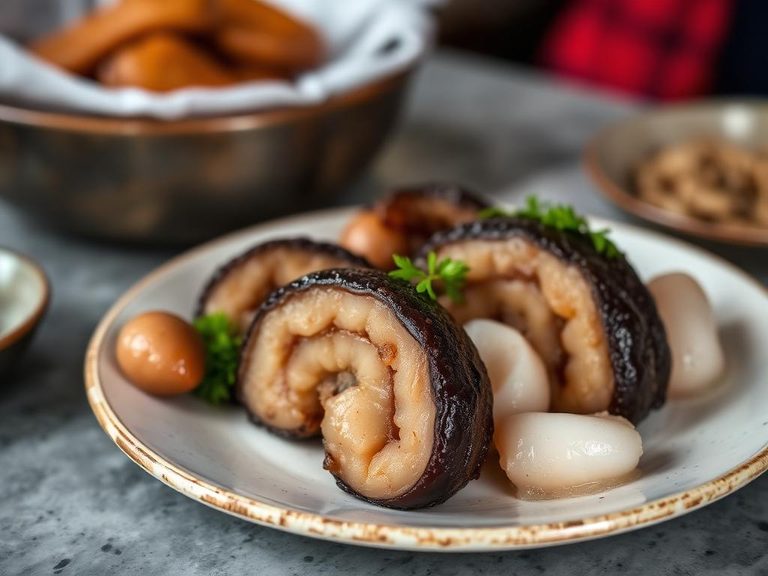
Maktaaq (Muktuk) is a traditional Arctic dish consisting of frozen whale skin and blubber, most commonly from the bearded seal. It is a staple food for Inuit and other Indigenous peoples of the Arctic regions of Canada, Greenland, and Alaska, often eaten raw or fermented.
🍽️ Nutrition at a glance
This dish is extremely high in fat and provides a significant amount of protein, with virtually no carbohydrates. It is a calorie-dense food, with a typical 100g serving providing roughly 350-450 kcal, primarily from its rich fat content.
Nutrition breakdown
| Calories | 400 kcal |
| Protein | 15 g |
| Carbs | 0 g |
| Fat | 38 g |
| Fiber | 0 g |
| Sugar | 0 g |
| Sodium | 80 mg |
| Vitamin C | 35 mg |
| Vitamin D | 10 µg |
| Vitamin B12 | 12 µg |
| Selenium | 30 µg |
| Phosphorus | 250 mg |
| Zinc | 3.5 mg |
| Iron | 2.0 mg |
| Niacin (B3) | 5.0 mg |
Per 100 g (about 3.5 oz) · estimated, varies by recipe
💡 What's interesting
Maktaaq is a remarkable source of Vitamin C, an essential nutrient rarely found in animal-based foods, which historically helped prevent scurvy in Arctic diets. Culturally, it is a prized food often served at celebrations and is considered a delicacy, representing a vital connection to traditional hunting practices and the marine environment.